
Skip to content
Search

Latest Stories

Submit Guest Post

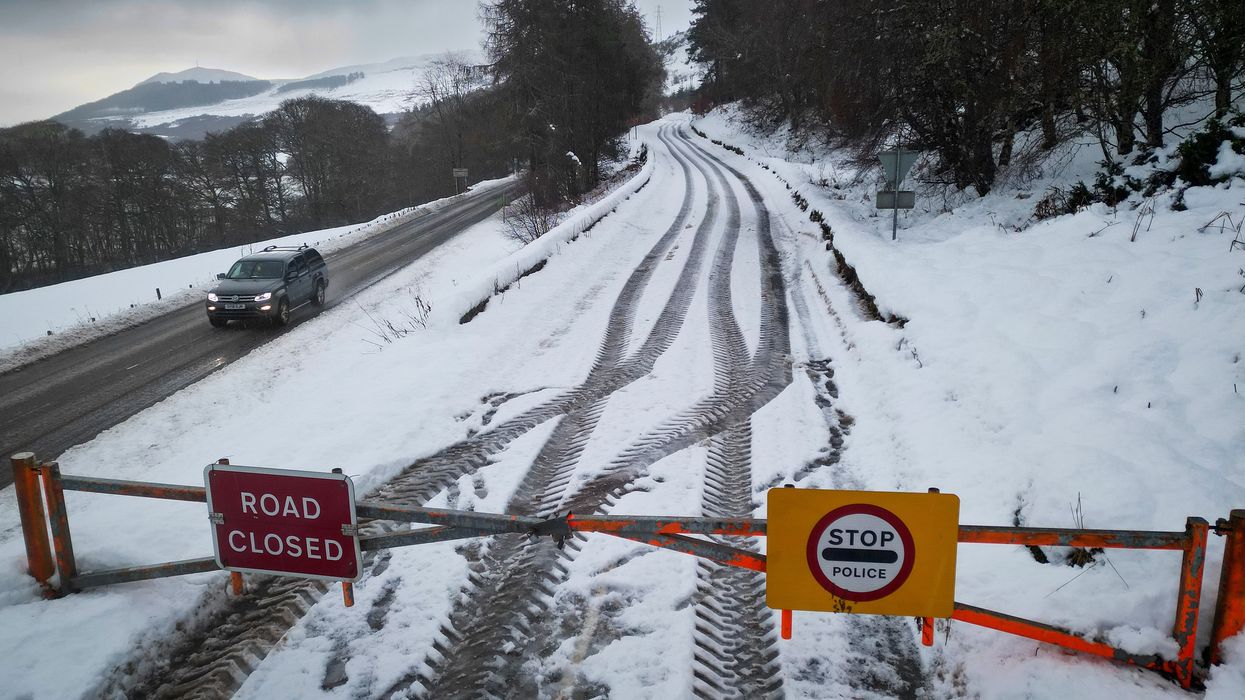
UK braces for snowstorm in March affecting 24 counties

UK braces for snowstorm in March affecting 24 counties

The snowfall, predicted for Tuesday, 11 March, is expected to impact nine counties in England. (Representational image: Getty)

A LARGE snowstorm spanning 337 miles is expected to hit the UK in March, with up to 24 counties likely to be affected, according to forecasts from WX Charts and Met Desk.

The snowfall, predicted for Tuesday, 11 March, is expected to impact nine counties in England: Cumbria, Lancashire, Northumberland, North Yorkshire, North Lincolnshire, West Yorkshire, Nottinghamshire, Derbyshire, and Staffordshire, reported Yorkshire Live.


In Scotland, 15 regions are forecast to be affected, including Argyll and Bute, Stirling, Perth and Kinross, Angus, West Dunbartonshire, East Dunbartonshire, South Lanarkshire, North Lanarkshire, East Ayrshire, South Ayrshire, Dumfries and Galloway, Renfrewshire, East Renfrewshire, Glasgow, and the Scottish Borders.

BBC meteorologist Sarah Keith-Lucas noted that snow in March is more common in the UK than in December. Speaking to Birmingham Live, she said, "The 'transition' seasons of spring and autumn can bring very variable weather. In fact, in the UK, it is more likely to snow in March than it is in December."

She added that early March will likely bring wet and windy weather in the north and west, while the south is expected to remain drier.

Netweather TV forecasts that late March will see more settled conditions, with above-average temperatures. It predicts temperatures could be 0.5 to 1.0 degrees Celsius higher than the 1991-2020 average in Scotland, Wales, Northern Ireland, and western England, with East Anglia and the southeast possibly seeing an increase of up to 2 degrees Celsius.

Western parts of the UK, particularly western Scotland and northwest England, may experience above-normal rainfall, while eastern areas could see average or slightly lower precipitation levels. Sunshine levels are expected to be above normal in eastern Britain and slightly above normal in the west.


Add EasternEye As Your Trusted Source
preferred source on google news

More For You

Tackling hostility against Muslims matters for everyone

Anti immigration protesters attend the 'Glasgow Reclaims The Streets From Far-right Hatred And Violence' anti-racism protest on June 13, 2026 in Glasgow, Scotland.

Getty Images

Tackling hostility against Muslims matters for everyone

Sunder Katwala

Born in the mid-1970s I felt part of a lucky generation, which gained from pushing back the overt racism of that era. When we talk about stronger “social norms”, what we mean is that few people thought that monkey chants at the football or racist jokes on the telly were normal anymore – while more had Asian and black colleagues, neighbours and friends.

That past progress is put to the test today. A terrible crime in Belfast saw organised efforts at indiscriminate racist attacks on migrants and ethnic minorities, whose only connection to the crime was the colour of their skin. Those seeking to make racism fashionable again have the online megaphone of the world’s richest man, Elon Musk, on their side.

Past progress could be experienced unevenly, too. Being of mixed Indian and Irish Catholic parentage, I saw both identities rise in status once the BBC comedy Goodness Gracious Me inverted who could tell the jokes, and peace broke out in Northern Ireland. Yet, British Muslims of my generation felt under more intense scrutiny after the 9/11 terrorist attacks.

Efforts to tackle anti-Muslim hatred risked being stalled by arguments over what to call it and how to define it. The government’s new definition of anti-Muslim hostility seeks to transcend the confusion that the term “Islamophobia” could generate. But the challenge is not just to define the prejudice – but to find effective ways to shrink it.

There are sobering findings on the starting points in new research from British Future and the British Muslim Trust. More than half of British Muslims report experiencing prejudice based on their religion last year – a quarter in person and over a third online. A third of the public hold mostly negative views. One in six endorse sweeping and often indiscriminate hostility. Anti-Muslim hostility can have about twice the social reach as prejudice against other faith or ethnic minorities.

Tackling this hostility cannot be the responsibility of Muslims alone. It will take a whole-of-society effort. After all, this is foundationally about the attitudes towards a six per cent minority group, held among the 94 per cent of us who are not Muslim.

Keep ReadingShow less
