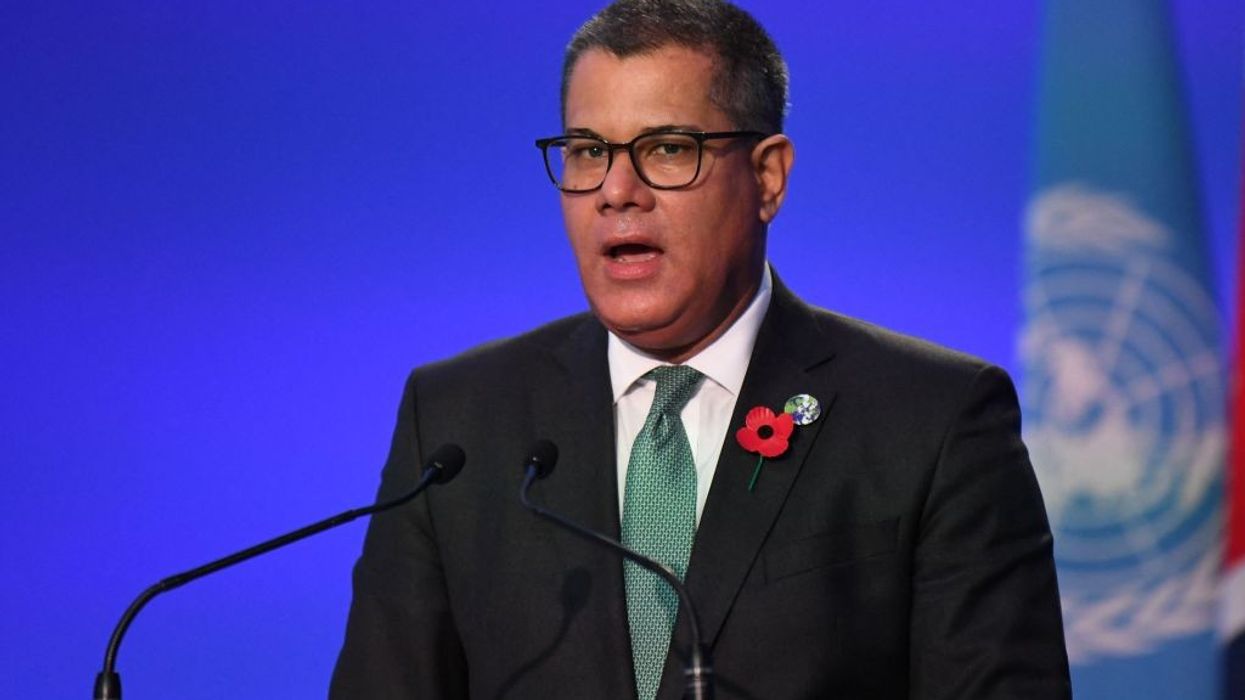

THE British president of COP26 has said that young people have “every right to be angry” about the lack of action on climate change because they have been failed by world leaders, reported The Times.
Alok Sharma said that young people are worried about the future and hence they are angry.
Young people heckled Sharma on Saturday (30) at a youth conference on climate change. They shouted at him that he was a hypocrite because of the government’s support for a new oilfield off Shetland.
While addressing delegates at the opening of the conference, Sharma said: “We know that this COP26, is our last, best hope to keep 1.5 in reach. I believe that we can resolve the outstanding issues. We can move the negotiations forward and we can launch a decade of ever-increasing ambition and action.
“Together we can seize the enormous opportunities for green growth for good, green jobs for cheaper, cleaner power. We need to hit the ground running to develop the solutions that we need. And that work starts today — and we succeed or fail as one.”
“If we act now, and we act together, we can protect our precious planet," Sharma concluded.
As the president of COP26, Sharma is trying to persuade more than 190 countries to agree on a mechanism for increasing emissions reduction targets over the next two years.
The UN warned last week that the emissions targets submitted to date by countries would collectively result in global emissions rising by 16 per cent by 2030, compared with 2010 levels, The Times report added.
The Intergovernmental Panel on Climate Change has calculated that emissions need to fall by 45 per cent from 2010 levels by 2030 to limit warming to 1.5C.
Under the Paris agreement countries are not required to submit new targets until 2025 but one idea being discussed is that countries will be asked to do so in 2023.
Patricia Espinosa, the United Nation’s climate chief, said that the decisions by 120 leaders to attend the conference showed climate change was a top priority at the highest level.
"If you asked me ‘why are you optimistic’, I think that from what we are learning and seeing, we know that these transformations can happen, that there are the tools, there are instruments, there are solutions," she was quoted as saying by The Times.
“It is a question of time and also on how we manage to replicate those solutions at the speed that is required so that in this decade, which is crucial, we can get to be confident about achieving the 1.5C.”
Mohamed Nasheed, the ambassador for the Climate Vulnerable Forum, a group of 48 nations disproportionately affected by climate change and speaker of the Maldives parliament, welcomed the decision at the G20 summit in Rome to end the financing of new coal plants overseas.
But he said the absence of a commitment from the G20 to end domestic coal use would leave the Maldives and other small island nations facing devastation from rising sea levels.