
- Tesla demonstrated its new Roadster driving upside down, flipping in midair and landing using thrusters.
- The company claims acceleration from 0 to 60mph in under a second and a top speed above 230mph.
- Production is targeted for 2028, but final prices and the road legality of its flying features remain uncertain.
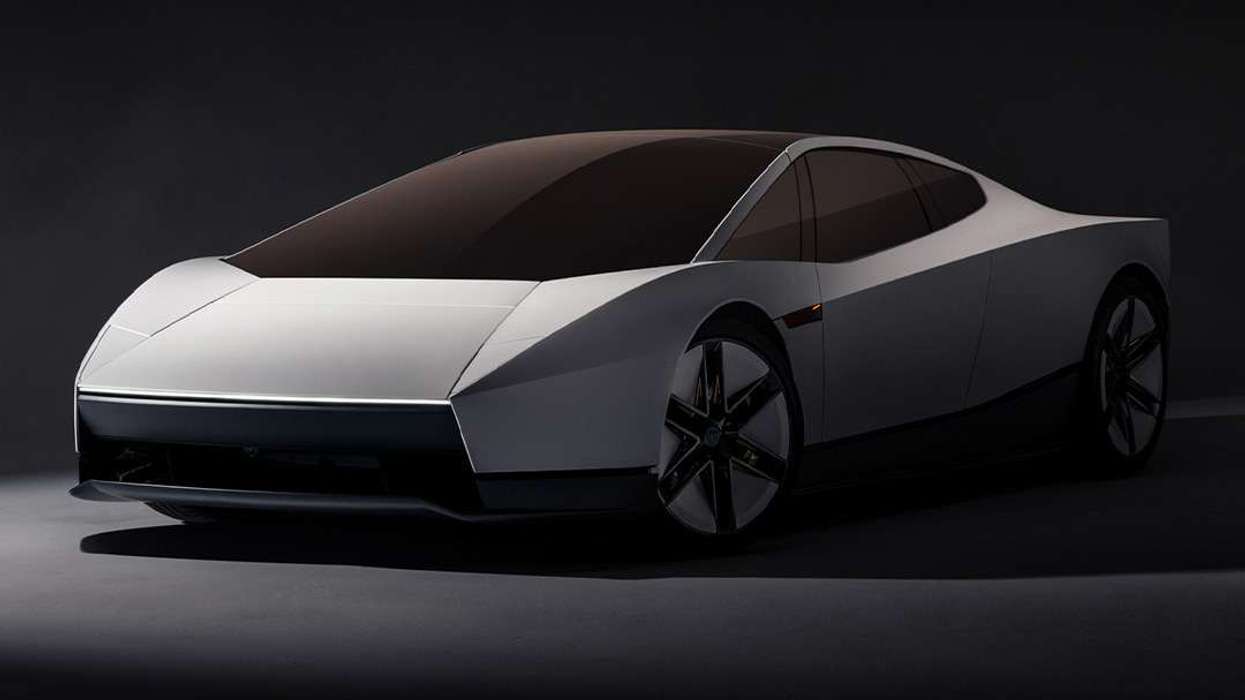
Elon Musk's long-awaited Tesla Roadster has finally taken centre stage, with a demonstration that looked more like a science-fiction stunt than a conventional car launch. The electric sports car drove upside down, performed a midair flip and landed using compressed-gas thrusters developed with SpaceX, Musk's aerospace company.
Unveiled at a SpaceX test site in Texas on Thursday (15), the redesigned Roadster is being presented as a high-performance electric vehicle with technology that could push the boundaries of conventional motoring. But after years of missed deadlines, the bigger question is whether Tesla can turn the spectacle into a production car that delivers on its promises.
"Turns out the future does have flying cars," Musk said at the event.
Tesla's vice-president of vehicle engineering, Lars Moravy, echoed the sentiment, declaring: "Flying cars are real."
The demonstration featured the Roadster climbing a large curved ramp before travelling upside down, using a fan-based suction system to remain attached to the surface. Integrated cold-gas thrusters then helped it launch off the ramp, rotate in midair and land.
In another display, the car jumped over a line of vehicles and a lorry, performing an aerial manoeuvre before returning to the ground.
Tesla also demonstrated rapid acceleration. The company claims certain versions of the Roadster can reach 60mph from a standstill in less than a second and achieve a top speed exceeding 230mph. These figures remain manufacturer claims, rather than independently verified performance results from a production vehicle.
Nearly a decade in the making
Tesla first unveiled the second-generation Roadster in 2017, promising deliveries in 2020. The project subsequently faced repeated delays as the company pursued other vehicles and technologies.
Production is now targeted for 2028, meaning buyers could wait more than a decade between the original unveiling and the start of manufacturing.
The company has outlined three versions: Performance, Thrust and an invite-only Rocket model. The Performance version is described as road-ready, while the Thrust variant adds technology intended to improve acceleration. The single-seat Rocket version is presented as the most experimental, with a full flight system.
Tesla's reservation page listed a $50,000 (£37,000) payment for the Performance version and $250,000 (£185,000) for the Thrust version. These are reservation payments, not confirmed final purchase prices. Tesla did not announce definitive retail prices at the unveiling.
The distinction between the models matters. The most dramatic demonstration does not necessarily mean every customer will be able to buy a Roadster capable of performing the same manoeuvres. The final specifications, safety requirements and regulatory approvals will determine what reaches the market.
Can the technology work beyond a showcase?
The Roadster's appeal rests on more than its ability to perform stunts. Tesla is trying to combine the acceleration and handling of an electric sports car with technology more commonly associated with aerospace engineering.
The thrusters use compressed gas rather than conventional rocket fuel, while the suction system is designed to help the car maintain contact with a surface during extreme manoeuvres. Tesla says the additional force could help overcome the limits imposed by tyre grip, which normally restricts how quickly a car can accelerate.
However, a controlled demonstration is not the same as proving that a vehicle can operate safely in everyday traffic. The use of thrusters raises questions about safety, regulation and whether the more ambitious features could be approved for public roads in the US or Europe.
The timing also matters for Tesla's wider business. The company is increasingly focusing on autonomous driving, robotaxis and robotics, making the Roadster more of a technology showcase than a mass-market vehicle. Its financial contribution may be limited, but it could help reinforce Tesla's reputation for engineering ambition.
For now, the Roadster has delivered the spectacle Musk promised. Whether it can deliver a commercially viable car, with the same performance and technology, will depend on what Tesla manages to put into production in 2028.