
Highlights:
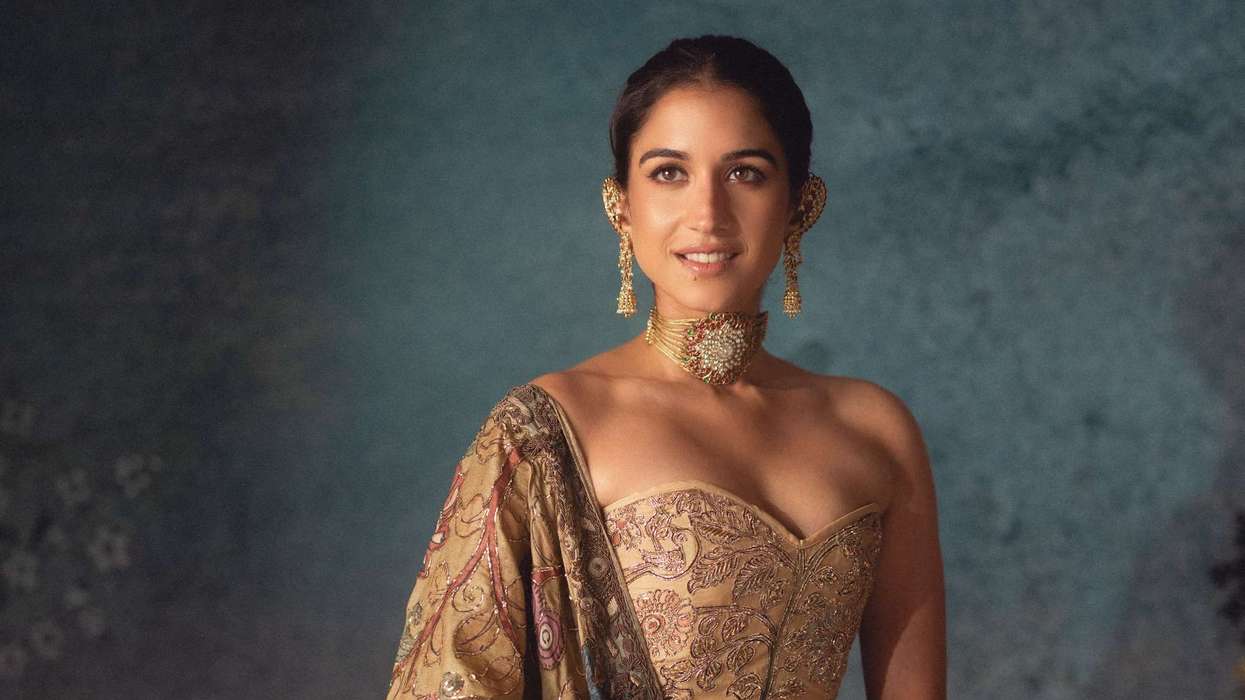
Indian business tycoon family's Radhika Merchant Ambani’s latest fashion appearance was about more than an elaborate outfit. At Swadesh’s first anniversary celebration in Mumbai, she wore a corset-and-skirt ensemble that brought together traditional Indian textile art and modern couture.
Created by designer Mayyur Girotra in collaboration with Swadesh, the outfit featured a structured, strapless corset paired with a floor-length skirt and a flowing dupatta. While the fitted bodice gave the look a contemporary silhouette, the skirt was the real centerpiece, covered in hand-painted Kalamkari artwork.
The textile featured earthy shades of gold and brown, with touches of pink and blue. Metallic embroidery added definition to the intricate designs, allowing the painted motifs to stand out.
Krishna Leela And The Tree Of Life
The skirt’s most striking feature was its storytelling. Its painted compositions drew inspiration from Krishna Leela, depicting episodes associated with the life and stories of Lord Krishna, alongside Kalpavriksha, commonly known as the Tree of Life.
Peacocks, sacred cows, lotus blossoms and floral vines appeared throughout the fabric. Together, these motifs brought devotional imagery and elements of the natural world into the design.
The Tree of Life is a recurring symbol in traditional art, often associated with growth, continuity and the interconnectedness of life. In this ensemble, it complemented the Krishna-inspired scenes, giving the skirt a visual narrative rather than making it simply a decorative piece.
The combination also reflected how Indian textiles have long been used to preserve stories, beliefs and artistic traditions through generations.
What Makes Kalamkari Special?
Kalamkari is a traditional Indian textile art known for its detailed, hand-drawn designs and the use of natural dyes. The Srikalahasti tradition of Andhra Pradesh is particularly associated with religious and mythological storytelling.
Unlike a fabric that relies entirely on printed patterns, Kalamkari involves considerable artistic skill, with intricate compositions created through drawing and coloring techniques. The result can turn a garment into a canvas for stories drawn from mythology, nature and cultural memory.
Radhika’s skirt brought this tradition into a contemporary luxury setting. The hand-painted compositions remained central to the design, while metallic detailing added a more elaborate finish.
Traditional Craft Meets Contemporary Couture
Girotra and the Swadesh artisans further embellished the textile using zardozi, pitta, dabka and appliqué techniques. These details framed the painted artwork and introduced texture without overwhelming the original designs.
The corset created a contrast with the skirt’s rich detailing and flowing shape. Its fitted structure gave the ensemble a modern edge, while the dupatta softened the silhouette.
That balance was central to the look. Instead of presenting traditional textile art as something reserved for heritage garments, the ensemble showed how it can be incorporated into contemporary occasionwear.
Swadesh’s anniversary celebration also placed the outfit within a wider conversation about Indian craftsmanship and luxury. Traditional techniques can remain relevant in modern fashion when designers work with artisans to preserve the details that make each textile distinctive.
A Celebration Of Indian Artisans
Radhika’s ensemble highlighted the skill involved in bringing hand-painted designs, embroidery and appliqué together in one garment. Every element contributed to a larger composition, from the mythological scenes to the floral patterns and metallic embellishments.
The result was a look that connected Indian artistic traditions with contemporary couture. More than an elaborate skirt, it offered a reminder of how textiles can carry stories across generations while finding a place in modern wardrobes.