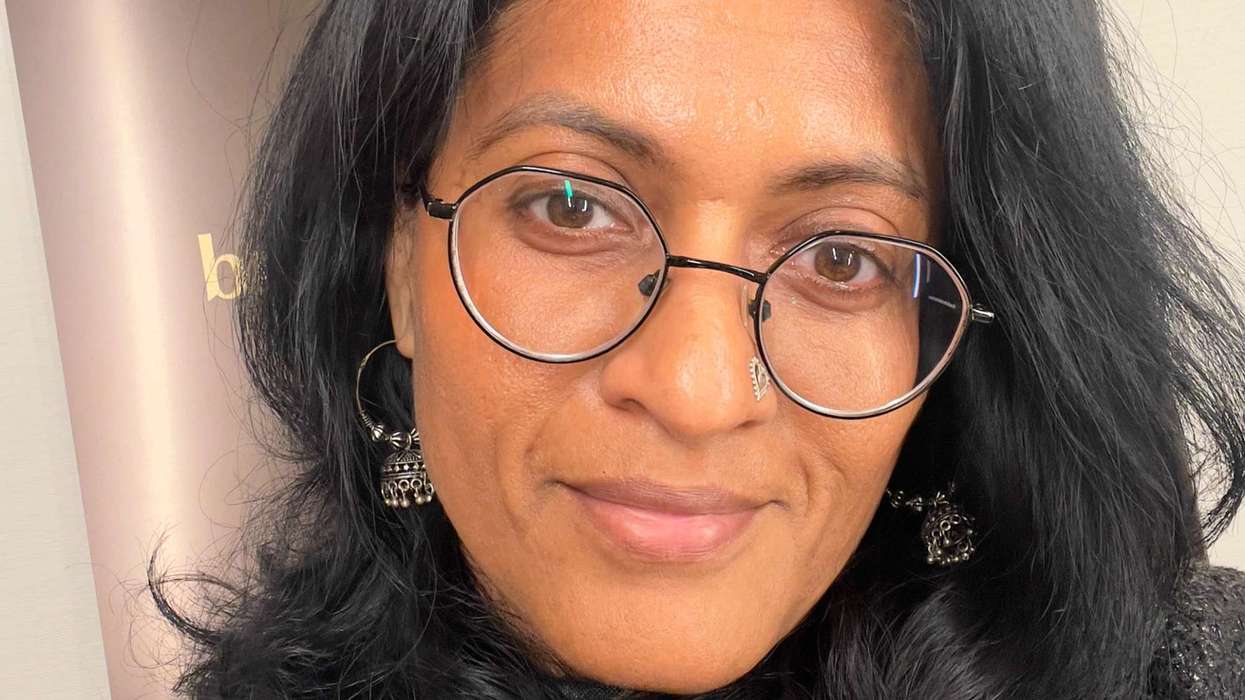

WHEN Indian American filmmaker Chithra Jeyaram began making Love Chaos Kin, she was drawn to a family whose story raised questions about adoption, identity and belonging. But after eight years of filming, she came to see it as something larger – a look at what happens when a child grows up with more than one history, culture and family.
Jeyaram’s feature documentary follows Lakshmi and Narayanan Iyer, an Indian American couple, and their adopted twin daughters, Anjali and Meghna. Adopted at 10 months, the girls are white and of Navajo (Native American) descent. They are raised in a family rooted in Indian and Hindu traditions while remaining connected to their white birth mother, Brandy, now known as Katherine Faye.
“Spanning 12 years of the family’s life, the 98-minute documentary follows Lakshmi’s efforts to help her daughters understand where they came from, including reconnecting with their birth mother and searching for their estranged Native American father,” Jeyaram told Eastern Eye.
The film will have its UK premiere as the opening gala film of the London Breeze Film Festival at Regent Street Cinema on October 21, with Jeyaram taking part in a question-and-answer session after the screening. The festival runs from October 21 to 25. Jeyaram came to the US in 2001 and has lived there for almost 25 years. Born in Tuticorin in India’s Tamil Nadu state, she spent part of her childhood in Kuwait before moving to the US for her master’s degree.
Migration, she said, has shaped her own ideas about identity and belonging. She describes feeling as though she has always been “on the fence”, never completely inside or outside a culture. In India, she can look as though she belongs, but speaking can reveal the distance created by years away. In the US, she can find herself the only Tamil or Indian person in a room.
“I was always wondering, right? Like, what is going to happen to my language? What is going to happen to my culture?” she said.
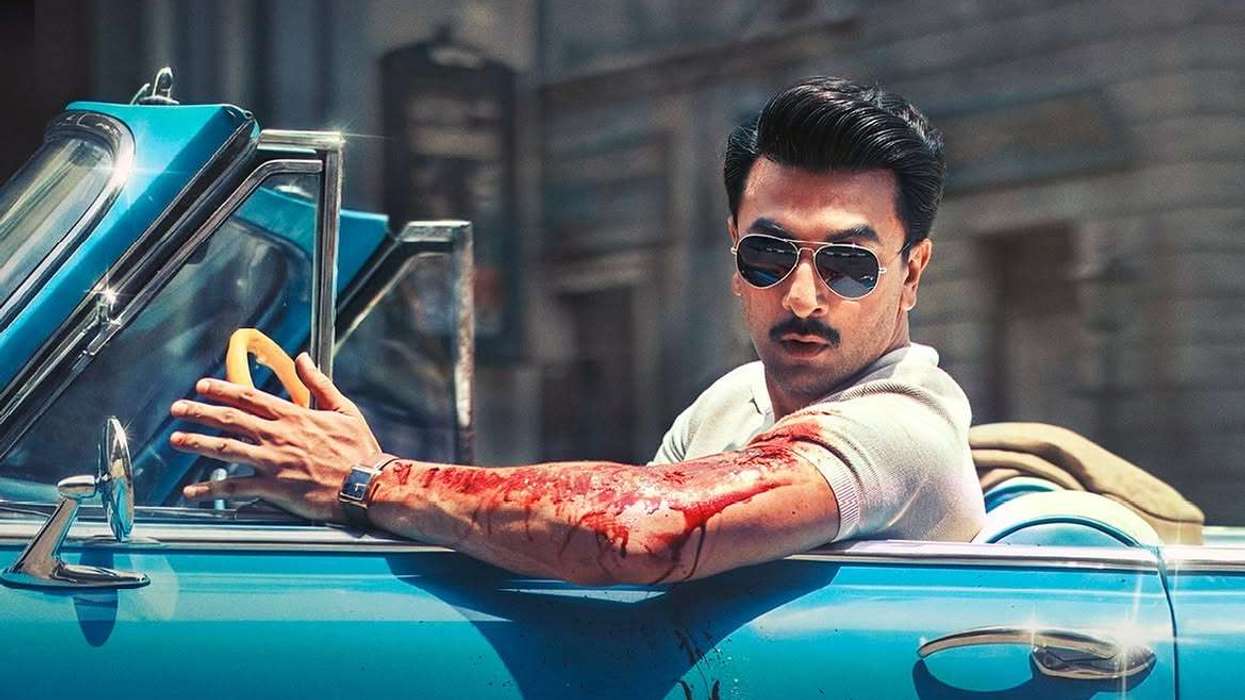
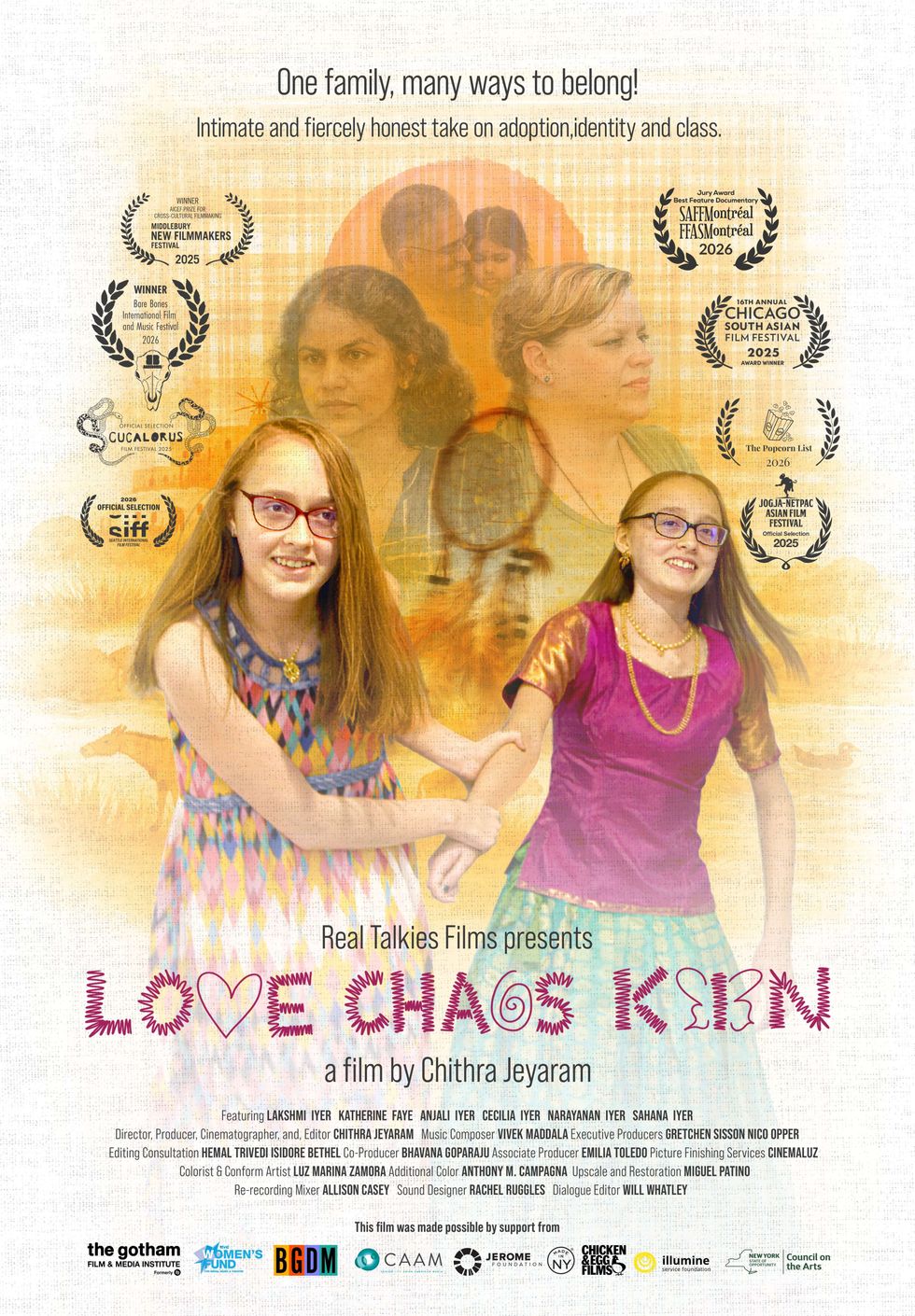 The poster of the feature documentaryEastern Eye
That experience made her consider how parents pass on their culture to children from different backgrounds, a question reflected in the family at the centre of Love Chaos Kin. Jeyaram said each of the four main people in the film has a different relationship with belonging.
“The children are Native American,” she said. “These children are descendants of the original inhabitants of the land, and yet when I started filming them, they didn’t even have connection to their Native roots.” At the same time, their upbringing is deeply connected to their Indian American family.
“They eat dosa every morning,” Jeyaram said. “They are singing nursery rhymes that I have heard as a kid.”
The family regularly attracts attention because the parents are Indian and the children are white.
“When the four of them walk out on the street, these two Indian parents and two white kids, everybody stops and stares at them,” she said.
For the girls, there can be a constant expectation that they explain themselves. “Sometimes it’s exhausting for them,” Jeyaram said. “You go to school, and some days they just don’t want to talk about adoption. They just want to be a teenager, and they don’t have a choice.”
Jeyaram believes adopted children should know the truth about where they come from and, where possible, retain meaningful connections with their birth families. The twins have always known they were adopted. They know their birth mother’s name and that she loves them. Jeyaram believes such openness can prevent children from having to create their own explanations about their past.
The film has received awards at festivals including the South Asian Film Festival of Montreal and the Middlebury New Filmmaker Festival, as well as audience awards at the Chicago South Asian Film Festival and Centre Film Festival.
Jeyaram hopes it will encourage people to look beyond fixed ideas of family and identity. “No matter how different we are, if we choose to trust, if we choose to have friendships, there is a lot to be learned from each other,” she said.
And for anyone considering adoption, she hopes they will think beyond the moment a child enters their home.
“Whoever is choosing to adopt is coming from a place of ‘I can’t have a child’, but in the process of getting a child, another mother or another family is losing a child,” she said.
“So therefore, whoever is adopting has to think of this as, yes, you are getting something, but you also need to make sure you are caring for that family that gave you a child, and for the child who’s lost a family.”