

AWARD-WINNING producer and writer Arvind Ethan David has turned to fiction with his debut novel, The Great Game, a historical detective thriller that places an Indian hero at the centre of a world traditionally dominated by white British characters.
Set in London in 1905, the novel follows Balvinder “Bunny” Dev Singh, a Sikh trainee lawyer who becomes an accidental detective after getting caught up in a murder investigation involving the fictional gentleman thief AJ Raffles, Scotland Yard, a young Winston Churchill and the ageing Sherlock Holmes. What begins as a hunt for a killer gradually opens into a wider story about empire, identity and Britain’s relationship with India.
In an interview with Eastern Eye, Ethan David said the idea for the novel grew out of his lifelong love of classic British adventure stories and detective fiction.
“I grew up loving Sherlock Holmes, Tarzan, HG Wells and all this British adventure and mystery fiction,” he said. But rereading those books as an adult led him to ask a different question: “Where were all the Indians?”
Ethan David said Indian characters in many classic stories were often portrayed as “the bad guys, the villains, the suspects, the coolies, the servants”, despite the presence of Indian lawyers, politicians, doctors, businessmen and even royalty in Britain during that period.
He wondered why Sherlock Holmes, “the world’s greatest detective”, seemed unaware of that history.
That question became the starting point for The Great Game, which was published last month.
“I wanted to write a mystery thriller set in London in 1905 with Sherlock Holmes, but with an Indian at the centre of it as the hero,” the writer revealed.
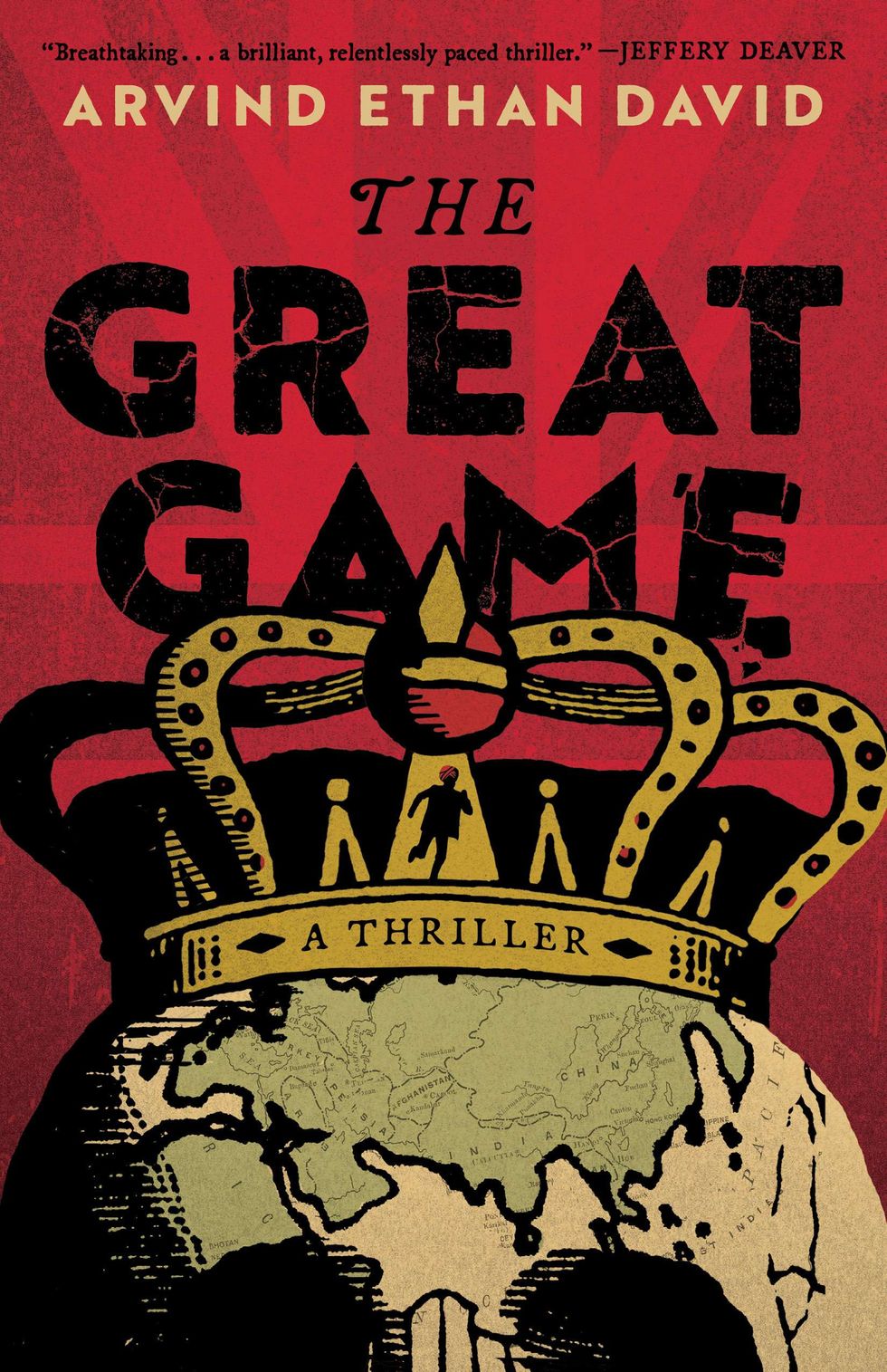 Book coverEastern Eye
The choice of Balvinder as a Sikh detective was deliberate. Ethan David wanted a character who could realistically have lived in Britain at the time and whose experiences reflected the complicated relationship between India and the British Empire.
He imagined a soldier from a Maharaja’s militia who had served during the Boer War, only to discover that Indian recruits were treated as second-class participants rather than equals.
“I was interested in a war veteran, someone carrying some of the trauma of war, but with the ambition to make himself something better,” he said. Instead of returning to Punjab after the war, Balvinder stays on in Britain, hoping to build a new life.
Ethan David, born in Kuala Lumpur to a Sindhi mother and a Malayali father and who grew up in Britain, said he recognised aspects of his own experience in the character.
“I’m an immigrant myself,” he said. “My family lives in Malaysia... they weren’t happy when I said I wasn’t coming home after university.” That personal connection helped shape Balvinder’s story of belonging, ambition and divided loyalties.
The novel explores what happens when Balvinder is asked by the British authorities to investigate a crime.
“On the one hand he’s pleased – immigrants like being given important jobs by their new countries,” Ethan David said. “On the other hand, helping the empire solve a crime may hurt his own country and people.” He added that this conflict lies “where a good story comes from”.
London itself plays an important role in the novel.
Ethan David said he wanted to bring Holmes back to the city where the detective belongs while showing that Britain’s capital has always been shaped by migrants as well.
“London is my city – I grew up here,” he said. “Why shouldn’t we tell the stories of our adopted cities and countries? It isn’t only their history – it’s our history as well.”
Although Holmes, Watson and Churchill appear in the novel, Ethan David said they were included for a larger reason.
Traditional Victorian mysteries often revolve around stolen jewels or missing documents, he said. His story starts with the attempted theft of a diamond before expanding into something much bigger.
“The biggest crime in the whole of world history is the theft of India’s wealth over two hundred years by the British, through colonisation,” he said. “I didn’t need to invent it; it happened.”
He stressed that The Great Game is not intended to be a history book or political manifesto. “Ultimately it’s an entertainment,” he said.
Through Balvinder’s experiences, the novel explores questions that still resonate today, particularly for people living between cultures. The character loves many aspects of England, including its literature, laws and London itself, while also recognising the injustices of empire.
Ethan David said he wanted to examine “what it felt like at the beginning of that feeling” experienced by some of the first modern immigrants.
He hopes readers will enjoy the adventure while also recognising that immigrants have long been part of Britain’s story. The novel reminds readers “that we have always been here”, Ethan David said.
He added: “We’re not a new phenomenon. India and England are interwoven... they don’t get to tell us to go home. They asked us to come. They brought us here.”