
Highlights
- Netflix’s The Last House follows a family trapped inside their home by a mysterious force linked to the rain.
- Directed by Louis Leterrier, the film puts its family drama at the centre of a high-concept survival story.
- The film draws comparisons to Steven Spielberg’s approach to placing ordinary families in extraordinary situations.
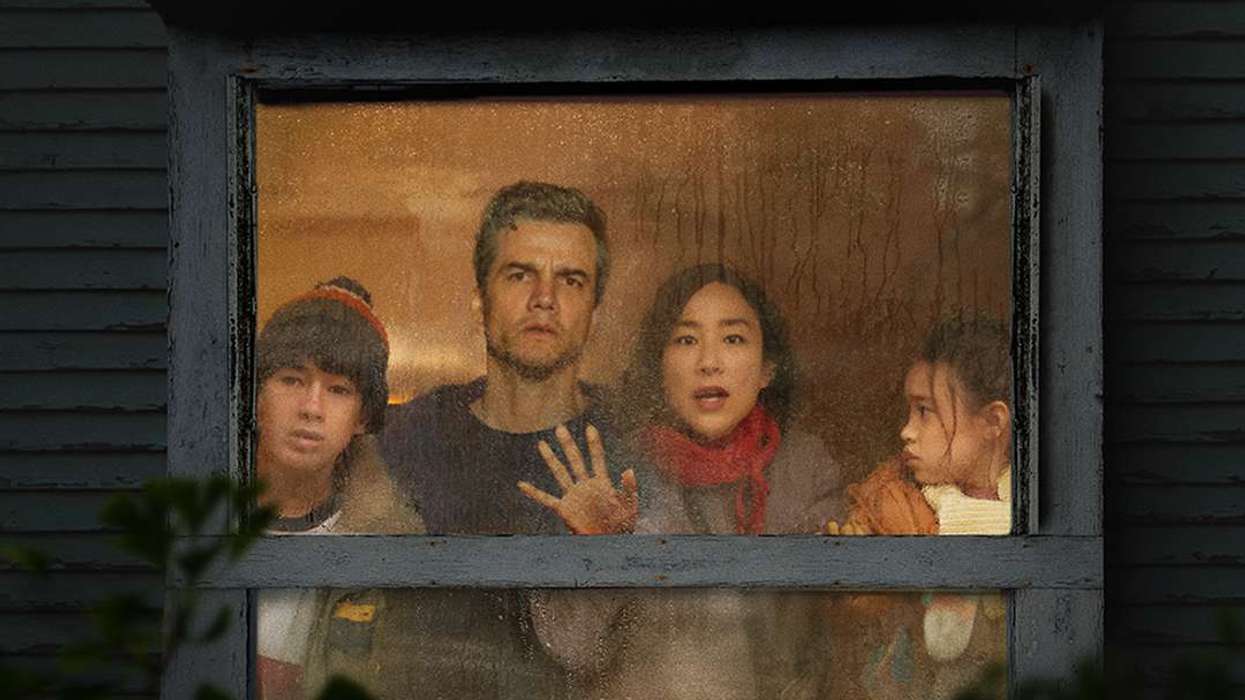
Netflix’s The Last House turns an ordinary family home into a terrifying prison, with a mysterious force linked to the rain leaving an entire neighbourhood unable to escape.
Directed by Louis Leterrier, known for Lupin and Now You See Me, the sci-fi thriller follows the Delgados as they struggle to survive after discovering that every exit from their home has been sealed. What begins as a family dealing with an impossible situation soon becomes a fight to preserve their relationships, food, water and sanity.
A family trapped with nowhere to go
Jason and Ann Delgado, played by Wagner Moura and Greta Lee, are left inside their home with their children after every attempt to leave is mysteriously stopped.
The family soon discovers they are not alone. Other homes in their neighbourhood appear to be facing the same problem. A neighbour who had been out jogging initially offers hope that help may be on the way, but the family is ultimately left to deal with their situation themselves.
The film wastes little time establishing the threat. The Delgados' entrapment and the scale of what is happening are revealed within the opening 20 minutes, turning what could have been a slow-burning mystery into an immediate survival story.
The real battle is inside the house
While the mystery surrounding the rain and the force trapping the neighbourhood remains at the heart of the story, The Last House spends much of its time examining how the situation changes the Delgado family.
Jason, an unemployed engineer, has struggled with his ability to provide for his family. Being trapped gives him a new opportunity to protect them, even as basic necessities become harder to find. Ann, meanwhile, becomes increasingly determined to shield her children from the psychological effects of their confinement.
As the months pass, the family loses access to food, electricity, water and communication. Their home also begins to deteriorate. Marks on the walls track the passage of time, floorboards are removed to make space for plants and food, while cracks spread through the house as its foundations begin to sink into the wet ground.
Why The Last House feels like Spielberg
The film's strongest connection to Steven Spielberg comes from its focus on an ordinary family facing something extraordinary.
Like several of Spielberg's sci-fi films, including Jurassic Park and War of the Worlds, the story places a family at the centre of a fantastical threat. But rather than making the mystery the sole focus, Leterrier builds the story around the Delgados and what they are willing to do for one another.
- YouTube youtu.be
Their arguments, affection and attempts to maintain some sense of normality make their eventual breakdown more affecting. Even small details, such as burning overdue mortgage payments for firewood, underline how their previous problems have been replaced by a much more immediate fight for survival.
The result is a sci-fi thriller where the biggest question is not simply why the family is trapped, but how far they can go to remain a family while everything around them falls apart.