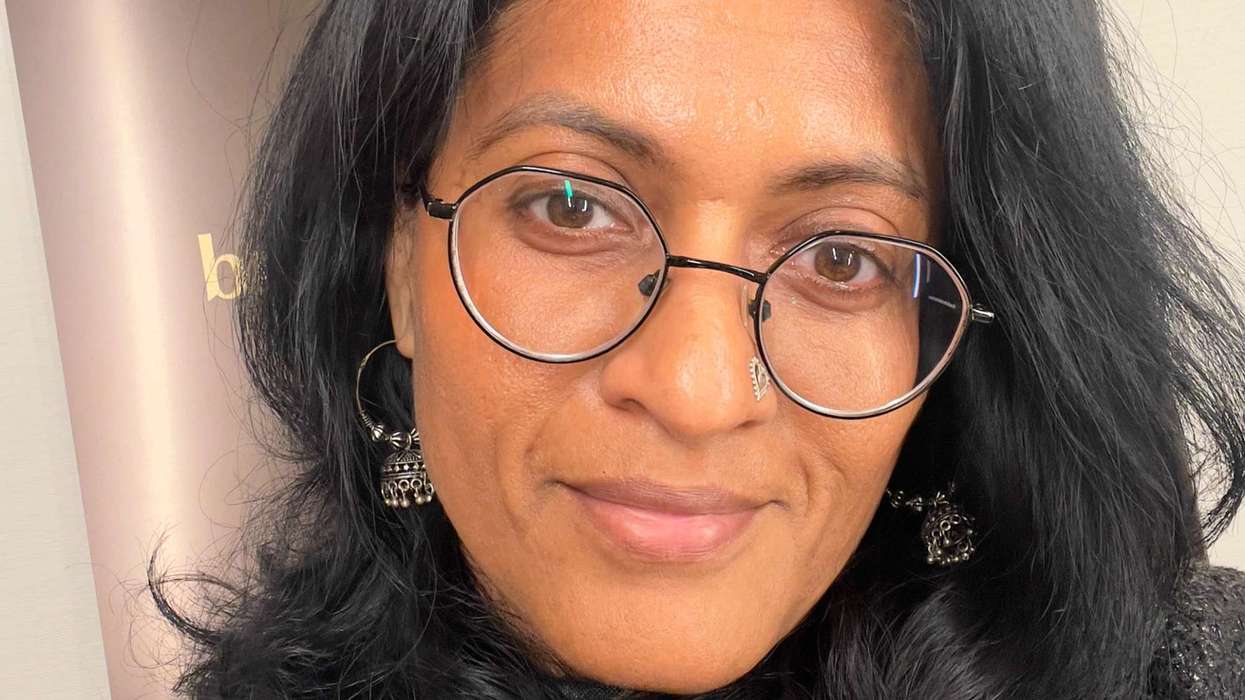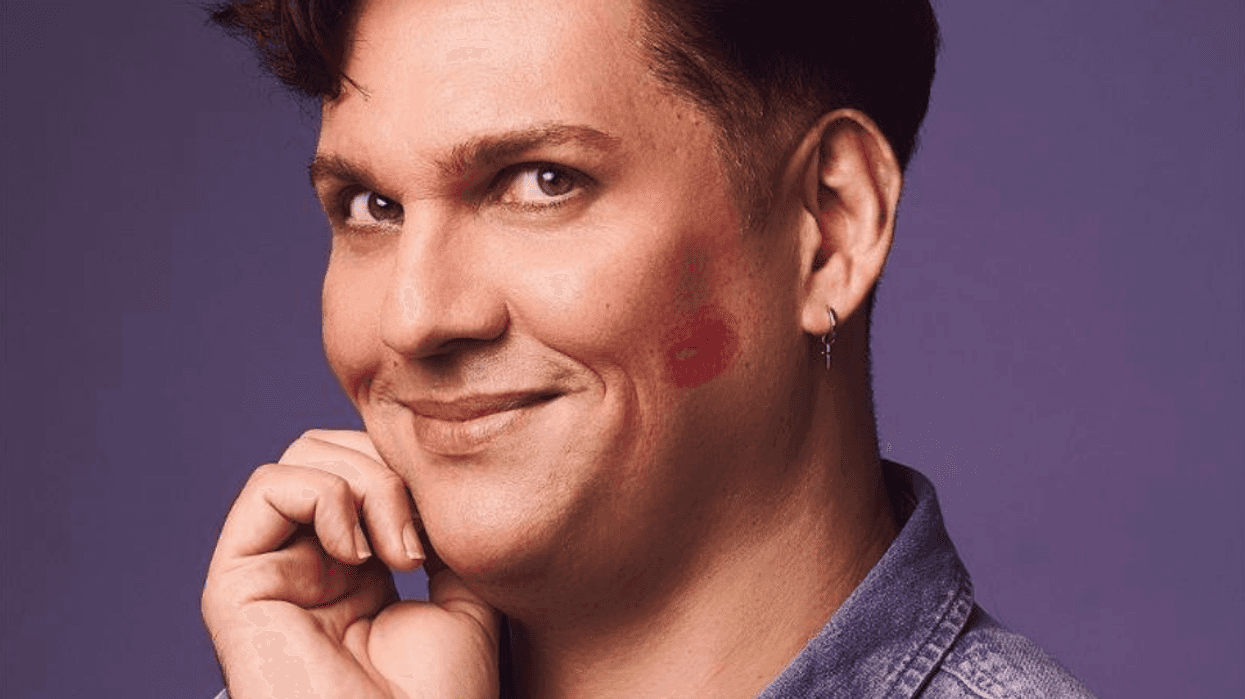

IRISH Indian comedian Dane Buckley said comedy gave him the confidence to embrace his Indian heritage and share stories about his family, as he brings his debut show, Darling, to the Edinburgh Festival Fringe.
The 45-year-old, whose mother is from Cavan in Ireland and father from Kolkata, told Eastern Eye, “Sometimes, when you’re mixed, you feel like, ‘Oh, I don’t have the right to feel Indian, as well. Comedy has made me feel like I have that right. I am half Indian. I do know about the culture.”
Buckley’s family was at the centre of his early attempts at comedy, long before he performed in front of audiences and Darling draws on his Irish-Indian childhood. “I grew up making the women in my family laugh, the kitchen table was the front row,” he said in the show’s publicity material.
Bringing those stories to Edinburgh was “wonderfully full-circle”, according to him.
Buckley’s parents met in London in the late 1970s, and his show focuses on characters and memories from his early years, including his Indian grandmother and Irish mother.
Irish and Indian cultures share some similarities, he said, citing large families, food, music and a history of colonisation and rebellion.
His memories of home were shaped by both cultures, with a busy family kitchen and living room filled with relatives, food and humour.
“When you’re the child of immigrants, from about five years of age, you hear about ‘back home’,” he said.
Buckley recalled the influence of his paternal grandmother, a nurse, from Kolkata who later moved to Mumbai.
She spoke about mango trees and cooking, and made jalebis from scratch.
“The first time I saw her make jalebis, I thought she was magic,” he said.
“I’d never seen anything like it, especially in England. If you see a jalebi being made in a pan, you think, ‘This woman has powers.’”
Those memories have now become part of his stage material. During Darling, Buckley has a photograph of his grandmother behind him and a small toy version of a jalebi.
Buckley, who calls himself the world’s only Irish, Indian, gay comedian, began performing stand-up professionally in 2022. He said the Covid pandemic helped push him towards comedy after years of people telling him he should try it.
His previous employment was in social care, running a day centre for elderly people and working with people seeking asylum in the UK. These experiences, too, influenced his comedy. “When you’re older, you can say what you want. You can be very direct,” he said.
His rapid progress in stand-up included winning competitions early in his career. His fifth gig won at King Gong at the Comedy Store in London, and he also won the Beat The Frog World Series in Manchester in 2022. He later reached the finals of the British Comedian of the Year and BBC New Comedy Awards in 2024, followed by the Sean Lock Comedy Award in 2025.
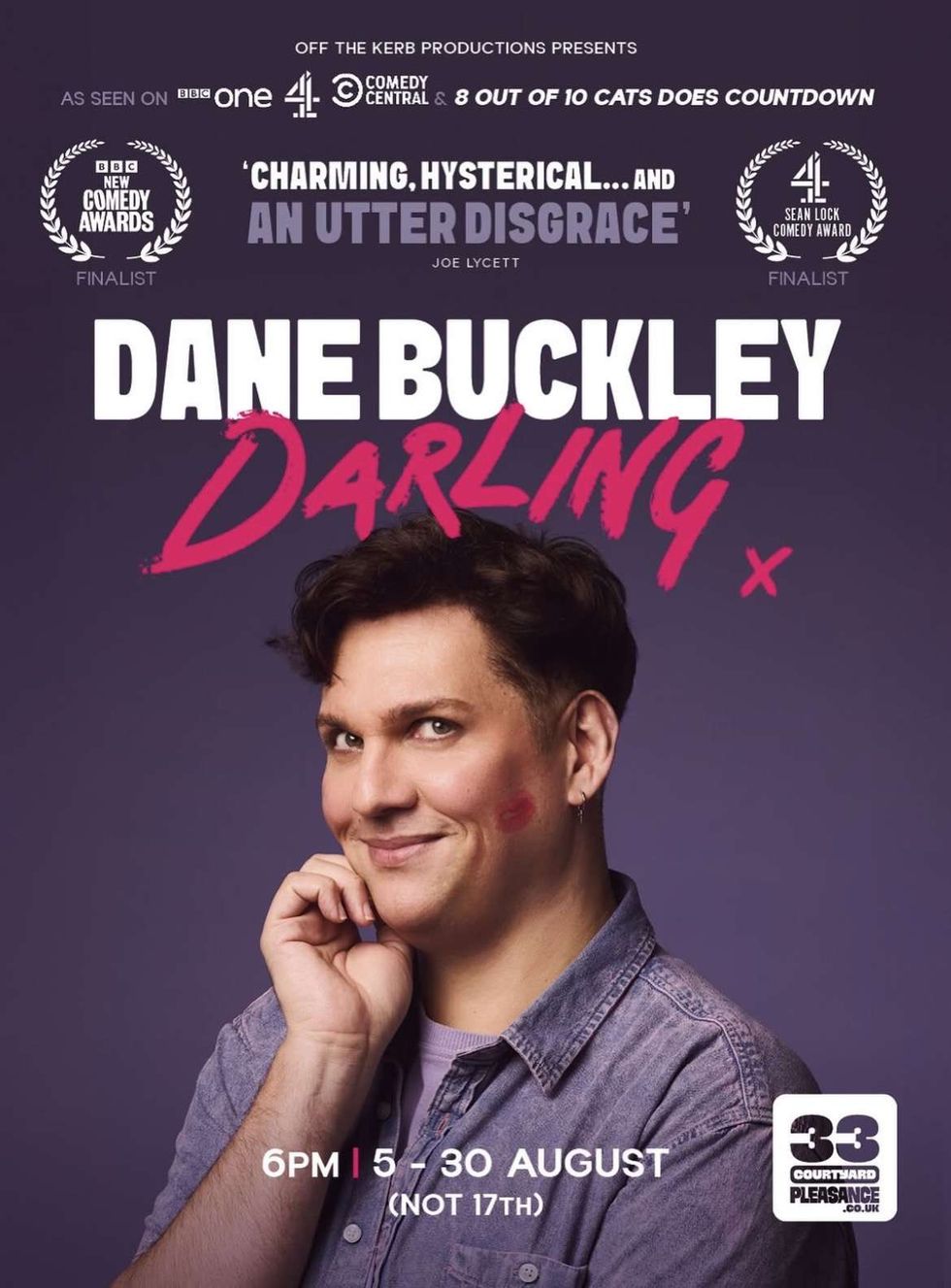 Dane Buckley Matt Crockett
Buckley has supported comedians Josh Widdicombe, Tom Allen, Joanne McNally and Rosie Jones on tour and appeared on 8 Out Of 10 Cats Does Countdown, as well as programmes on BBC One, BBC Three and Comedy Central.
He is not overly concerned with the usual rules of comedy, Buckley said, perhaps because he started out later than many performers.
“I work very hard and go very quickly,” he said. “Because I started later in life, I feel like I have many of the skills.”
Darling is not simply about telling his own story. He wanted audiences who may not immediately identify with him to leave having enjoyed the experience.
“I’m half Irish, half Indian and gay. Sometimes when you come out, you’ll have people be like, ‘Well, I don’t know if I understand this.’ And if you win them over, then they come up to you and enjoy it. I really enjoy that process.”
Comedy can help people deal with difficult moments, Buckley said.
“Humour is the ultimate weapon. In any difficult situation, if you can make someone laugh, it's healing.
“The takeaway is joy, humour, fun. That’s what comedy should be about. It should be escapism; it should be medicine.”
As a child, Buckley said he sometimes felt caught between identities. Older Indian women in his neighbourhood would call him “kacha bacha”, which he explained as meaning “half-baked”.
He now sees his mixed background differently. “I love doing that. It makes me feel happy and proud, and I feel like it’s a superpower as well.”
The Edinburgh Fringe represents an important next step in his career.
Buckley said the response has already exceeded his expectations. His hope is that the Edinburgh appearance will lead to a tour and eventually allow him to take his Indian stories further.
Buckley wants to create a show focused on his Indian side and travel to the country, starting in the north and working his way down to Kerala. He also wants to explore his grandmother’s roots in Kolkata and visit the city’s Catholic Indian community.
“I’m a massive foodie as well, so I have to do it,” he said. “I want to do all the cooking and stuff, so I’ve already been planning.”