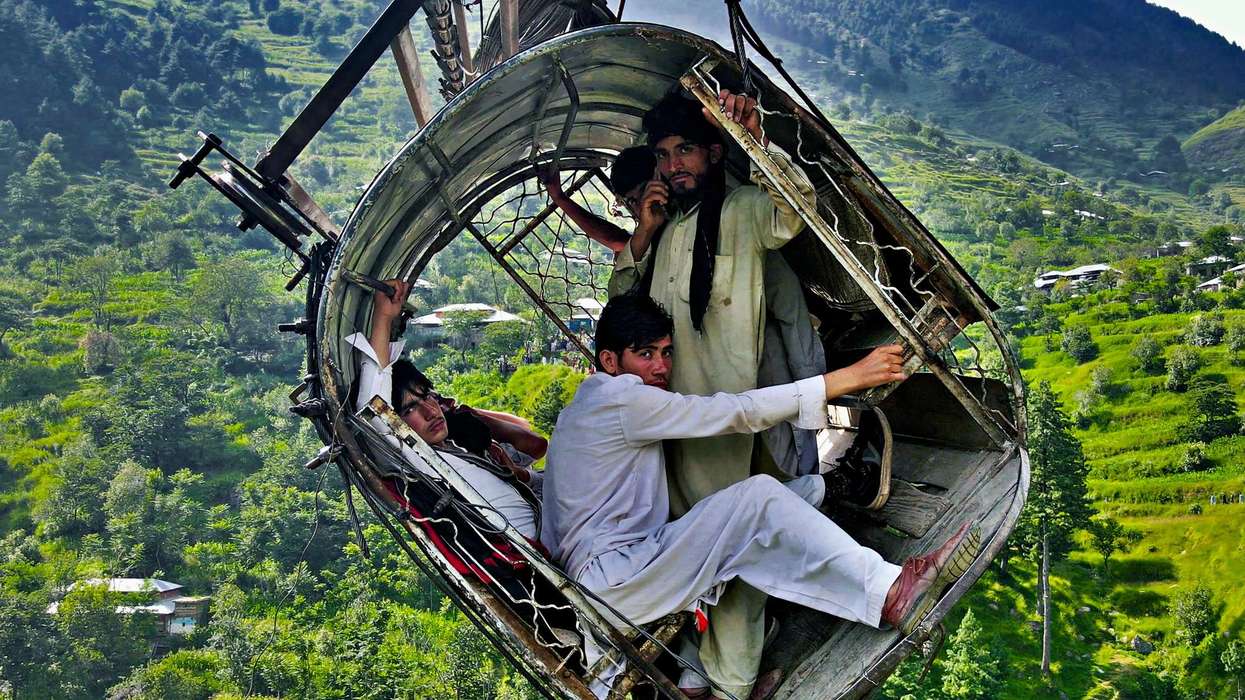

LONG before rescuers reached them, villagers trapped for hours on a broken cable car above a Pakistani ravine understood something about their own survival: the world was only watching because a phone kept filming.
That realisation sits at the heart of Hanging by a Wire, a new documentary from Karachi-born filmmaker Mohammed Ali Naqvi on the 2023 rescue in Battagram, Khyber Pakhtunkhwa region, which opens in UK cinemas this week.
In an interview with Eastern Eye, ahead of the release, Naqvi said villagers told him plainly what those hours of live footage meant to them.
“When this incident happened, maybe if we were not on the news, no one would have cared about us,” he recalled them saying. “But because we put it on the news, people paid attention. Once we were saved, though, everyone left and went about their day.”
Naqvi said that line stayed with him through two years of filming, shaping a documentary less interested in spectacle than in what happens to a community once the cameras move on.
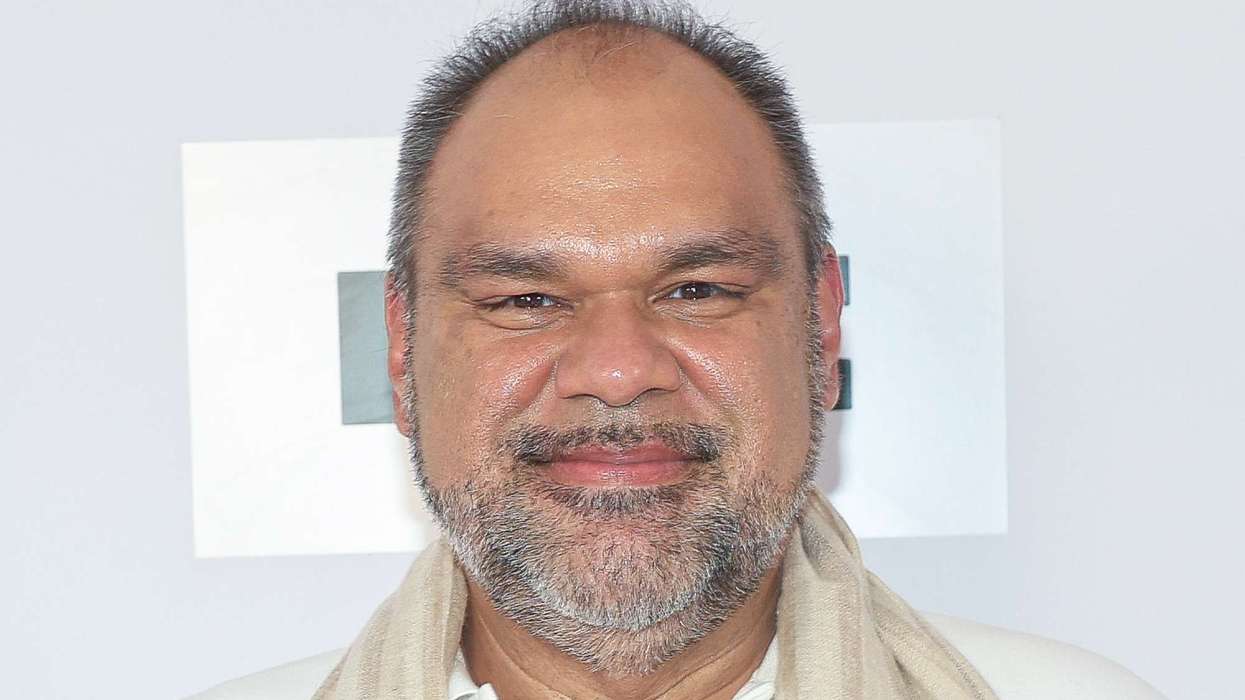 Mohammed Ali Naqvi Manoli Figetakis/Getty Images
He said, “The inherent dramatic turns of events of the day are already there in the plot of what actually happened. But, the universal story is that there’s this community that’s very resilient.”
On August 22, 2023, a cable snapped on a makeshift chairlift carrying six schoolchildren and two adults across a ravine in the Allai Tehsil area of Battagram district, in Khyber Pakhtunkhwa province. Passengers were left dangling roughly 274 metres, or 900 feet, above the ground for more than 15 hours.
Villagers relied on the cable car daily to reach school, a journey that would otherwise take over two hours on foot. Aware that outside help might depend on outside attention, residents began posting footage of the unfolding crisis on TikTok and Instagram themselves, and national and international news picked up the story soon after.
Pakistan’s Army Special Services Group eventually led the rescue, using helicopters and sling operations to bring each passenger down one by one as night fell.
All eight survived, and then caretaker prime minister Anwaar-ul-Haq Kakar later honoured the rescuers at a ceremony in Islamabad.
Much of the footage used in the film, including striking aerial shots, came not from a news crew but from a village resident who runs a jewellery shop and films as a hobby.
“Some of our hero footage in the film, these beautiful drone shots, were shot by a jewellery shop owner in the village who happens to be a drone enthusiast and a YouTube vlogger,” Naqvi said.
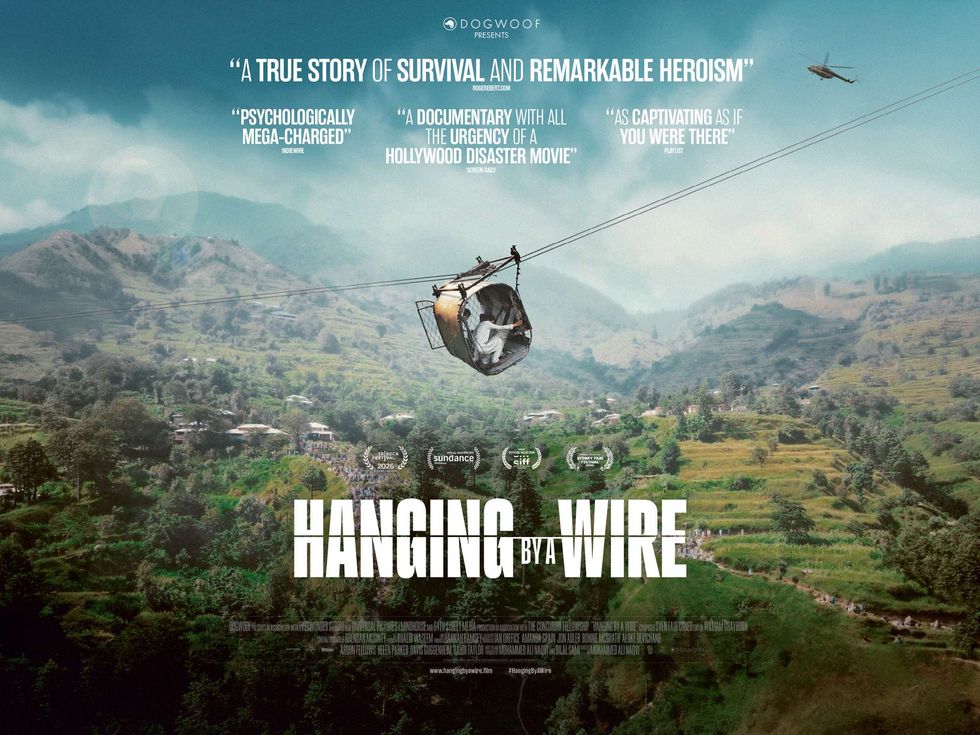 The poster for Hanging by a Wirex
He described the community as already aware of what media attention could do for them, long before any production crew arrived.
The filmmaker, who has made documentaries for almost two decades, said the day’s events already carried their own dramatic shape before he ever picked up a camera. “I was like all Pakistanis – not just in Pakistan, but even in the diaspora and all over the world – who were glued to the TV watching this whole rescue unfold,” he said, describing the day as “an action thriller film” that he felt compelled to tell.
Asked what kind of story he set out to make, Naqvi pointed to the people involved, rather than the drama alone.
“There are exemplary acts of courage and bravery shown not just by members of the community, but by everyone involved in the rescue effort – the police, the rescuers, the community, the family members, the military,” he said.
Quoting one of his film’s subjects, a police officer named Sonia, he added: “When we join hands and work together, we can move mountains.”
Naqvi described the area as remote and largely cut off from regular infrastructure, tucked into the Himalayan foothills of Khyber Pakhtunkhwa.
Locals get around using homemade cable cars strung between mountain tops, he said, calling them unsafe, but essential.
“A journey that takes one minute by cable car would take two and a half hours on foot,” he said, adding that the makeshift lifts as a matter of necessity, rather than choice.
He linked this resourcefulness to a word he says exists in both Urdu and Hindi.
“Jugaar, which means improvisation, or resilience,” he explained, noting it as the quality that let an isolated community solve problems that better-funded places rarely must face.
“I’ve been blown away by human resilience, ingenuity and resourcefulness, and I’ve seen it firsthand,” he said.
“So much of us in cities... take so much for granted, and we never realise how difficult life can be without those basic facilities.” That gap between attention and follow-through is what Naqvi hopes the film can help close.
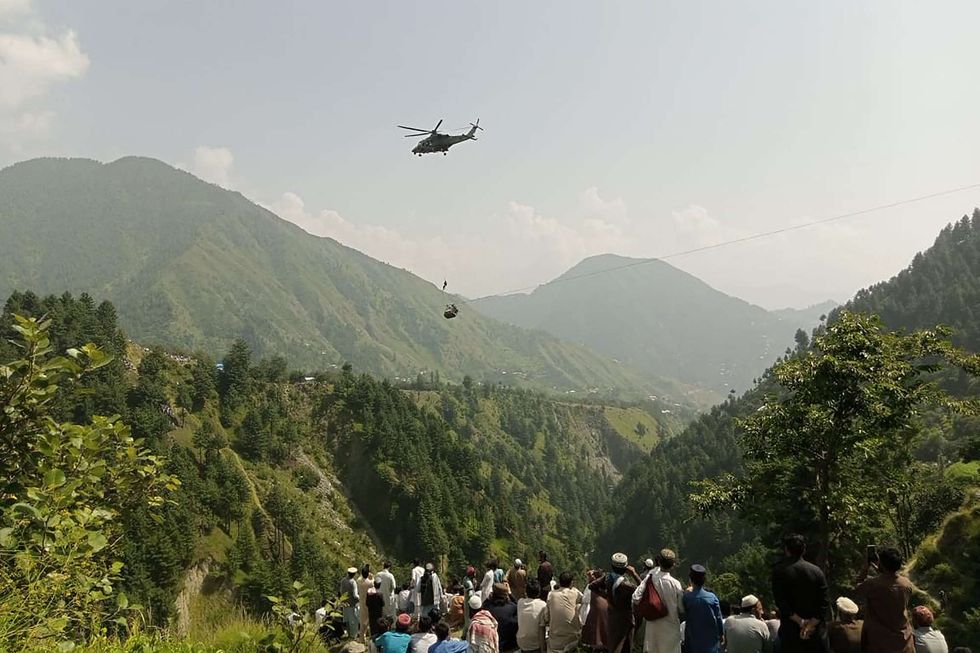 People watch as an army soldier descends from a helicopter during the rescue operation in Khyber Pakhtunkhwa AFP via Getty Images
He is now working with a Seattle-based nonprofit, One Good Act, to fund schooling for the survivors and small infrastructure projects in the village, drawing on donations from the Pakistani diaspora in north America and Britain.
“Almost all documentaries carry an implicit social justice message, and that’s always been the case for me,” he said, calling the film an “advocacy piece” that might do more for the community than a single news cycle managed at the time.
Filming took place over roughly two years, beginning a few months after the incident in 2023 and continued through phases in 2024 and 2025. “Documentaries are always a phased approach,” Naqvi said. “It’s not like scripted production where you do it in one go. It’s more spread out.
“Villagers haven’t seen the final cut, but while it was being made, they saw different iterations of it, like earlier rough cuts.”
Hanging by a Wire, which has a run time of 77 minutes, was premiered at the Sundance Film Festival earlier this year.
The film opens in Montreal for a week before its wider north American release in New York on Friday (28), with a streaming date expected later this year and further international rollouts planned for Asia, the Middle East and south Asia, including Pakistan.