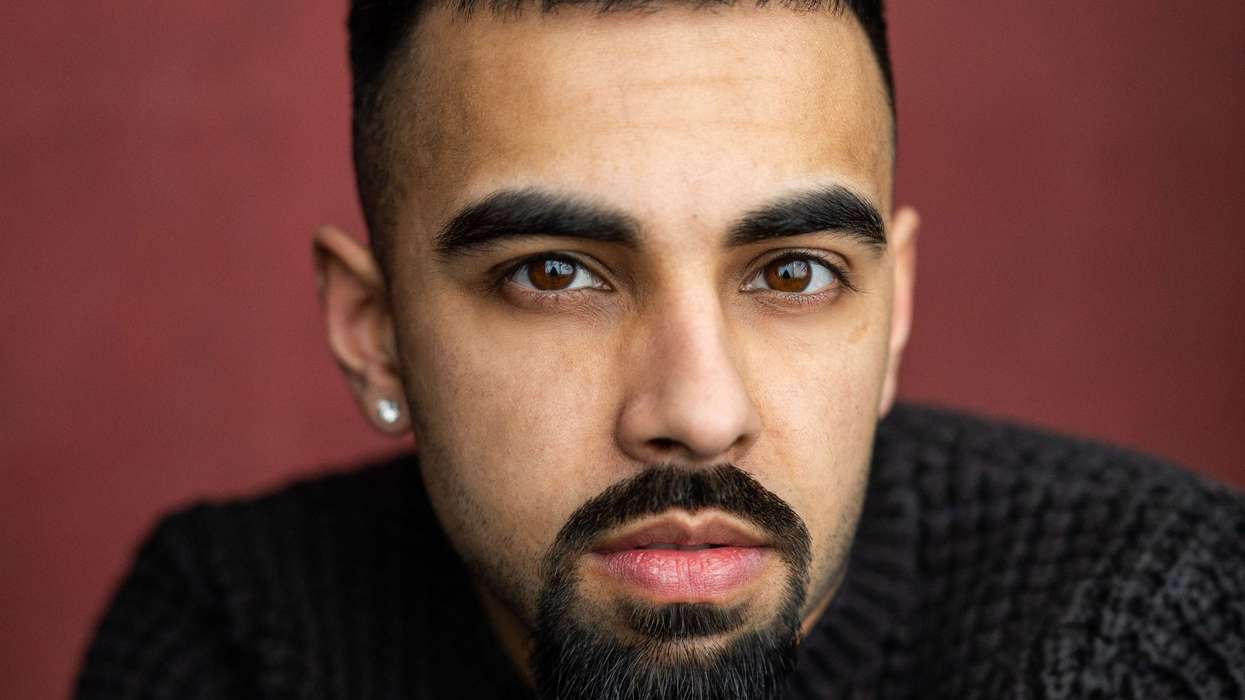

ACTOR Amar Chaggar said his latest film, Never Had a Chance, aims to bring difficult subjects within the British Asian community into the open.
Set for release on Friday (14), the Hounslow-set independent drama explores crime, family breakdown, domestic violence, drugs, mental health and gambling against the backdrop of the west London suburb’s Punjabi community.
“When we look at a lot of British south Asian stories, they are often more romance- or comedy-based, and sometimes quite slapstick,” Chaggar said.
“This film was an opportunity to say, it’s time we make some noise about the problems we’re facing,’ and hopefully create positive change moving forward.”
The film follows Ravi (Chaggar), a man with a criminal record who is trying to move away from his past and build a more stable life.
Chaggar described his character as someone who is “down on his luck” and wants “a sense of normality”.
His attempt to change track from his criminal past is complicated by his relationships and by the people around him.
When Ravi meets Suki (played by Tina Sharma), he begins to see the possibility of having the family life he has lacked.
“He finds that safety net and that sense of family (with Suki),” Chaggar said.
“He then wants to build that… that leads him to want a future with a family of his own.”
Chaggar, 30, grew up in Kent, but said he spent time living in Hounslow and has family and friends there.
“I understand what the community is like and how life is there for people in their 20s, 30s and 40s,” he told Eastern Eye.
Chaggar stressed that Never Had a Chance is not a true story, although some of its moments reflect situations that have parallels in real life.
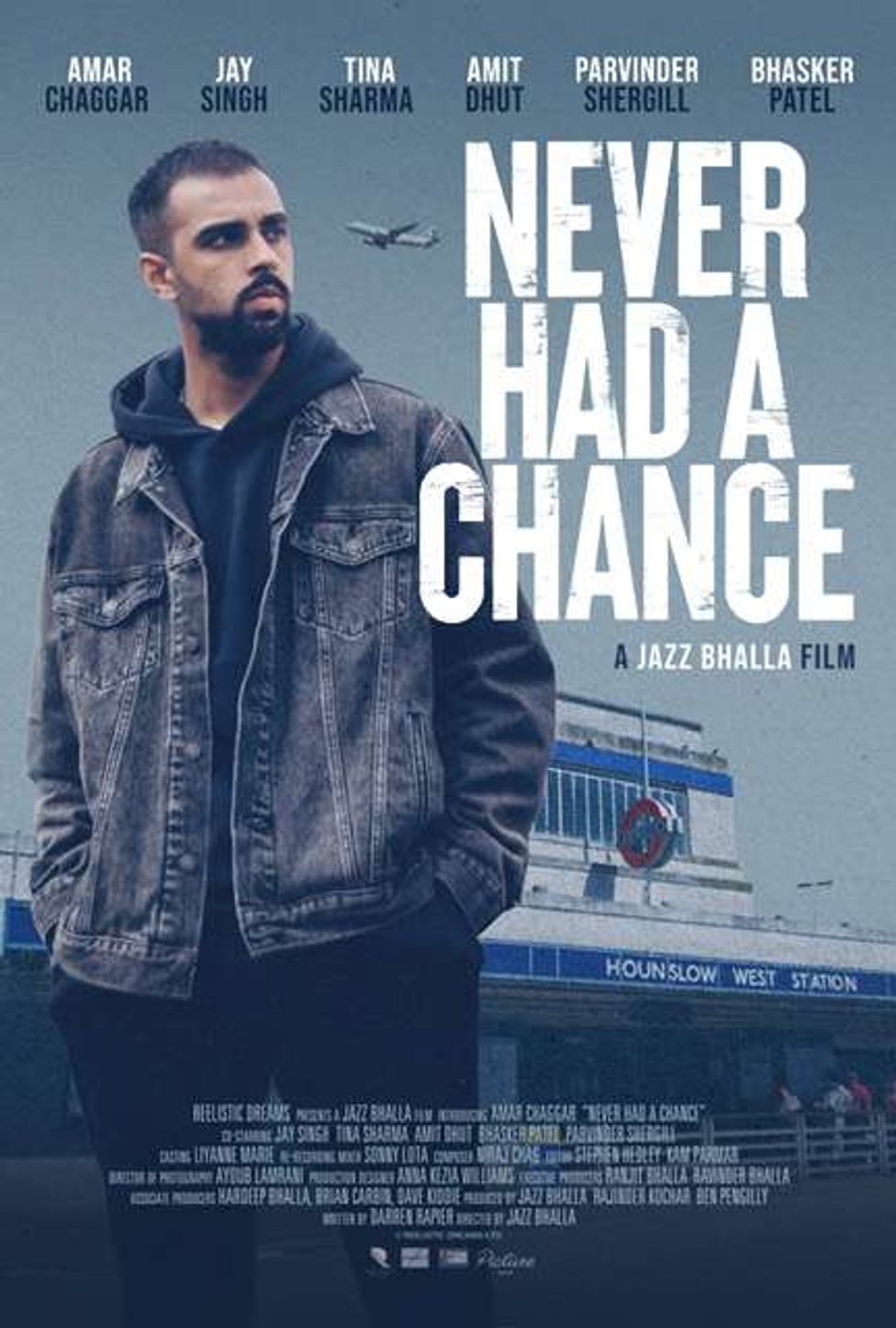 Movie posterEastern Eye
The film received recognition on the festival circuit, including a Best First Feature win at Kingston International Film Festival and Best Feature at London Independent Film Festival.
It was also shown at the UK Asian Film Festival, LightReel Film Festival, British and Irish Film Festival Luxembourg and Northampton Film Festival.
Chaggar said the response surprised him because the team initially faced difficulties getting interest from parts of the industry and from distributors and festivals.
That experience left him with few expectations about how audiences would respond. “I wondered what people were really going to think about it,” he said. “Does the film carry weight? Are people able to take something away from the story? Does it change their perspective or lead to a conversation with a friend?”
Following screenings at festivals, the actor recalled meeting members of the audience, with some becoming emotional while others responded with laughter and enthusiasm.
For Chaggar, the response also highlighted the need for more British Asian stories that deal with a wider range of experiences. He said south Asians were still not represented enough in the British film and television industry and that, when they were represented, they could be confined to particular roles.
“We are often seen as a one-dimensional market,” he said. “What a lot of the big productions do not realise is that we have very powerful stories, too... that should be told, and that need to be told.”
He said there is an audience for such stories not only in Britain, but also internationally. “There is also a big market for these stories in the UK, the US, Canada and India,” he said. “It is a market that should definitely be capitalised on.”
While he believes representation is beginning to improve, Chaggar said the industry still had further to go.
“We are starting to gain some momentum. We are seeing more stories being told, more filmmakers creating projects and more people wanting to become actors in the industry,” he said.
“But I still feel like maybe we are 10 or 15 years behind, and we still have a lot of room to push forward.”
Music is another important part of the film’s depiction of west London. Its soundtrack draws on British Asian music and dub influences, with elements of Punjabi music, hip-hop and rap.
Chaggar said the soundtrack reflected the environment in which the story is set.
“The music choice was incredible; it was very truthful to how Hounslow is as a community,” he said, adding, “In Hounslow and west London, there is a lot of dub, Punjabi music, hip-hop.”
Chaggar hopes audiences will judge the film on the story it is trying to tell and recognise that British Asian productions can reach beyond their immediate communities, as well as encouraging people to talk about problems that can otherwise remain unaddressed.
Never Had a Chance will be released in select cinemas nationwide on Friday (14)