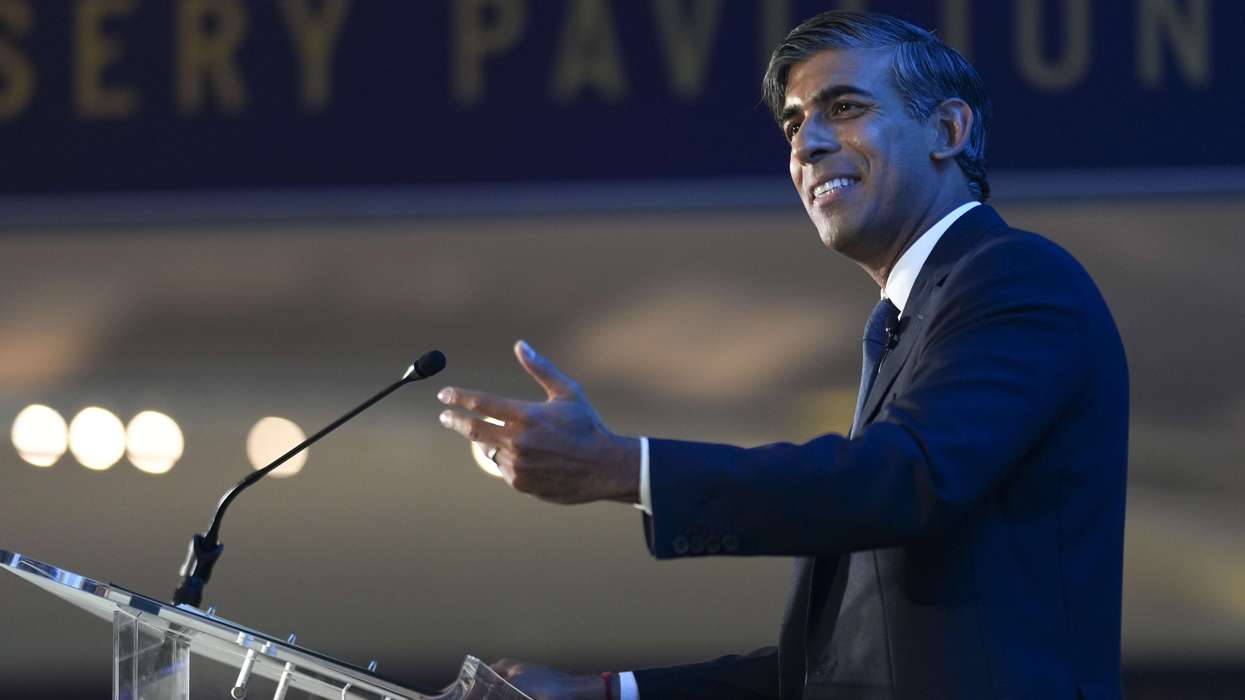

Cricket can help to prevent society dividing along ethnic lines, former prime minister Rishi Sunak said while delivering the prestigious MCC Cowdrey Lecture at Lord’s.
Speaking passionately about the unifying powers of cricket, Sunak said: “I passionately believe that cricket can and does bring us together. This sport is almost unrivalled in being played by nearly every ethnic group in Britain, and this matters because to sustain our democracy, we can’t just live side by side. We have to live together, and that means playing together, too.”
Speaking to an invited audience in the Nursery Pavilion on Thursday (17) – the lecture was streamed live – Sunak, who remains the MP for Richmond and Northallerton in north Yorkshire, pondered: “When I think of my own adopted county of Yorkshire, what is the shared passion of my largely white rural constituents in the Dales and the inner-city British Asian kids in Bradford? Cricket.”
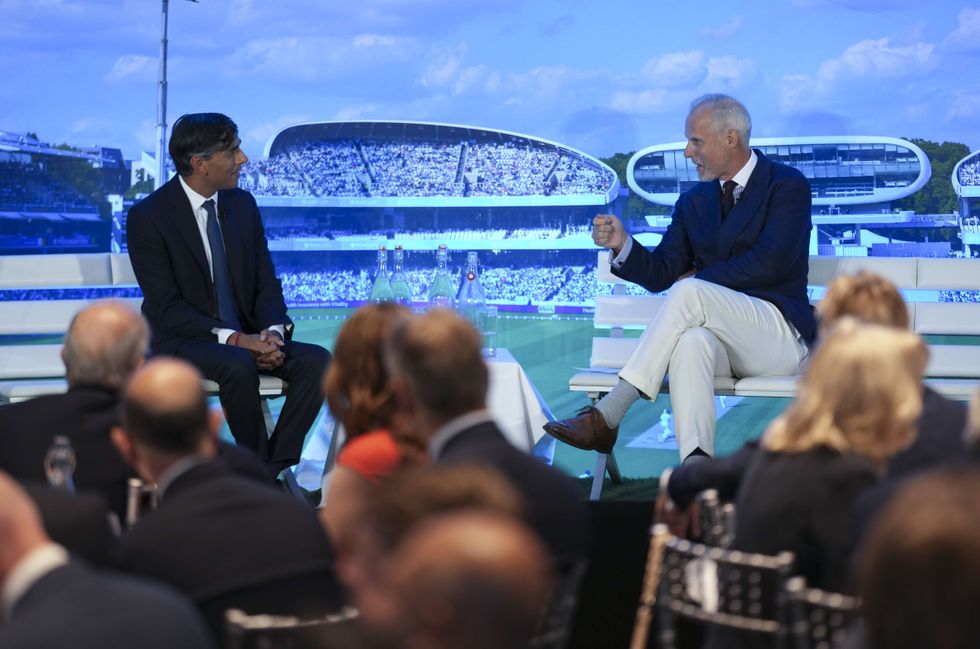 Rishi Sunak in conversation with Ed Smith. MCC-Jed Leicester
He went on: “Our game is a bridge that can draw people together in spite of the many forces trying to drive them apart. In office, I became increasingly worried about how divided our society was becoming.”
He pointed out: “In Britain, we have created the most successful multi-ethnic, multi-faith democracy in the world. But it would be foolish and dangerous to Ignore the fact that this achievement is under real threat. There are worrying signs that our politics is becoming more polarising than ever, and we must ensure that it doesn’t divide along ethnic lines. Or our great achievement won’t long endure.”
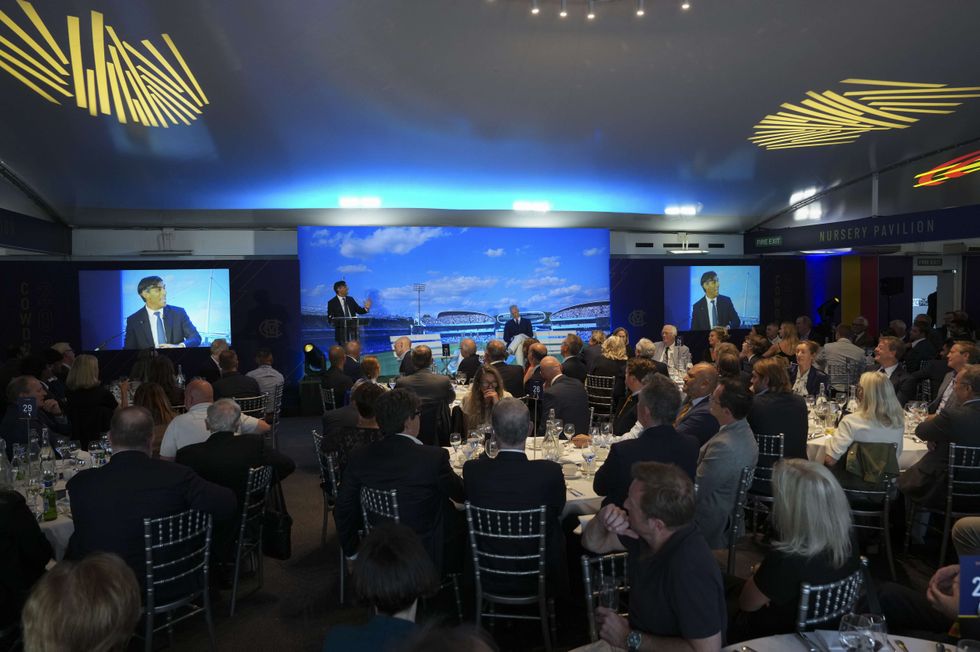 Rishi Sunak gets attentive audience while delivering Cowdrey Lecture. MCC-Jed Leicester
The MCC Cowdrey Lecture, formerly referred to as the “Spirit of Cricket Lecture” is an annual event organised by MCC and hosted at Lord’s Cricket Ground.
The event is named after Lord Cowdrey, the former England captain who is credited with initiating the “Spirit of Cricket” – an outline for fair play that was later added as the official Preamble to the Laws of Cricket.
Colin Cowdrey passed away in December 2000 and in his memory, the Cowdrey Lecture was born. The first Lecture took place in 2001 and was delivered by the great Australian captain and commentator Richie Benaud.
He has been followed by, among others, Sunil Gavaskar, Clive Lloyds, Geoffrey Boycott, Imran Khan (now languishing in a jail in Pakistan), Kumar Sangakkara and Brian Lara.
As the first chairman of the ICC, Cowdrey encouraged the world’s cricketing nations to embrace the spirit of cricket, and thanks to his efforts, the MCC resolved in the preamble to the laws of the game “to uphold everything that is good about the sport. The spirit of cricket was never meant to dampen the competition or the will to win, but to encourage players to respect each other, respect the umpires and respect the supporters who love the game the way they do.”
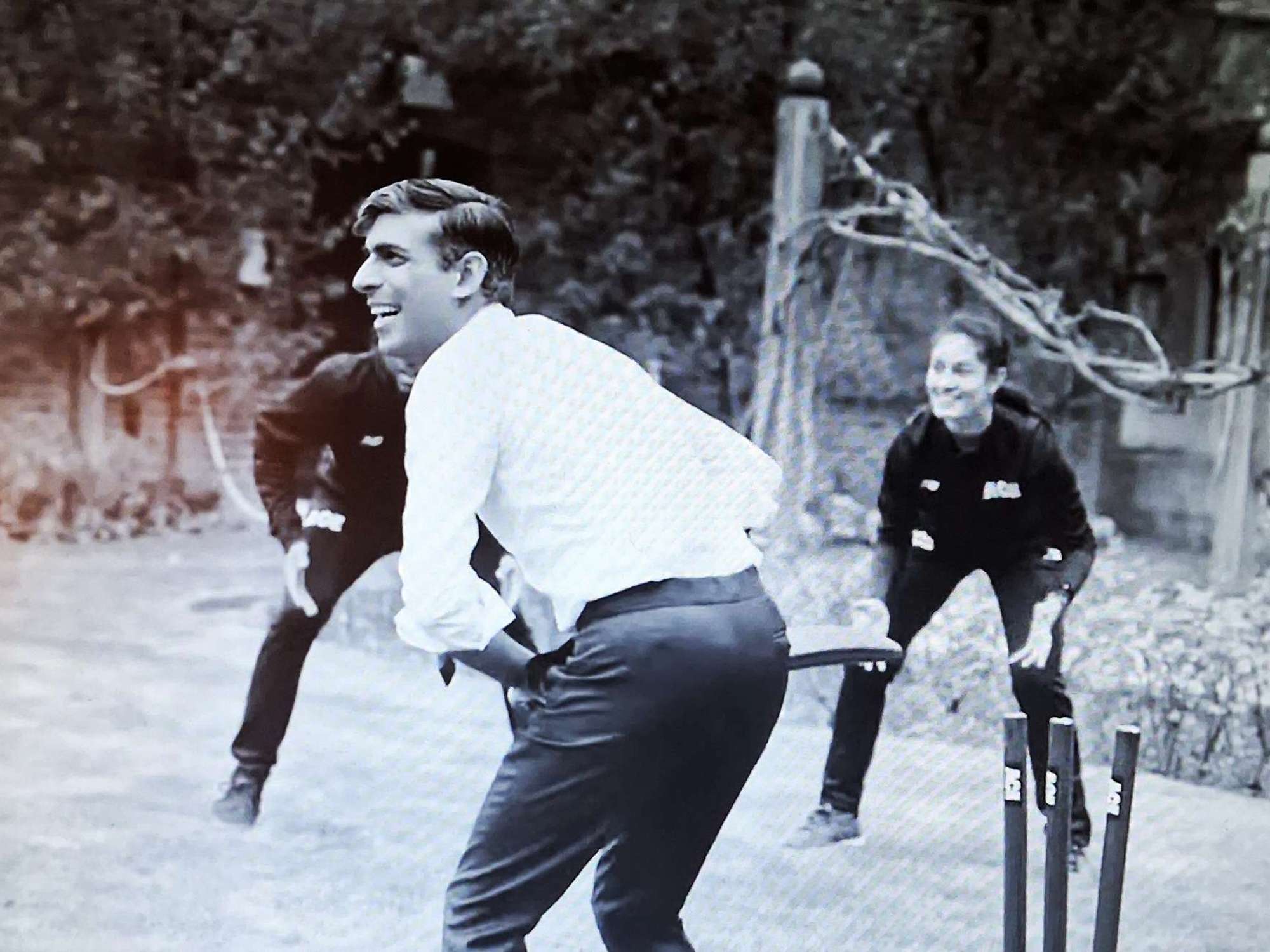 Rishi Sunak playing cricket in the garden at 10 Downing Street. Amit Roy
Sunak spoke not only about his love of the game but also how getting away for the occasional net practice at The Oval eased the stresses of life in 10, Downing Street. Still only 46, he sounded statesmanlike in his speech which was well received by the audience.
Sunak said: “We need a renewed commitment from every section of society to our national values. At a minimum, that means embracing the fact that we will abide by the rule of law, that change in this country only comes about through peaceful, democratic processes. But this is the very least we should expect. People in our country should also live by the values that have so long defined our national character – decency, respect, tolerance, fair play. That is the spirit of our country.”
“And to truly flourish as a society, we need to retain a shared pride in our past and build confidence in our future,” he continued. “Now, I don’t pretend for a second that cricket alone can deliver this. I know some will say that cricket has had its own issues with racism and so can’t fulfil that role.”
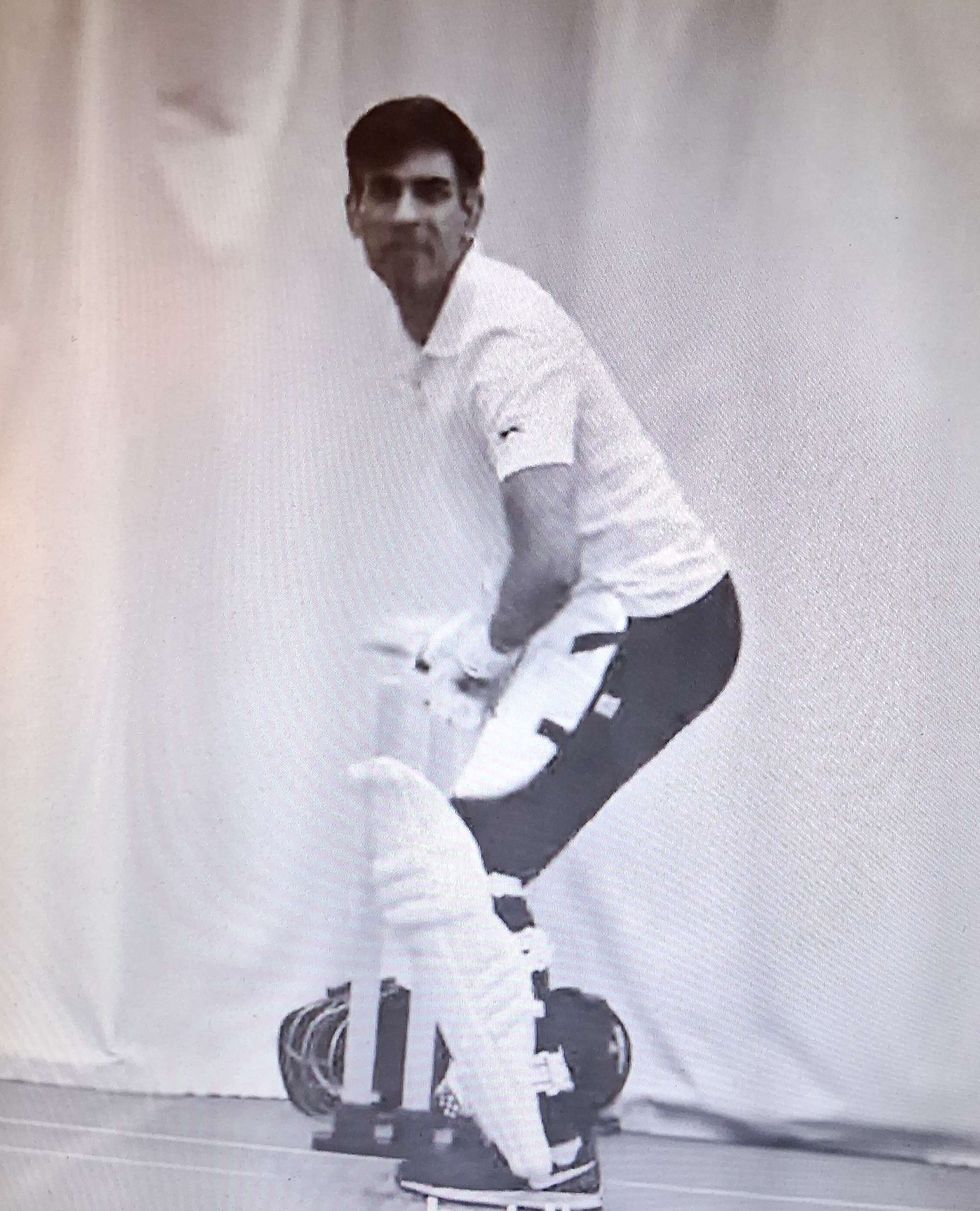 Rishi Sunak batting at The Oval. Amit Roy
Referring to the Yorkshire racism scandal surrounding the Pakistani origin player Azeem Rafiq, he admitted: “There has been hurt caused, and the game, including in my own adopted county, hasn’t always handled it perfectly.”
He suggested: “We shouldn’t minimise that, but learn from it. Yet I passionately believe that cricket can play an important part in bringing people together. And we should also remember the great progress that the game has made. Look at all the matches around the country where you see people from different backgrounds playing the same game. But we must tackle what one might call the reverse ‘Tebbit test’.”
The late Tory politician, Norman Tebbit, wondered why UK-born Indians and Pakistanis invariably supported their parents’ country of origin.
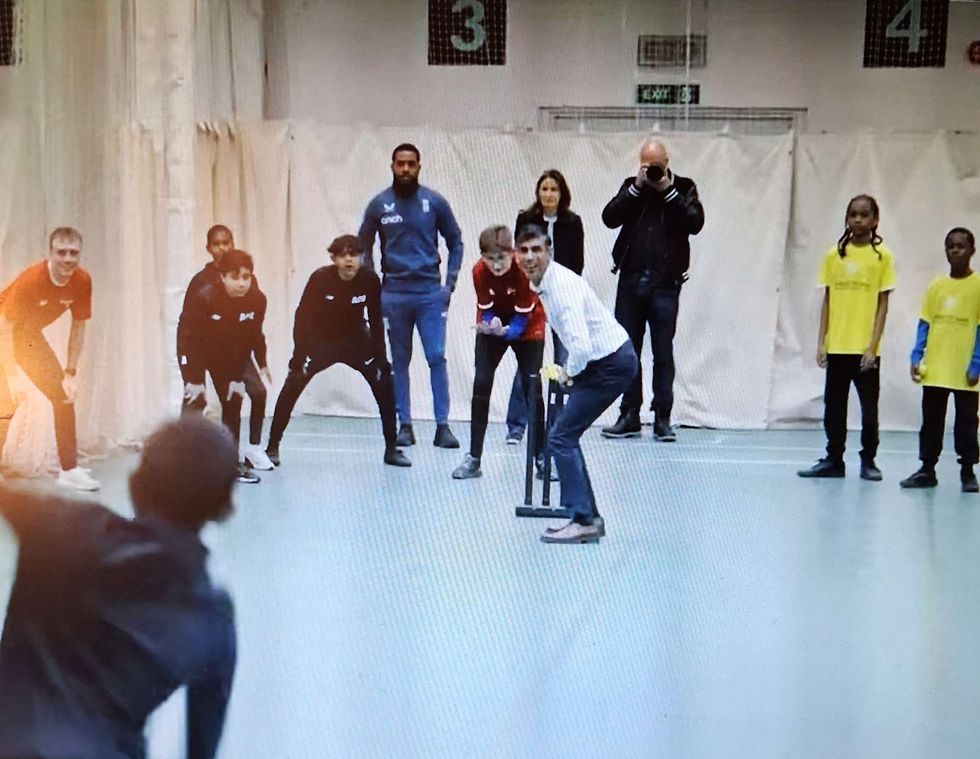 Rishi Sunak batting at The OvalAmit Roy
In 1990, Tebbit said in an interview: “A large proportion of Britain’s Asian population fail to pass the cricket test. Which side do they cheer for? It’s an interesting test. Are you still harking back to where you came from or where you are?”
The following year, Tebbit said that he did not think certain immigrant communities would assimilate “because some of them insist on sticking to their own culture, like the Muslims in Bradford and so forth, and they are extremely dangerous”.
What has changed in the last 30 years is that many British black and brown players have been part of the England team, among them Jofra Archer, Adil Rashid and Shoaib Bashir. Nasser Hussain, born in Madras (now Chennai), became England cricket captain.
Without referring specifically to Nigel Farage’s Reform party and supporters of the far right, Sunak observed: “I was born in Southampton and grew up supporting England. They are my team. But in recent years, there seems to have emerged a view that refuses to accept that anyone who isn’t white can be English. They want to deny me my Englishness. Now I feel secure enough in my identity that these voices don’t bother me personally, but I do worry about what this debate says to our children today.
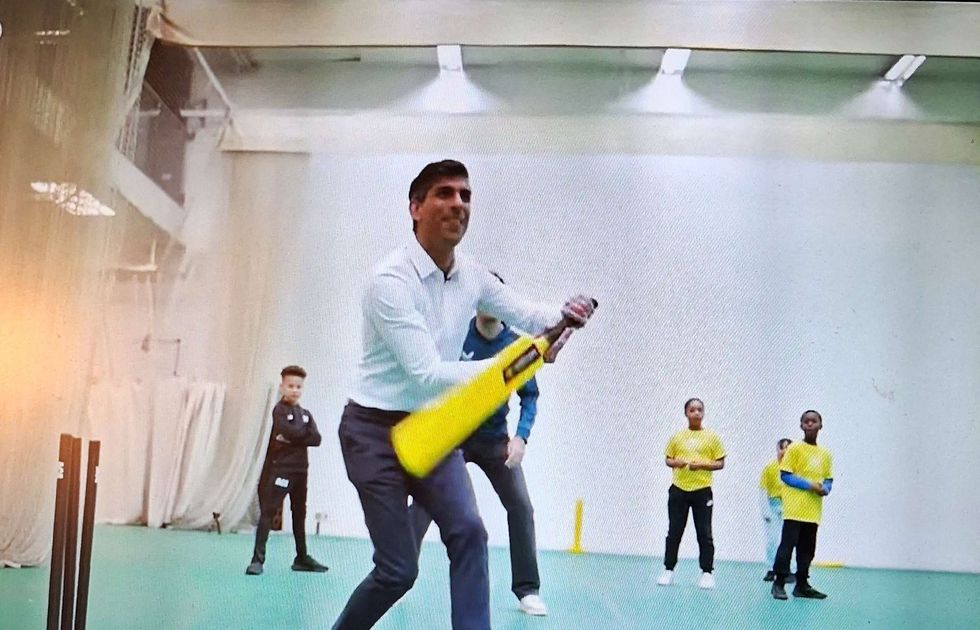 Rishi Sunak batting at The Oval.Amit Roy
“How many will hear it and feel rejected? And we must recognise where that can lead and be clear that cricket obviously has no truck with this attitude. For all the criticism of the Tebbit test, in fact anyone can pass it.”
“But this new (reverse Tebbit) test sets people up to fail,” he stated. “It is, by definition, impossible for a non-white person to pass it, regardless of their patriotism, regardless of how well they’ve integrated. It is a recipe for alienation for a two-tier society. I want every child in every playground imagining they are playing for England, and that vision is possible. For me, cricket, more than any other sport, is the greatest social integrator, and this club (MCC) has come a long way since the days of gentlemen and players.”
He talked about England’s current players: “Take a recent England ODI team, for example. There were as many state school kids, as boys who’d benefited from private education. There were black, brown, and white faces, players whose families came from Kashmir, Barbados, and Zimbabwe, as well as Yorkshire and Surrey, all dedicated to the team, all dedicated to representing England. That’s what the spirit of cricket does, but we do need to do more in sport and in politics, to bring people together, and make sure that the ideal of England, which so infuses the spirit of cricket, persists not just today, but in the decades ahead.”
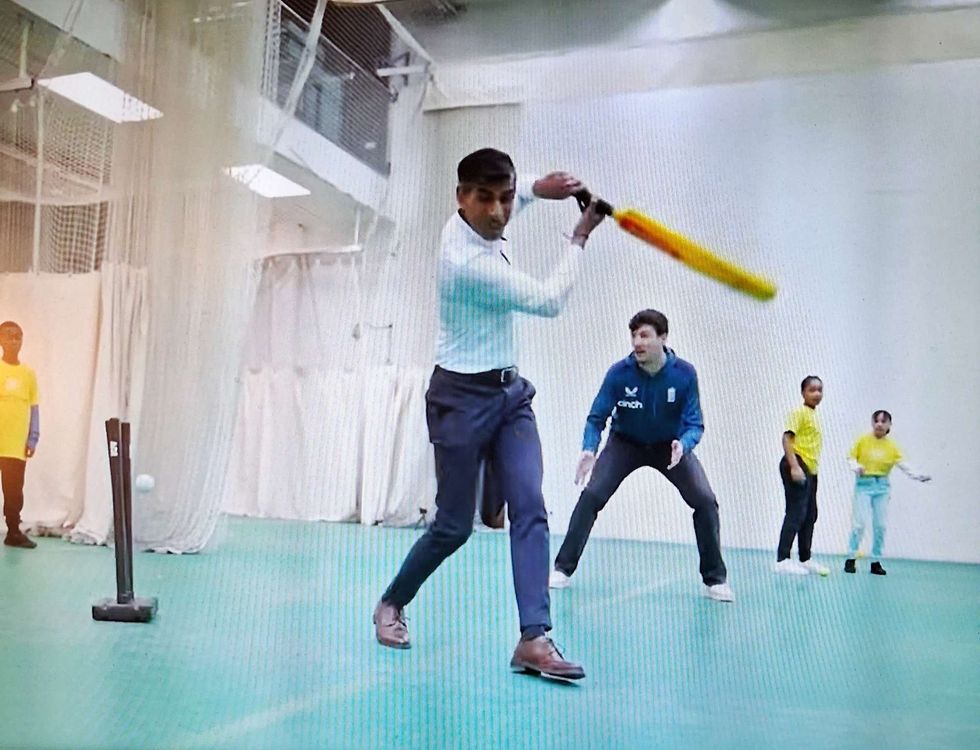 Rishi Sunak batting at The OvalAmit Roy
Sunak concluded with a final reflection: “The importance of sport to our society will only grow in the coming decades. In my professional life, I spend a lot of time thinking about how artificial intelligence will transform our economy and our lives. It will bring about more profound changes than any of us have ever lived through. But it will also make us crave things that are real, that are shared. Sport is one of them, and our responsibility is to keep cricket at the heart of what people turn to when they seek what grounds them and connects them. And that means everyone in our great country.”
He emphasised: “I believe cricket can be the most welcoming of sports played by everyone everywhere – a truly national game. And if cricket can produce England teams in which every kid, rich or poor, urban or rural, black, white or brown, girl or boy, can see themselves, the impact will reach far beyond the boundary. It will make our national teams even more of a unifying force than they already are. It will make our society stronger and more united, and it will help bring this England, our England, together.”
It is perhaps ironic that Sunak limped on to the stage with the aid of a crutch but he laughed as he explained: “You saw me hobble up, and at my age, I’m beginning to think that it’s safer to be talking about sport than actually playing it. My attempt to keep up with my two teenage daughters (Krishna and Anoushka) on our Easter ski trip has ended up in not one but two knee surgeries.”
Before the lecture, the audience were briefly shown footage of Sunak in the nets at The Oval and playing cricket at the back garden at No 10.
Sunak said his lecture had been inspired by the conversation, “View from the Boundary”, he had with the BBC cricket correspondent Jonathan Agnew at the TMS (Test Match Special) box at Lord’s in July 2023.
“Now, I can’t speak to you this evening with the authority of a former player, but I can speak with the love of a lifelong fan,” he said. “So many of my happiest memories involve this great game. My first experience of it was at Hampshire at the county ground.”
He said: “My favourite day as prime minister involved cricket, too. We had the crunch parliamentary vote on the Windsor Framework. It was a deal that we negotiated with the EU to resolve the issues around Northern Ireland. There was lots of talk in Westminster about a big Tory rebellion that would be as predictable as an England batting collapse. But we ended up winning that vote very comfortably, and the rebellion didn’t really materialise. And I went straight from parliament that day to Downing Street to meet the England cricket team, who had just won the T20 World Cup.”
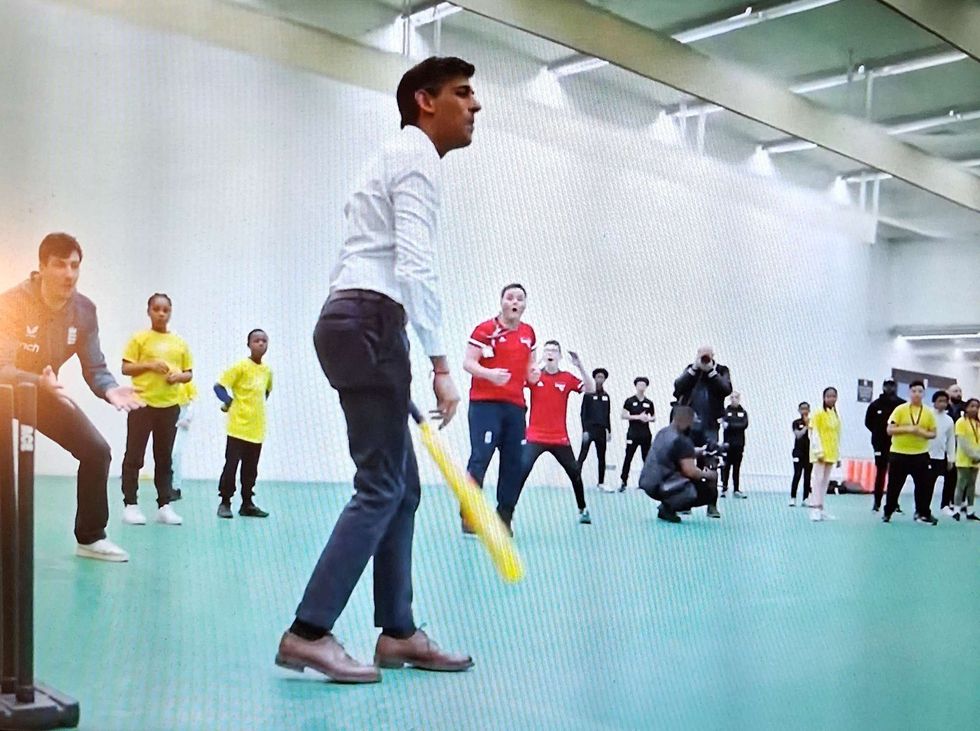 Rishi Sunak batting at The OvalAmit Roy
He thought he was “batting pretty nicely” in the back garden game.
“And then I was bowled by a 10-year-old, and given how many people in India have now seen that video, that lad is definitely going to get an IPL contract,” he joked.
He paid tribute to Cowdrey (who was known for his perfect cover drives), “the first ever player to score 100 against every other Test-playing nation, home and away”.
“We remember him for his commitment to the spirit of cricket,” commented Sunak. “He embodied and defined the decency and the dignity of our game. It’s a fitting tribute to Colin that so many legends of the game have come here to speak in his memory and in the spirit that he intended.”
Speaking of his own experiences at No 10, he said: “Well, when I was in Downing Street, I used to occasionally get away for a net at The Oval. Trying to hit some cover drives was a good way to clear my head.”
He produced a ripple of laughter with the quip: “I also found there was less treacherous spin at the Oval than Westminster.”
He recalled: “Training at the same time as me, were some kids who always impressed me with their dedication and their temperament, and they were from the ACE programme, a significant effort to boost cricket in the black community. Founded by Ebony Rainford-Brent, it is already helping to produce professional players who have represented our country in age group cricket, but as Ebbs herself said, this need to make cricket more available and more accessible as this is far from an issue limited to ethnic minority communities.”
He also said: “I remember sitting with (fast bowler) Jimmy Anderson in the Cabinet Room as he told me about how there was no cricket played in his state school, and he would have been lost to our sport if it had not been for his parents’ determination to get him into Burnley Cricket Club. And we must ensure that we don’t miss out on the next Sir Jimmy.
“So, the England and Wales Cricket Board is working hard with ACE, the Lord’s Taverners, the South Asian Cricket Academy, Chance to Shine, and the MCC to take cricket to a million more primary school children. And the ECB’s Cricket Domes programme (to build indoor facilities) holds genuine promise, both in terms of widening participation and providing a solution to that most intractable of problems: our weather.
“Cricket domes across the country would let more people play cricket and ensure that they can practice together all year round. And the popularity of the three domes that have already been built so far shows just how much demand there is. And now we have a new cricket-loving prime minister, I would urge everyone to push the government to fully restore the funding we announced for this programme back in 2024.”
He said: “As a cricket-loving father of two young girls, I’m also particularly delighted by the rise and the rise of the women’s game. And one of my best girl dad moments came taking our eldest daughter to the women’s T20 World Cup final here at Lords, and I know that this summer’s Test here at the home of cricket (when Indian women made history by beating England) was the first of many. It is superb that cricket is no longer just seen as a boys’ game, (and) that girls want to play it. And having women’s cricket on the BBC in the school holidays, can only help entrench the progress we’ve made.”
Sunak was introduced as the evening’s speaker by the MCC’s president, Ed Smith, 49, who played county cricket for Kent and Middlesex, which he captained, and 3 Tests for England. He got a double First reading history as an undergraduate at Peterhouse, Cambridge, but also scored a century on his debut for the university.
In conversation with Smith, the former prime minister said he had enjoyed “a lovely, lovely childhood really” following cricket. At the age of 12, he was cricket captain at Stroud School, a preparatory school in Romsey that he attended before going on to Winchester.
He wished that when he was prime minister, he had taken more time off for nets at The Oval to achieve a better work-life balance.
“When I look back at my time, I didn’t do enough of it,” he confided. “My wife (Akshata Murty) had a nice way of putting this. There’s a passage in a book about Lord Buddha, and he was he was talking about finding balance in your life, and he was comparing it to a lute, a kind of old small guitar. He said if the lute string is too loose, then it doesn’t play. But if it’s too tight, then it snaps. And looking back on my time as prime minister, I probably was that lute string tuned a bit too tight.
“I was really focused on everything. It wasn’t an easy time, and I didn’t escape enough. Actually, if I was giving advice to myself, going back a bit, I would say you’ve got to carve out the time in any of these demanding jobs to get away and focus on something completely different. It just clears your mind; it helps you think more freshly and appropriately about the big decisions you’ve got to make. I always thought another hour of work would make the difference. That’s how I was built. But I’ve realised over time I would have been better off not with another hour of work. I would have been better off – and not in a frivolous way – going to do another hour of net. That’s the kind of advice I’d give myself looking back.”
Asked whether there was any way he could have prepared for the job of prime minister, he thought not: “When I was chancellor, you’d think it would be the best possible preparation for being prime minister. (It’s the) second most important job in the government. You live in Downing Street, so you’re used to all of that.
“And, actually, when I was chancellor, Boris (Johnson) was very good at involving me in everything. I saw up close all the information he was getting. When I ended up being prime minister, one thing that surprised me was how big a jump it was.
“Part of me thought, well, I’ve kind of done this next most important job. I've seen most of it up close. It won’t be that different, but it really was. And the reason is at the end of the day, everyone else can give you a piece of advice and all the rest of it, but they all leave, and the decision sits with you. And I felt that probably most acutely, which nothing really prepares you for.
“I was making a decision about whether to provide long-range missiles to Ukraine – they call them Storm Shadow missiles. And, at that point, everyone was very worried about whether if we did that, the Russians would escalate back. I spoke to President Macron, President Biden – people were not super excited about the idea of doing this. I believed it was the right thing to do. It would make a difference to Ukraine, and ultimately made that decision.
“You can get all the advice from people. But ultimately, if I have to make the call, that sits with me. If something goes wrong, it rests on your shoulders. And that’s probably the thing that you just have to get used to in these jobs, which in a sense very little prepares you for until you sit in those seats.”
There is a general expectation that Sunak will step down as an MP at the next general election, which he might still do. But he went out of his way to stress how much he enjoyed representing his constituency in parliament.
Commenting on the “atomisation” of society, he said: “If you’d asked me about this 10-12 years ago, I probably would have been quite negative. The thing that has made me more positive and made me think actually we have far more agency about this question of atomisation, separation, is being in Yorkshire.
“One of the best things that has ever happened to me is becoming an MP where I did in North Yorkshire. People often say to me, ‘luckiest MP, represents the most beautiful part of the country’ – and that is true. But I say the reason I’m the luckiest MP is not because it’s the most beautiful part of the country, although of course it is, it’s because of the strength of the communities.
“That’s what I see week in, week out, where people put the effort in. They all help out at the village hall or a village hall pantomime or pitch in to take shifts at the community-owned pub. They volunteer to do the cricket stuff in the holidays or make meals for people who need to come out of their homes, so we combat loneliness. And I see that in spades every week.
“That fills me with optimism because it tells me it is possible to combat this atomisation. It just requires us to do something about it. We have agency, and I see that at home in North Yorkshire, and that’s the spirit that I think hopefully we can kind of harness across the country.”
He made it clear: “I get an enormous amount of fulfilment from being an MP. I’m still in parliament and love doing it, and that comes from the place that I’m lucky to represent. I give a lot to it, and I get a lot back from my constituents. They’re very loyal. They obviously tell you straight when you’re screwing something up. But when you’re working hard for them, they’re very loyal.
“I remember one of my selection meetings where they choose the MP. I’m not from Yorkshire. In fact, coming from Southampton, I basically couldn’t come from any further away without being from Scotland or something. So, there was a bit of scepticism about me at the beginning. But in one of these meetings when they’re (the candidates) all interviewed, one of these people at the back of the room, I heard him say to his colleague, ‘That lad’s a grafter, and Yorkshire likes a grafter.’ They reward your loyalty, so it makes a job very fulfilling. I continue to get a lot of fulfilment from it. It’s probably one of the great joys of my life having the opportunity to do it.
“One of the best things that has ever happened to me is becoming an MP where I did in North Yorkshire. People often say to me, ‘luckiest MP, represents the most beautiful part of the country’ – and that is true. But I say the reason I’m the luckiest MP is not because it’s the most beautiful part of the country, although of course it is, it’s because of the strength of the communities.
“That’s what I see week in, week out, where people put the effort in. They all help out at the village hall or a village hall pantomime or pitch in to take shifts at the community-owned pub. They volunteer to do the cricket stuff in the holidays or make meals for people who need to come out of their homes, so we combat loneliness. And I see that in spades every week.
“That fills me with optimism because it tells me it is possible to combat this atomisation. It just requires us to do something about it. We have agency, and I see that at home in North Yorkshire, and that’s the spirit that I think hopefully we can kind of harness across the country.”
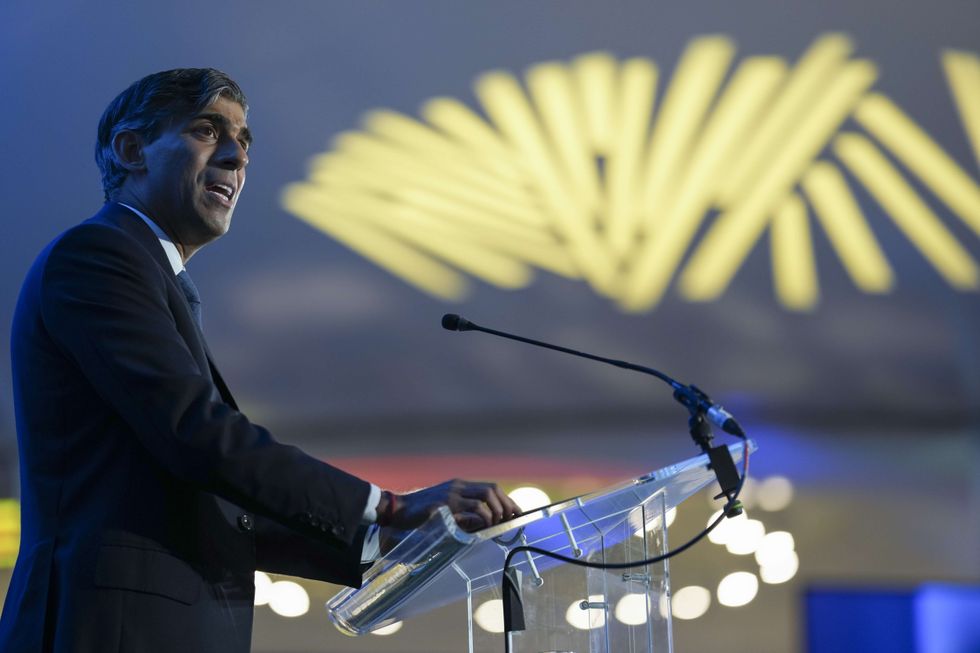 Rishi Sunak delivers Cowdrey Lecture pic two. MCC-Jed Leicester
He made it clear: “I get an enormous amount of fulfilment from being an MP. I’m still in parliament and love doing it, and that comes from the place that I’m lucky to represent. I give a lot to it, and I get a lot back from my constituents. They’re very loyal. They obviously tell you straight when you’re screwing something up. But when you’re working hard for them, they’re very loyal.
“I remember one of my selection meetings where they choose the MP. I’m not from Yorkshire. In fact, coming from Southampton, I basically couldn’t come from any further away without being from Scotland or something. So, there was a bit of scepticism about me at the beginning. But in one of these meetings when they’re (the candidates) all interviewed, one of these people at the back of the room, I heard him say to his colleague, ‘That lad’s a grafter, and Yorkshire likes a grafter.’ They reward your loyalty, so it makes a job very fulfilling. I continue to get a lot of fulfilment from it. It’s probably one of the great joys of my life having the opportunity to do it.
“One thing that is very special about our system of government is you’re right at the top and you’re are prime minister or chancellor, but you haven’t left the thing that elected you in the first place. You are still the member of parliament for your constituency. That link is incredibly grounding while you’re doing these big jobs, which is rare around the world.
“You’d be at this G7 summit or something. French President, Joe Biden, all the rest of it. Everyone’s discussing their weekend plans, and they’re all going off to do whatnot and whatnot. And I said, ‘Well, I’m flying back. I’m going to Kirby Sigston Village Hall, I’m holding a surgery, giving a talk at the Women’s Institute, cutting a ribbon at a pub. They all find it a bit odd. But it is a wonderful thing about our system, which we must not lose.”
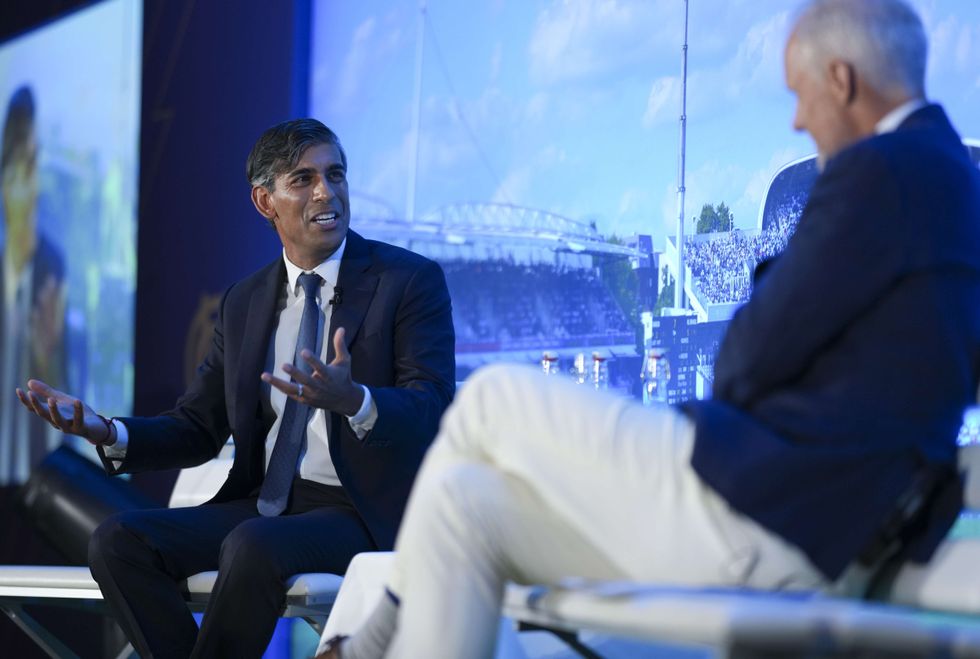 Rishi Sunak in conversation with Ed Smith. MCC-Jed Leicester
Despite the advance of AI, which he supports, he said: “We still crave these human experiences, and that’s what sports does.”
He said: “One of the great challenges we face at the moment post-Covid is children being absent from school. There’s very clear evidence that involving young people from disadvantaged backgrounds in sports like cricket is actually very good for their school attendance. That would be an incredible thing for the country.
“(With) slightly older people who are suffering from loneliness, which we know has many knock-on health impacts, encouraging them in something that’s active and team-based has benefits. We can be quite imaginative and broad in all the different ways sport makes a difference to our society.”
He described cricket as “a unique sport in our national life for its ability to bring people together from different walks of life, different parts of the country, at a time when we really need that. All of us can read and see the same things and have this feeling that there are forces of division out there.”
He emphasised once again: “Cricket, especially, is a unifying force. It will make us healthier. It will make us happier. It gives us all those great values that Colin (Cowdrey) espoused – that spirit of cricket. But, ultimately, for me, a more united society is a stronger society. That’s what cricket can do, and that should be the great pitch of our game.”
The full list of previous speakers is as follows:
2001 Richie Benaud - Australia
2002 Barry Richards - South Africa
2003 Sunil Gavaskar - India
2004 Clive Lloyd - West Indies
2005 Geoffrey Boycott - England
2006 Martin Crowe - New Zealand
2007 Christopher Martin-Jenkins - England
2008 Archbishop Desmond Tutu - South Africa
2009 Adam Gilchrist - Australia
2010 Imran Khan - Pakistan
2011 Kumar Sangakkara - Sri Lanka
2012 Tony Greig - England
2013 Simon Taufel - Australia
2014 Sir Ian Botham - England
2015 Rod Marsh - Australia
2016 Brendon McCullum - New Zealand
2017 Brian Lara - West Indies
2018 Dave Richardson - South Africa
2019 Mike Brearley - England
2021 Stephen Fry - England
2023 Andrew Strauss - England
2024 Stars of the Tailenders podcast
2025 Stars of BBC’s Test Match Special
2026 – Rishi Sunak – first British PM of Asian origin