
SO, WHAT will Rishi Sunak, still only 46, do next?
After all, in July 2024, after he had stepped down as prime minister, Sunak delivered a witty, self-deprecating line during the King’s Speech debate in the Commons: “On the government benches, life comes at you fast... before you know it, you have a bright future behind you and you’re left wondering whether you can credibly be an elder statesman at the age of 44.”
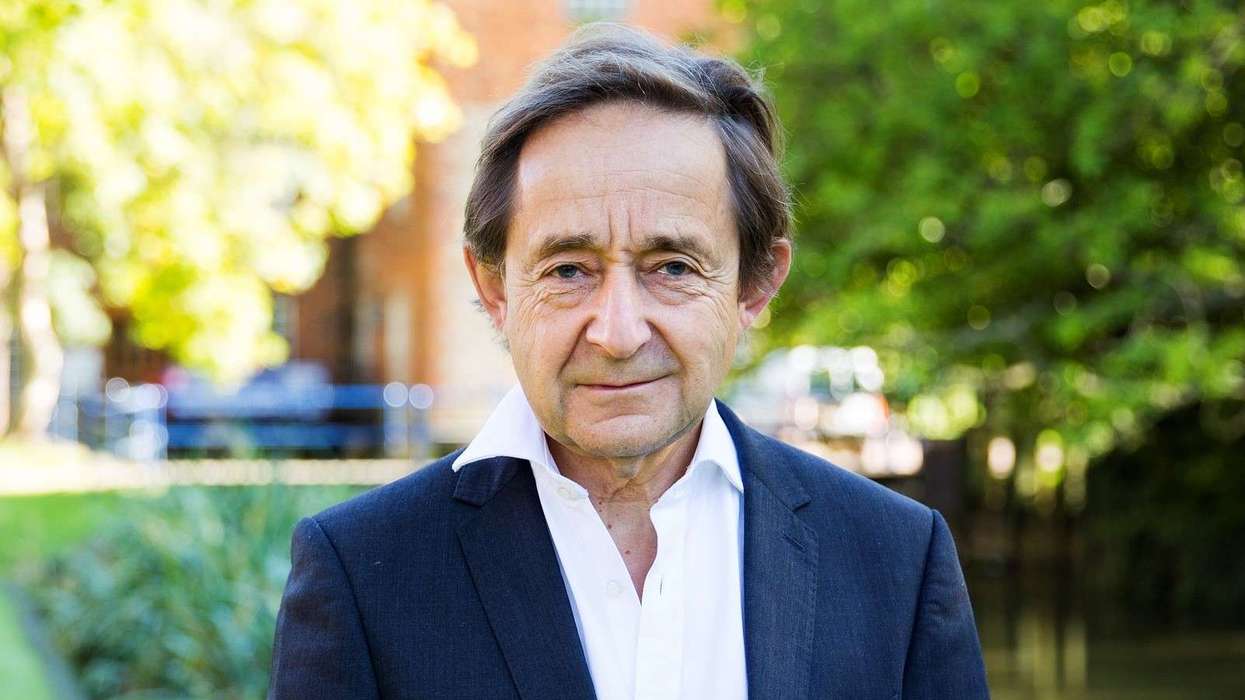
For some kind of answer, Eastern Eye turned to the eminent historian, Sir Anthony Seldon, who has just published a book assessing Sunak’s premiership from 25 October 2022, when he succeeded Liz Truss, to 5 July 2024, when he was replaced by Sir Keir Starmer after leading the Tories to their worst defeat in the party’s history.
In the general election on 5 July 2024, the Tories lost 251 MPs and were reduced to a rump of 121 seats in the Commons.
Seldon is the author or editor of more than 50 books on contemporary history, politics, and education.
He written books on consecutive British prime ministers John Major, Tony Blair, Gordon Brown, David Cameron, Theresa May, Boris Johnson and Liz Truss, and now added Sunak at 10: The Last Conservative Prime Minister? to the list.
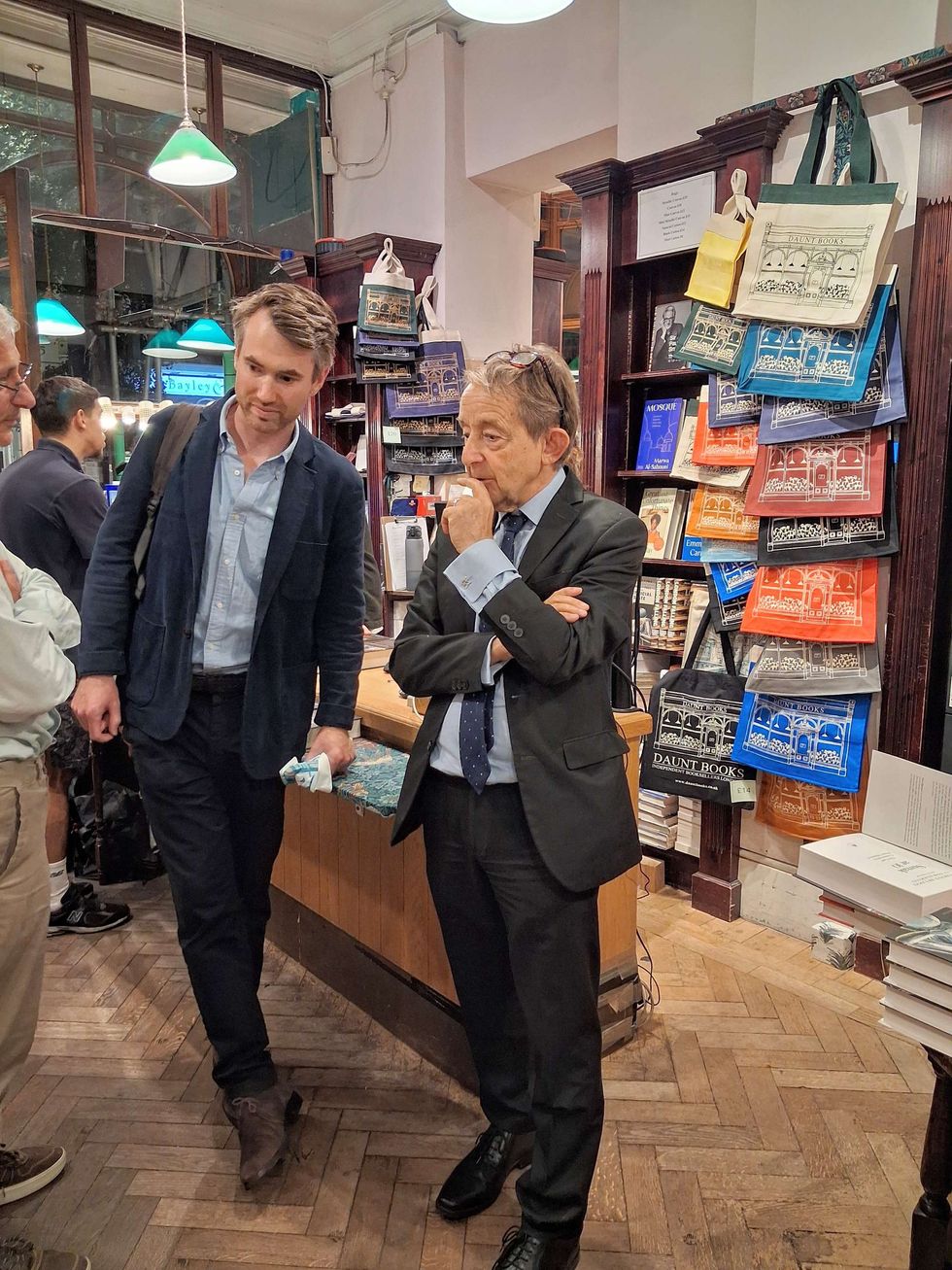 Anthony Seldon at the launch of Sunak at 10 at Daunt Books.Amit Roy
The book, co-authored with historian Tom Egergton and published by Atlantic Books (£25), involved a team of researchers, who between them conducted 200 interviews with key players in Sunak’s meteoric rise and fall.
“This is the ninth prime minister I’ve written on, going all the way back to Churchill,” Seldon pointed out.
In 1981, he published a book on Winston Churchill, Churchill’s Indian Summer, which won a Best First Work Prize.
Seldon, who has the advantage of being someone with a sense of historical perspective, began by admitting: “I don’t have any insight about what he might do, but he has 25 years of public service left.”
However, he ventured an educated guess: “I think it’s not impossible he will come back as a cabinet minister. I think the Tory Party and the country need somebody with his talent and with his commitment to public service.”
“So, I would say that this is somebody who the country can’t afford to lose, who understands it better than anybody in Westminster among MPs at the moment,” he went on.
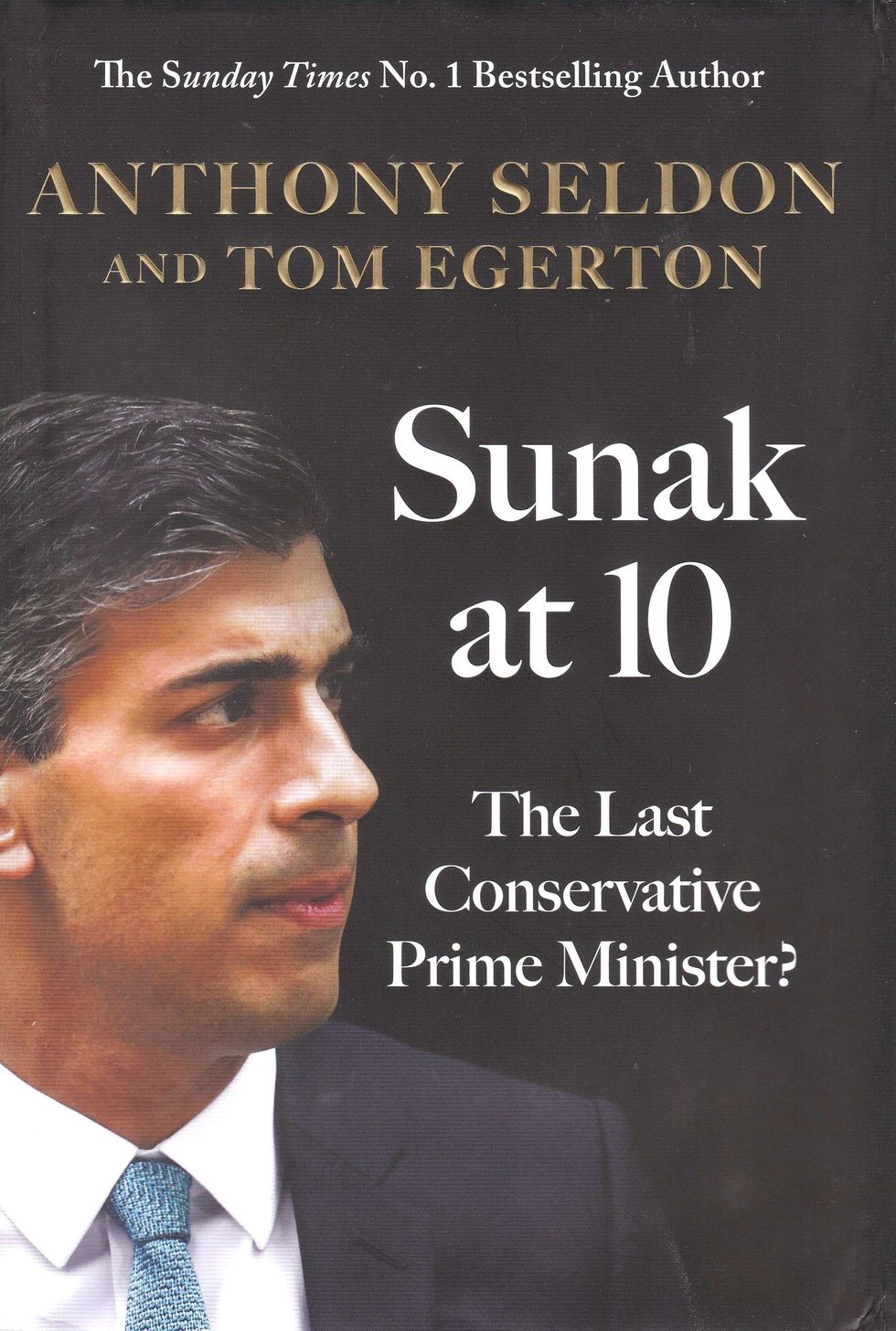 Rishi book by Anthony Seldon front coverEastern Eye
As for the judgement of history, Seldon told Eastern Eye: “People are sceptical of my argument, but I know that I’m right. You know, I’m a historian. I know, I know, that history will be much kinder to Rishi Sunak than his contemporaries.”
He was less flattering about the current leader of the Conservative party: “We have many people who are very keen on dividing us, and a big attraction for me was Rishi was a healer; he wasn’t a divider. Whereas Kemi Badenoch is a divider, not a healer.”
Seldon, now 73, also has the advantage of having had a long career as a schoolteacher and headmaster.
He was born in London on 2 August 1953, educated at Dulwich College Preparatory School, Bickley Park School, and then Tonbridge School, followed by Worcester College, Oxford, where graduated (like Sunak) in PPE (Philosophy, Politics and Economics). In 1981, he gained a PhD in economics at the London School of Economics., followed by an MBA from the Polytechnic of Central London, and a PGCE (Postgraduate Certificate in Education) from King’s College London.
He has taught at Whitgift School in Croydon, Tonbridge in Kent, and St Dunstan’s College in south London. He has been headmaster of Brighton College and Wellington College, and been vice-chancellor of the University of Buckingham.
He recalled that in September 2023, he replaced Emma Pattison as head of Epsom College, following the tragedy of her death. “At Epsom, the headmistress (and her daughter) had been killed (in an apparent murder suicide by her husband), and I went in for a year and a half.”
Asked whether he had enjoyed being a headmaster, he said: “I constantly worried that I wasn’t doing a good enough job.”
He also said: “In my study as a head, I would never have a desk. I would always get rid of the desk first thing and just have comfortable chairs all the way around
that people could sit in, just in a big circle, (or) a big square. I spent a lot of time with kids.”
He had always enjoyed having aspirational British Asian children among his pupils.
In 2004, he co-authored the academic paper and case study, “United Kingdom: A Comparative Case Study of Conservative Prime Ministers Heath, Thatcher and Major”, as part of a book, with Pranay Sanklecha, a Brighton College alumnus who was “a terrific cricketer and brilliant person”.
Asked what he would say if Sunak sought his advice as a headmaster, he replied: “It is so shocking and traumatising being in Downing Street. It’s like you have a billion volts passing through your head. People are never the same again. Even people who work as aides and officials are changed by the experience, but for the prime minister in particular, it’s a profoundly unsettling experience. I found him as philosophical about his experience as any prime minister and accepting (losing office) peacefully. But I don’t think he has thought it through.”
Seldon answered: “I would say to him, carry on working it through the system because you haven’t worked it through the system yet, and you have something to offer this country because you understand the 21st century, the second quarter of the 21st century better than anybody in politics at the moment.
“And I think part of that comes from his long experience of being outside the country. I think part of it comes because he can view it as somebody who wasn’t born in Richmond (his constituency in Yorkshire), who does have this Indian background.
“There’s a saying, ‘What knows he of England that only England knows?’ [Kipling’s poem has the line, ‘And what should they know of England who only England know?’]. He knows more about Britain because he is more than just British. And that period in Stanford and the amount of time he spent outside this country means he can see it all holistically in a bigger way than somebody like Andy Burnham, who is promising he can sort out the money. But he’s British through and through, and Starmer was lamentably just British. We need somebody with that internationalism in their blood and in their brain and in their heart and in their head to run Britain.”
Not everyone will agree with this but in his book, Seldon argues that far from coveting the premiership, Sunak had to be pushed by his most loyal supporters
into standing when the Truss government collapsed after 49 days. “Compared to others, he’s remarkably at peace. He didn’t really want to become prime minister, especially not after Liz Truss, when the party was ripping itself to shreds.”
For now, Sunak remains the Tory MP for Richmond in Yorkshire. “Richmond, on one level, is so counterintuitive. I mean, (Nigel) Farage goes with Clacton like bread goes with butter, and yet he and (Sunak’s wife) Akshata have made the Richmond constituency their own, and there’s a real affection across the constituency from non-Tory voters as well. I think he enjoys that.”
Seldon remembered: “The first conversation I had with Rishi was after he just become prime minister. There was a party, and we talked about my feelings about India and its culture. The first prime minister I wrote a book about who loved India was John Major. I got to know him very well. I wrote an even longer book about John Major.”
Sunak at 10 runs to 598 pages.
“There are interesting parallels between John Major and Rishi Sunak. Here are three parallels. They both love India, obviously. They both love cricket, and they’re both people with a deep sense of service. And they also took over when the Conservative Party had been in power for a very long time and had a difficult time because the party was so fractured.”
He uses a cricketing analogy to describe the near impossible circumstances in which Sunak took over as prime minister: “Say (Jasprit) Bumrah comes in with India at 100 for 9. India need another 300 to win. Bumrah is then blamed because India are defeated. What do you expect the guy to do? In the changing room, everyone is at each other’s throat. When Sunak took after, the party was 30 per cent behind in the poll of polls. He managed to reduce that to 10 per cent. You have to judge somebody against the opportunities they have.”
Seldon continued: “He also had Nigel Farage who announced he was becoming an MP. Pollsters say that took 80 to 100 seats off the Conservatives. None of those other people had this massive challenge on the right like he did. Major didn’t.
“His contemporaries need to blame him. Kemi Badenoch, the Conservative leader, and her followers need to blame him. Do you know what the party is polling? It’s polling about just over 20 per cent. When she took over from him in
early November ‘24, the Tories were polling 26 per cent. And he was against Starmer in his honeymoon period. She needs to blame him. Everyone needs to blame him. He’s everyone’s necessary fall guy. But there’s something deeply dishonest (about the analysis of his defeat).”
He wondered: “Who would have done a better job? Boris? Liz? Penny Mordaunt? Suella Braverman? I mean, come on.”
The launch party for Sunak at 10 was held last week at Daunt Books in Marylebone, where Seldon remarked: “He was Britain’s first non-white prime minister, but he never made anything of it.”
To Eastern Eye, Seldon said: “He didn’t want to. The fact is people accepted it. And yet he also equally never hid it. He lit the (Diwali) candles. He was very open about his heritage, his parents’ heritage, his grandparents’ and Akshata’s heritage. I mean this is modern Britain. Of the four people who lived in Downing Street, three were non-white. (Chancellor) Jeremy Hunt’s wife is Chinese, and Rishi and Akshata are Indian. I think that he wanted people to know him for what he did, not to make any kind of apology and say, ‘Look, you know, this is difficult. I’ve had to come up, climb a difficult thing,’ like a lot of prime ministers do. He wouldn’t have been the person he was without that heritage.”
Seldon pointed out that Sunak had touched lightly on his ethnicity in his final speech as prime minister outside No 10.
Sunak had said: “One of the most remarkable things about Britain is just how unremarkable it is that two generations after my grandparents came here with little, I could become prime minister and that I could watch my two young daughters light Diwali candles on the steps in Downing Street.”
Seldon observed: “What did he do when he heard that he had lost the general election? He telephoned Keir Starmer and he was very gracious about Starmer on the doorsteps of Downing Street.”
Sunak’s words were: “Whilst he has been my political opponent, Sir Keir Starmer will shortly become our prime minister. In this job, his successes will be all our successes, and I wish him and his family well. Whatever our disagreements in this campaign, he is a decent, public-spirited man, who I respect. He and his family deserve the very best of our understanding, as they make the huge transition to their new lives behind this door and as he grapples with this most demanding of jobs in an increasingly unstable world.”
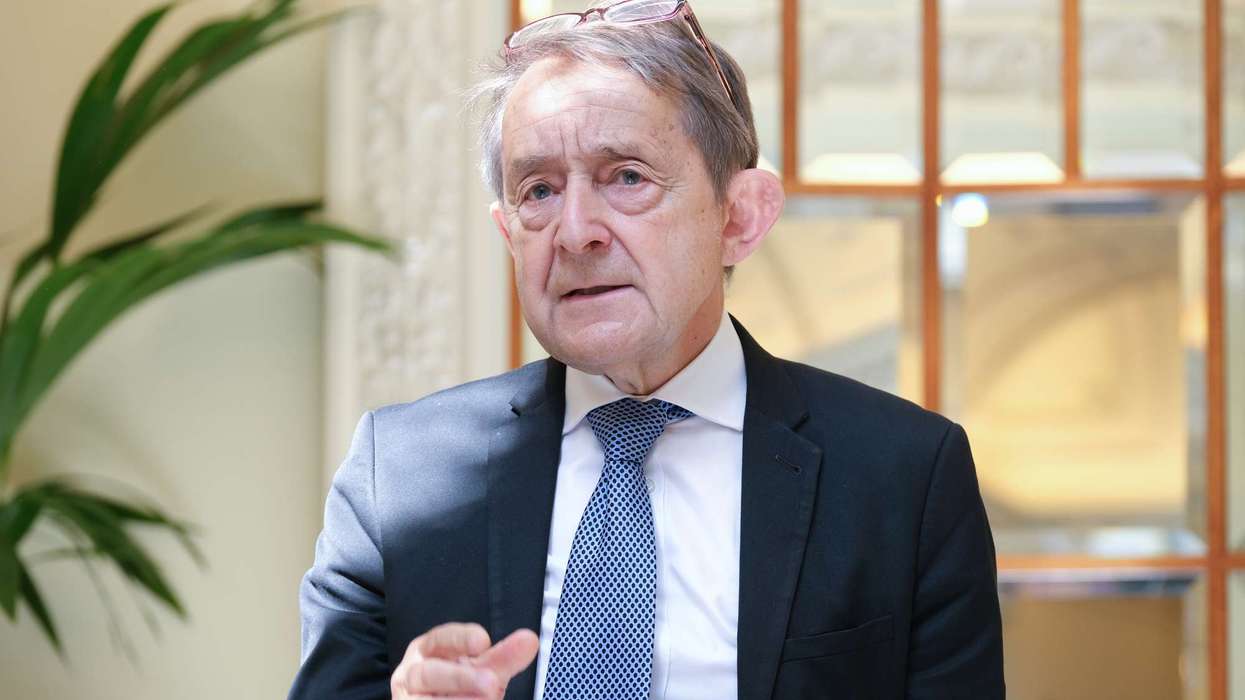 Anthony SeldonAtlantic Books
Seldon added: “He immediately phoned all those MPs who had lost their seats to apologise. Those who didn’t pick up, he wrote notes to. I think from his faith, there is a passivity. There is a centeredness. He's not a highly egotistical person. (In my conversations with him) we never talked about the atma, but he’s a soulful figure who is at peace with the world and with himself. Although he still gets very upset with himself when things go wrong, he wouldn’t, like some prime ministers, shout at other people. He would criticise himself. He was too hard on himself.”
What had struck Seldon about Sunak was “his sense of deep sense of service, his lack of ego, that sense that duty, his impeccable manners, his impeccable devotion to what he’s doing”.
He has described Sunak as “Britain’s first properly twenty-first-century prime minister”.
This was because “he was all for innovation, for AI. No (other) prime minister has understood AI. When people like Dario Amadike (CEO of AI company Anthropic) were talking to him, they felt they were talking to an equal.”
In his opinion, Sunak was a visionary: “He understood modern technology. He understood the rise of protectionism, the attacks on globalism, the rise of technology, the need to rewire the state. He made some starts on it. I am totally convinced history will say that because history takes into account the circumstances that you’ve had. Was he in touch with future trends? His work pivoting Britain towards Asia – I mean, Korea, Japan, as well as India. His resolving Brexit by sorting out the Windsor Framework, which his party just couldn’t care about. He made possible Britain’s new relationship with the EU. He was far more of a visionary than the other Tory prime ministers.
“Gordon Brown is now a wonderful visionary and has written this book on innovation. I was hearing him talk but as a prime minister, he wasn’t particularly visionary, and spent a lot of his time reacting to the global financial crisis. Blair is much more visionary now with the Tony Blair Institute than he was as prime minister. He was quite a conservative prime minister. He didn’t rewire Britain for the 21st century. He talked about a new Britain, but didn’t make it happen. He didn’t resolve Britain’s relationship with the EU. But Rishi did these things in office and on a very hostile pitch, where the turf was breaking up.”
He returned to the cricketing analogy: “The balls were coming into him, and they weren’t having a true trajectory because they were flying up or flying left.”
He demurred when it was suggested Anthony Seldon could write a book assessing the career of Anthony Seldon: “I’m not certain anyone would want to read it. But it would be a good thing in one way because it would be a good tutorial about how not to live life and avoid the mistakes that I’ve made. It would be a good cautionary tale. I think I was shaped by faith which is very important. I mean I’m also a practising Christian, and there’s something about the mysticism of Hinduism, the transcendence of the ego, which has always chimed with me. But my life is not over. A lot of my life had been spent trying to help people who’ve been unhappy, setting up a charity called Action for Happiness. I’m also walking to Ukraine, creating a path across Europe for people to discover what they share in common, not what divides us in the world.”
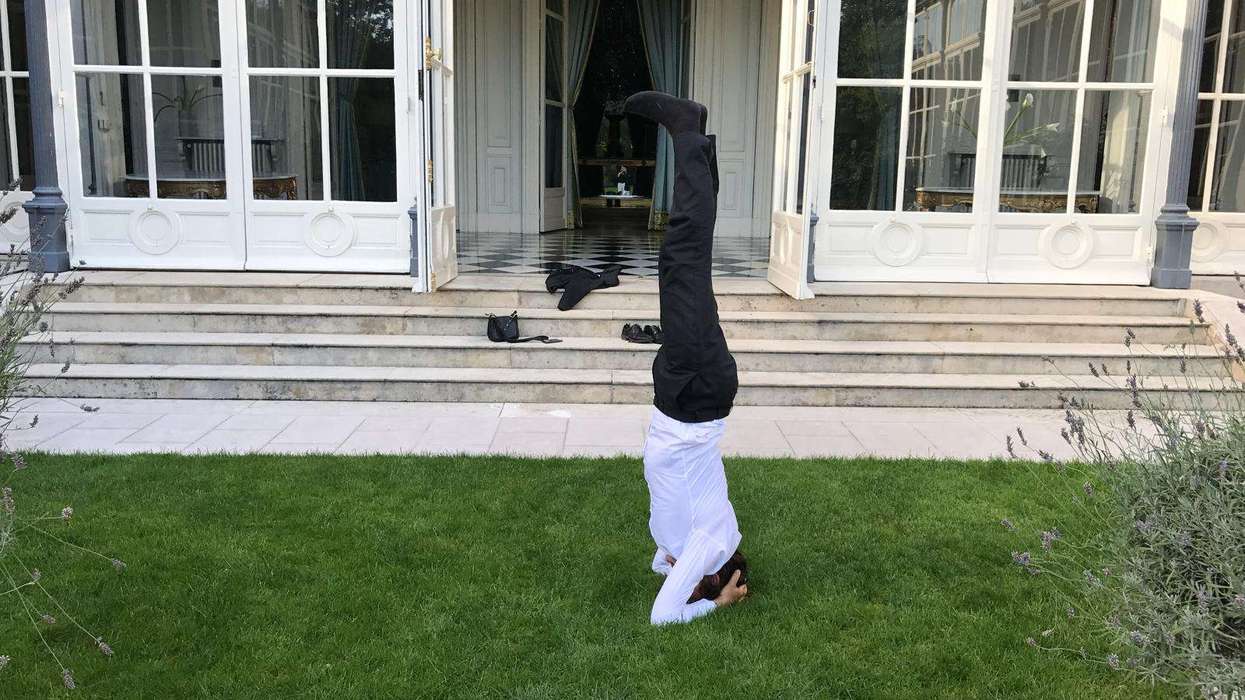 Anthony Seldon doing a yoga headstand at the British embassy in Paris, Credit Anthony Seldon
Yoga and meditation have also helped him deal with stresses of life: “After university, I started meditating twice a day with an Indian mantra, and learnt a lot about Vedantic philosophy through that. And I also started yoga and attending Sivananda yoga. It’s a form of yoga which is very concerned with health and food and fitness. So, those were two big traditions.”
He famously chose a yoga and prayer mat as his luxury item when he appeared on Desert Island Discs on BBC Radio 4 in 2016.
He was once photographed doing a headstand in the grounds of the British embassy in Paris: “I was giving a talk to staff at the embassy about well-being and how to look after your body and your mind and to be busy, and not be too pressed and stressed. And last night, for example, I woke up, and I was worried. There’s a lot of pressure in my life at the moment, and so doing yoga just helps the body to feel good. I think I’ve always been quite an anxious and driven person, and I think it’s helped me.”
In doing a yoga headstand, he is in good company because it was a practice favoured by Jawaharlal Nehru, independent India’s first prime minister who was educated at Harrow and Trinity College, Cambridge.
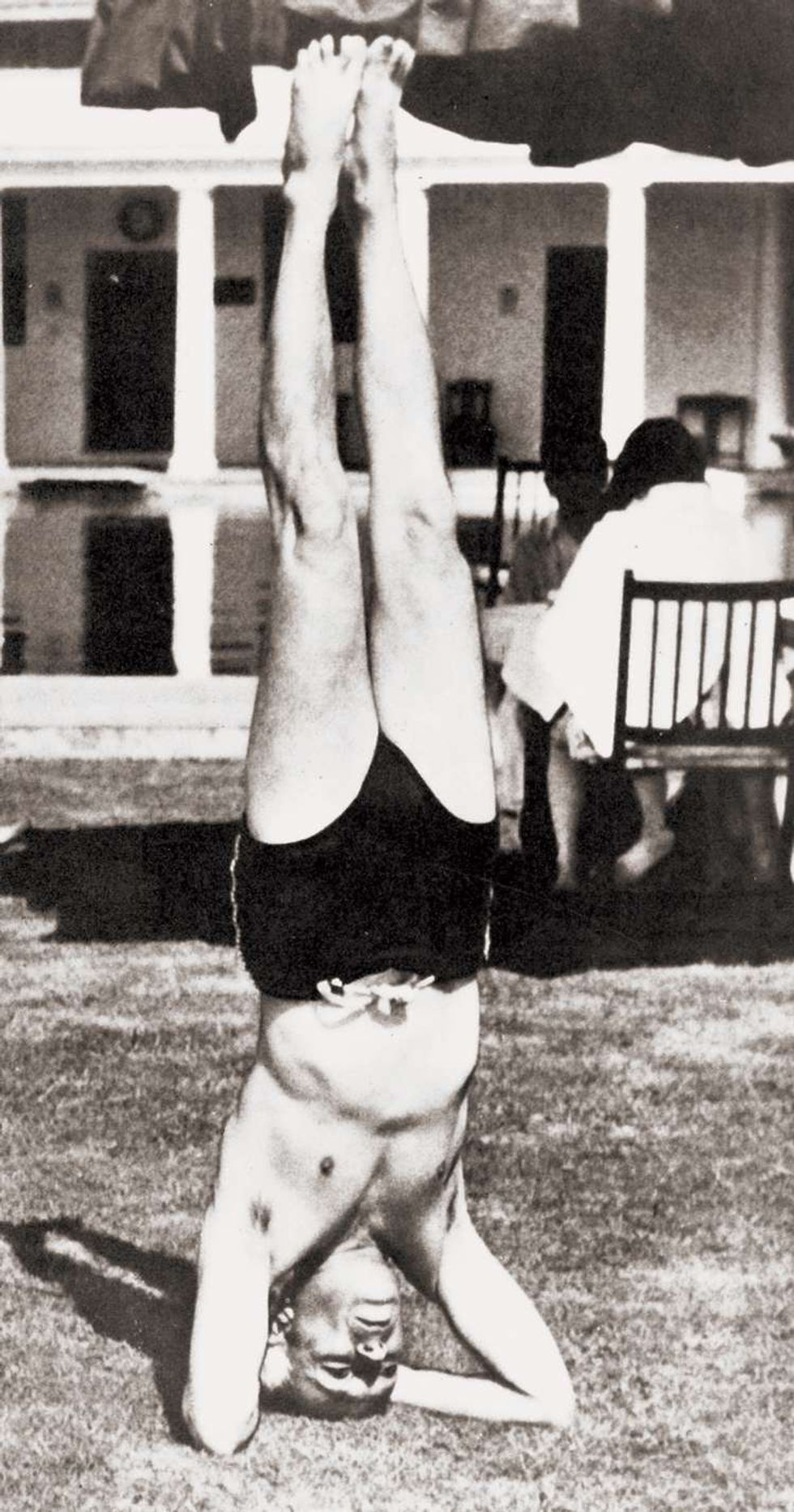 Jawaharlal Nehru yoga headstandNehru family
While Nehru was jailed by the British from 1942-45, he wrote about the asana in The Discovery of India: “Among my exercises one please me particularly – the shiorshasana [an advanced inverted yoga posture known as the king of all asanas], standing on the head with the palms of the hands, fingers interlocked, supporting the back of the head, elbows on the floor, body vertical, upside down. I suppose physically this exercise is very good; I liked it even more for its
psychological effects on me. The slightly comic position increased my good humour and made me a little more tolerant of life’s vagaries.”
Seldon now knows India quite well: “It wasn’t till 1997 that I first went to India. I’d just published my book on John Major in September ‘97, and I was going after Christmas. I suddenly realised that I didn’t have a visa and I was flying the next day. And the High Commission was closed. So, I got in touch with his (Major’s) office. He was now leader of the opposition. He was no longer prime minister, but very kindly managed to help me get a visa so I could fly. I went to Ahmedabad, where Brighton College, where I was the head, was playing cricket in the old Test stadium. I love the country, and have been back to speak at the Jaipur Literary Festival, to go to yoga camp down in Trivandrum in the south, and up in a place called Uttarkashi, which is way beyond Dehradun and The Doon School. I have been there perhaps eight times.”
He talked also of Sunak’s links with India. He compared Sunak’s arrival as prime minister almost with the moment Barack Obama became the US president.
“At his first G20 (in September 2023), there was huge fascination and interest in him because he wasn’t just a Brit taking over,” Seldon commented. “He did so much for Britain internationally that people in this country don’t fully comprehend.”
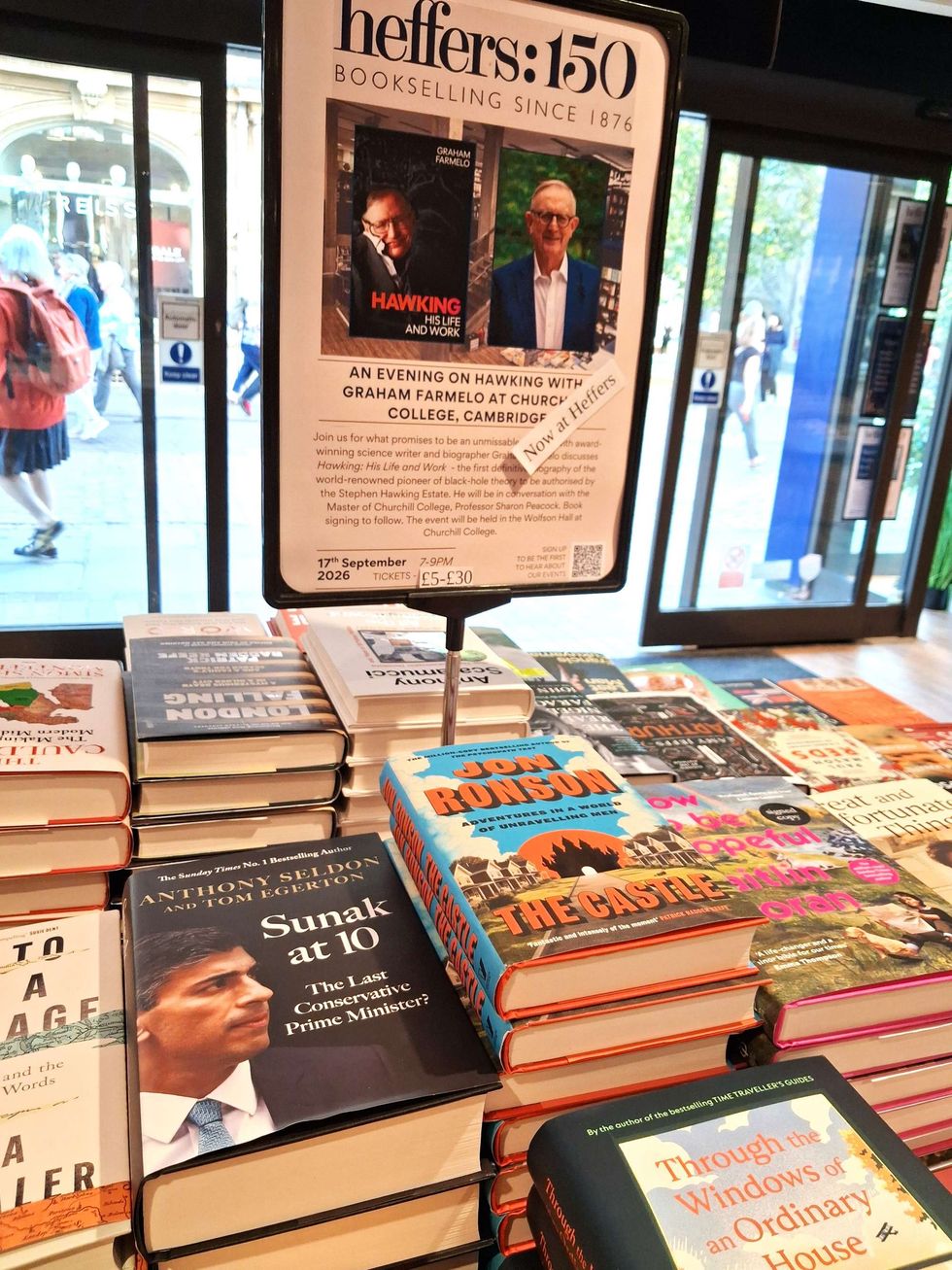 Sunak at 10 on sale at Heffers bookshop in CambridgeAmit Roy
Sunak’s relationship with India was “very important to him, of course, because of his wife and his wife’s family. His father-in-law (Infosys founder N R Narayana Murthy) told him to learn how the world works, and then do public service. The problem with people who come into politics in Britain now is they don’t know anything about finance, about companies, about how to make money, about different peoples, different cultures. I never spoke to him about this, so I don’t know. But my sense is (that as a British prime minister) he was careful not to show favouritism to India, or be told he was spending far too much time in India. He wanted to get it right. He also wanted to get it right because he loved India, but also saw India as massively important for Britain politically, its security, and economically.”
Sunak at 10. The Last Conservative Prime Minister? By Anthony Seldon and Tom Egerton. Published by Atlantic Books. £25.




 Kate Varah Adama Jalloh
 Hiran Abeysekera (Hamlet) in Hamlet at the National Theatre. Sam Taylor
  Ncuti Gatwa as Algernon in The Importance of Being Earnest at the National Theatre Marc Brenner
 Sharon D Clarke as Lady Bracknell in The Importance of Being Earnest at the National Theatre Marc Brenner
  Indhu Rubasingham left and Kate Varah Amit Roy
 The company of Bacchae at the National Theatre Marc Brenner
  Ballet Shoes poster National Theatre
  Rosamund Pike (Jessica) in Inter Alia at the National Theatre resize Manuel Harlan