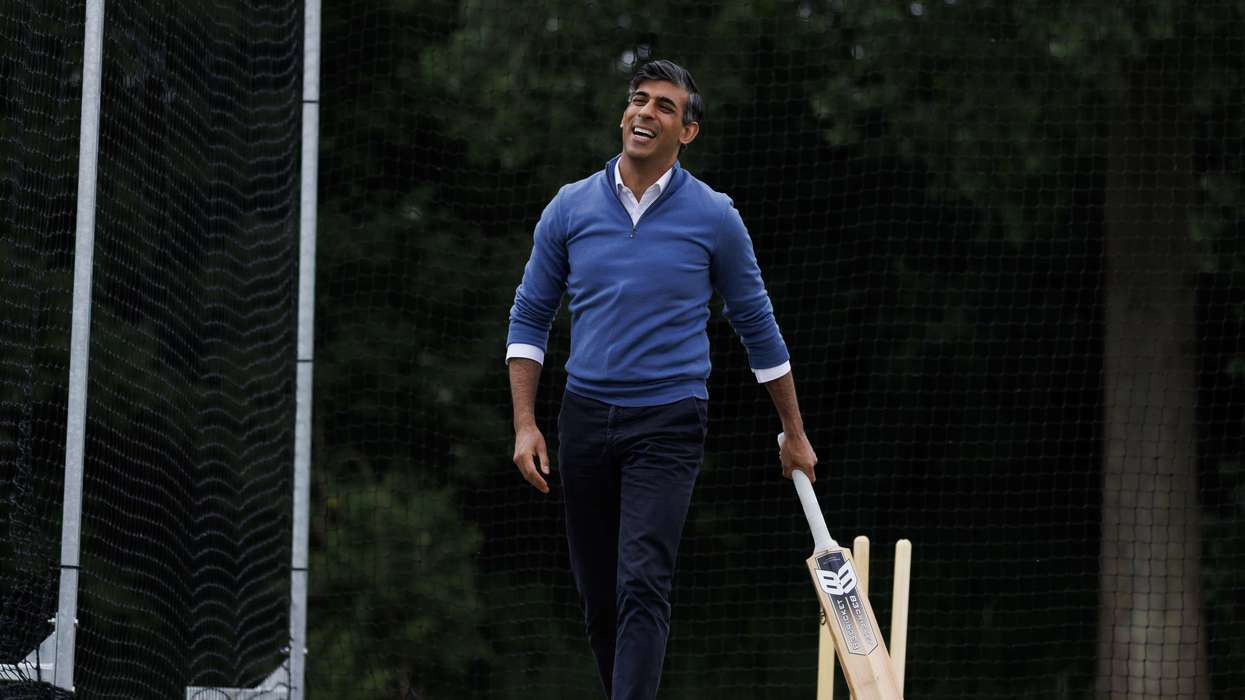

RISHI SUNAK’S premiership ended in disastrous fashion when he led the Conservative Party to the worst result in its history after the Tories lost 251 MPs in the general election of July 4, 2024, and were reduced to a rump of 121 seats in the Commons.
And yet, Sunak receives a remarkably positive assessment from the author Sir Anthony Seldon, who suggests that after the decline that set in following the premierships of Boris Johnson and Liz Truss, probably no one could have done any better.
“Sunak was Britain’s first properly twenty-first-century Prime Minister,” concludes Seldon in Sunak at 10: The Last Conservative Prime Minister?
Seldon, who has written books assessing the premierships of consecutive British prime ministers John Major, Tony Blair, Gordon Brown, David Cameron, Theresa May, Boris Johnson and Liz Truss, has now added Sunak to the list.
Sunak at 10, co-authored with historian Tom Egerton, is published by Atlantic Books. They were assisted by a team of researchers. At 598 pages, it is certainly a big book. “We conducted over 200 indepth interviews with former members of Sunak’s government, with many of the key players in the wider Conservative Party, with Labour and Reform UK, with senior figures in the civil service, as well as academics, journalists and thinkers.”
Seldon, 73, seems to think that history will be kinder to Sunak than his contemporary critics.
Having been headmaster of independent schools Wellington College, Epsom College and Brighton College, as well as vice-chancellor of the University of Buckingham, Seldon has given Sunak a report card he won’t necessarily want to hide from his parents.
According to Seldon, “Prime Ministers can be judged under four criteria. First, did they leave the country stronger economically than when they inherited it? Sunak was the most economically literate Prime Minister since Brown in 2007, and far more so than Blair: the combination of him and Jeremy Hunt proved effective at a time when prudence and judgement were required. Even though arguably more could have been done to stimulate growth and productivity, the answer is a demonstrable yes.”
He goes on: “Second, was Britain’s position in the world stronger than when the PM arrived in office? Sunak proved himself a far more adept leader of Britain internationally than expected, given his lack of ministerial experience. Britain’s relationship with the EU, the United States, India, East Asia and the Commonwealth saw confidence and stability returned. Sunak maintained Britain’s global leadership on Ukraine, the most positive legacy bequeathed to him by Johnson. So again the answer is yes.”
 Sir Anthony Seldon Atlantic Books
He continues: “Third, is the Union stronger? Again the answer is positive. The Windsor Framework and the restoration of power-sharing at Stormont healed a lingering wound left by Johnson that, if left unresolved, could have seen violence return to the region. Scotland’s future membership of the Union equally was more secure in July 2024 than had been the case in October 2022.”
The answer to the next question is a bit mixed for Sunak.
Seldon ponders: “Fourthly, did trust in politics and government recover? Based on figures from the ONS (Office for National Statistics), which showed trust in government standing at 35 per cent in 2022, falling to 22 per cent by 2026, the answer would be no, although how much of that decline was due to Sunak is difficult to prove. But looking at his actions to restore a sense of moral integrity since the Johnson premiership, Sunak was more successful: he was meticulous in his personal conduct in No. 10 and prioritised ethical conduct and acting within the law and convention. He always acted with dignity. Public disorder preyed heavily on his mind, with the very real risk of disruptive public sector strikes, or social and racial unrest on the streets after the 7 October attacks on Israel, if protests were not handled sensitively but firmly. Morale in the civil service did improve after Johnson and Truss.
“But Sunak’s premiership was waylaid, to his chagrin, by scandal and the failure to visibly tackle national priorities, above all immigration, meant public trust in politics couldn’t recover fully from the chaos of 2022, and has since worsened after his departure from office.”
Seldon says: “The first task of a Prime Minister is, as First Lord of the Treasury, to keep the country solvent, and second, to keep it secure from threats abroad. When judged against the position he inherited, the restricted options open to him, and against the performance of the prime ministers before and after him, he scores well under all headings.”
The commentator (Lord) Daniel Finkelstein is quoted: “Sunak’s achievement was to be right in predicting that both Truss and Starmer would put up taxes.”
Seldon states: “Sunak was Britain’s first properly twenty-first-century Prime Minister. His understanding of technology, Al, geopolitics and future employment was superior to his nearest competitors for the title, Blair and Cameron. Struck as Chancellor that every other G7 country has a separate department for science and technology, Sunak as PM put huge effort into creating DSIT (Department for Science, Innovation & Technology) to drive Whitehall to think more about and reflect the modern world. He was ferocious in driving Al forward, above all with the Bletchley Park Summit, which gave Britain an enduring world leadership role, introducing safeguards for frontier models and the AI Safety (now Security) Institute to make the world a safer place while ensuring a regime that didn’t stifle innovation as the EU has done. His championing of education reform and entrepreneurialism was farseeing if incomplete. His smoking ban, pursued in the face of considerable party opposition, again saw him as a leader of the whole nation: many lives will be saved because of it, and billions of pounds relieved for the NHS. …. Indeed, his reluctance to become Prime Minister in late October 2022, which he knew would be the poisoned chalice it became, again exemplifies his sense of service and duty to the nation.”
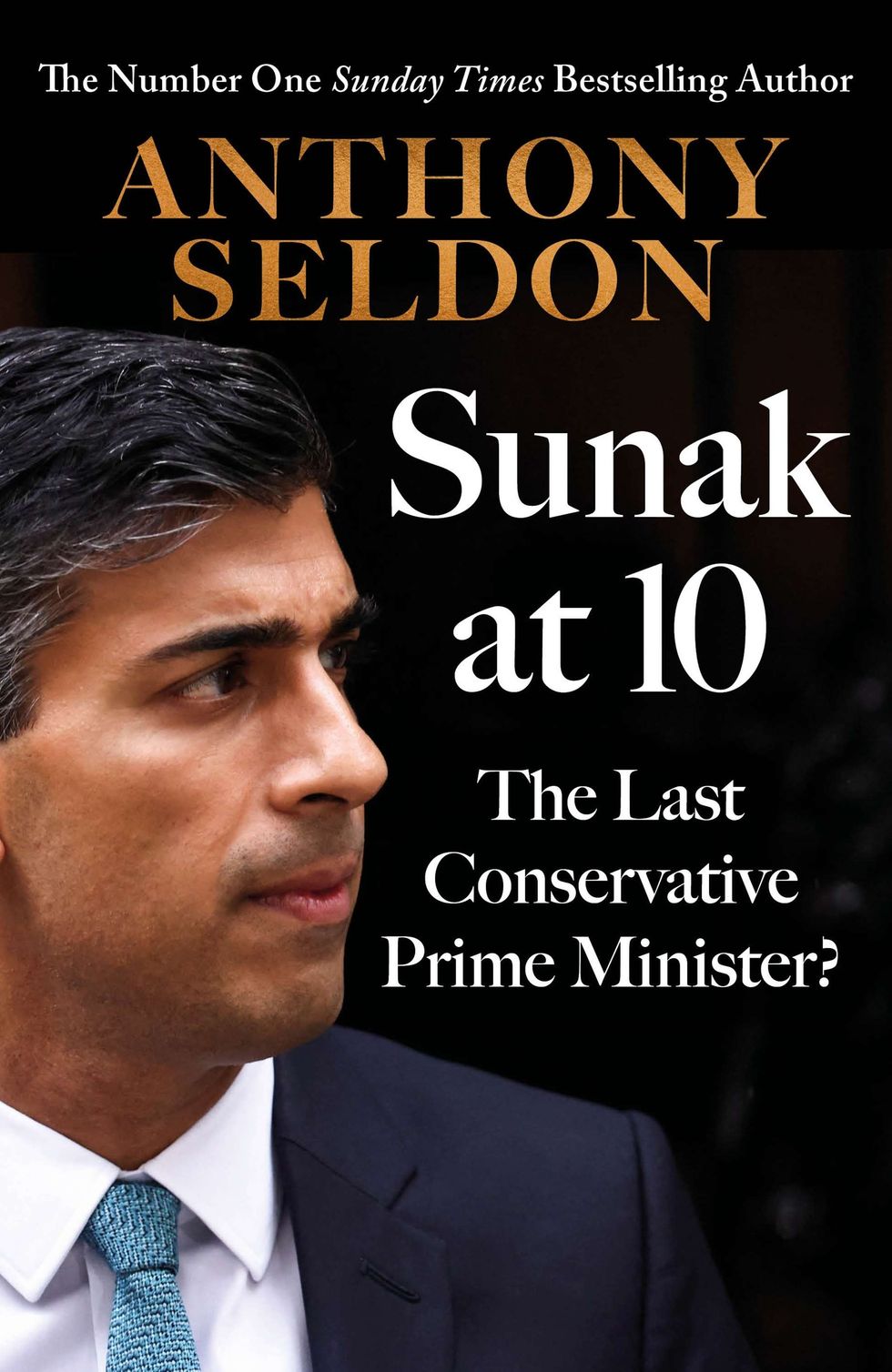 The cover of his book Atlantic Books
“Ultimately, we can judge the success of a Prime Minister in comparison to their predecessors and their successors,” observes Seldon. “After all, they were the leaders facing similar circumstances and headwinds. The comparison does him no disservice. The records at No. 10 of Johnson and Truss stand for themselves.
“But Sunak also represented the spirit of modern Britain much better than his successor, in part by wearing his ethnicity both lightly and comfortably. When Starmer succeeded him in 2024, unlike when Labour took power in 1945, 1964 and 1997, the country appeared to go not forwards but backwards, with a generationally (and eighteen-year) older Prime Minister attuned to an earlier age and ways of thinking. In time, history may indeed judge Sunak better than his own party, to many of whom he remained an alien figure.”
Seldon argues that Sunak’s “period in office will be remembered for principled leadership, less for talking about putting country before party than doing precisely that, for being the first Prime Minister to truly understand the technological and financial challenges of the mid-twentyfirst century and to do something about it, for making a start on – while falling far short on – tackling Britain’s deep-seated problems including chronically low productivity, the size of the government debt, the preparedness of its military, its borders and its high energy prices. …. Ultimately, Sunak made steady progress despite battling against a party that never wanted him as leader or fully supported what he was trying to do, all the while being Britain’s first non-white PM and coming to office too young and inexperienced.”
- Sunak at 10: The Last Conservative Prime Minister? by Anthony Seldon and Tom Egerton. Published by Atlantic Books. £25