
- Rishi Sunak says AI is already reducing entry-level job opportunities for young people
- Business leaders privately telling him firms can grow without taking on more staff
- He calls for National Insurance to be scrapped and replaced with taxes on company profits
- Sunak, now an adviser to Anthropic and Microsoft, warns AI's jobs impact "may be different to previous technology cycles"
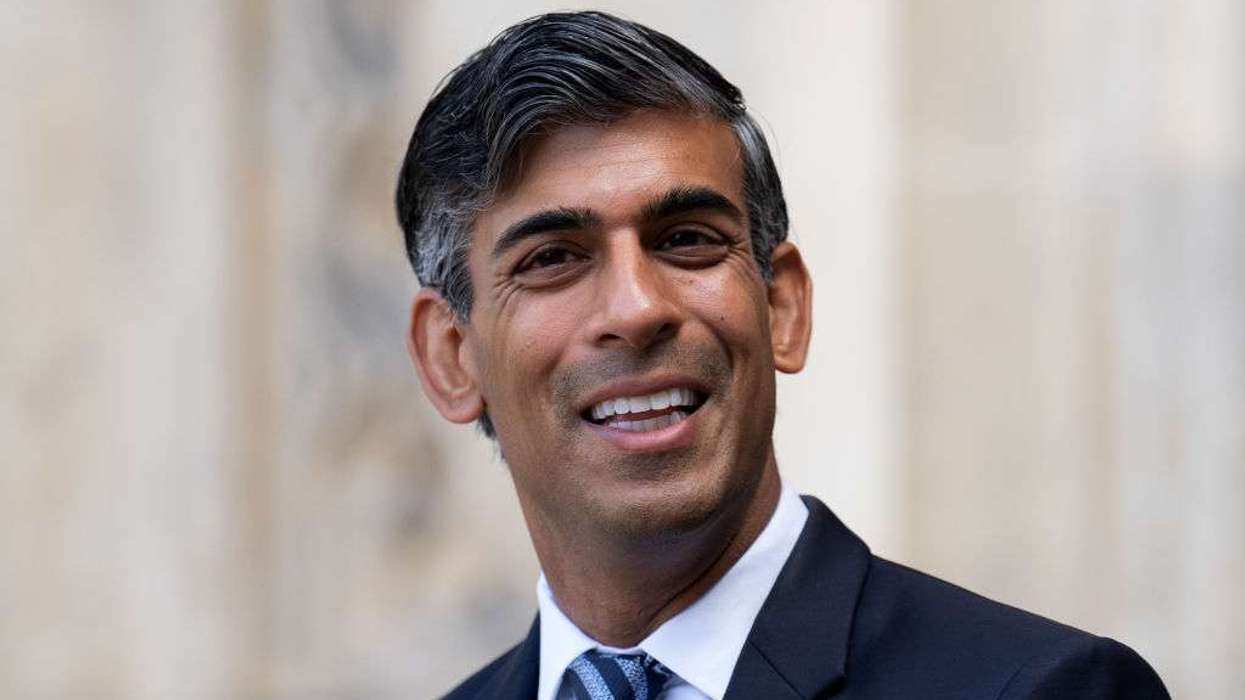
ARTIFICIAL INTELLIGENCE is already making it harder for young people to find work, former prime minister Rishi Sunak has warned, adding that the government needs to act now to stop the problem getting worse.
Speaking to BBC Newsnight, Sunak said chief executives had been telling him privately that they were confident they could keep expanding their businesses without meaningfully growing their workforces.
He described it as a new way of thinking emerging in boardrooms: "Flat is the new up," he said, quoting the language bosses were using with him directly.
"They think they can continue to grow their businesses without having to significantly increase employment because they're starting to see how they can deploy AI," he was quoted as saying.
Sunak, who now advises both the AI company Anthropic and tech giant Microsoft, said he remains broadly enthusiastic about what AI can do. But he acknowledged that young people worried about breaking into sectors such as law, accountancy, and the creative industries were right to be concerned.
'Shake-up the tax system'
"There are reasons to be worried and think about the future," he said. "But we are able to do something about this."
His proposed solution is a shake-up of the tax system. He called for National Insurance — a levy paid by employers each time they take on a worker — to be phased out over time and replaced with higher taxes on company profits.
His argument is that as AI makes firms more productive and profitable, those profits should be taxed more, while the cost of hiring actual people should fall.
Many governments, he added, would soon face a similar reckoning as tax income from employment dried up and they were forced to look elsewhere.
Sunak also used the programme to raise concerns about how powerful new AI tools are assessed for risk. He referred to Anthropic's recently announced model, Claude Mythos, which the company itself said was capable of outperforming humans at certain hacking and cybersecurity tasks.
An AI superpower
He said this showed "we shouldn't rely on companies to mark their own homework" — though he praised Anthropic for allowing the UK's AI Security Institute, which he set up as prime minister, to be the first body to independently test the model's capabilities.
On a more upbeat note, Sunak said he had recently joined Labour's deputy prime minister David Lammy at an AI investment summit to jointly champion the UK tech sector. He backed what some in the industry are calling "Londonmaxxing" and "Britmaxxing" — the push to attract major waves of investment to Britain.
"I know people like to talk us down... but in this area there are huge reasons for us to feel confident and proud," he said. "We are an AI superpower any which way you look at it.
"Sunak, who is also a senior adviser at investment bank Goldman Sachs, said the key challenge for governments was tilting the balance so AI helped workers do their jobs better, rather than simply replacing them.
He warned that AI's effect on employment "may be different to previous technology cycles, and we want to do what we can to tip the scales in a more positive direction".