
I PLAYED my part in raising the flag last week, as a small part of a red stripe on the St George’s Cross.
I was with my daughters, a few rows behind the goal at Wembley stadium, to watch the women’s national football team. By holding aloft our allocated red carrier bag, as England’s Lionesses sang the national anthem, we could, together with a little help from a few thousand other fans together, produce a giant England flag curving around our end of the stadium.
Anyone who wonders if an inclusive English patriotism is possible could find out – at a Lionesses match – what it can look and feel like. Maybe we went a tiny bit over the top by adopting my 13-year-old’s idea of giving us St George’s Cross nail polish for the trip to Wembley, but it felt in tune with the spirit of the occasion.
The crowd was young, with more women than men, overall, though plenty of boys and girls of school-age were at the game with their mums and dads, or their junior football teammates. There was no sense of a country gripped by existential angst about who counts as English with plenty of young white, black, Asian and mixed race young fans among those cheering for the team, humming along to the brass band playing Three Lions and Sweet Caroline, and trying to catch the eye of the roving fan-camera featuring on the big screen.
England won this World Cup qualifying match between Spain’s World champions and England’s European champions. So, we wondered, as we got off the train home, whether we could now reclaim the rather tattered-looking England flags hoisted on the lamp-posts outside the station as saluting the Lionesses victory, too.
This year has shown how national symbols can polarise opinion, too. That podcaster Konstantin Kisin’s declaration that he could not see how former Conservative prime minister Rishi Sunak could not be English because he is “brown and Hindu” got a fair amount of mainstream airtime suggested that many among the media and political classes are unsure about how far ethnic minorities are accepted as English, as well as British.
Sunak did not want to give excessive attention to an argument he found motivated by the attention seeking “shock jockery”, though I suspect the argument illustrated that Asian English identity can remain less familiar and more contested than that of the black English, maybe because sporting symbolism settled that argument some decades ago.
Given the uncertainty about how to talk about England today – and how to bring a changing England together. British Future has published a new toolkit, England United: Pride not Prejudice to support those who want to stand up for an inclusive English identity.
Despite these politically polarised times, it reports reassuringly broad foundations. Only eight per cent of white people think you have to be white to be English, while 86 per cent do not. There is a broad majority – by 73 per cent to 16 per cent – among ethnic minorities, too. That there is more uncertainty among ethnic minorities shows the danger that a visible and vocal rejectionist minority could set inclusion back.
 Children ride a fun fair attraction during St George's Day celebrations in Trafalgar Square in London, Britain, April 19, 2026Reuters
Historically, those born abroad have always felt a stronger association with British identity, but the Englishborn children and grandchildren of migrants have been much more likely to see English identity as open to them too.
Flags on lamp-posts certainly polarise opinion – seen differently by those with different political views. Quite a lot of people see them as simply hoisting the national flag. But others do intend a more prejudiced message. Ethnic minority respondents are more likely to perceive an exclusive message about who does or does not belong. But the research shows how much context and intent matter: there are much broader majorities, across majority and minority groups, that flying the flag from the town hall reflects a healthy national pride.
So there is a broad public appetite to see and hear an effort to express an inclusive English identity, but that can remain a work in progress outside of a sporting context.
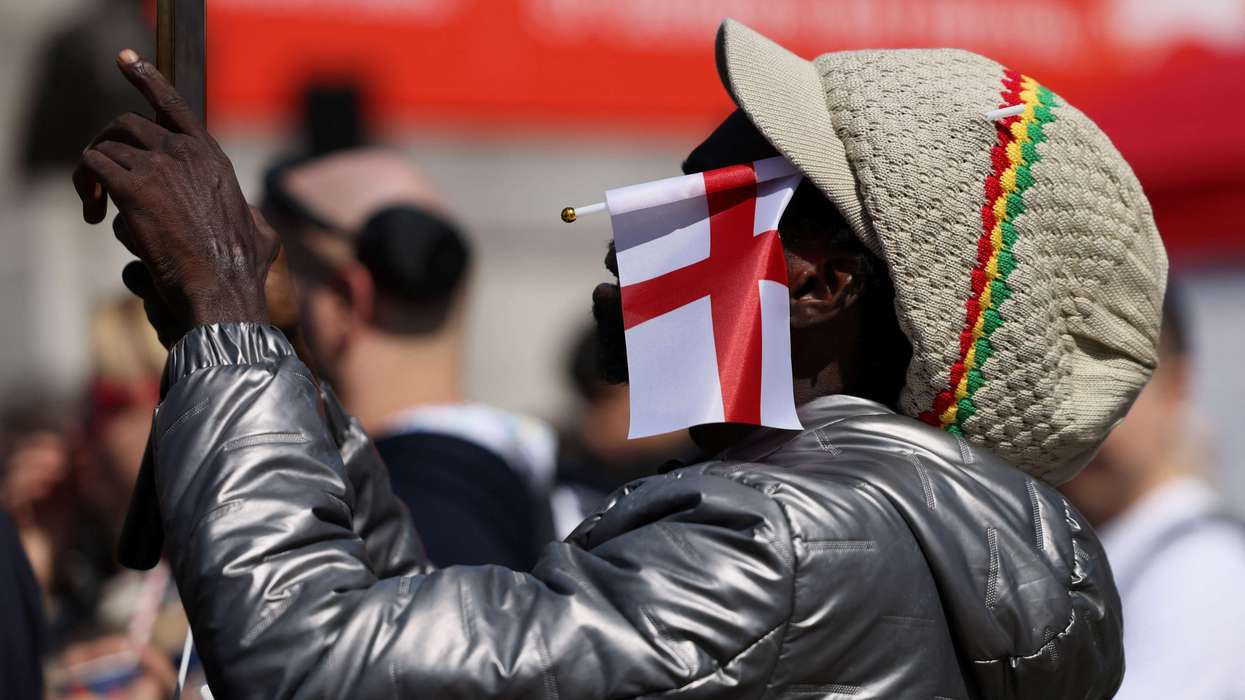
There is a growing effort this year to respond by showing this year how St George’s Day (23) can help bring people together. Parades and community festivals to mark St George’s Day take different approaches in London and Yorkshire, in Birmingham and Kent.
The “very English chat’ project has crowdsourced a pocket library of 50 objects that tell the story of modern England. That captures that there are many different ways in which people identify as English.
There is a shared ethos and message: that everybody who calls England home can be invited to events that celebrate England’s past, present and future. That is an approach to marking this national day that speaks to what most people can agree on: that pride, without prejudice, can help to bring a changing England together.