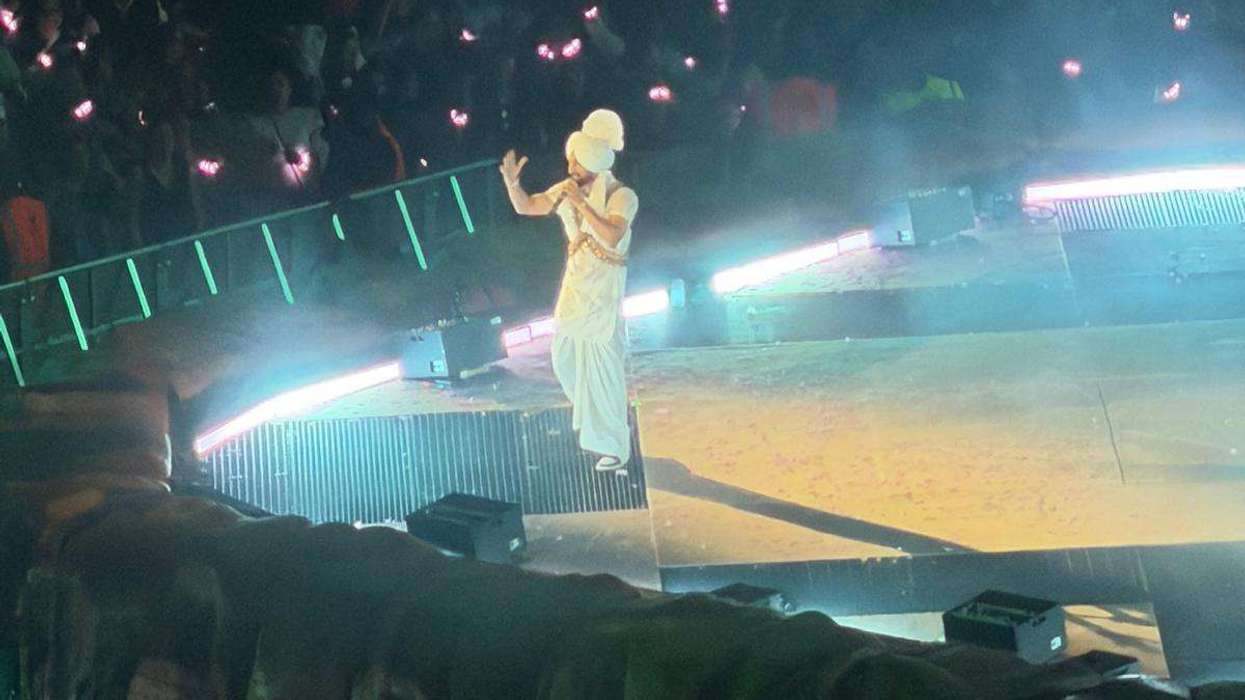

ON Saturday night (12), I witnessed Punjabi pride at Wembley stadium. This is when Diljit Dosanjh became the first Punjabi artist to headline Wembley Stadium on the same stage that had once held Michael Jackson and Queen.
It was sold out with 90,000 people. He stood there in his turban, the turla catching the light, singing songs straight out of Punjab’s villages, in his dhoti, wanting nothing but to be himself. And the crowd singing back to him wasn't foreign at all it but almost entirely Punjabi. That night, London was Punjab.
I felt very small. A few years ago, I would have refused to be part of this very crowd – noisy, loud, unmistakably and unashamedly Punjabi. Standing there now, I had to ask myself: do I still have that Angreziat in me? Can I really, honestly, go on avoiding my own Punjabiat?
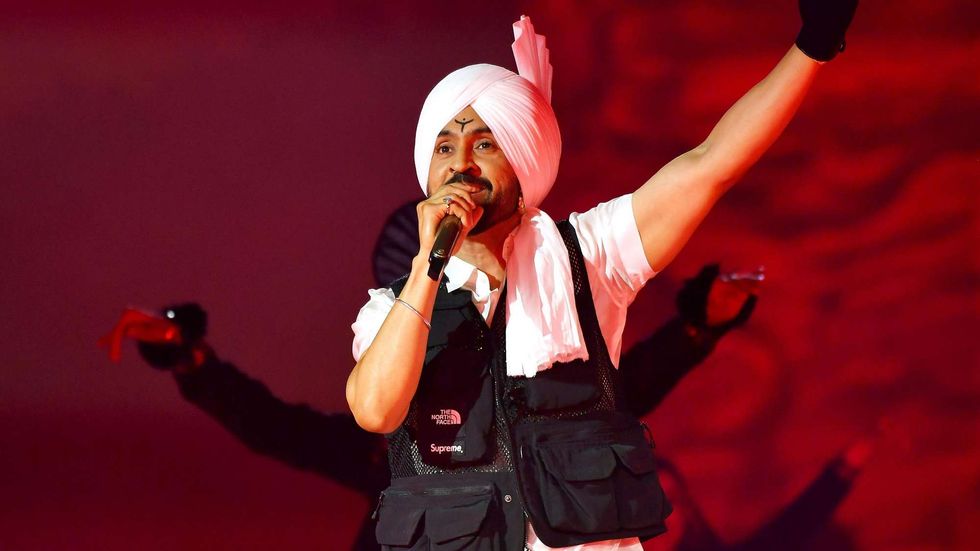 Diljit DosanjhEastern Eye
I was born in Amritsar, Punjab, into a family that prided itself on being very British. They had left India ten years earlier, but their influence remained deeply ingrained in our blood. Some of the English-medium schools we attended still had a handful of English teachers, and quite a few Anglo-Indians among the staff.
This British influence made us proud of speaking English, as well as a “cultured” version of Punjabi, one laced generously with Urdu and Hindi. We were raised to look down on the language of the villager, because it marked you as uneducated. Little did we realise that in doing so, we were not being true to our own language at all.
We listened to Punjabi music only at weddings and festivals like Lohri and Baisakhi. The rest of the time, we were in the throes of the flower power age, when The Beatles were gods, and singing along to “We Will Rock You” was simply the done thing. We read Thomas Hardy and Dickens and absorbed that culture voraciously. We grew up embarrassed of the basic Punjabi man. Our choice of marriage depended on finding a British version of this Punjabi Sikh gentleman, educated, ideally, at Oxford or Cambridge. Moving to England felt like arriving in a country we had spent our whole lives preparing for. Sending our own children to Oxford or Cambridge was the ultimate dream.
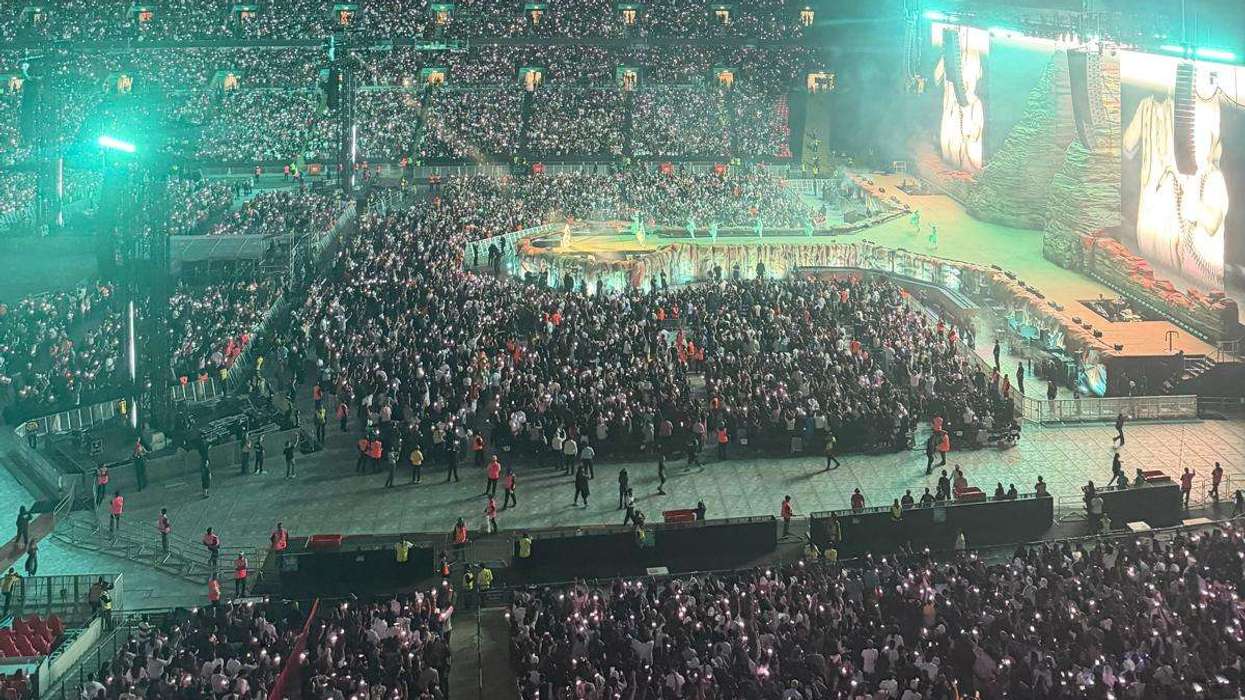 A packed audiencePhoto: Surina Narula
I never really sat down to ask myself what had led me to these choices, until Narendra Modi became prime minister of India, and shocked all our senses. We couldn’t understand how a tea seller could possibly make India better. Weren’t we sliding backwards, looking uneducated to the world?
I agreed with his critics that he was dismantling the very institutions that held India together and yet, somehow, I found myself enjoying the pride he gave us in simply being Indian. The fact that, all over the world, the major CEOs in their thirties and forties were now less Anglicised and more unapologetically Indian has fed this new Indian pride.
So, what exactly have I been avoiding? By not being “Punjabi”, was I denying myself the great poets of Punjab, singing Heer, and the beauty of Sohni Mahiwal? I cannot simply judge Punjab by a music that grew loud because farmers, singing on their tractors, wanted to hear their own voice for once.
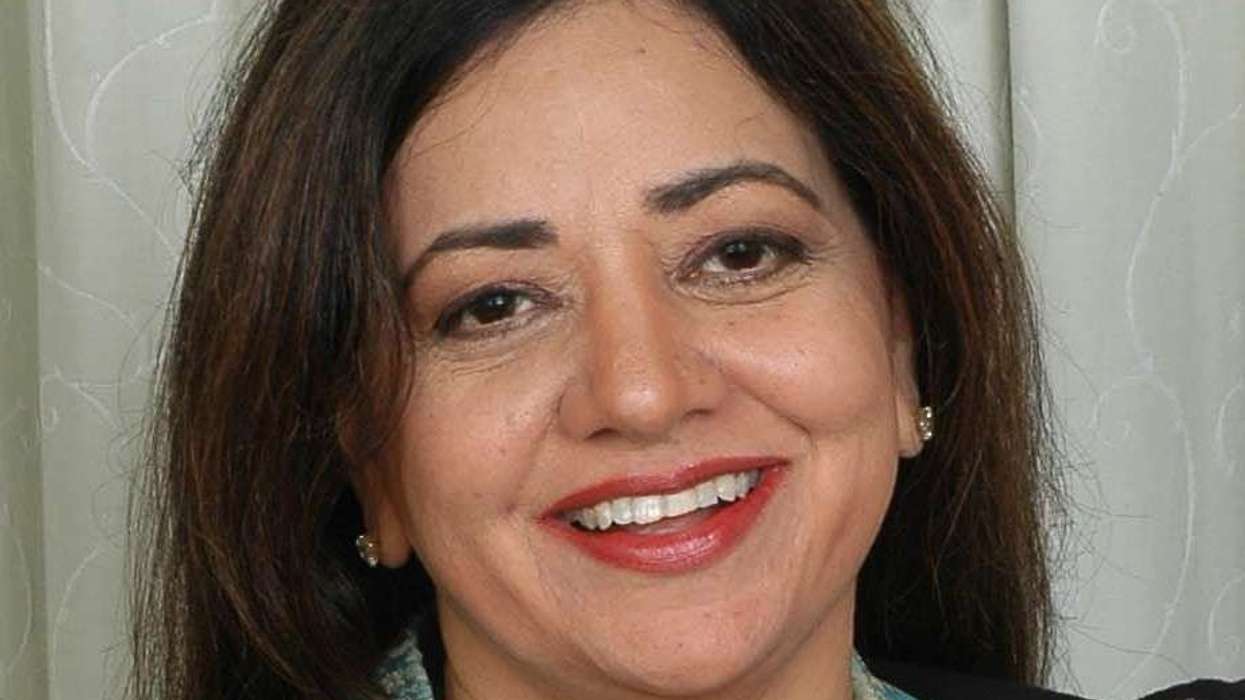 Surina NarulaPhoto: SN 14
Nor can I judge a dress, and categorise or marginalise it for being authentic. What, after all, makes my borrowed pantsuit valid, and a salwar kameez invalid? And yet, even as I ask myself this, I resist a different kind of demand – the idea that the answer is to now choose a side. Why can’t I borrow what I want from every culture? Why do I have to stand alone, separated, in an authenticity that may be pure, but is neither convenient nor comfortable to me? Why can't we simply enjoy the diversity?
This isn’t just my own confusion. Salman Rushdie called it mongrelisation, and said he “rejoices in mongrelisation and fears the absolutism of the Pure”. The critic Homi Bhabha went further, arguing that culture is never really pure to begin with but always made in what he called a “Third Space”, where different worlds meet. Perhaps that’s where we always stood, without knowing its name. Has the British Asian finally arrived or is this new, unshrinking version now unwelcome to some?
That, I think, remains to be seen.
**********
The BBC reported:
On Saturday night, under the world-famous Wembley arch, five words rang out: “Punjabi Aa Gaye Wembley Oye!”
Indian megastar Diljit Dosanjh famously starts all his concerts by announcing that “the Punjabis have arrived”.
But this time, it was a play on the usual catchphrase.
Dosanjh is the first ever Punjabi singer to headline Wembley Stadium, the music venue has said.
Addressing his fans, he reflected on the significance of the occasion. “This moment will go down in the history books,” he said.
And as Bhangra beats blared out, fans erupted with cheers while Dosanjh launched into his biggest hits, from Born to Shine to Lover.
Over two decades, Dosanjh has built a huge global fanbase, topping charts and singing with the likes of Ed Sheeran.
Surina Narula attended Diljit Dosanjh’s Wembley concert




 Kate Varah Adama Jalloh
 Hiran Abeysekera (Hamlet) in Hamlet at the National Theatre. Sam Taylor
  Ncuti Gatwa as Algernon in The Importance of Being Earnest at the National Theatre Marc Brenner
 Sharon D Clarke as Lady Bracknell in The Importance of Being Earnest at the National Theatre Marc Brenner
  Indhu Rubasingham left and Kate Varah Amit Roy
 The company of Bacchae at the National Theatre Marc Brenner
  Ballet Shoes poster National Theatre
  Rosamund Pike (Jessica) in Inter Alia at the National Theatre resize Manuel Harlan