by LAUREN CODLING
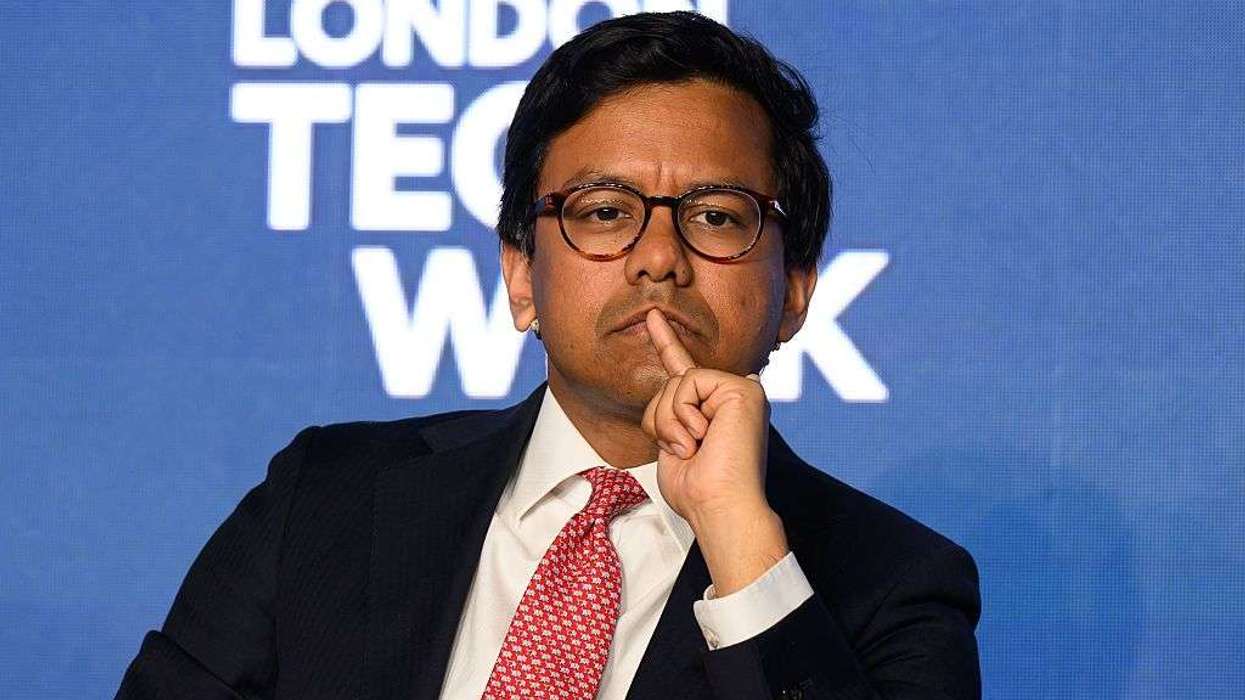
A CHAMPION debater has spoken of his experience of competing against a robot, as he admitted he had worried about losing to the machine.
Project Debater, described as the “first AI-powered, computational argumentation tool”, pitted Briton Harish Natarajan against a machine in a live debate in San Francisco last month.
Natarajan, 31, from Newcastle, and the machine, developed by tech company International Business Machines (IBM), were told to present arguments on funding for preschool education.
IBM had developed the six-year-old artificial intelligence debating system primarily in Israel. In order to succeed, it had been programmed to produce arguments, as well as listen and respond to opposing points of view.
Natarajan told Eastern Eye he had no preconception of Project Debater’s strengths and weaknesses.
Admitting to being nervous before the debate, he said: “My assumption was it would be an interesting debate and it was far more likely that the human would win.
“But I did have a moment of realisation that if I lost, this would be a major story and it would be a large part of what people remember me for.”
Before the event, which was watched by thousands, each had 15 minutes to prepare to debate the motion.
Neither had access to the internet. Each was then given the opportunity to make opening arguments and had the chance to challenge one another.
Revealing he was initially unsure how to approach the motion, Natarajan described the machine’s first speech as “effective”.
The machine had an immense amount of “knowledge” to justify its claims. It could tap into a vast database of statistics included in academic data and newspaper articles, while the
Briton had to rely on his own knowledge and oratory skills.
It was during the second speech, however, that Natarajan felt he could potentially succeed.
“The robot’s second speech, which was supposed to be a response to my argument, was weaker than its constructive speech,” he recalled.
“It made it easier for me to say, ‘this is what I said, and this is not being responded to’ and that is important [when debating].”
After a 25-minute exchange, Natarajan was announced as the winner.
Despite his victory, he admitted it was “shocking” that artificial intelligence had come so far.
Debating was complicated, he said, and for a machine to take on the challenge was incredible. He also noted the robot’s use of emotive language to pursue its point.
“For a machine to construct a four-minute speech, and to understand a full four-minute, natural speech by a human, is incredible,” Natarajan said.
“It highlights that technology is moving at such a rapid rate.”
IBM is now discussing how it can improve the quality of the machine’s ability to debate.
In 1996, world chess champion Garry Kasparov, took on an IBM supercomputer called Deep Blue and won.
However, in 1997, Deep Blue competed again against Kasparov and won.
Natarajan, who has won 36 debating competitions thus far, believes Project Debater’s story could play out in a similar vein.
“There will come a time where a machine can debate against the best human debater and probably win,” he said. “Whether or not it will be done by IBM or if I will be invited... we will have to see.”
Natarajan, who has been debating since he was in school, is now head of economic risk analysis at the AKE International consultancy. He said it was his family who initially suggested he test out his skills in competitions.
“My parents and my sister always said I was argumentative,” he said.