
Highlights
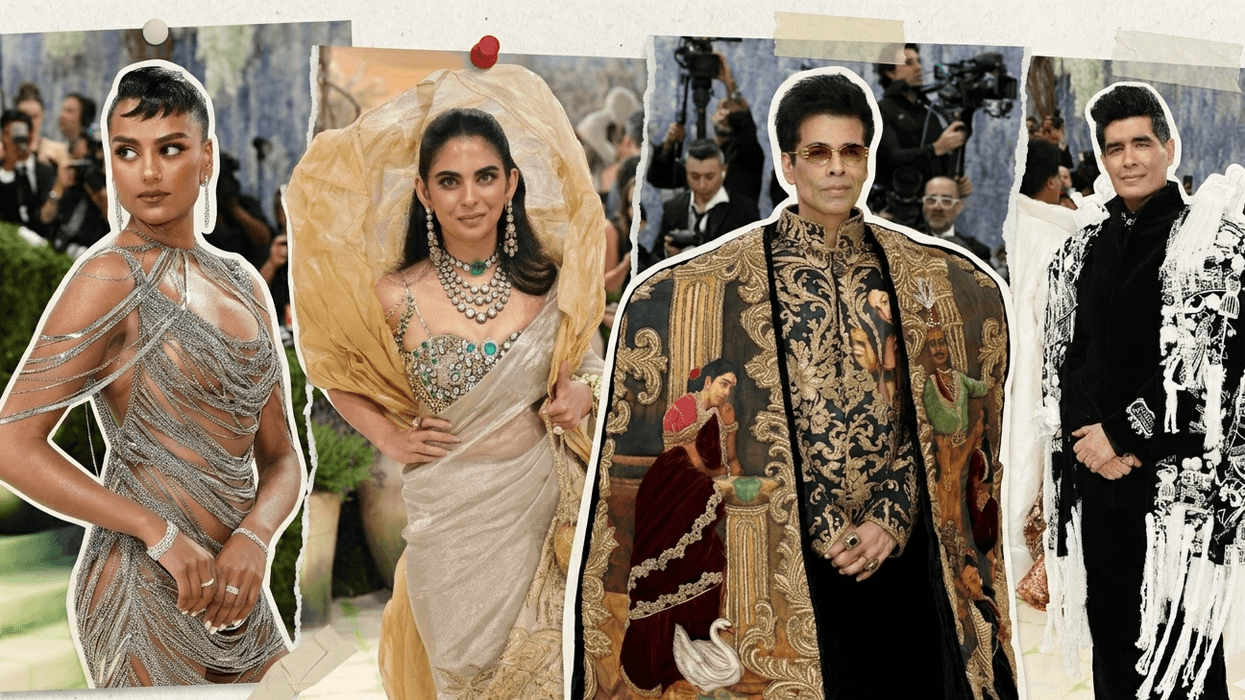
- Karan Johar and Isha Ambani lead a fashion-forward south Asian presence
- Designers draw on art history, kalamkari and couture innovation
- Jewellery, sculpture and textile heritage shape a distinct narrative on the carpet
Art history and couture collide
Karan Johar marked his Met Gala debut in a custom look by Manish Malhotra, drawing directly from the works of Raja Ravi Varma. The ensemble featured a hand-painted cape bordered with zardozi, where mythological imagery was treated as living canvas rather than reference.
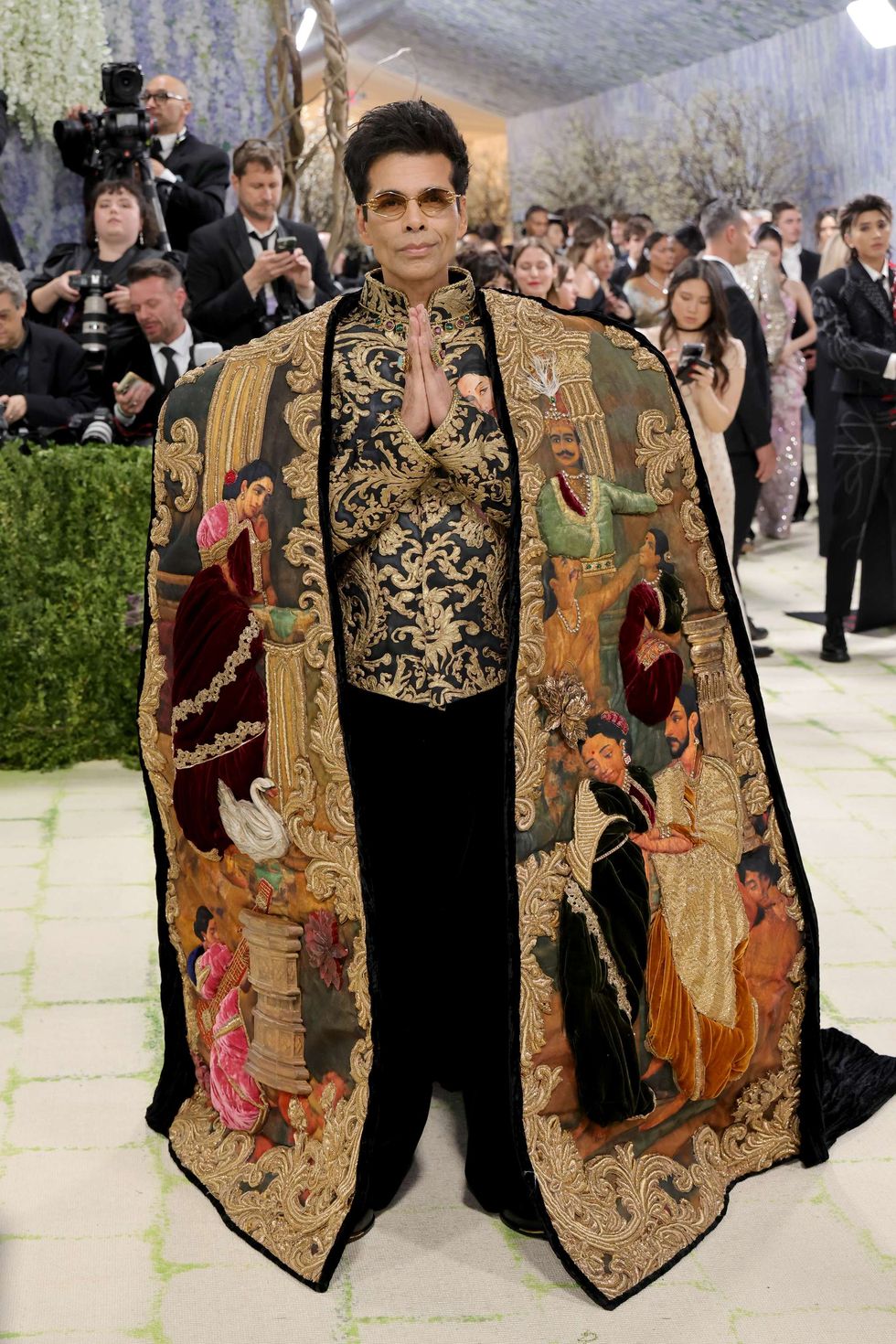 Karan Johar Getty Images
Isha Ambani took a sculptural approach in a gold sari-gown by Gaurav Gupta. Woven with gold threads, the piece was paired with heirloom jewellery and a jasmine-inspired hair sculpture, merging traditional adornment with a contemporary silhouette.
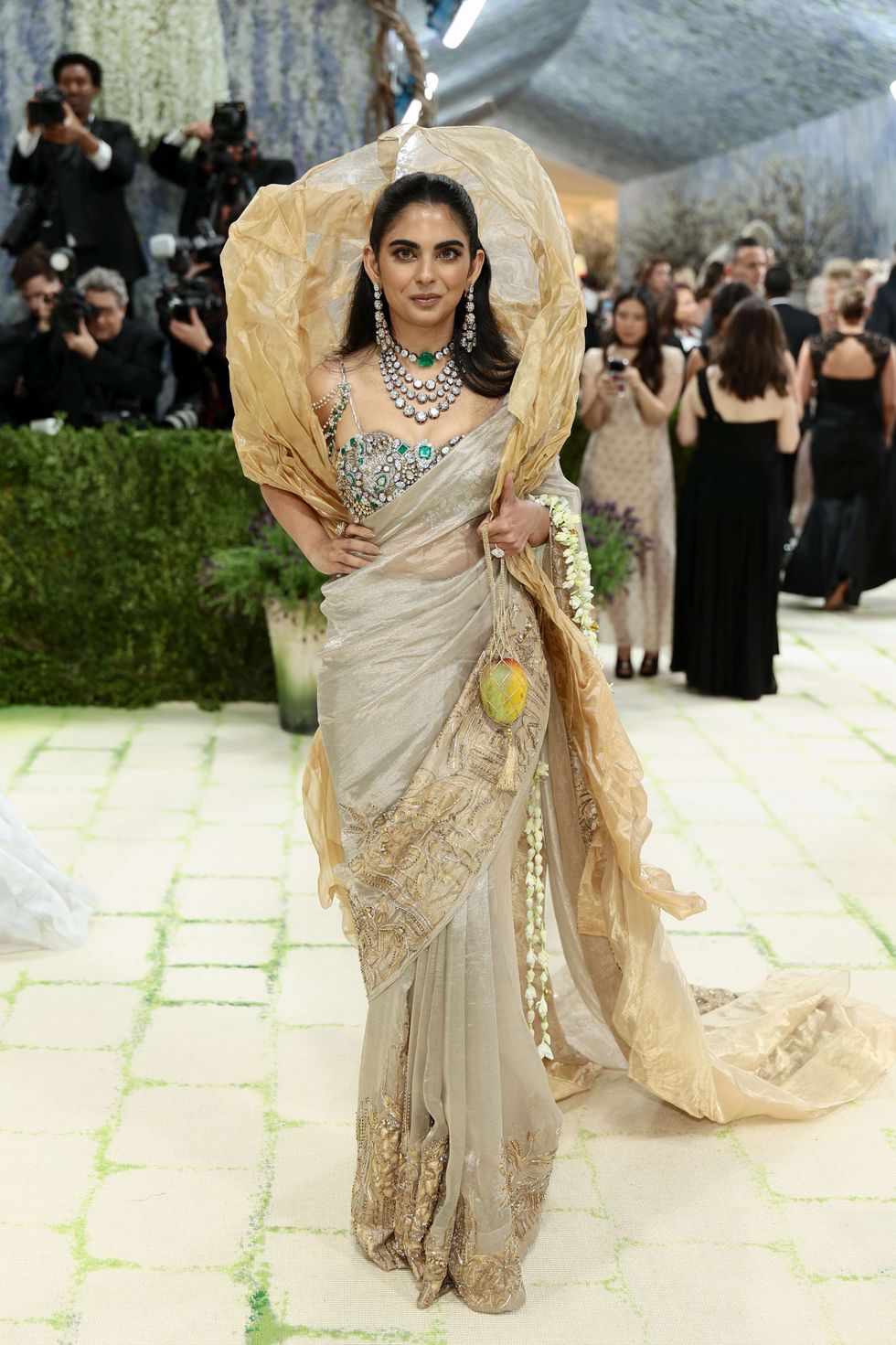 Isha AmbaniGetty Images
Natasha Poonawalla leaned into the theme through collaboration with Marc Quinn. She wore the sculptural Orchid Pectoral, layered over a white couture gown by Dolce & Gabbana, presenting the body as a site for art.
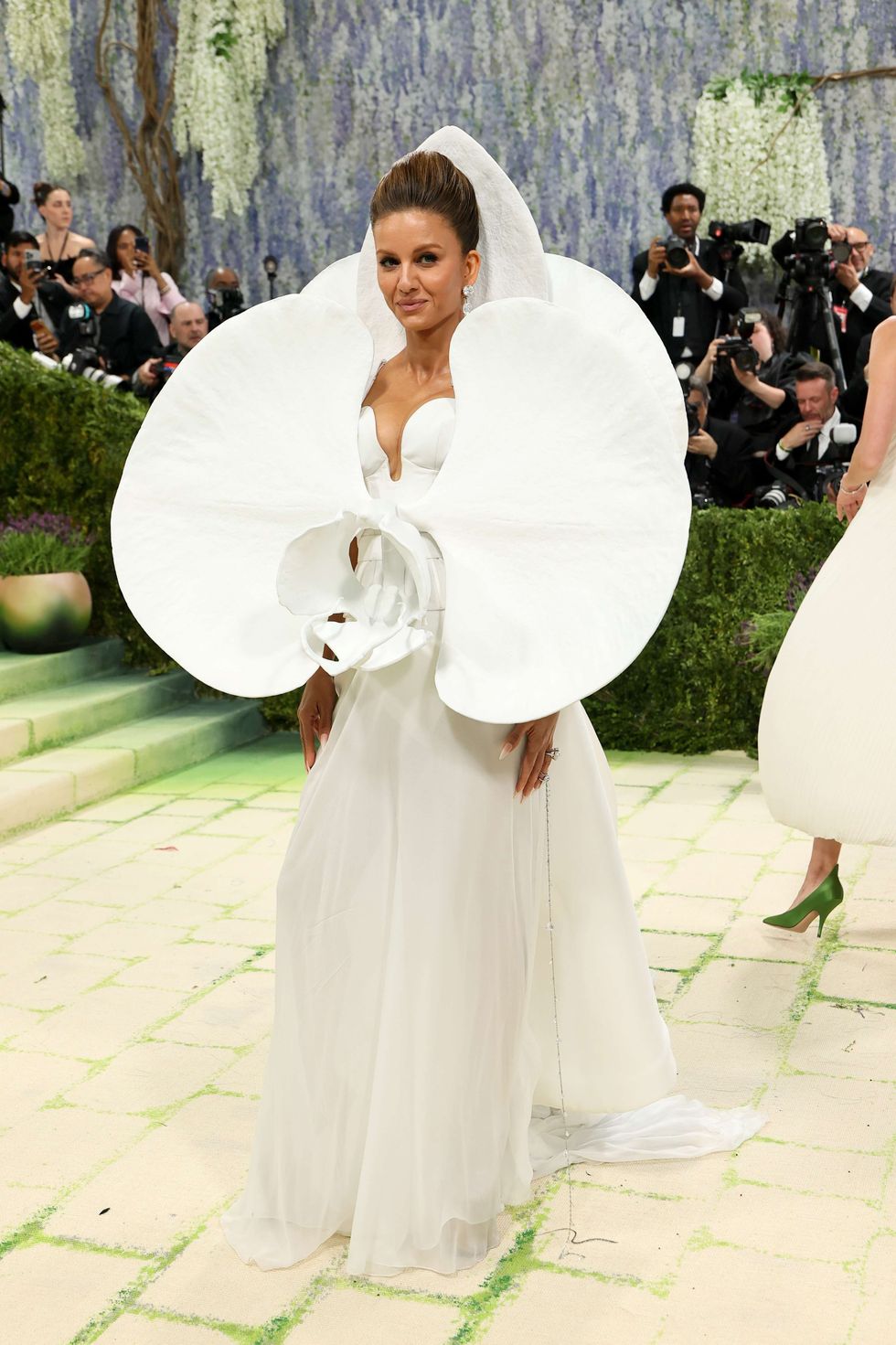 Natasha PoonawallaGetty Images
Identity, material and modern expression
Ananya Birla made her debut in a futuristic black couture look by Robert Wun, paired with a stainless steel mask by Subodh Gupta. The metallic element functioned as both concealment and statement, introducing questions of identity and visibility.
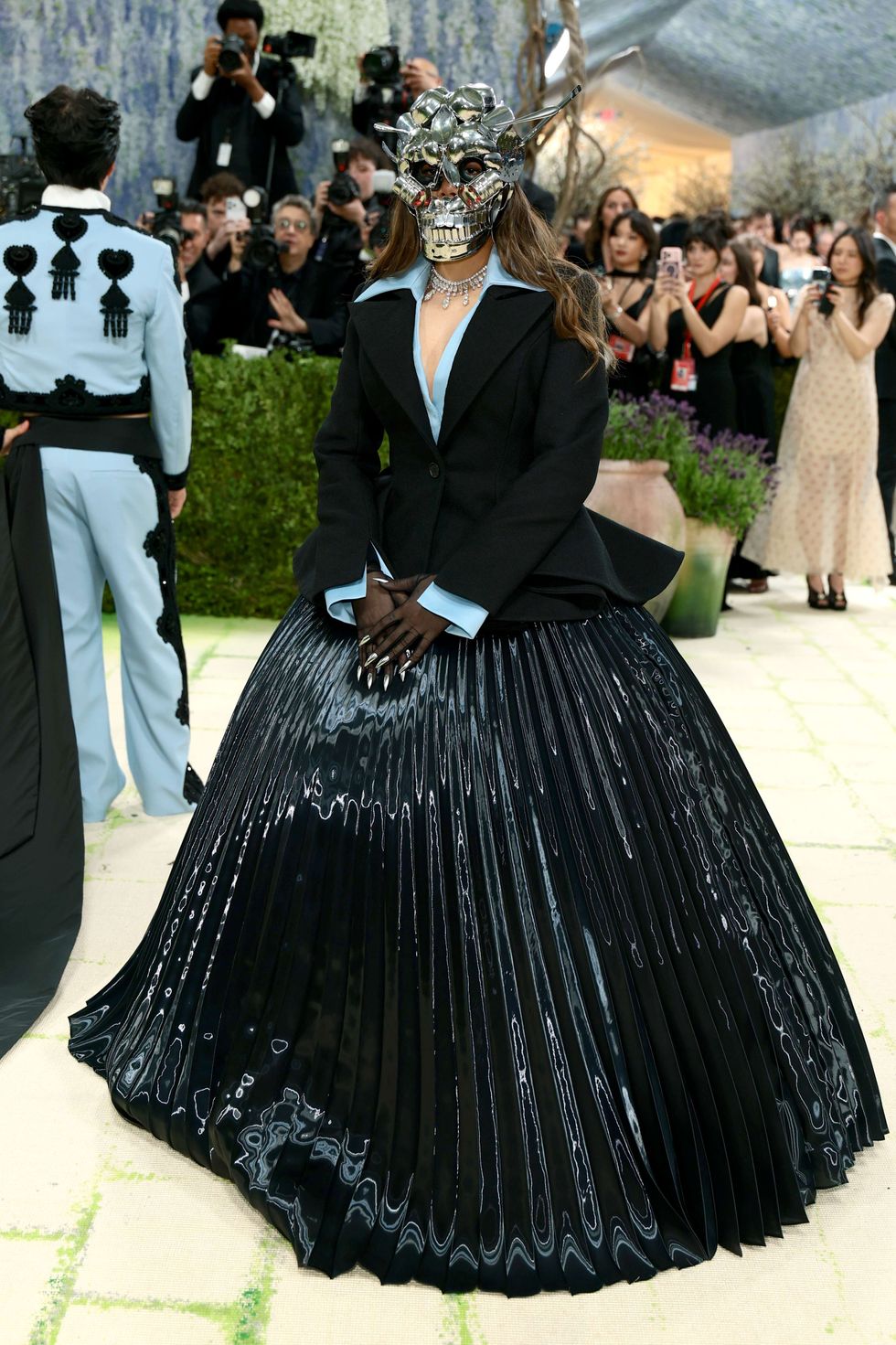 Ananya Birla Getty Images
Simone Ashley opted for a silver chain minidress by Stella McCartney. Constructed to create the illusion of nudity, the piece explored the relationship between exposure and structure, aligning with the exhibition’s focus on the body beneath.
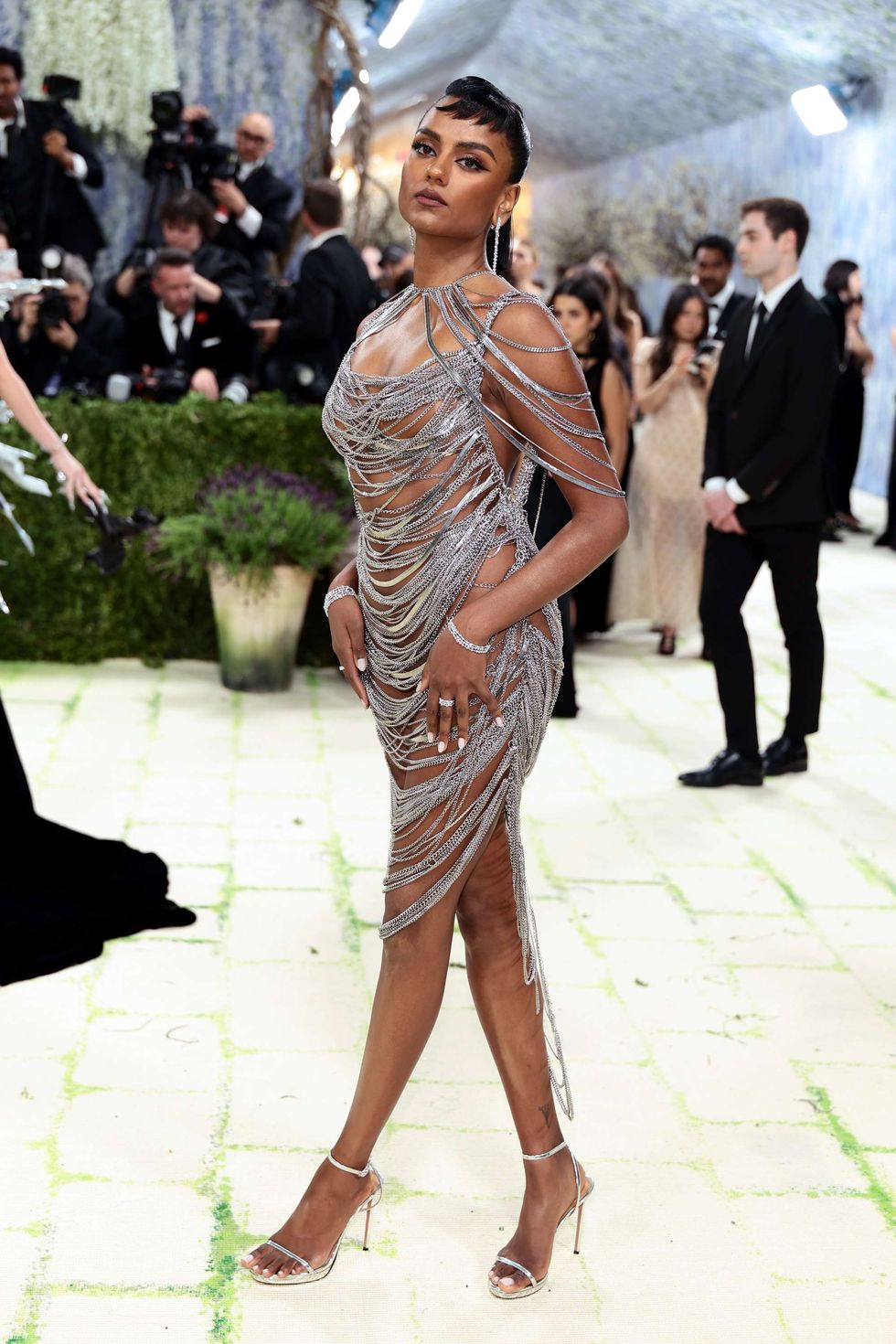 Simone AshleyGetty Images
Heritage as living archive
From Jaipur’s royal family, Gauravi Kumari wore a gown by Prabal Gurung that incorporated an original chiffon saree once owned by Gayatri Devi. Padmanabh Singh also wore Gurung, reinforcing the link between archival garments and modern tailoring.
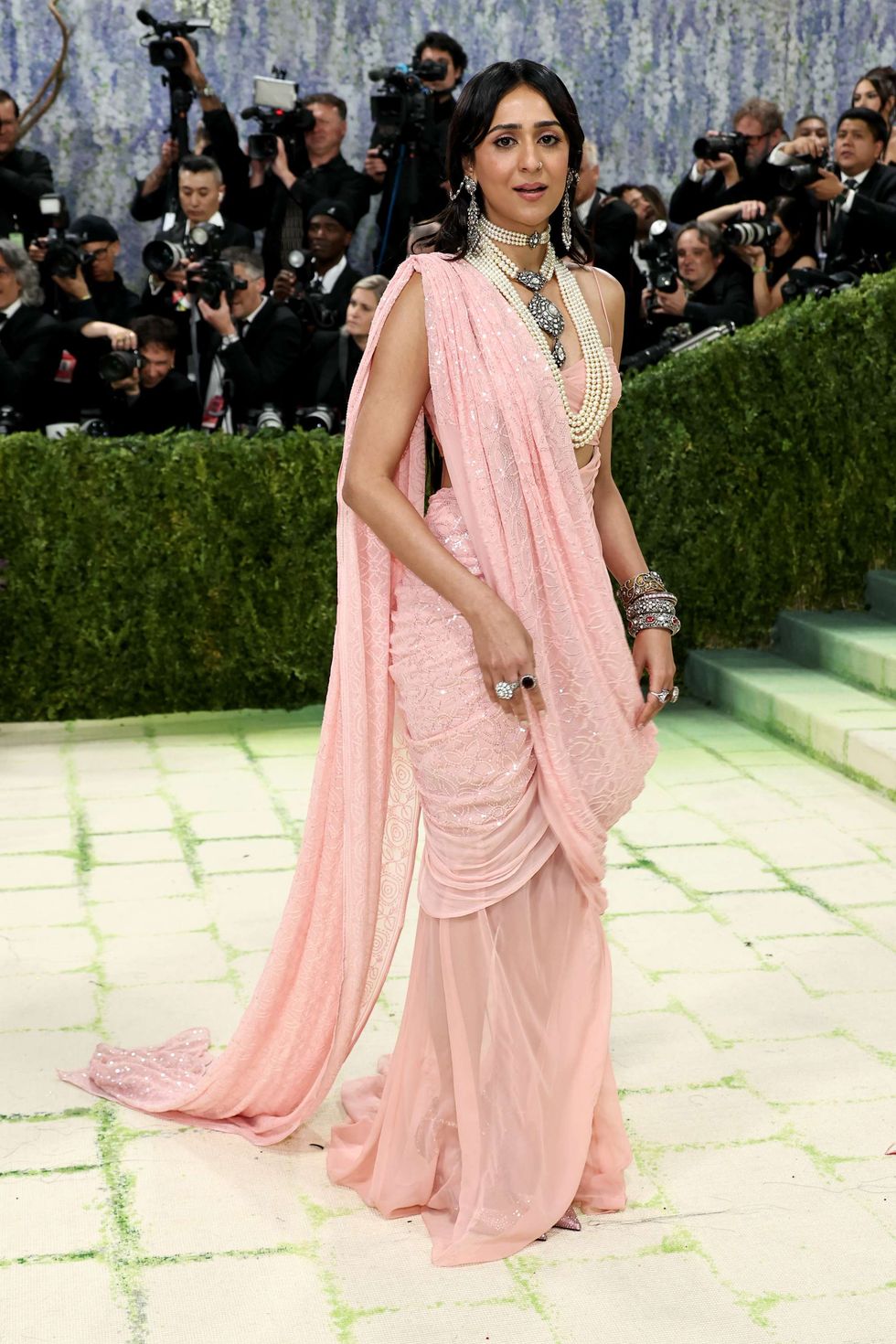 Gauravi Kumari Getty Images
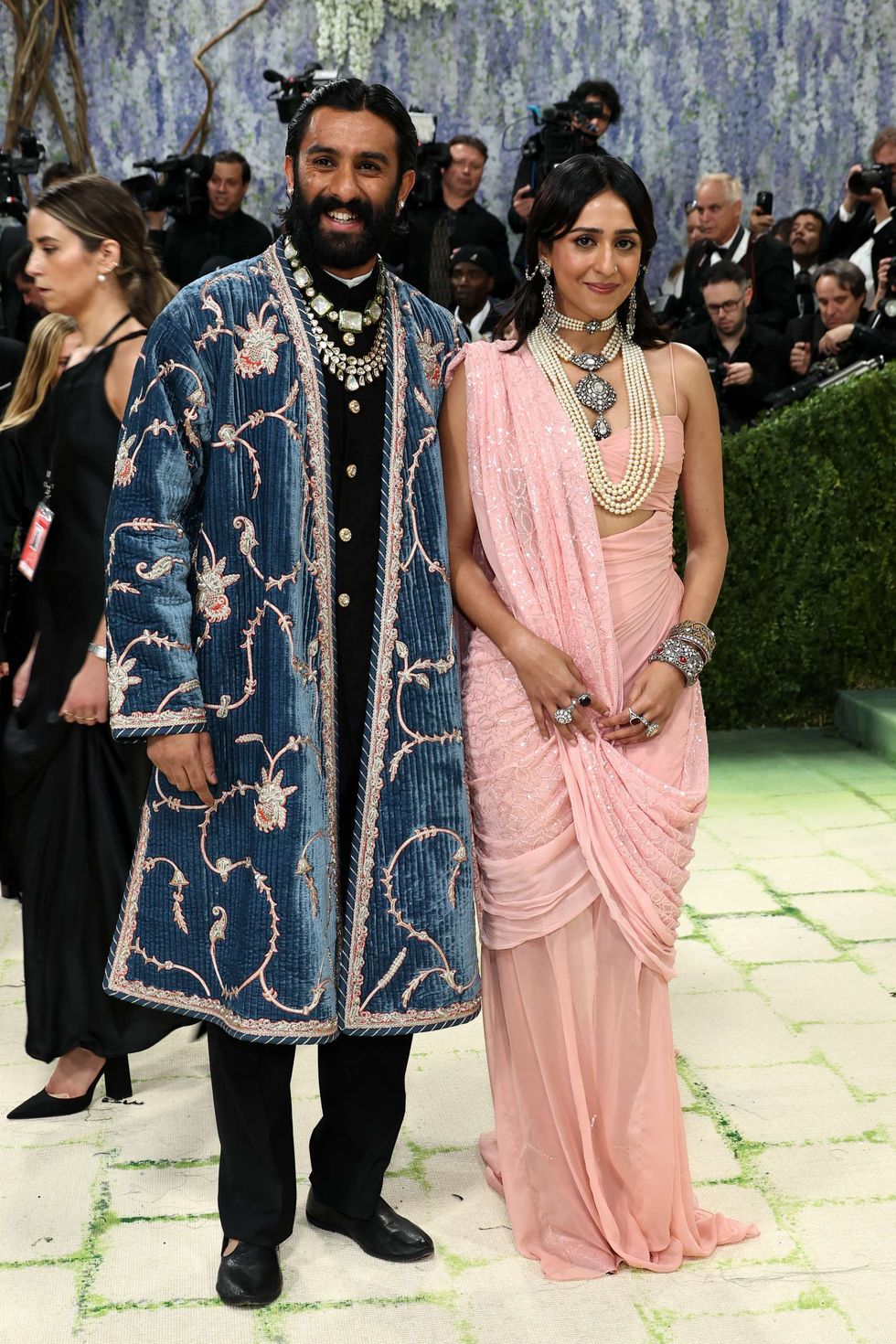 Padmanabh Singh and Gauravi KumariGetty Images
Sudha Reddy returned in a creation by Manish Malhotra built around the “Tree of Life” motif, drawn from kalamkari traditions. The design used textile storytelling to anchor the look in heritage.
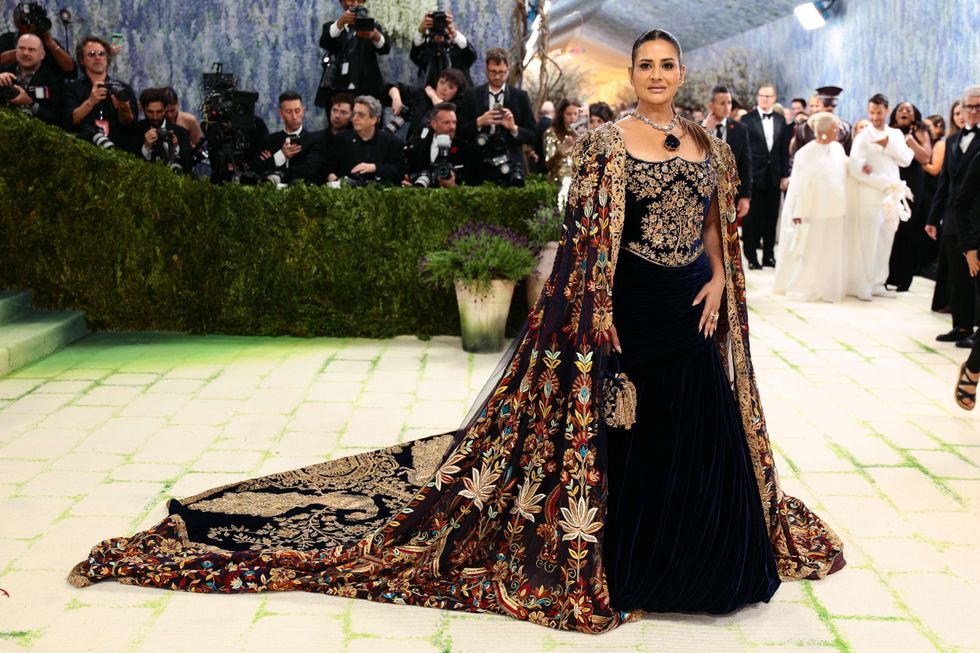 Sudha ReddyGetty Images
Malhotra himself appeared on the carpet in a black bandhgala, paired with an architectural cape inspired by Mumbai. The ensemble reflected his continued focus on craftsmanship, presenting Indian design as both structure and narrative.
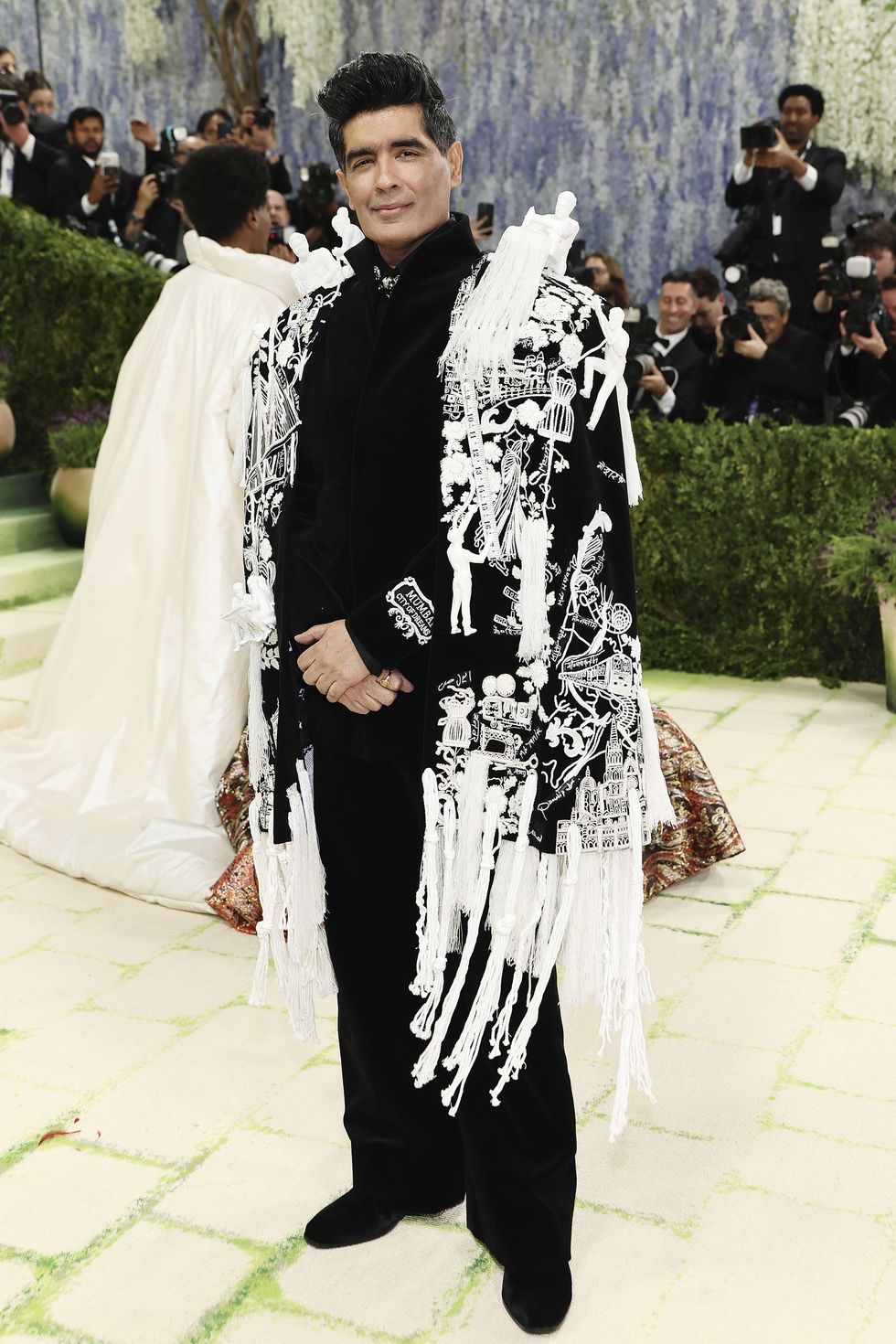 Manish MalhotraGetty Images
Set against the backdrop of the Metropolitan Museum of Art, these appearances highlighted how south Asian attendees interpreted “Fashion Is Art” through material, memory and meaning, positioning craft and culture at the centre of the global fashion conversation.