
Highlights
- Sarah Paulson channels the politics of excess through a sculptural tulle gown
- The “ONE Percent” collection reframes couture as commentary on inequality
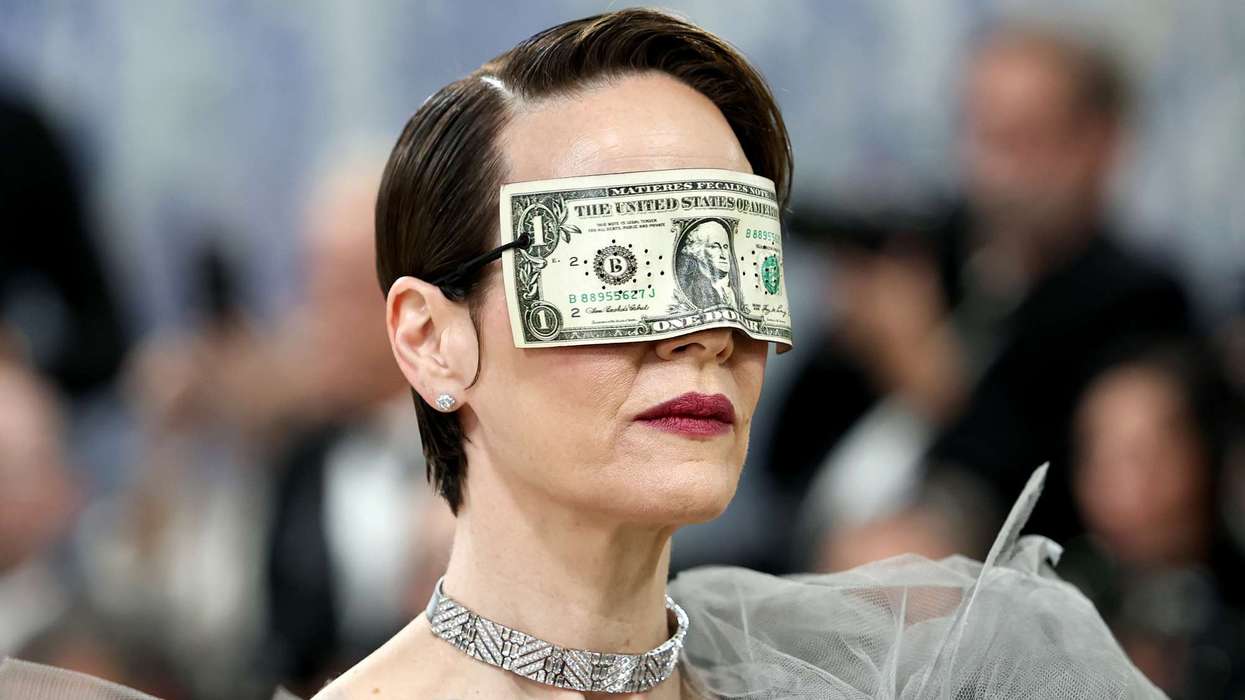
- A dollar bill mask becomes the clearest symbol of power, privilege and blindness
A gown that exaggerates power and privilege
Sarah Paulson stepped onto the Met Gala carpet in a red-grey tulle ball gown by Matières Fécales, its scale immediately dominating the frame. The silhouette was deliberately inflated, with layers of tulle building volume into something almost architectural. A large, theatrical bow extended the sense of excess, while white opera gloves completed a look that echoed traditional markers of high society dressing.
The design comes from the label’s Fall 2026 collection, “The ONE Percent”, which focuses on the ultra-wealthy as both subject and spectacle. Here, couture is not presented as aspiration but as exaggeration. The proportions push beyond elegance into caricature, suggesting a world where wealth distorts not just access but appearance itself.
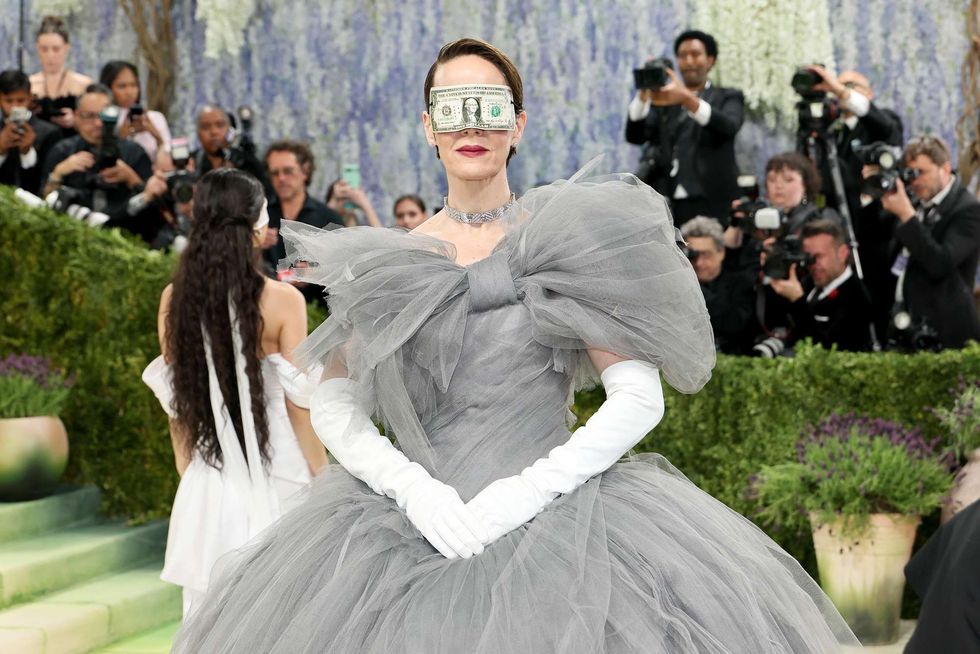 The most direct element of the look sat across her faceGetty Images
The mask that sharpens the message
The most direct element of the look sat across her face. A dollar bill placed over her eyes turned symbolism into something unavoidable. It suggested blindness shaped by money, an image that cut through the layers of fabric and spectacle.
The styling reinforced this tension. Around her neck sat the Ruban Diamants choker from Boucheron’s Histoire de Style, Art Déco High Jewelry collection. Its precision and refinement stood in contrast to the exaggerated gown, bringing the language of traditional luxury into a look that questions it.
Politics on the red carpet
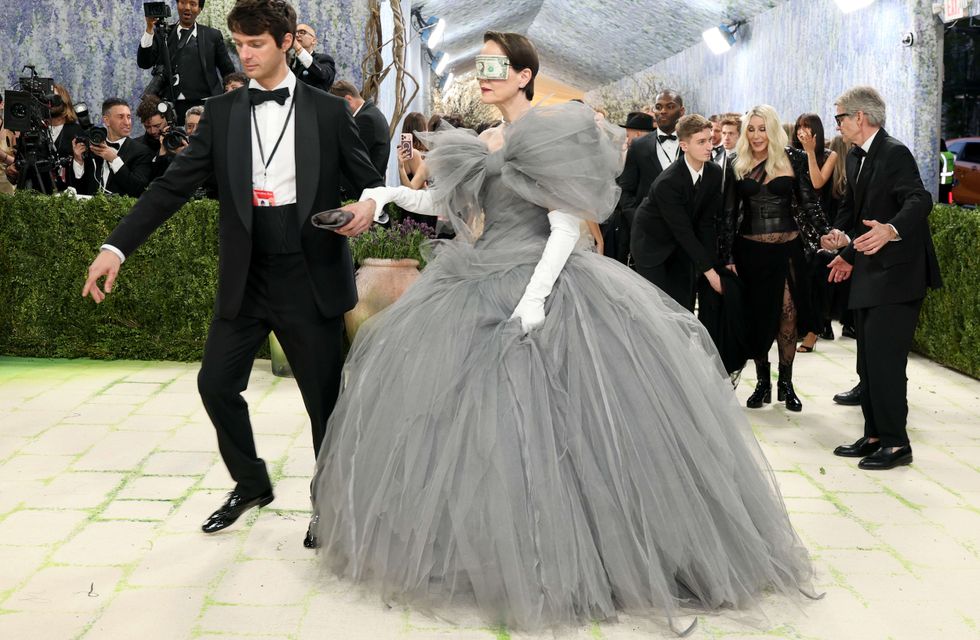 Rather than stepping outside the system, the look operates from within itGetty Images
The setting complicates the message. The Met Gala, held at the Metropolitan Museum of Art, is one of the most exclusive events in fashion, with tickets priced at $75,000. To critique wealth within that space is to accept a degree of contradiction.
This year’s theme, “Fashion Is Art”, accompanied the “Costume Art” exhibition curated by Andrew Bolton, which explores how clothing interacts with the body. Paulson’s interpretation extended that idea into politics. The body becomes a site where power is displayed, concealed and questioned at once.
Rather than stepping outside the system, the look operates from within it. By adopting the codes of couture and amplifying them to the point of discomfort, Paulson reflects the spectacle back on itself. The result is not just an outfit but an argument, staged in one of fashion’s most visible spaces.