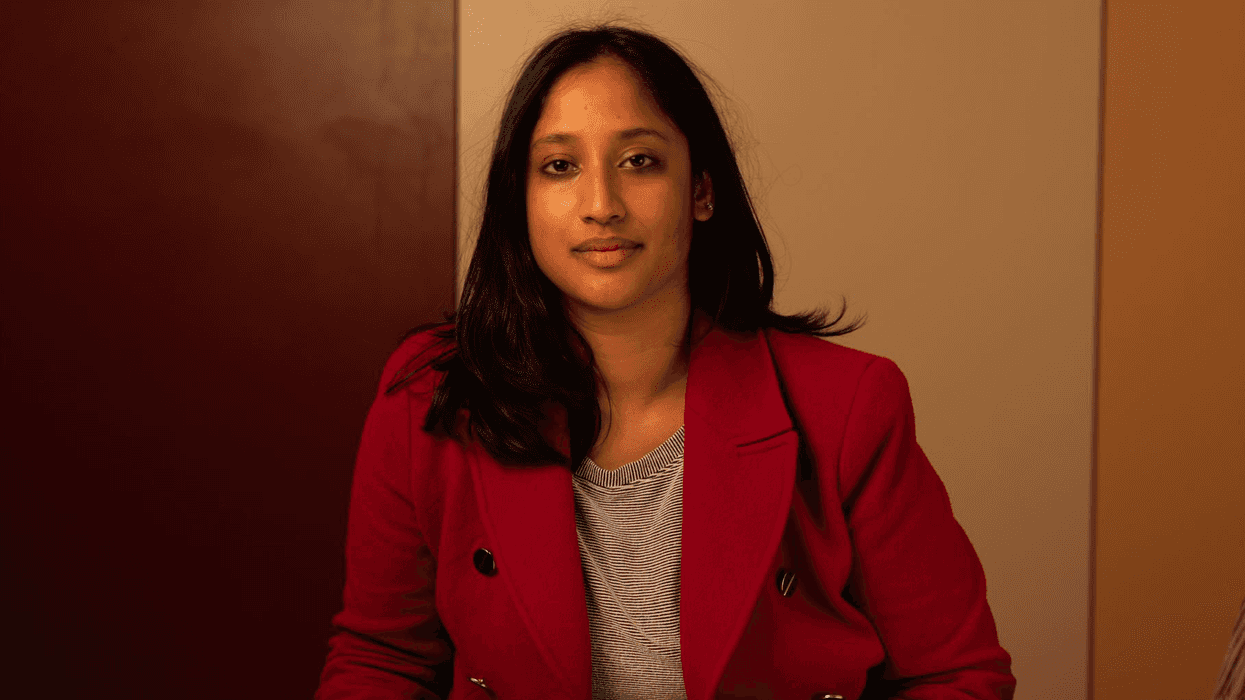

THE debut play of Asian playwright and screenwriter, Atiha Sen Gupta, has received a fresh production at Tara Theatre this week, 17 years after it first premiered to critical acclaim.
The revival of What Fatima Did…, directed by Adam Karim, is presented by Tara Theatre Young Company, with a cohort of eleven 18-to-25-year-olds making their professional theatre debut.
"When I wrote the play in 2009, they were just about born, or perhaps five years old. So, I think they're discovering it as a kind of old piece, which is quite strange for me, because I wrote it when I was young and now, I feel quite aged by it,” Sen Gupta told Eastern Eye.
Set in a secondary school, the play centres on the absent figure of Fatima — a confident, party-loving teenager whose decision to start wearing the hijab sends ripples through her friendship group and forces those around her to confront their own assumptions about identity, belonging, and what it means to be British. The central dramatic conceit is that Fatima herself is never seen.
"She's the absent figure," the writer explained.For the Tara Young Company production, however, an additional five-minute monologue has been created in which the audience finally encounters her.
"Politically, having her appear goes against the central conceit of my play," Sen Gupta added, "but dramatically, it's very satisfying for the audience to finally see this figure they've been missing for the entirety of the play."
The cast includes Anoushay Dar as Fatima, Tahir Hassan as Mohammed, Ben Lonergan as George, Kent Okwesa as Craig, Shakira Paulas as Aisha, Marie Thorseth as Ms Harris, and Amaka Whitney as Stacey.
Sen Gupta was just 21 when the play premiered at the Hampstead Theatre. Educated at Hampstead School, she had become involved as a teenager with the Hampstead Theatre's youth company, an experience she credited as formative, and one she is aware young writers today may not so easily access."
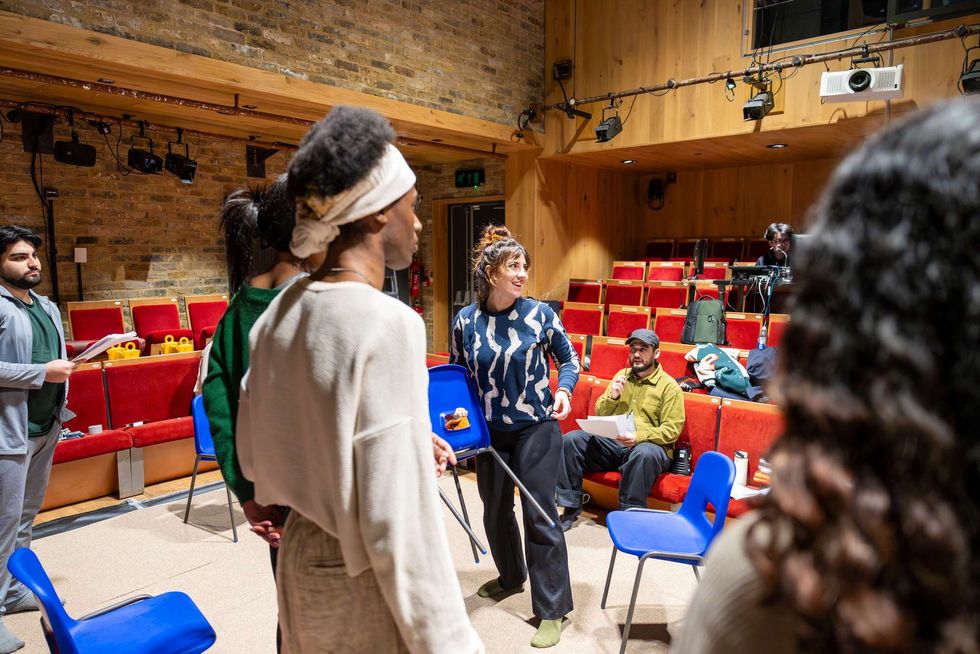 Tara Theatre Young Company rehearses What Fatima Did...Tyler Fayose Photography
I was 17 when I was commissioned," she said, "and I don't think in this day and age I would have had that opportunity."
The play was originally rooted in the spike in Islamophobia of the early 2000s, and Sen Gupta and the company have worked to refresh the text so that it resonates with a new generation, including collaborating on a new ending.
The cultural references of 2009 have otherwise been retained rather than updated, a decision that reflects just how little, in Sen Gupta's view, has fundamentally changed.There is a scene in which a white British character named George dons a hijab fashioned from the St George's flag.
"That still feels very relevant today," she said, "perhaps more so, because of the rise of Reform and the national conversation moving rightwards with a very anti-migrant tone."
The hijab debate, she pointed out, may have shifted in Britain, but in various European countries the push to ban it continues. "So even that debate remains very much alive."
Underpinning all of it is the question of British identity, one the playwright regards as unresolved and perhaps deliberately so.
"I think Britain fundamentally hasn't decolonised," she said. "To be British, to be English, is still largely understood to mean being white."
Sen Gupta invokes the thinker Ambalavaner Sivanandan, a prominent figure in British race relations, who observed that one’s face is one’s passport - it gives one away.
"You can live here for three generations, go to British schools, speak English as your primary language, and yet the colour of your skin still sets you apart. Whereas a Polish immigrant, within one generation, can simply be British, because of the colour of their skin."
Sen Gupta studied politics and sociology at Warwick University and said her writing carried an intellectual rigour alongside a sharp sense of humour."
I think all theatre is political, or should be," she said, "but I'm not interested in didactic or worthy theatre. Humour undercuts that worthiness and seriousness; it relieves tension, relaxes the audience, and allows the story to find its way through."
Since What Fatima Did…, Sen Gupta has written State Red, about police racism, produced at Hampstead Downstairs in 2014, and Counting Stars, about two Nigerian nightclub toilet attendants set in what she described as "post-Lee Rigby, post-Brexit Woolwich", which played at the Edinburgh Fringe and the Theatre Royal Stratford East in 2016, where she was writer-in-residence.
She has also written for television, including co-writing an episode of Skins in 2009 and contributing to Holby City in 2016.
When the pandemic shuttered theatres entirely, she made a decision that surprised many: she retrained as a paramedic. "I decided to train in a job that would never go out of fashion and could never be put on Zoom," she said.
The move was partly practical — it was, she said, always difficult to make a living purely as a playwright, even supplementing income with admin work on the side — but she is also clear that it has fed her writing.
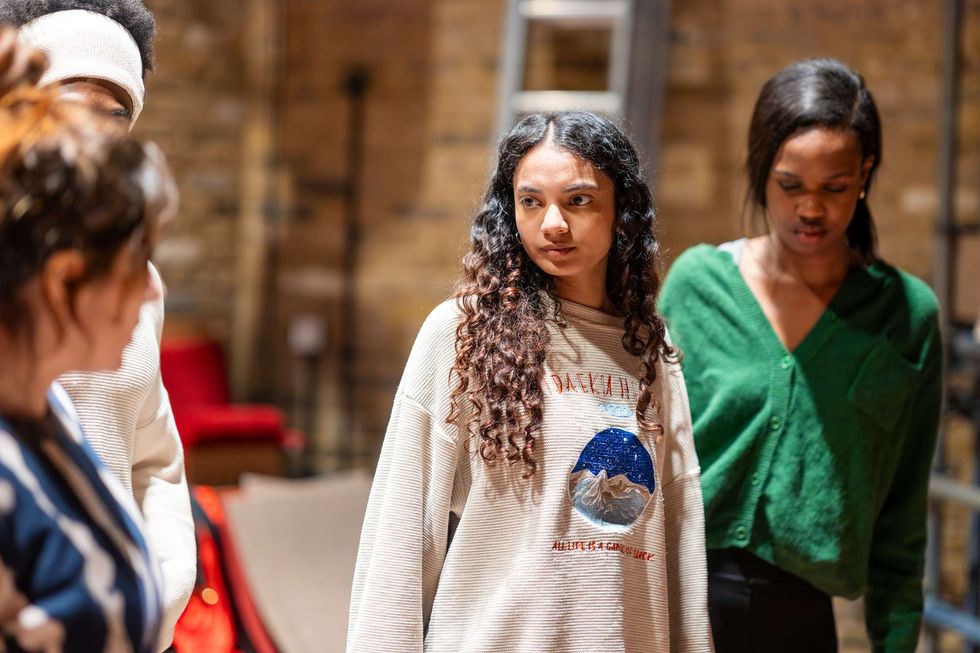 Tara Theatre Young Company rehearses What Fatima Did... Tyler Fayose Photography
"As a paramedic, I see lots of interesting people, patients, and stories. Having more life experience makes you a better writer."
The production rounds off the first year of Natasha Kathi-Chandra's tenure as Tara Theatre's artistic director, and forms part of a season emphasising the breadth of south Asian storytelling.
She is also keen to highlight something practical and principled about Tara Theatre."If I'm not mistaken, Tara is the only theatre company in the country that pays a living wage to the participants in their young company show. In my day, I was just grateful to be involved; we didn't get paid. I think that approach should be rolled out nationally — if you're giving your time, you should be paid."
For aspiring writers, her advice is pragmatic: have a second job, read widely, and take a multi-pronged approach rather than pinning everything on one opportunity.
"It's a vicious cycle," she said. "You can't get your work seen without an agent, but how do you get the agent in the first place?"
Theatre company websites, open submissions, competitions, and young company schemes are all worth pursuing, she said, adding, above all: persevere.
What Fatima Did… runs at Tara Theatre until Saturday (18)