
Highlights:
- 311 children have died since March in Bangladesh’s measles outbreak
- Suspected cases rise to 41,793 nationwide
- 17 deaths reported in a single day, the highest so far
- Vaccination drive targets 1.8 crore children amid “high” risk warning
BANGLADESH has recorded 311 child deaths since March in a measles outbreak, according to government data released on Monday.
The number of suspected cases has reached 41,793, while authorities reported the highest single-day death toll since the outbreak began on March 15, with 17 children dying within 24 hours.
"Seventeen more children died in the past 24 hours with measles or its symptoms across the country,” a directorate general of health services (DGHS) spokesman said on Monday.
He said that during the same period, 1,456 patients with measles symptoms were admitted to hospitals across the country, with laboratory tests confirming 154 cases.
"Some children were already in a critical condition to a point of no return," government health services spokesman Zahid Raihan told AFP. "That's why the recorded deaths are still increasing."
Measles is highly contagious and spreads through coughs and sneezes. It has no specific treatment once contracted.
Complications can include brain swelling and severe breathing problems, and the disease is most common among children. Most cases recorded during the current outbreak have been among children aged between six months and five years.
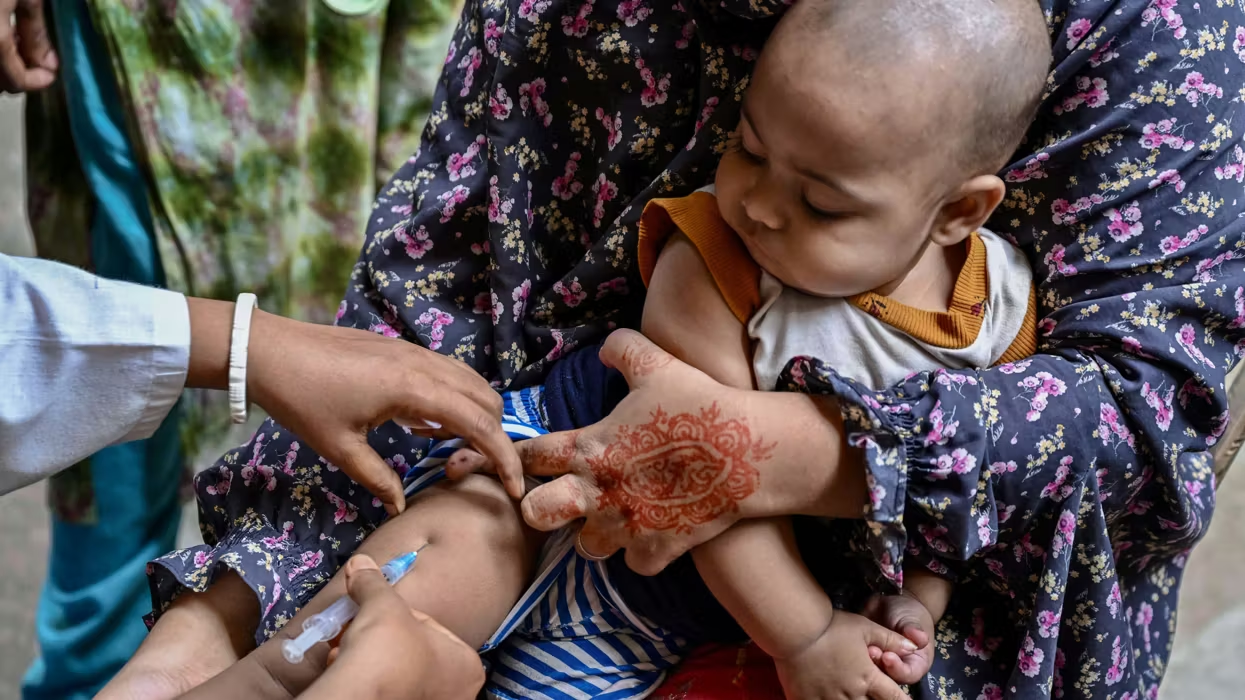
Health officials are working to vaccinate children across the country of 170 million people, with support from the World Health Organization, UNICEF and security forces.
Two weeks ago, the WHO assessed the outbreak as a "high" national risk, warning of continued transmission unless urgent measures were taken to close “immunity gaps”.
Prime Minister Tarique Rahman’s Bangladesh Nationalist Party (BNP) government launched a nationwide emergency campaign on April 20 to vaccinate around 1.8 crore children aged six months to under five years.
The record deaths were reported two days after health minister Sardar Sakhawat Husain said measles was under control and that the death rate had declined with vaccine supplies and nationwide distribution. He said over 81 per cent of children have received the measles vaccine and the government was working to reach 100 per cent coverage.
For decades, Bangladesh ran the Expanded Programme on Immunisation (EPI), with measles vaccination as a core component. Between 2000 and 2019, deaths declined and vaccination coverage increased. In 2018, Bangladesh achieved its measles-rubella control goal and was verified as having interrupted endemic transmission of certain strains.
Officials said this progress declined in 2026 due to vaccine shortages linked to stockouts in 2024-2025 during the interim government led by Muhammad Yunus. Prime Minister Rahman called the failure of past regimes a "life-destroying" and “unforgivable crime".
BNP health affairs secretary Mohammad Rafiqul Islam said the outbreak occurred “due to the interim government's failure to provide vaccines on time.”
“UNICEF is deeply concerned about the sharp rise in measles cases across Bangladesh, putting thousands of children, especially the youngest and most vulnerable, at serious risk,” UNICEF Representative in Dhaka Rana Flowers said in a statement.
Flowers said the resurgence “highlights critical immunity gaps, particularly among zero-dose and under-vaccinated children, while infections among infants under nine months, who are not yet eligible for routine vaccination, are especially alarming.”
The WHO said that without a rapid scale-up of vaccination and response measures, transmission was “likely to continue expanding, placing further strain on health services and increasing the risk of severe health outcomes among children”.
A report in the journal Science said “changes to the government's vaccine purchase system after 2024 revolution led to nationwide shortages, gaps in immunity”. It added: “A country of more than 175 million that has long taken pride in its high vaccination rates, the epidemic stems from a catastrophic breakdown in vaccine procurement following the country's 2024 revolution,” under the headline “Measles explodes in Bangladesh after vaccination breakdown, killing hundreds of children”.
Officials said the Dhaka division, including the capital, is the worst-affected region, followed by Rajshahi division, while other regions are also reporting cases. Health experts said the current death toll is the highest in decades, with more than 45,000 cases recorded since March 15.
The WHO estimates around 95,000 measles deaths globally every year, mostly among unvaccinated or under-vaccinated children under the age of five.
(With inputs from agencies)