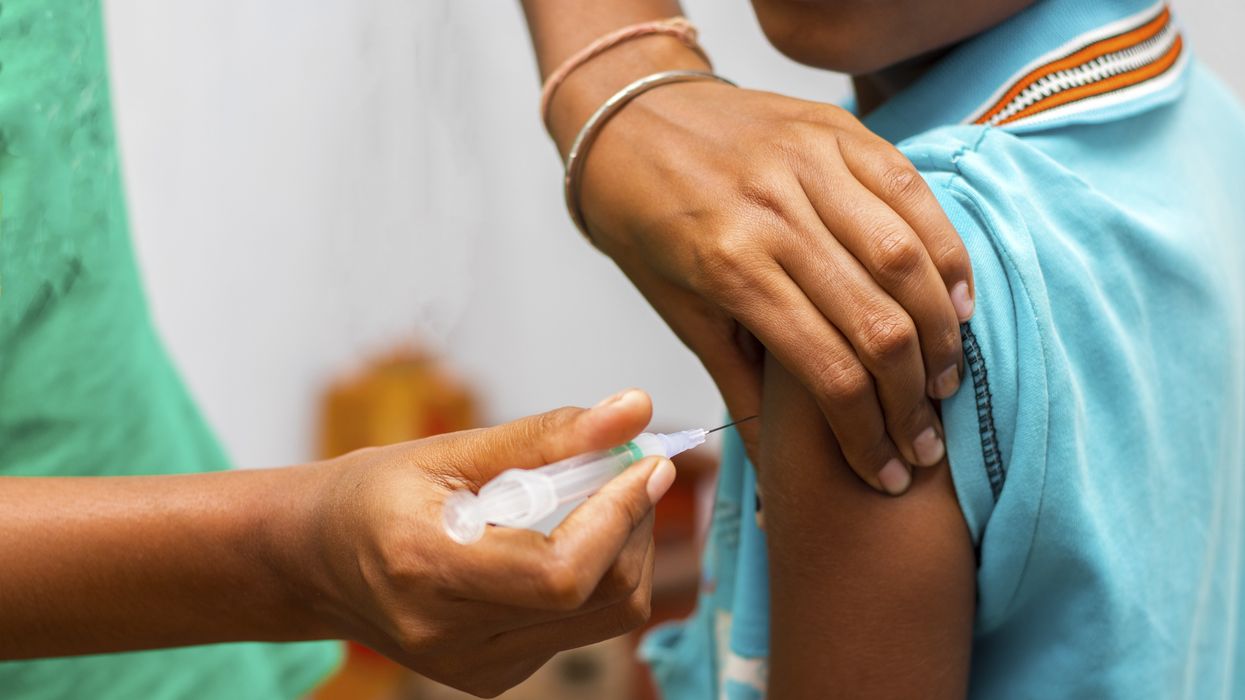

INDIA was one of eight countries that accounted for more than half of the world’s unvaccinated children in 2023, according to a study published in The Lancet. The analysis showed that 15.7 million children globally received no doses of the diphtheria, tetanus, and pertussis (DTP) vaccine in their first year of life, including 1.44 million in India.
The study was conducted by an international team known as the 'Global Burden of Disease (GBD) 2023 Vaccine Coverage Collaborators'. It provided updated estimates of routine childhood vaccine coverage from 1980 to 2023 across 204 countries and territories.
In 1980, 53.5 per cent of children who had never received any routine childhood vaccine—referred to as 'zero-dose' children—lived in just five countries: India, China, Indonesia, Pakistan, and Bangladesh.
Progress and setbacks in vaccine coverage
Routine childhood vaccinations are described as among the most powerful and cost-effective public health tools available, according to Dr Jonathan Mosser from the Institute for Health Metrics and Evaluation (IHME), University of Washington, US. IHME co-ordinates the GBD study.
"Despite the monumental efforts of the past 50 years, progress has been far from universal. Large numbers of children remain under- and un-vaccinated," Dr Mosser said.
He added that persistent global inequalities, challenges related to the COVID-19 pandemic, and the growth of vaccine misinformation and hesitancy have affected immunisation progress. These factors have increased the risk of outbreaks of vaccine-preventable diseases, including measles, polio, and diphtheria.
Dr Mosser said the findings underline "the critical need for targeted improvements to ensure that all children can benefit from lifesaving immunisations".
The researchers analysed data on 11 vaccine-dose combinations recommended by the World Health Organization (WHO) for all children globally. Between 1980 and 2023, vaccine coverage more than doubled worldwide for diseases such as diphtheria, tetanus, pertussis (whooping cough), measles, polio, and tuberculosis.
Recent reversals and geographical disparities
The number of zero-dose children fell by 75 per cent during this period, from 58.8 million in 1980 to 14.7 million in 2019, before the pandemic.
However, progress has either stalled or reversed since 2010 in many countries. Measles vaccination coverage dropped in 100 of the 204 countries between 2010 and 2019. In addition, 21 of 36 high-income countries saw declines in coverage for at least one vaccine dose for diseases such as diphtheria, tetanus, pertussis, measles, polio, or tuberculosis.
The study found that only 18 of 204 countries and territories had met the 2030 target of halving the number of zero-dose children compared to 2019 levels. The authors noted that "accelerated progress" would be required to meet this goal.
According to the study, 65 per cent of the children who had never received a vaccine dose and need to be reached between 2023 and 2030 live in sub-Saharan Africa (4.28 million) and South Asia (1.33 million).
"As of 2023, more than 50 per cent of the 15.7 million global zero-dose children resided in just eight countries (Nigeria, India, Democratic Republic of the Congo, Ethiopia, Somalia, Sudan, Indonesia, and Brazil), emphasising persistent inequities," the authors wrote.
(With inputs from PTI)