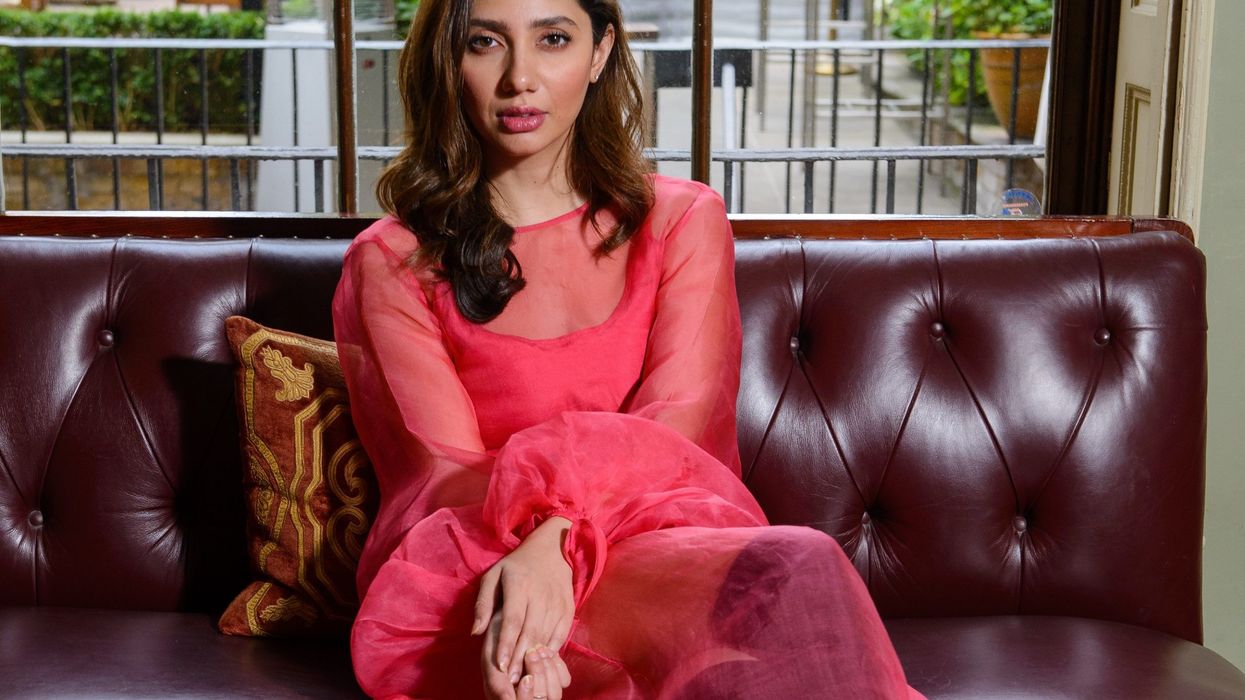

Well-known Pakistani actress Mahira Khan, who has also starred alongside superstar Shah Rukh Khan in the 2017 Bollywood film Raees, has opened up about the backlash she faced following the 2016 Uri attacks and how the situation took a toll on her mental health and eventually led to her diagnosis of bipolar disorder.
In an appearance on the FWhy podcast, a tearful Mahira spoke about the backlash that she experienced after Raees, saying, “That year was rough. The same year Raees released was the same year Verna released, and the same year the whole picture thing happened, and it broke me. It was unexpected. I’d finished the film. It was going just fine. Then suddenly this attack happens, and politically, everything gets political. It’s always political. With India, it’s always political. But the fact that it would get this messy…”
She also spoke about how she would receive threats and really negative tweets. “Constant tweets, constant. In fact, I would get calls and very scary ones. The only thing I wanted was, okay fine, I can’t go to India to promote it, I can’t enjoy this, but I hope it releases in my country. Because I knew that people would rush to the cinemas to watch it, he (Shah Rukh Khan) is really loved here. That was heartbreaking. It brought on an anxiety that I have always had inside me, the depression, it came to the surface.”
She further added, “I ended up in a psychiatrist’s office, and she said, ‘We’ll talk about everything later, but I need you to know that you have manic depression’. This is the first time I’m saying that, I don’t know if I should. It’s been six-seven years, and I’ve been on anti-depressants. I tried leaving them in the middle, and I went into a very, very dark space.”
Mahira also described how she felt when she was at her lowest after she decided to stop taking her medicines. “Last year, I was bad, I was in bed… I remember, very well that I couldn’t even get up from my bed to go to the bathroom. I was that bad, it was that dark. I remember praying, ‘I promise you Allah, if you show me even this much hope or light, I will take it and I will run with it.’ And when he did, and when I went back on my medicines, I woke up feeling like, ‘Oh my god, I feel like I can smile, feel lighter’.”

 Laforteza's announcement comes less than six months after Manon Bannerman also took a temporary breakGetty Images