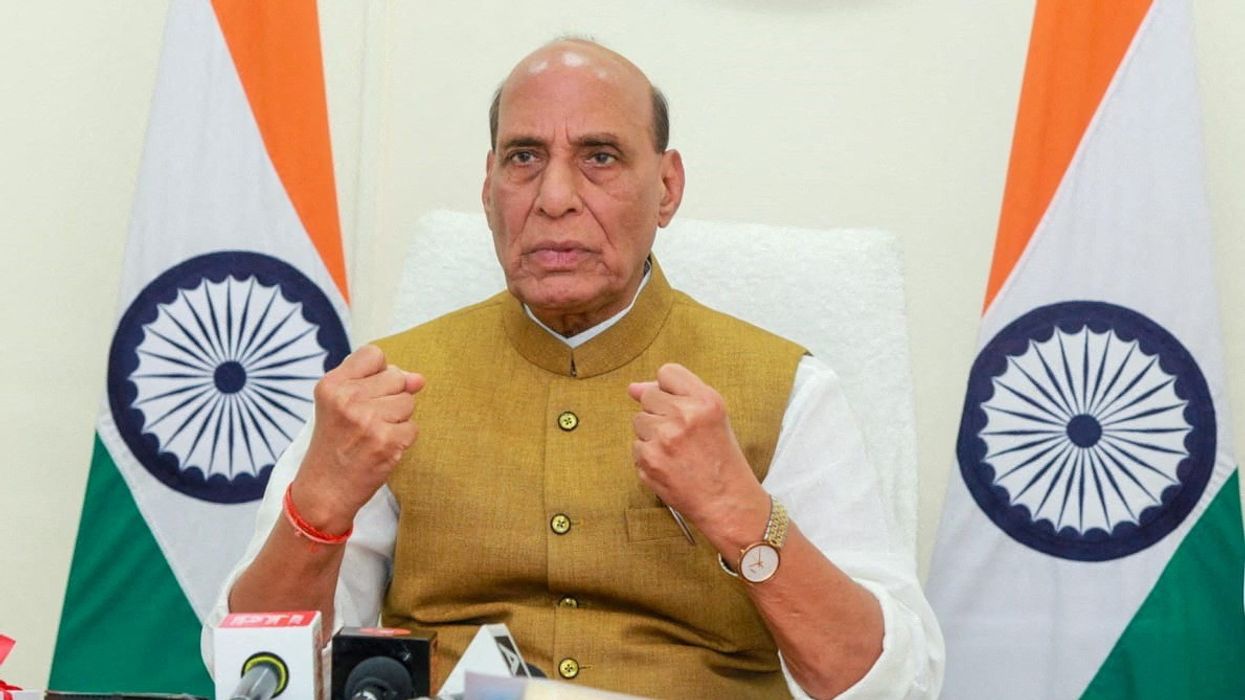

INDIA’s Defence Acquisition Council (DAC) has approved the initiation of procurement for arms and equipment worth $12.31 billion (£9.05 billion), the defence ministry said on Thursday.
The council is headed by India's Defence Minister Rajnath Singh.
The approvals are part of a push to strengthen the armed forces through the purchase of various systems and platforms. The ministry said the proposals include armoured recovery vehicles, electronic warfare systems for the three services, and surface-to-air missiles.
“These procurements will provide higher mobility, effective air defence, better supply chain management and augment the operational preparedness of the armed forces,” the ministry said in an official statement.
Naval systems and battlefield upgrades
The DAC has also cleared the procurement of mine countermeasure vessels (MCMVs), super rapid gun mounts (SRGMs), and submersible autonomous vessels for the Indian Navy. According to the ministry, “these procurements will enable mitigation of potential risks posed to the naval and merchant vessels.”
Among the other projects approved are the acquisition of an integrated common mobility card for the armed forces, high-power radar, air defence tactical control radar, advanced radio systems, and electronic warfare systems. The procurement of these items will help in improving situational awareness, enhancing battlefield transparency, and reducing the sensor-to-shooter loop.
The DAC also gave approval for the procurement of an integrated common inventory management system for the tri-services. The ministry said this would help in efficient management of ordnance stores and streamline inventory monitoring, strengthening the supply chain network.
All procurements from Indian vendors
The entire value of the approved proposals is to be procured from domestic sources. The ministry said, “All these procurements will be made from Indian vendors under Buy (Indian-Indigenously Designed Developed and Manufactured) and Buy (Indian) categories, giving a boost to the Indian defence industry.”
According to the statement, this move is in line with the government’s goal of achieving self-reliance in defence production and promoting the Indian industry under the ‘Aatmanirbhar Bharat’ initiative.
The procurement will also involve the acquisition of guided extended range rockets and area denial munition type I for the Indian Army. The ministry said these will enhance the combat capabilities of the artillery forces.
The Defence Acquisition Council is the highest decision-making body in the Ministry of Defence for capital acquisition proposals.