
Highlights
- Jayasinghe will run roughly 1,400km along Sri Lanka's coastline from July 1.
- The run raises money for youth running clubs across five regions of Sri Lanka.
- Born in Rome and raised in London, he said the journey is about finding his Sri Lankan identity.
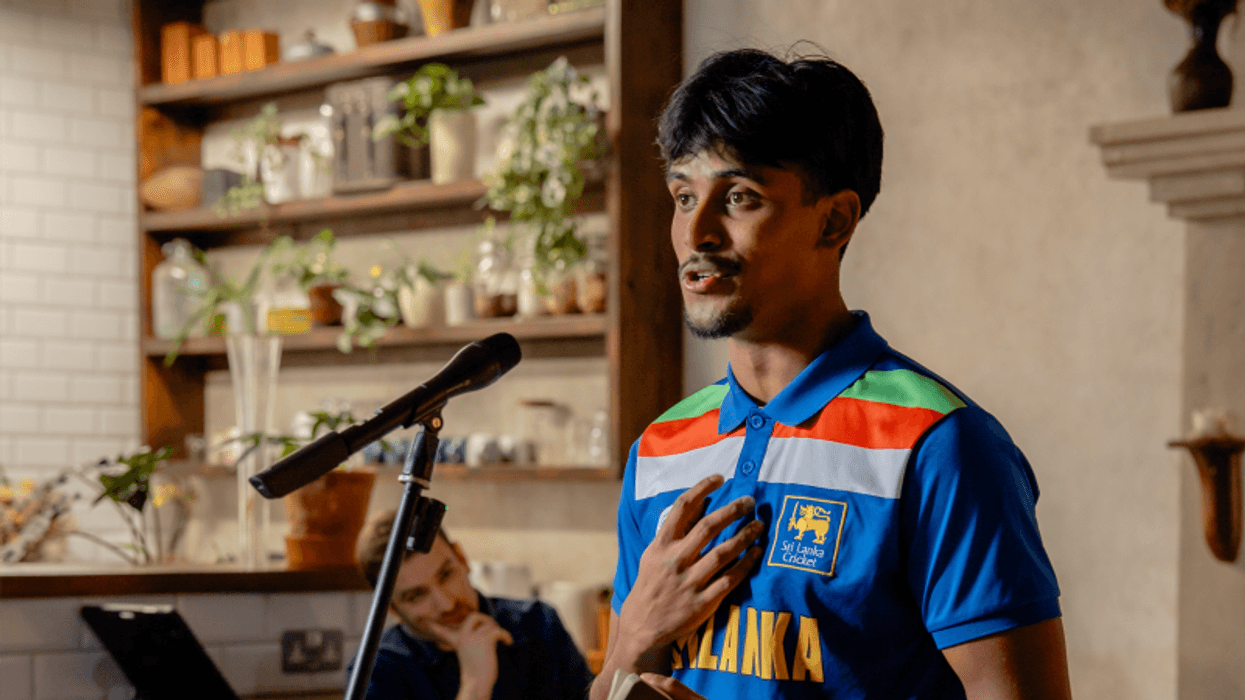
A 21-year-old British Sri Lankan is preparing to run the entire coastline of Sri Lanka, roughly 1,400 kilometres, starting July 1.
Sash Jayasinghe, born in Rome to Sri Lankan parents and raised in London, plans to cover around 45 kilometres a day for 30 days or more, supported by a documentary crew and a mission that goes well beyond the finish line.
The run, called 4Lanka, aims to raise money for youth running clubs across five regions of the island while Jayasinghe documents his journey reconnecting with his Sri Lankan roots.
"I have never fully known what being Sri Lankan is," he said. "This documentary is going to allow me to learn a lot about the island and that is where I am going to find that identity."
The run itself
The route follows Sri Lanka's coastline and will be covered at roughly 45 kilometres a day. Jayasinghe plans to start each morning at 5am and aim to finish by around 3pm, before the peak heat sets in between 11am and 3pm.
He will have a full crew with him including videographers, a nutrition support person and content helpers. "There is no way I can do this run by myself," he said.
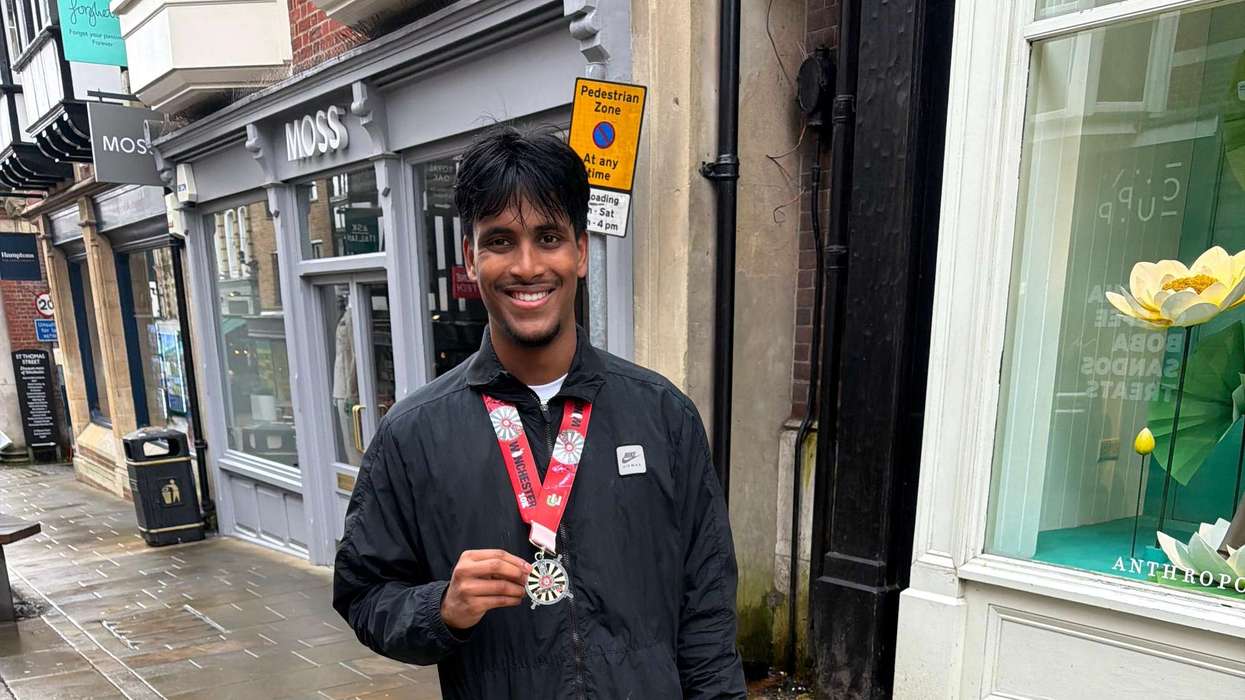 Jayasinghe trained up to 80km a week in Winchester while working shifts and creating contentSash Jayasinghe
Electrolytes will be critical given the heat and humidity and his diet leading up to and during the run is built around carbohydrate-heavy foods: pasta, rice, wraps, bagels and bananas.
To prepare, he currently trains between 60 and 80 kilometres every week, supplemented by paddle and racquet sports. In the gym, he does one upper body session, one leg session and one knee strengthening session per week
The southeastern stretch of the coastline presents a different kind of challenge. A large jungle and safari area means the route cannot follow the coast directly through that section.
He will have to cut inland and come back out. A friend who ran across Sri Lanka a year ago warned him that leopards in the area once forced a full day's halt. "That's going to be interesting," Jayasinghe said.
"But that's part of the island, so I just got to embrace it." The run is also the centrepiece of a documentary he is producing, showing himself connecting back with his roots.
If capturing the right moments means slowing the running schedule, he said he is comfortable with that trade-off. "This run is not about a world record. It's more about pushing the narrative I have behind my brand."
More than miles
Jayasinghe's own family reflects the island's complex history. His mother is Sinhalese and his father is Tamil.
"I never really understood the difference growing up," he said. "By talking to so many different people from these different communities, I learned how all of this is actually possible if the mission is proper."
He hopes the clubs will become something lasting, with diaspora visitors returning to the island through retreats he plans to organise after the run.
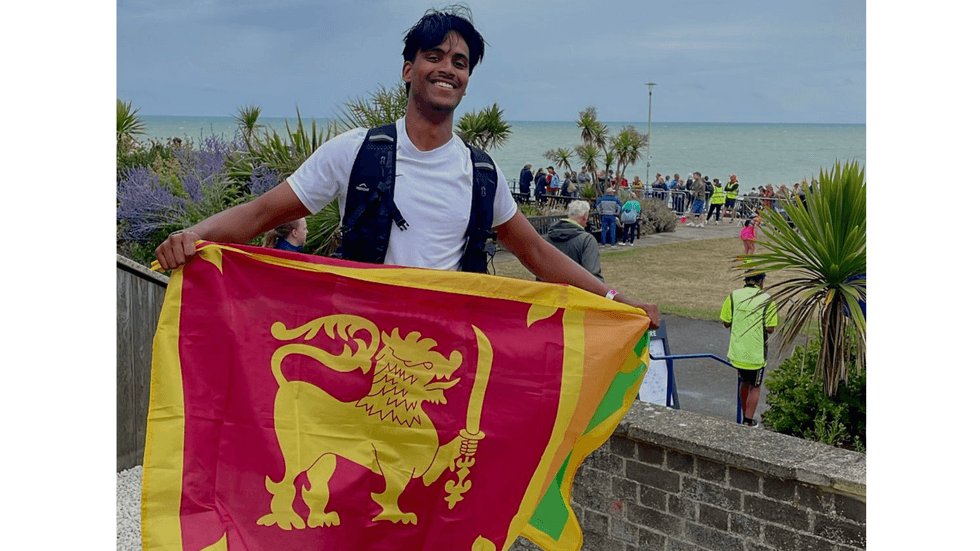 Jayasinghe, with a Sinhalese mother and Tamil father, said he later came to understand the divideSash Jayasinghe
His wider ambition stretches beyond Sri Lanka. By 2028, he wants to help 5,000 south Asians build purpose-driven businesses, using his own story as the framework.
"No one has the same story as you, no one has the same lessons as you," he said. "If you build a personal brand based on yourself, people will naturally be attracted to you."
Getting to this point has required real sacrifice. Jayasinghe has spent two years largely alone in Winchester, training up to 80 kilometres a week while building his content and working shifts.
"Relationships, I feel like," he said, when asked what he has given up most. "I've had to turn down loads of time with friends and family just to fully focus." His parents, he admitted, do not yet know the full scale of what he is planning.
He prefers to show rather than tell. When asked what will keep him going on the hardest days on the road, his answer was immediate. "My why," he said. "Being able to show people how important it is to have that behind your life, behind the business you are building. I am showing it by doing this one."
For British Asian teenagers watching, his message is simple. "Do that thing you always wanted to do but didn't because you were scared," he said. "Every failure is good for you. It will shape you into being the person that you are."


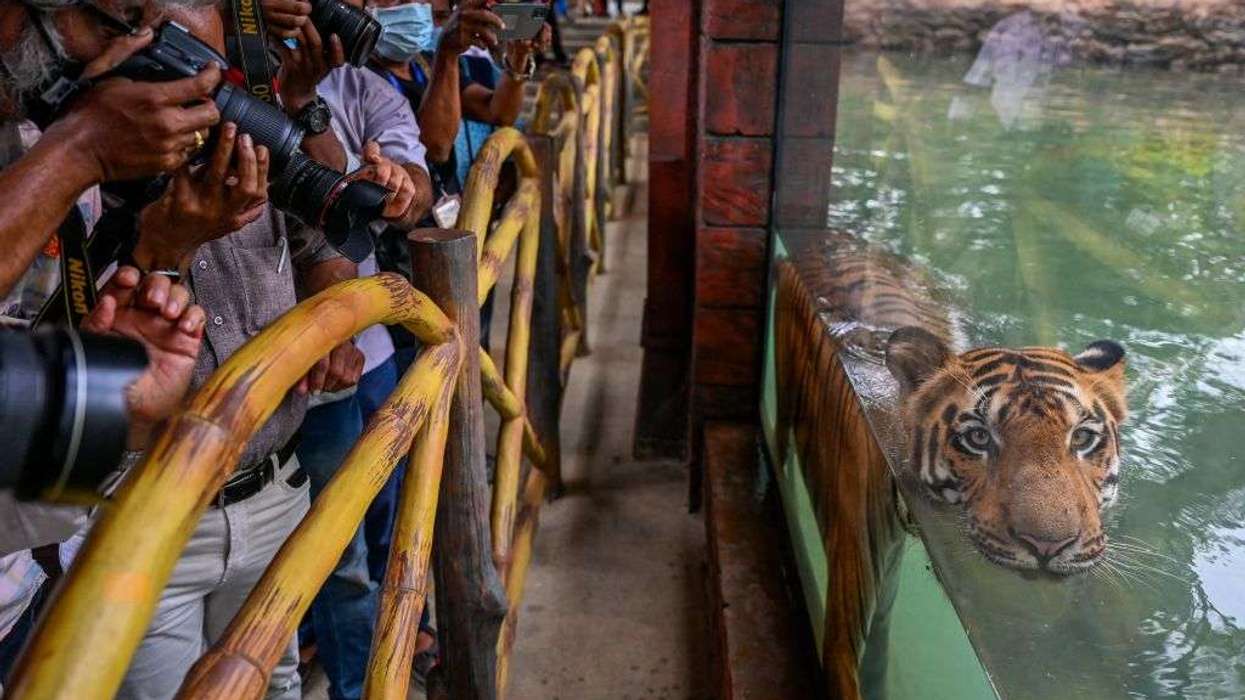
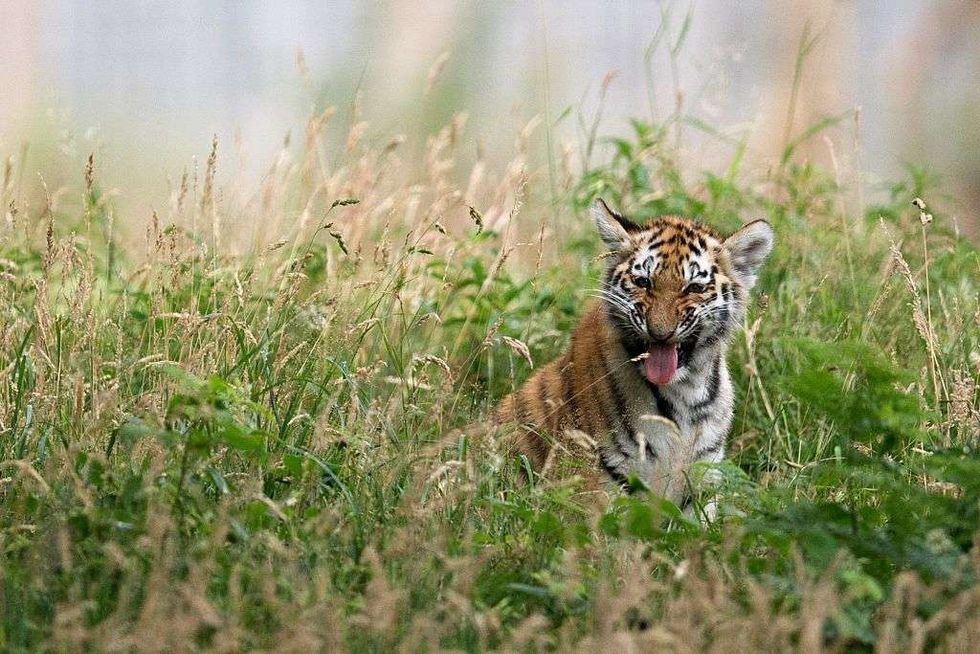 A rare Amur Tiger cub, aged four months, experiences its reserve for the first time at the Yorkshire Wildlife Park near Doncaster, northern England on July 29, 2015. Only around 450 Amur Tigers survive in the wild in their native Russia and Yorkshire Wildlife Park's release of three cubs, named Hector, Harley and Hope, into their reserve coincides with International Tiger Day. Getty Images
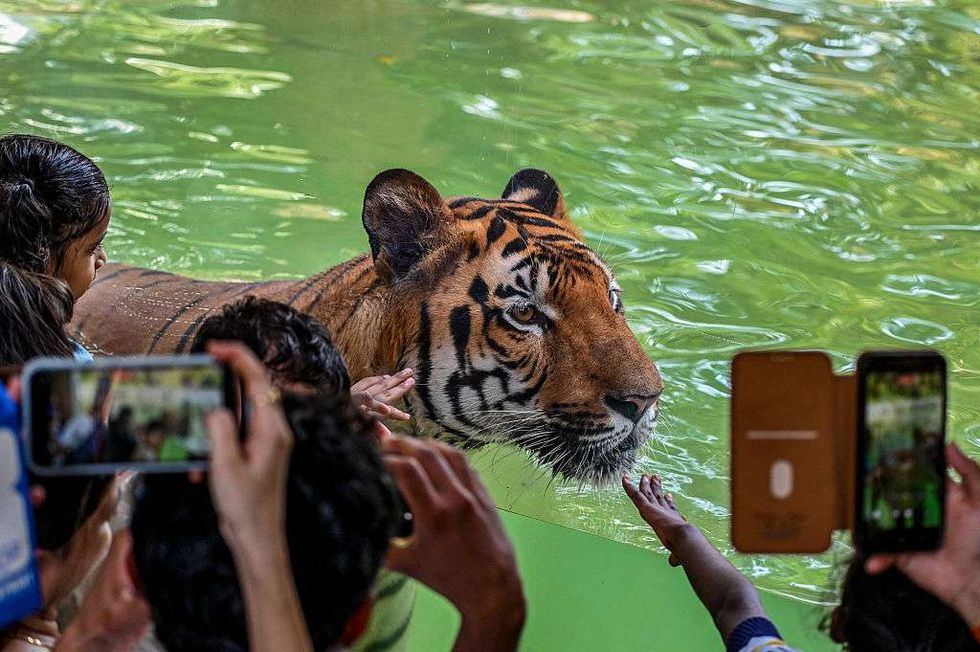 Visitors watch Jai, a Bengal tiger enjoying in a pool on a hot afternoon at the Veermata Jijabai Bhosale Udyan and Zoo in Mumbai on May 10, 2026. Getty Images
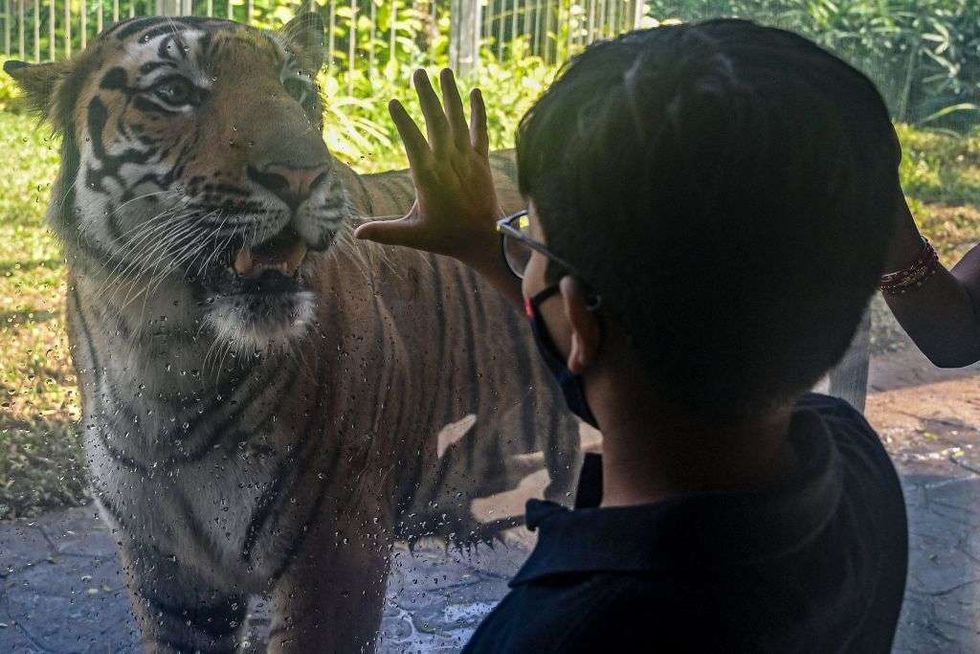 A boy looks at Shakti, a Bengal Tiger strolling inside its enclosure at Veermata Jijabai Bhosale Udyan and Zoo after the facility was reopened for visitors as part of easing of restrictions imposed earlier to curb the Covid-19 coronavirus pandemic in Mumbai on February 10, 2022. Getty Images