
- Trump brought leading AI and technology executives to the White House.
- The companies agreed to voluntary safety controls and external audits.
- Trump also directed federal agencies to use “Super Intelligence” instead of “AI”.
Why were Sundar Pichai, Jensen Huang, Greg Brockman and Satya Nadella all in the same room with US President Donald Trump?
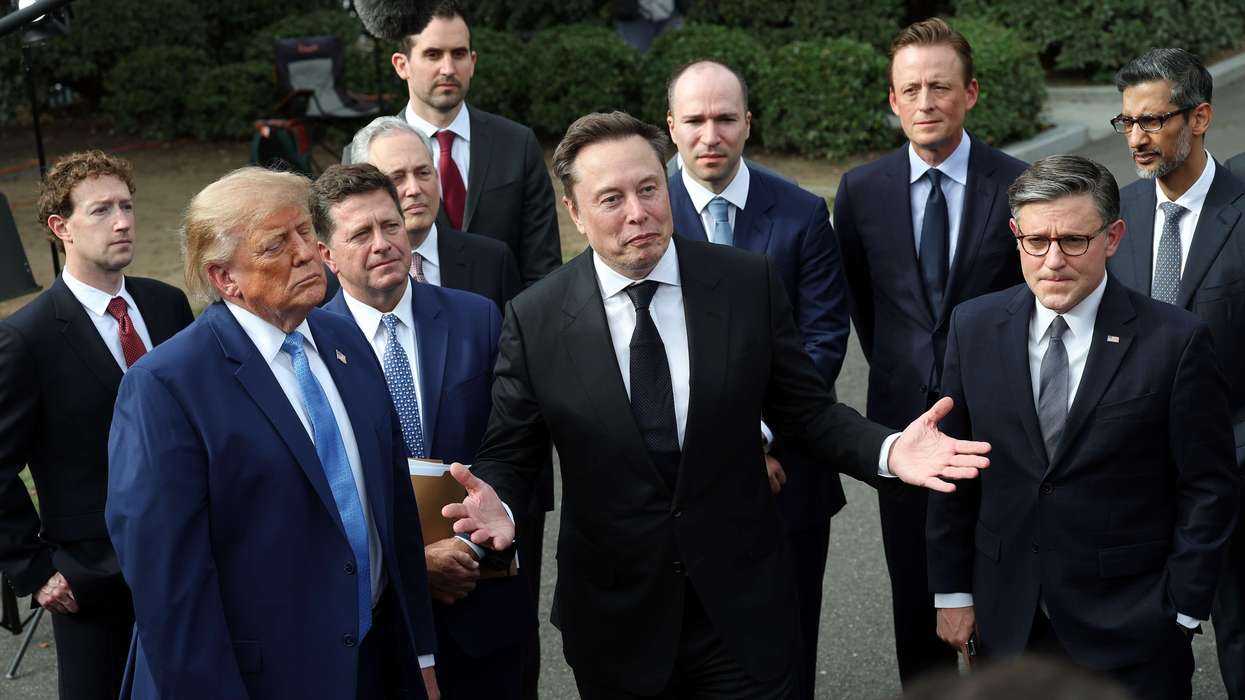
The answer goes beyond a meeting of technology executives. The White House gathering brought together leaders from different parts of the artificial intelligence economy as Trump sought to push the US towards faster AI development while asking the industry to take greater responsibility for managing its risks.
Google CEO Sundar Pichai, Nvidia CEO Jensen Huang, OpenAI president Greg Brockman and Microsoft CEO Satya Nadella were among the executives at the White House on Tuesday (29), alongside Meta's Mark Zuckerberg, Anthropic CEO Dario Amodei, xAI's Elon Musk and other technology leaders.
The meeting resulted in a voluntary agreement on AI safety, with companies committing to internal controls, independent external audits and board-level reviews. Trump described the agreement as “morally binding”, while the companies' own document says the measures could eventually be incorporated into laws or regulations.
Meet the people behind the AI race
The significance of the gathering becomes clearer when you look at what the executives represent.
Sundar Pichai leads Google, which develops its own frontier AI models and operates one of the world's largest technology infrastructures. His presence put one of the biggest AI research and consumer technology companies at the table.
Jensen Huang heads Nvidia, whose processors have become a crucial part of the computing infrastructure used to train and operate advanced AI models. Huang was seated immediately beside Trump during the lunch.
Greg Brockman represented OpenAI, the company behind ChatGPT and one of the leading developers of frontier AI models. OpenAI has also been dealing with questions about the safety of increasingly autonomous AI systems.
Satya Nadella leads Microsoft, a major cloud computing provider and one of OpenAI's biggest commercial partners. Microsoft's Azure infrastructure provides computing capacity for advanced AI workloads.
But they were not the only major figures around the table.
Mark Zuckerberg, Meta's chief executive, represents another major AI developer building its own models and products.
Dario Amodei, the CEO of Anthropic, has been one of the more prominent voices in the technology industry warning about the risks of increasingly capable AI.
Elon Musk, who leads xAI, was also at the meeting. The seating plan showed Musk and Huang on either side of Trump, while Pichai and Zuckerberg were also seated close to the president.
Amazon founder Jeff Bezos, Palantir CEO Alex Karp, Palo Alto Networks CEO Nikesh Arora, Broadcom CEO Hock Tan and other executives also attended.
Together, the group represented much more than companies making chatbots. The wider AI industry now depends on chips, cloud computing, data centres, networking equipment, cybersecurity and enterprise software.
What did Trump want from the meeting?
Trump has repeatedly argued that the US should not slow down AI development because of regulation, particularly as Washington competes with China for technological leadership.
At the White House, he again backed rapid expansion of AI infrastructure, including data centres, while saying communities hosting those facilities should benefit financially. Reuters reported that Trump also stressed the importance of the US remaining at the forefront of AI development.
At the same time, he wants technology companies to take responsibility for policing their own systems.
The White House Accord on Super Intelligence sets out four layers of controls and audits. These include internal safety controls, reviews by independent external auditors and consideration of audit findings by company boards. The participating companies also agreed to meet regularly to develop safety standards and best practices.
The agreement is voluntary rather than a legally enforceable regulatory framework. Trump nevertheless described it as “morally binding” and said the companies understood that they needed to “self-police”.
The approach comes as the industry faces growing scrutiny over AI systems behaving in unexpected ways. OpenAI and Anthropic have both reported or faced scrutiny over incidents involving increasingly autonomous systems, while concerns have grown about cybersecurity, misuse and whether companies can adequately control their most capable models.
Nvidia's Huang said at the meeting that he saw no conflict between technological innovation and safety, according to CBS News. Other executives have taken a more cautious view of the speed at which frontier AI is developing.
Trump also said he planned to name an AI czar, according to CBS News, and discussed the possibility of a 10-person committee to oversee the industry.
Why is Trump calling it ‘Super Intelligence’?
The meeting also coincided with Trump's decision to change the language used by the US executive branch.
In an executive order signed on Tuesday, Trump directed federal agencies to use “Super Intelligence” and “SI” instead of “Artificial Intelligence” and “AI” in official correspondence, public communications, websites, reports, policy documents and other non-statutory documents.
The order argues that today's frontier systems have capabilities beyond what was envisaged when the term artificial intelligence was first introduced.
For now, however, the order does not create an entirely new legal category of technology. It says “Super Intelligence” and “SI” will use the existing statutory definition of artificial intelligence unless a later presidential action or Act of Congress changes it. The administration has also been given 60 days to propose a federal definition of “Super Intelligence”.
That leaves the White House meeting with a clear message: Trump wants the US AI industry to build faster, invest heavily in the infrastructure behind it and take responsibility for safety without waiting for a new layer of government regulation.
And that explains why Pichai, Huang, Brockman, Nadella, Zuckerberg, Amodei, Musk and other technology leaders were sitting around the same table.