
AS INTERNATIONAL trade secretary in Rishi Sunak’s government, Kemi Badenoch took pride in obstructing a Free Trade Agreement with India. The FTA wasn’t signed until Sir Keir Starmer became prime minister, possibly his best achievement, at least from the Indian point of view. Had Badenoch been prime minister, she would have plunged Britain into war with Iran alongside US president Donald Trump, just as Tony Blair had done with president George W Bush over the Iraq War. Blair had pledged his fealty to Bush in a memo, “I will be with you, whatever.”
Badenoch pressed Starmer to join Trump in taking military action against Iran, when RAF jets were already shooting down missiles and drones fired by Tehran at allies in the region.
Badenoch told BBC Breakfast: “They need to do more than that, they need to stop the missile sites, you need to go to the source.”
She went on: “If you have someone with a gun shooting, stopping the bullets is not enough, you need to go after the weapon.”
And she added: “You can’t always wait for people to attack you. Sometimes you have to make sure that you get there first to stop their ability to hurt your citizens.”
Even Trump now acknowledges that the Iran war may have been one reason why his Republican party did so badly against the Democrats in the midterm elections.
Voters will wonder whether Badenoch has the judgement and understanding of foreign affairs necessary to be Tory leader, let alone prime minister. Maybe she should try to persuade Sunak to join her shadow cabinet.
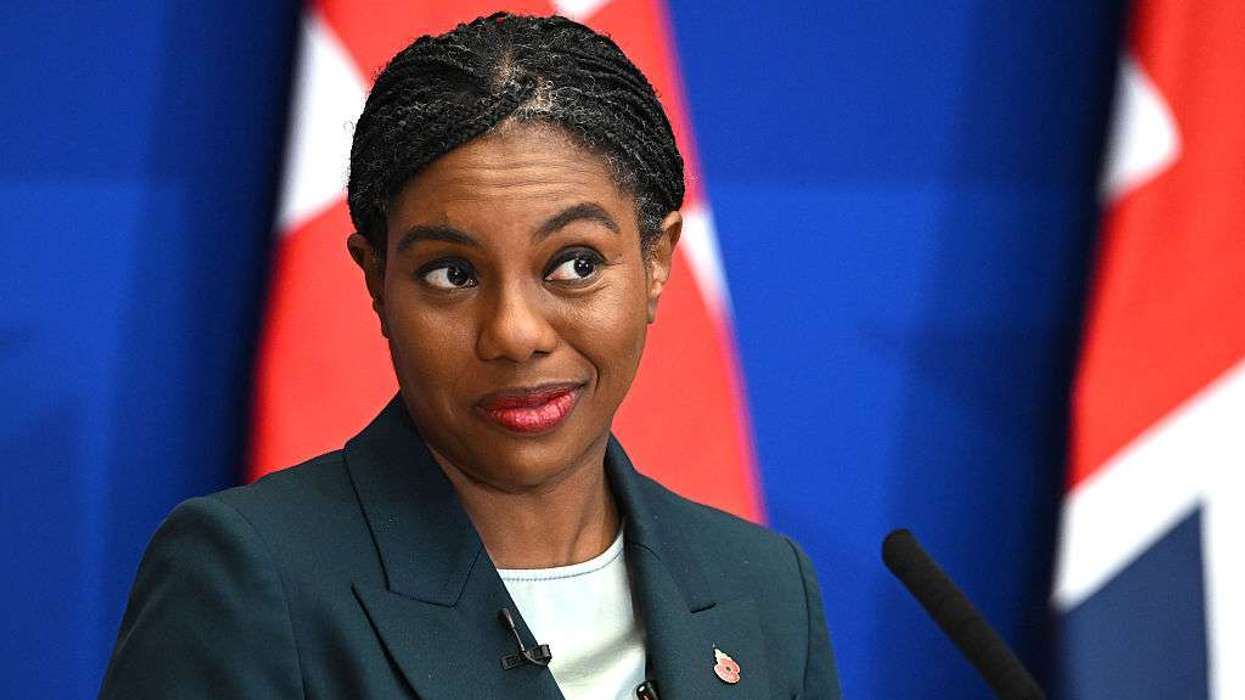 Conservative Leader Kemi Badenoch gives a speech at The Emmanuel Centre on November 10, 2026 in London, England. (Photo by Leon Neal/Getty Images)
Liz Truss, who was chosen by Conservative party members over Sunak and endorsed by all the right-leaning newspapers to be Tory leader, flew to America after Trump’s election so that she could be photographed with the president.
Her considered view was that Trump was “right about everything”.
On Sunday (8), as leader of the Reform party with 8 MPs in the Commons (including Suella Braverman, Robert Jenrick and five other former Tories), Nigel Farage solemnly laid a wreath at the Cenotaph. As a keen backer of Trump from the start, he predicted the president wouldn’t do too badly in the midterm elections.
He told GB News: “I don’t go with that consensus that Trump is going to get smashed. We’re in for a big surprise tonight.”
He has downplayed his previous support for the Iran war, but Restore Britain leader Rupert Lowe, who is looking to outflank Farage to the right, told the Financial Times: “Farage backed the bombing on day one . . . I say vote Reform, get war.”
There will be fewer people wanting to import Trumpian politics into Britain.
Trump’s stop-start Iran war has damaged the world economy and made life worse for everyone in Britain, affecting everything from mortgages to the price of petrol and heating. Worst of all, he did not follow through on his promise to rescue the people of Iran, who were being oppressed by their own regime. In fact, the outlook for ordinary Iranians is grim.
The Islamic regime in Iran, which is skilful at frustrating its adversaries, has been playing a long game. It was correct in assessing Trump would be weakened by the midterm elections. There is now just a chance it will want to do some kind of deal from a relative position of strength with a lame duck president. On 4 November, regime supporters held demonstrations to mark the anniversary of the capture of the US embassy in Tehran. That lasted 444 days. That’s something I remember because most days I did a little round of the embassy. It seems to me Trump, Truss, Badenoch and Farage didn’t think through their Iran policies.
Ambika Mod’s glass ceiling
Although Ambika Mod has made a name for herself in TV drama, she still thinks “there’s definitely an issue in this industry with systemic racism”.
“I think it is really hard for South Asian actors to really push through,” she said, adding, “I feel like the glass ceiling is always getting higher and higher and higher.”
According to a BBC report, “the actress broke through as the overwhelmed Shruti in BBC medical drama This Is Going To Hurt in 2022, and gained wide recognition for her starring role as Emma Morley in Netflix’s miniseries adaptation of David Nicholls’s bestselling novel, One Day.”
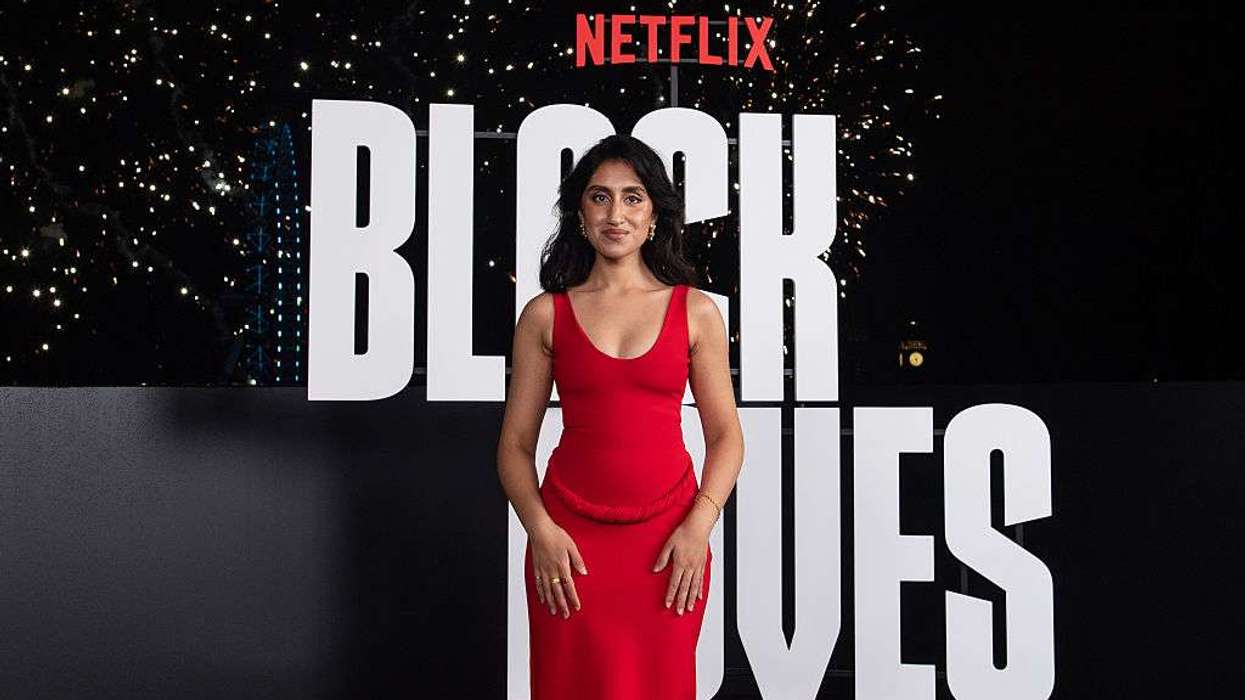 Ambika Mod attends the launch event for season 2 of "Black Doves" at Johnston Roof Terrace & Riverside Room, IET London on November 02, 2026 in London, England. (Photo by Jeff Spicer/Getty Images for Netflix)
Ambika, 31, who joined the cast of Black Doves for the second season of the streamers spy thriller, said was careful about the roles she too on.
As the daughter of Indian immigrants, a “central tenet” of her work was to “change how South Asian women are seen on-screen and the characters that we are seen in”.
Several Asian actors I have consulted believe they are losing out to their black counterparts. In the aftermath of “Black Lives Matter”, there has been a general effort throughout the industry to right the political wrongs of the past and be as generous as possible with black actors.
In TV ads, for example, it is black people who invariably represent multiracial Britain. Unwittingly or otherwise, Asian actors are being overlooked.
The John Lewis 2026 Christmas campaign features a white grandmother named Gloria (played by Dame Kristin Scott Thomas) and her multi-ethnic family, which includes her mixed-race/Black grandchildren, her white daughter, and her Black son-in-law.
Multiply this philosophy across television and theatre, and one can see why Asian actors are losing out. In War Horse at the National, I noticed that black actors were chosen to portray even upper-class English officers with clipped accents. In the forthcoming Jungle Book at the National, three of the actors are black. To be sure, theatre is about the suspension of belief and colour-blind casting. But the way the system is currently working means Asian actors are being cut out. Asian actors feel they are losing out, firstly, because they are not white, and secondly, because they are not black. This is a tricky and delicate problem which will be difficult to resolve.
Some casting directors might feel the Caribbean countries are justified in calling for slavery reparations and be tempted to do their own little thing to correct the balance. At the moment the dice does seem to be loaded against Asian actors.
What’s required is a little common sense and a fair sharing of roles. Blacks and Asians should not be pitched against each other.
Diabetes for Diwali
The BBC has talked of the joys of Diwali and commissioned “food content creator” Sanjana Modha to offer her recipe for “Gulab jamun with pistachio ice cream”.
“This recipe for fluffy, rosy gulab jamun takes me back to my childhood,” she enthused. “Every bite of these soft, rose, cardamom and saffron syrup-soaked milk doughnuts melts in the mouth.”
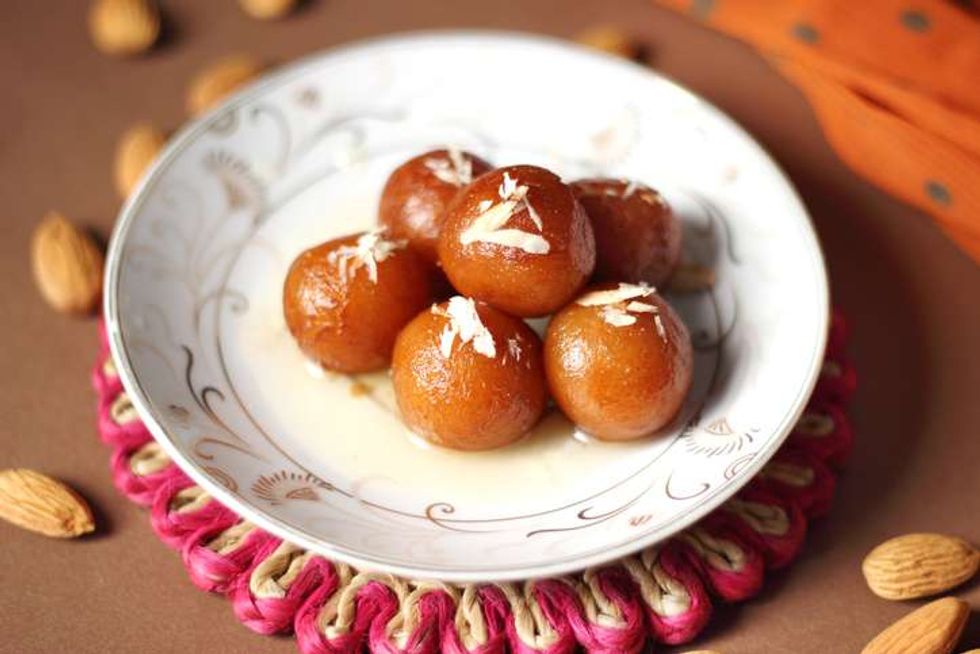 Gulab jamuniStock
There were also recipes for “Lemon laddoos” and “Pistachio and rose shortbread”.
I would love a diabetes doctor to warn: “I’m sorry but your condition is very serious – I’m going to have to prescribe a course of two gulab jamuns for lunch and another two for dinner.”
Incidentally, there is a lavishly illustrated article in the Financial Times, “Diwali dressing is evolving . . . and going global.”
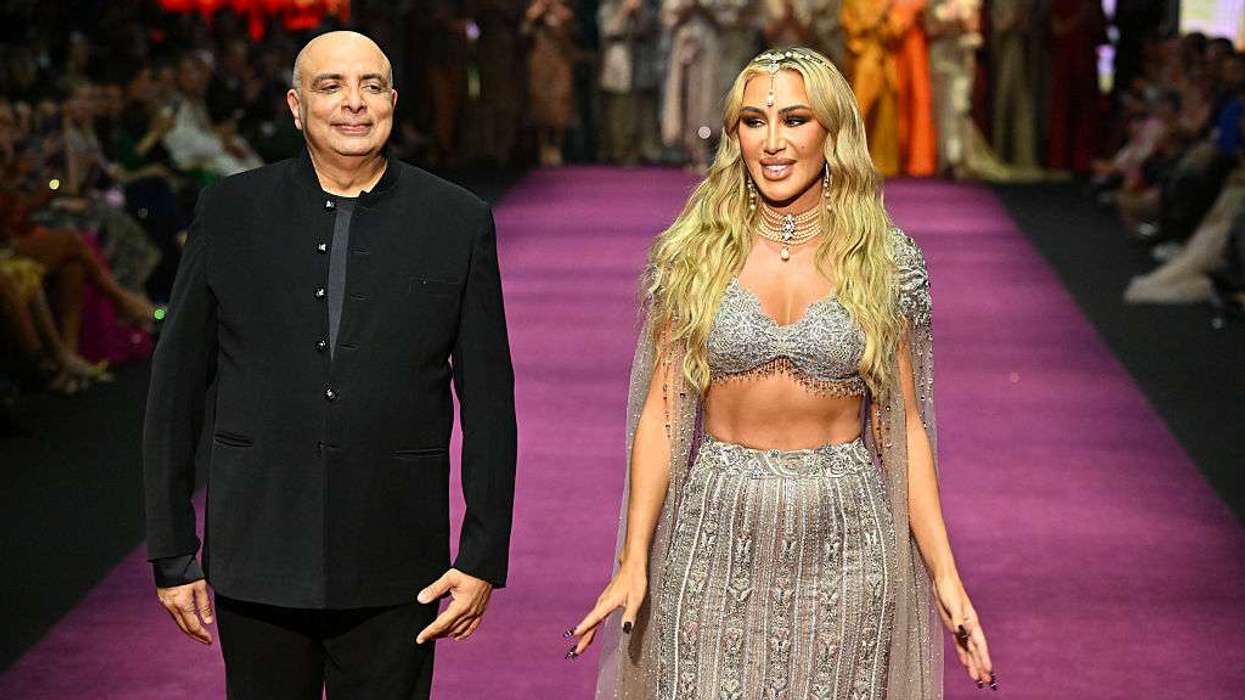 Tarun Tahiliani and (R)Maya Diab walk the runway during the Tarun Tahiliani show at Dubai Fashion Week - Spring/Summer 2027 (SS27) held at the Dubai Design District on October 26, 2026 in Dubai, United Arab Emirates. (Photo by Cedric Ribeiro/Getty Images)
“In the run-up to Diwali, many of India’s leading designers have been travelling for trunk shows and events around the world,” it says. “Gaurav Gupta just hosted a Diwali celebration at Harrods, Sabyasachi held a Diwali reception at the Metropolitan Museum of Art. Tarun Tahiliani closed Dubai Fashion Week on Monday and opened his first flagship outside India, in Dubai. They are all responding to a gap in the market: the need for Diwali dressing internationally.”
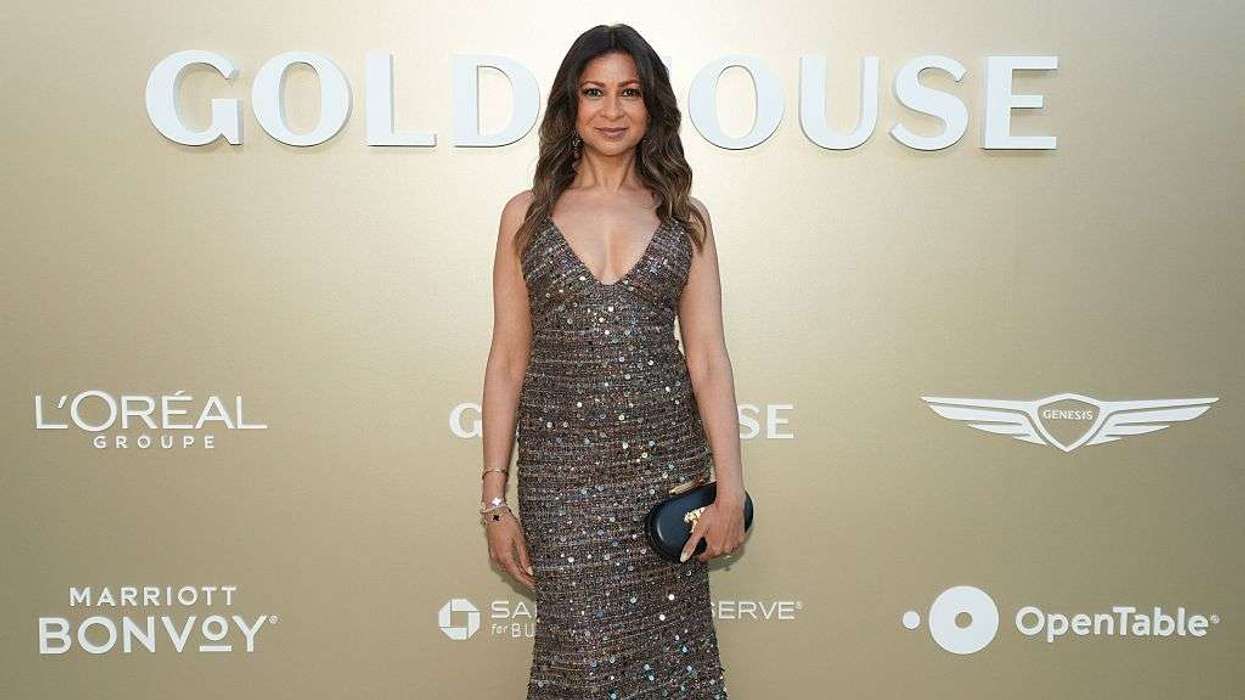 Anjula Acharia arrives at the Gold House 5th Annual Gold Gala at The Music Center on May 09, 2026 in Los Angeles, California. (Photo by Presley Ann/Getty Images for Gold House)
Outfits by Anamika Khanna, Anjula Acharia, Anita Dongre and other designers illustrate the article. You have to be careful not to get gulab jamun syrup on any of these dresses.

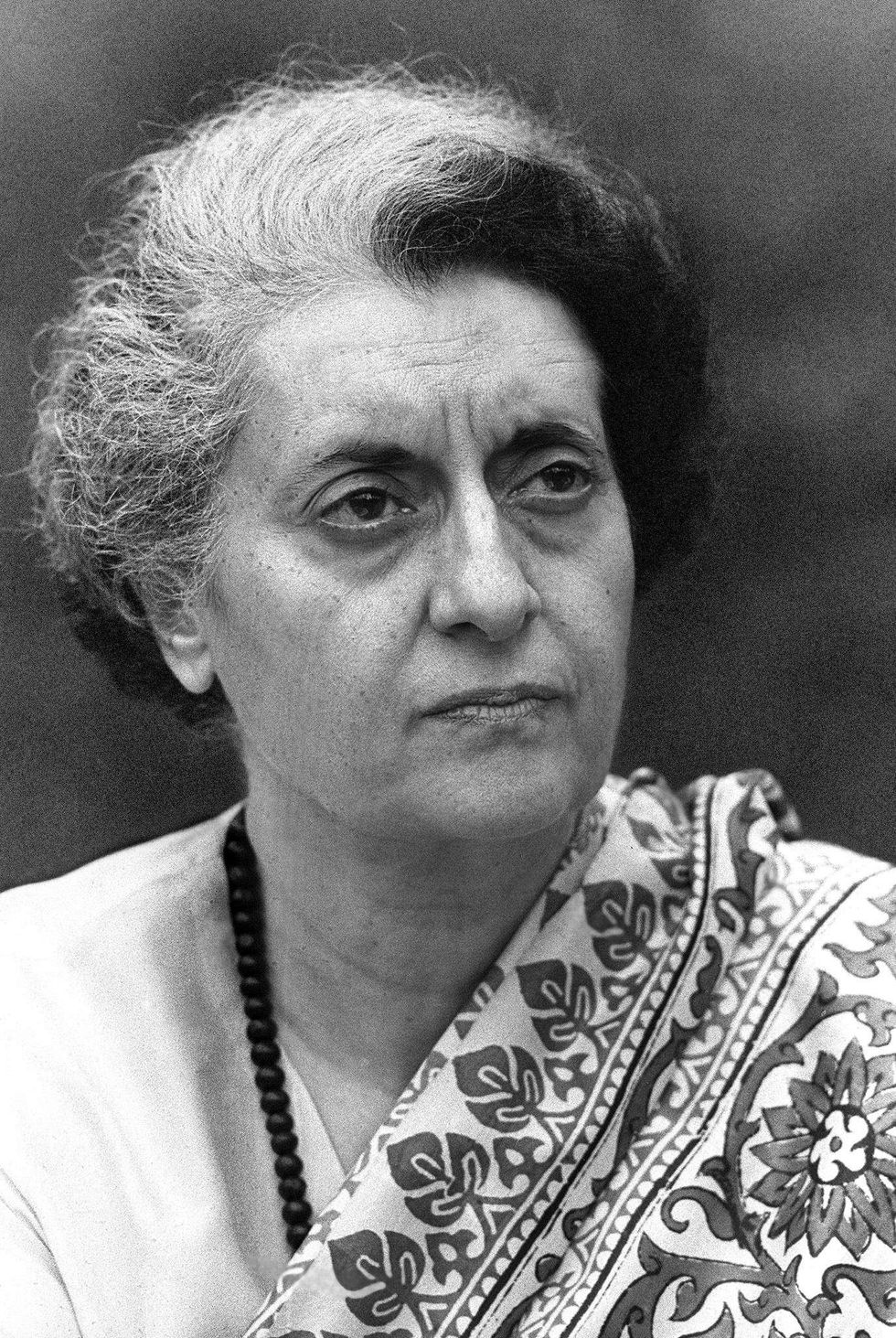 Indira GandhiTF/AFP/Getty Images
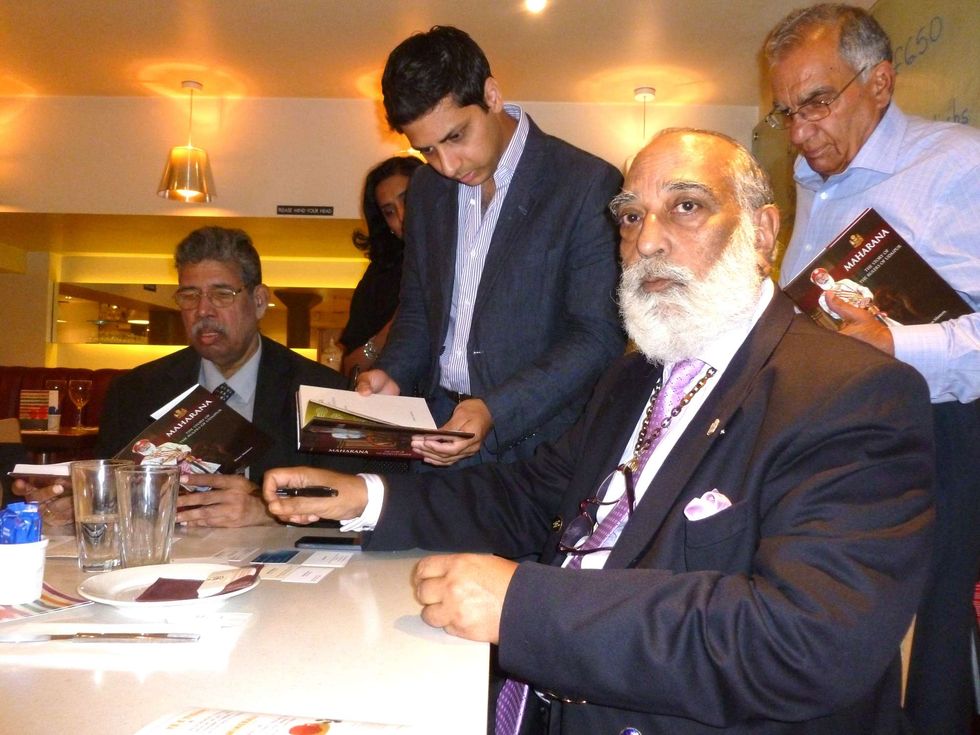 Rao with HH Arvind Singh Mewar of Udaipur at an IJA event in 2014Eastern Eye




