REGARDED as a wily cricket captain during his playing days, Pakistan prime minister Imran Khan appeared on Sunday (3) to have stumped his political opposition as well.
The country's president dissolved the national assembly just hours after the deputy speaker declined to accept a no-confidence motion that would likely have seen Khan booted from office, meaning the country will go to the polls within 90 days.
Whether he gets a second innings remains to be seen.
Khan enjoyed genuine popular support when he became premier in 2018, but critics say he has failed to deliver on promises to revitalise the economy and improve the plight of the poor.
The 69-year-old's Tehreek-e-Insaf (PTI) party was voted in by millions who grew up watching him play cricket, where he excelled as an all-rounder and led the nation to World Cup victory in 1992.
The PTI overturned decades of dominance by the Pakistan People’s Party (PPP) and Pakistan Muslim League-N (PML-N) - two usually feuding groups that have now joined forces to oust him.
Khan's vision was for Pakistan to become a welfare state modelled on the Islamic golden age of the seventh to 14th centuries, a period of cultural, economic and scientific flourishing in the Muslim world.
But he has made little headway in improving Pakistan's financial situation, with galloping inflation, crippling debt and a feeble rupee undermining economic reform.
A deteriorating security situation, particularly since the Taliban returned to power in Afghanistan last year, has also happened on his watch.
Tiptoed into politics
The Oxford-educated son of a wealthy Lahore family, Khan had a reputation as a playboy until his retirement from international cricket.
For years he busied himself with charity projects, raising millions to build a cancer hospital to honour his mother.
He tiptoed into politics and for years held the PTI's only parliamentary seat.
But the party grew hugely during the military-led government of General Pervez Musharraf, becoming a genuine force in the 2013 elections before winning bigger five years later.
Running the country proved more difficult than sitting in opposition, however.
Double-digit inflation has driven up the cost of basic goods, and while the economy is forecast to grow four per cent this year, it has been stagnant for the last three.
Pakistan has also had to borrow heavily just to service nearly $130 billion (£99.13 bn) of foreign debt.
The increasingly volatile security situation exemplified by the Taliban's return to power across the border in mid-August has also contributed to Khan's downfall.
The hardline Islamists' victory was initially seen as a victory, both for Pakistan - long accused of supporting them - as well as for a prime minister dubbed "Taliban Khan" for his consistent advocacy of dialogue and criticism of US policy towards Kabul.
But attacks by Pakistan's own Taliban - as well as the local Daesh group and Baluch separatists - have increased despite Kabul's assurances that Afghan soil would not be used for such purposes.
Pakistan's army is key to political power, and some analysts say Khan lost its crucial support - claims both sides deny. Certainly, he could not have pulled off Sunday's manoeuvre without the military's knowledge, or support.
Closer to China, Russia
Khan's efforts to position Pakistan as a key non-aligned regional player have not been successful either.
Ties with the United States have frayed, with Khan accusing Washington of working with the opposition for regime change.
Islamabad has moved closer to China, even though the important work on the China-Pakistan Economic Corridor (CPEC) has slowed down.
He has also moved closer to Russia, angering the West by continuing a visit to Moscow on the same day as the invasion of Ukraine.
Khan did have some domestic successes.
He is credited with bringing Pakistan relatively unscathed through the global Covid-19 pandemic, and a free universal health scheme he pioneered is slowly being rolled out across the country.
Khan frequently rails against Western permissiveness, sparking outrage among rights groups by repeatedly linking rape to the way women dress in a country where sexual violence is widespread.
Married three times, his current wife Bushra Bibi comes from a conservative family and wears a veil in public.
Often described as being impulsive and brash, he draws frequently on cricket analogies to describe his political battles.
"I fight till the very last ball. I never quit whatever the result may be," he said in an address to the nation last week.
(AFP)

Add EasternEye As Your Trusted Source





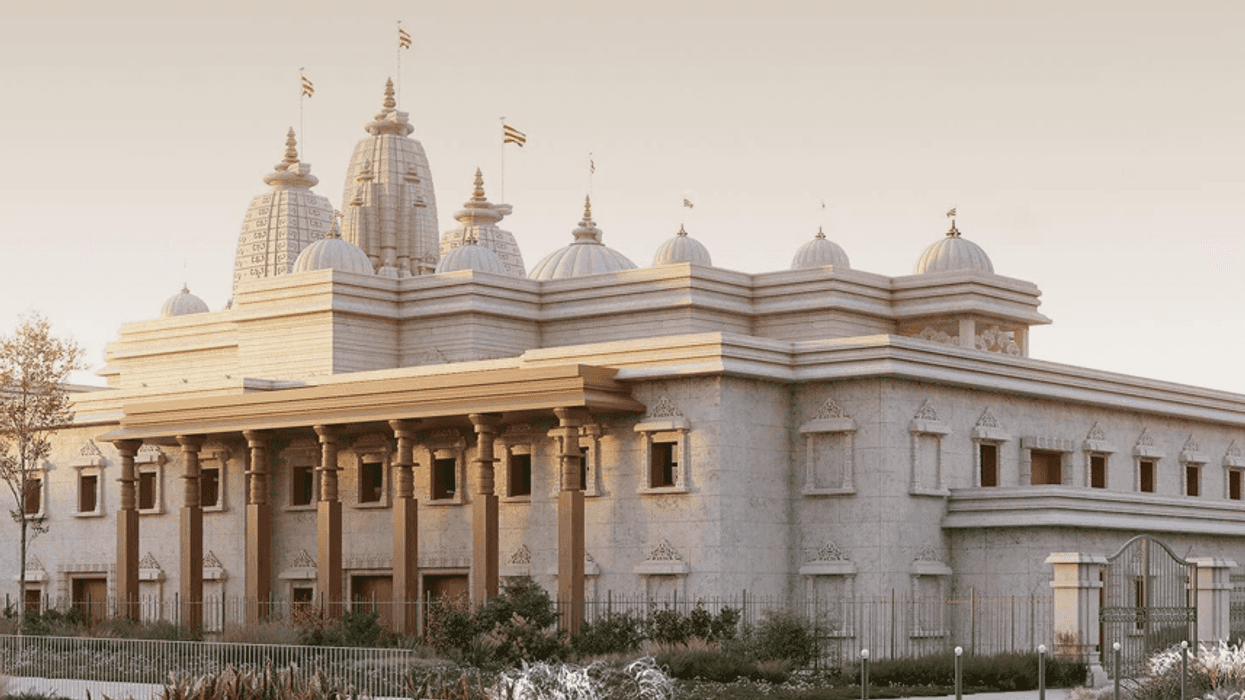
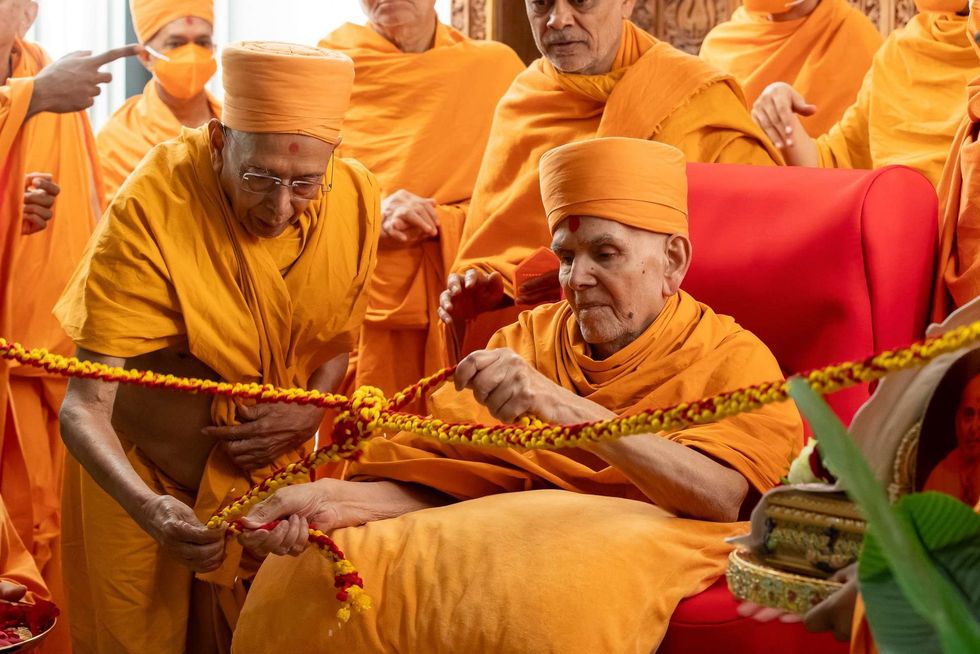 Mahant Swami Maharaj arrives in France ahead of the Paris Mandir Mahotsav BAPS Paris Media
  Historic Jal Yatra starts at the iconic Eiffel TowerBAPS Paris Media
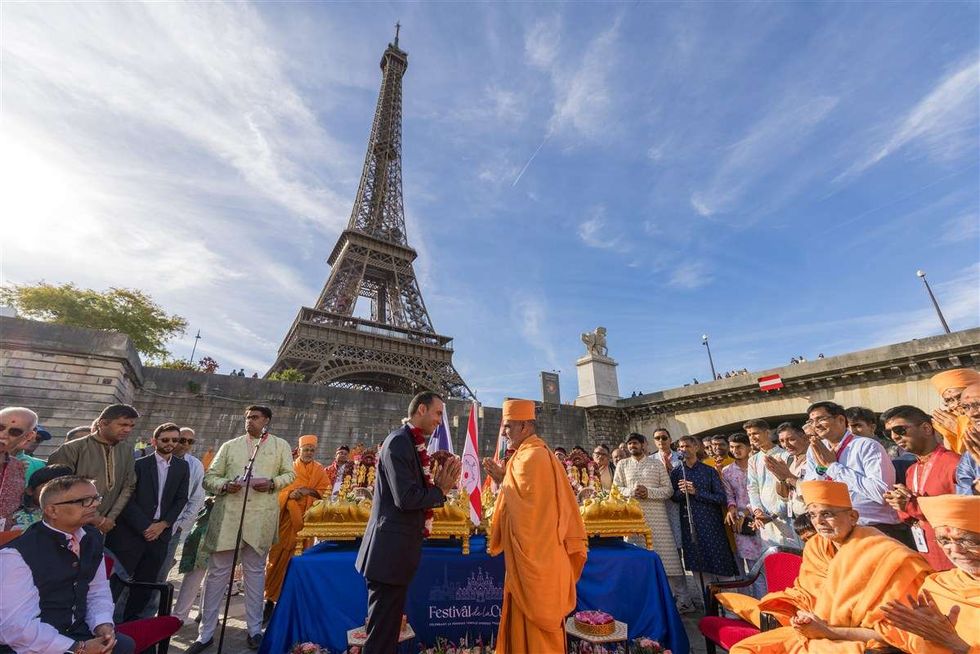 Organisers called it the largest coordinated flotilla to sail the Seine since the opening ceremony of the Paris 2024 Olympic GamesBAPS Paris Media
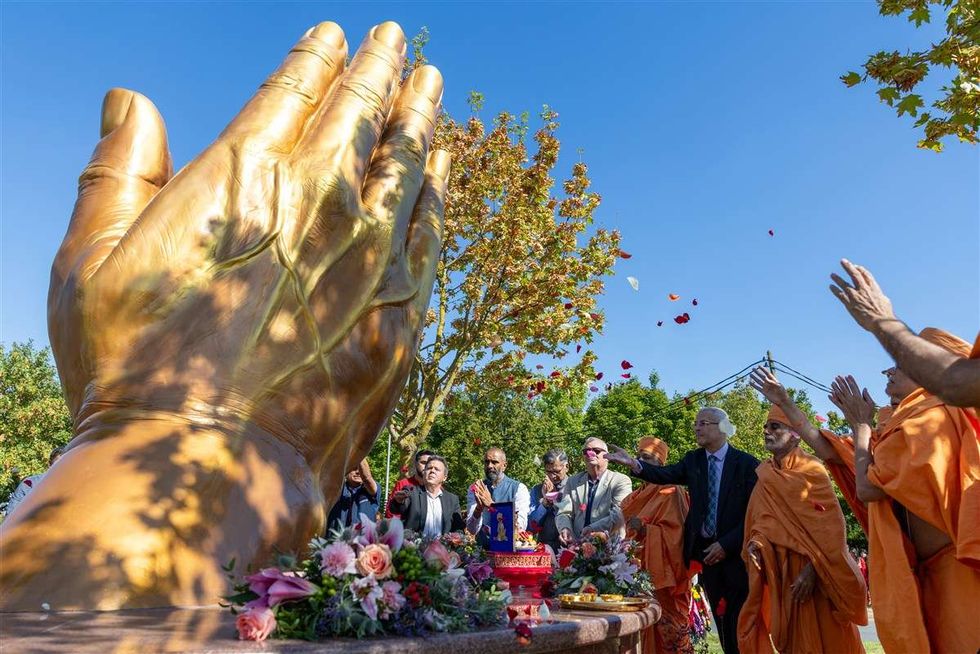 A sculpture of folded hands in the traditional Indian gesture of namaste was unveiled at a roundabout in Bussy-Saint-Georges this weekBAPS Paris Media