
Leaders of the Quad alliance said on Tuesday (24) they opposed all attempts to "change the status quo by force, particularly in the Indo-Pacific".
The statement, which followed a summit meeting of the four members of the grouping - India, Japan, Australia and the United States in Tokyo - comes with international pressure on Moscow over its invasion of Ukraine, and growing concern about whether Beijing could try to forcibly seize self-ruled Taiwan.
Here are five key takeaways from the Quad summit and the bilateral talks between Indian prime minister Narendra Modi and other leaders of the alliance.
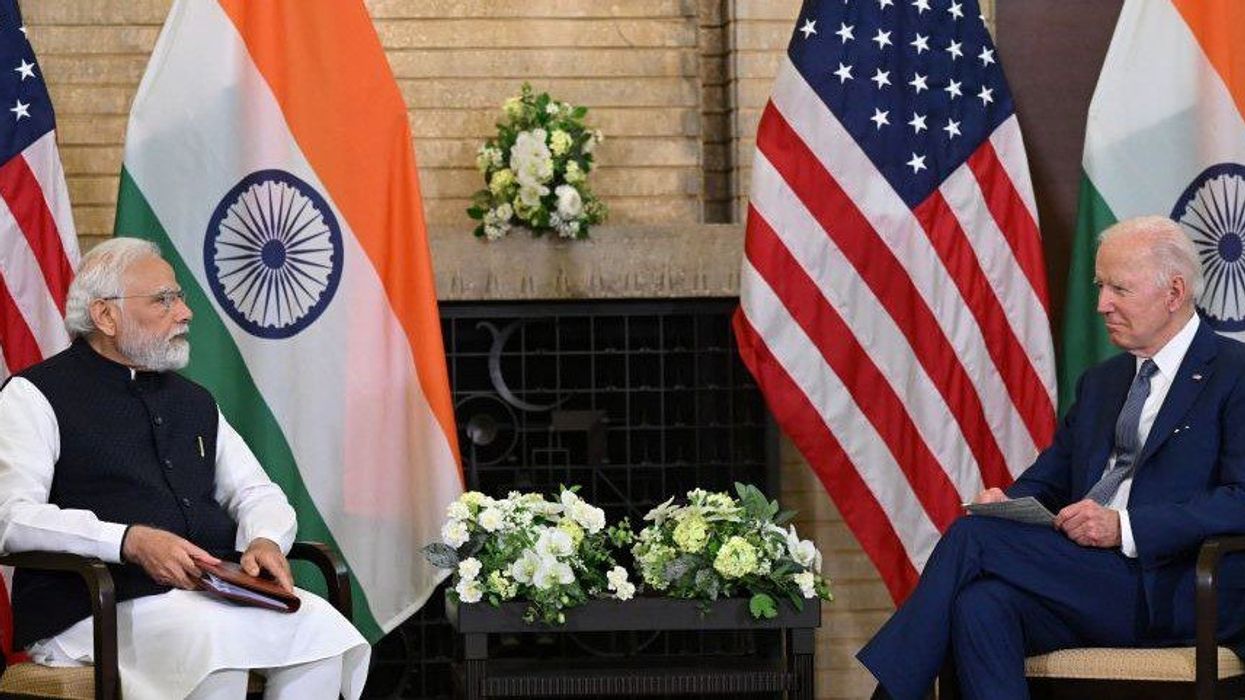
1. Biden hails Modi for successful handling of Covid-19
US president Joe Biden hailed Modi's "successful" handling of Covid-19 and compared India with China to drive home his point that democracies managed the pandemic “better” than autocracies.
Biden made the "unscripted" remark during an in-camera meeting with Modi, an official privy to the conservation between the two leaders said.
Biden said "India's success” and “China's failure" in handling the pandemic despite the two countries having similar population numbers meant that democracies could deliver.
Modi's success busted the "myth that autocracies like China and Russia can handle the rapidly changing world better because their leadership can take and implement decisions without going through lengthy democratic processes", Biden was quoted as saying.
2. India’s ‘partnership of trust’ with the US: Modi
Modi described the India-US relationship as a "partnership of trust" as he and Biden vowed to work together for a more prosperous, free and secure world while committing to bilateral defence and economic engagements.
The Prime Minister said the Quadrilateral alliance is a “force for good,” and said "we increased cooperation during COVID-19 regarding vaccine delivery, climate action, supply chain resilience, and disaster response."
Moreover, India’s ministry of external affairs said both sides launched an India-US Initiative on Critical and Emerging Technologies to facilitate outcome-oriented cooperation in artificial intelligence, quantum computing, 5G and 6G, biotech, space and semiconductors.
3. Modi-Albanese bilateral talks
Modi also met Australia’s newly elected prime minister Anthony Albanese and they took stock of the ties between the two nations.
“India’s Comprehensive Strategic Partnership with Australia is robust and benefits not only the people of our nations but also the world. (I) Was delighted to meet PM @AlboMP and take stock of bilateral ties. We discussed ways to add even greater momentum across key sectors,” Modi tweeted.
4. No explicit condemnation of China or Russia
In a joint statement, the leaders of all four Quad countries made specific reference to "the militarisation of disputed features, the dangerous use of coast guard vessels and maritime militia and efforts to disrupt other countries' offshore resource exploitation activities" - all activities China is accused of carrying out regionally. But they avoided explicit condemnation of either China or Russia.
5. Maritime monitoring
The Quad nations also agreed on a new maritime monitoring initiative that is expected to bolster surveillance of Chinese activity in the region. And they announced a plan to spend at least $50 billion (£39.98 bn) on infrastructure projects and investment in the region over the next five years. The moves come with worries over recent Chinese efforts to build ties with Pacific nations including the Solomon Islands, which sealed a wide-ranging security pact with Beijing last month.
'Quad a force for good', says Modi; Biden says, 'China is a failure': 5 key points from Tokyo summit
The Quad summit is taking place at a time when the bilateral ties between each Quad nation and China are at an all-time low.





 FILE PHOTO: A woman walks past a poster displaying a message of defiance to the terror attack of May 22 at the Manchester Arena, in Manchester, northwest England on May 31, 2017. (Photo by OLI SCARFF/AFP via Getty Images)