by Nadeem Badshah
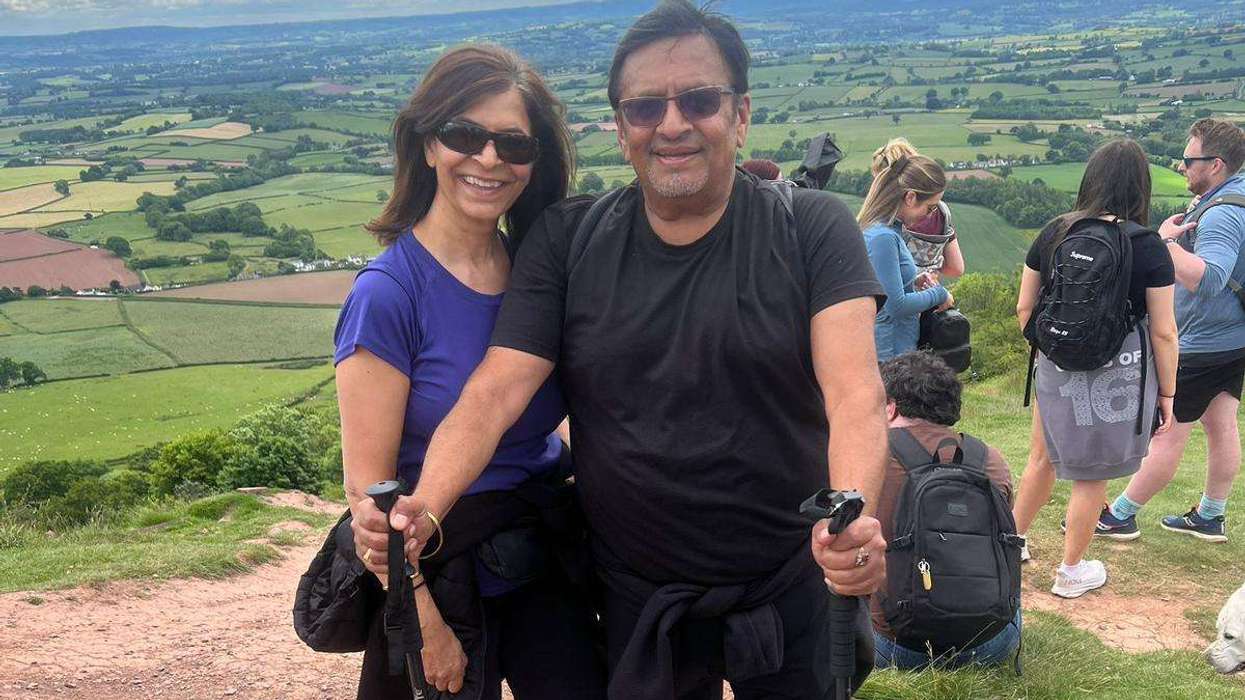
SATINDER PUJJI has a lifetime of stories and memories about his father, who was one of the most decorated Indian soldiers in the world wars.
Squadron Leader Mohinder Singh Pujji was among the war heroes honoured by Britain last
Sunday (11) on Armistice Day.
The RAF pilot flew combat missions and survived several crashes during the Second World
War in Britain, Europe, North Africa, the Middle East and Burma. The war hero, who was
awarded the Distinguished Flying Cross, once saved 300 American soldiers from Japanese
troops in the Burmese jungle.
Another memorable story for Satinder, a retired finance director, was when his father, along
with a few Indian soldiers, were invited to Buckingham Palace.
He told Eastern Eye: “Dad told me King George VI invited him and the Indian soldiers for
lunch. Princesses Margaret and Elizabeth (now the Queen) were there and sat by him. They talked about India.
“Princess Margaret asked him, ‘do they wear trousers in India or a dhoti like Gandhi wore?’ He laughed – Princess Elizabeth told her to be quiet. She knew a lot about the world, Margaret’s knowledge then was limited.”
Pujji was in a group of 24 Indians who answered a newspaper advert for pilots and arrived in Britain in 1940. He trained with the RAF and was tasked with tackling bombers and fighters when Adolf Hitler ordered the bombing of London.
He died at the age of 92 in 2010. A bronze statue was unveiled of him in Gravesend, Kent, after a campaign led by Labour MP Tan Dhesi.
Satinder, who has two sisters who live in India, said his father waited until after the conflict to get married.
He said: “He was engaged to my mum at the time and didn’t want to get married till after the war. He didn’t want her to be widowed before marriage.
“One time he crash-landed in Dover and twice over the sea in France. He was the most decorated pilot. We are very proud.”
This year’s memorial events had a focus on the role that Commonwealth soldiers played
in helping Britain during world wars. An estimated 1.3 million people from south Asia risked
their lives to fight in the First World War, with more than
74,000 dying.
In the Second World War, more than 2.5 million Indian troops were fighting across the globe.
Satinder believes more Britons are aware of the role troops from abroad played.
“Before my dad used to say few people knew who was representing India in the RAF. Gradually it is increasing.
“The first time was from BBC India News that Indians living in England learned about them.
“More people are aware now that it was the single most volunteered service in England during the war. More than two million volunteered,” he said.
That awareness also remains strong in the Pujji family, who keep the collection of medals
and souvenirs that their father was awarded.
Satinder, who lives in London, said: “We have kept all of the medals and souvenirs with my
sister in Bandra [a suburb of the western Indian city of Mumbai]. She is the youngest sibling and was the closest to my dad. We are a very close-knit family.”
He added: “My daughter, who was born on Armistice Day and just turned 26, is doing a PhD in history. She has gotten more closer to my dad and learned more about partition. People ask her about her granddad.”





 Vijay with friend and racer Ajith KumarPhoto: X