
THE Bayeux Tapestry exhibition at the British Museum is perfect for Asians because they are so used to tales of love and war being told through long scrolls.
Such paintings are an integral part of Indian folk art, especially.
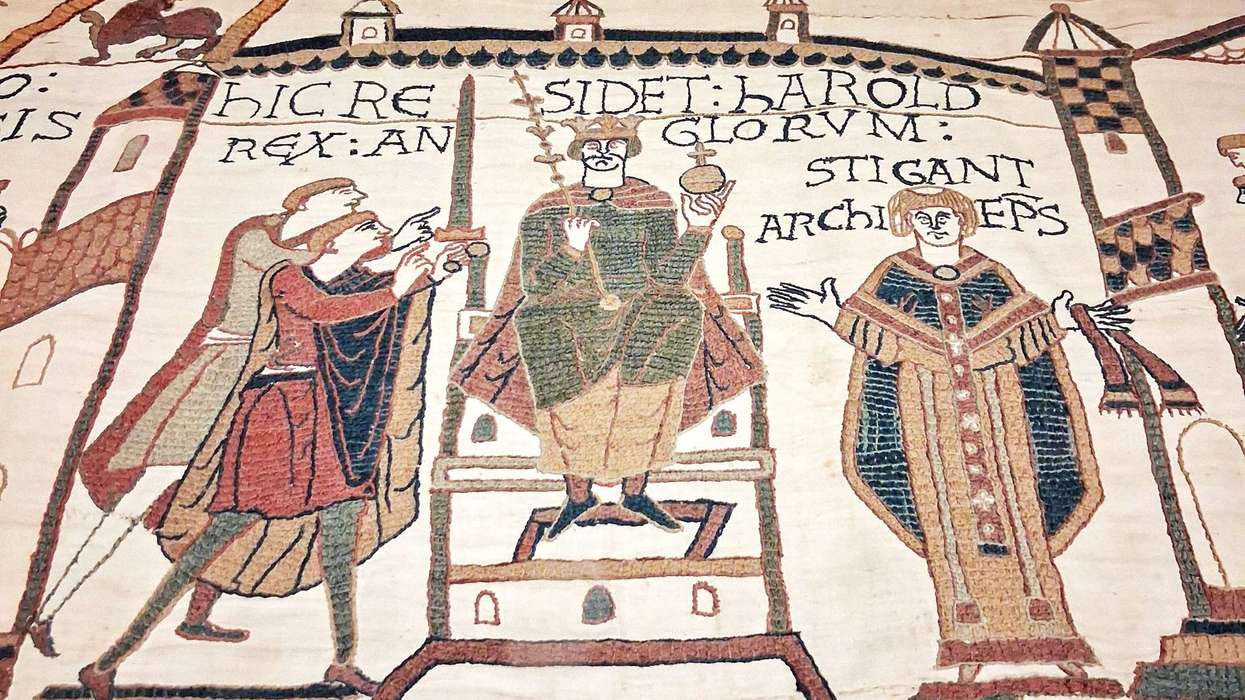
The story of the Bayeux Tapestry is a relatively simple one, beautifully told by the British Museum. What is unique about this tapestry, embroidered by women in England in woollen thread on linen cloth, is that the fabric has lasted nearly a thousand years. That is a near miracle.
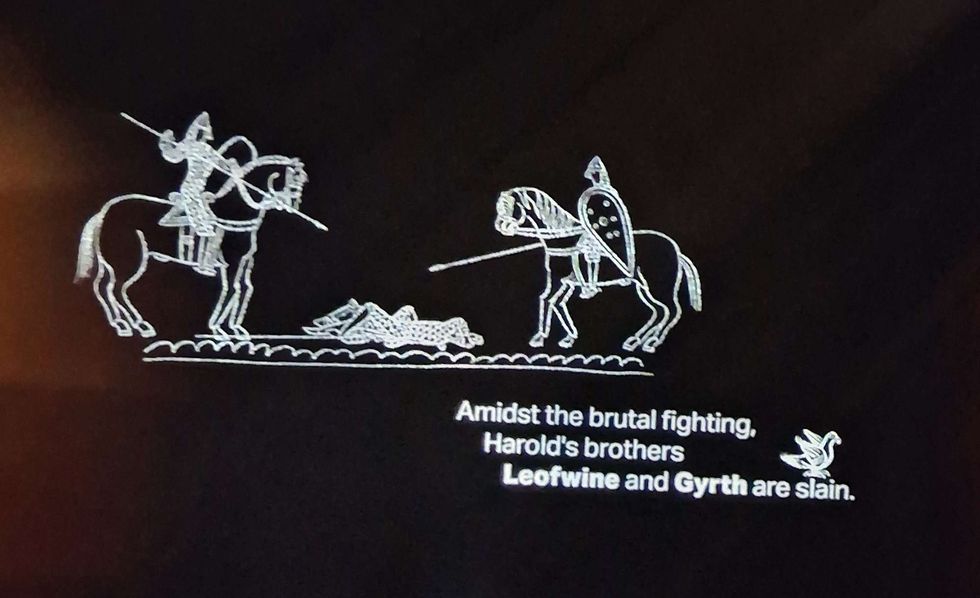
I saw the Bayeux Tapestry on Monday (7) and found it great fun, with animated cartoons above the tapestry, which was laid almost horizontally. All the horses galloping across a dark screen reminded me of The Lone Ranger on TV from my boyhood days.
 An animation shows the death of his brotherBritish Museum
The British Museum gives us the basic details: the Bayeux Tapestry is a 70-metre-long masterpiece telling the story of the events leading to the Battle of Hastings on October 14, 1066, and the Norman Conquest of England by William, Duke of Normandy.
The embroidery in wool thread on linen cloth was likely produced in or near Canterbury and dates to 1072-1077.
Through 58 scenes, 627 characters and 737 animals, the tapestry gives an account of the medieval period in Normandy and England like no other. It provides information about civil and military architecture, armour and seafaring, as well as precious details of everyday life.
There is a large poster by the British Museum’s main entrance in Russell Street, emphasising that the exhibition is possible because of “a historic loan from France”.
Others might be irreverent enough to point out that boat crossings have been going on since long before Nigel Farage was a twinkle in Reform’s eye.
I quickly walked the length of the exhibition to assess what was on offer before going back to the beginning. You begin with photographs of the East Sussex countryside, green and peaceful.
The scene is set: “Near Hastings, England, 14 October 1066.”
This is followed by: “The scene of a monumental battle”; “Two rivals will fight for the throne”; “One is the newly crowned English king” (this is Harold); “The other is a Norman duke from across the sea” (this is Duke William of Normandy); and “The outcome of their epic clash will change England forever”.
This is what Farage fears with the present boat crossings.
 Odo urges William to wage war against HaroldBritish Museum
We are also told: “England’s women are highly distinguished in needlework and embroidering with gold thread.”
We are given some relevant numbers: “As the story unfolds you will encounter 416 plants, 737 animals, 37 ships, 115 swords, 33 buildings, 23 trees, 11 thrones, 4 sea crossings, 2 feasts, and 1 comet.”
There is a quote from Henry of Huntingdon: “In the year of grace 1066, the Lord the ruler carried out what he had long contemplated for the English: he delivered them for destruction to the violent and cunning Normans.”
I loved the animated cartoon captions, which even kids will be able to understand.
It begins: “Southern England, 1065. After an audience with King Edward, Earl Harold embarks on a fateful journey.”
Next: “His mission takes him across the sea to France. Blown off course Harold lands in hostile territory. Brandishing his knife in defence, he is seized by Guy, the local lord.”
Then: “The news reaches Duke William in Normandy. He dispatches riders to secure riders to secure Harold’s release.”
Next: “Humbled, Guy surrenders Harold to William”, followed by: “In William’s great hall, a spirited exchange ensues. The duke recruits Harold for a campaign against his rival, Conan of Brittany.”
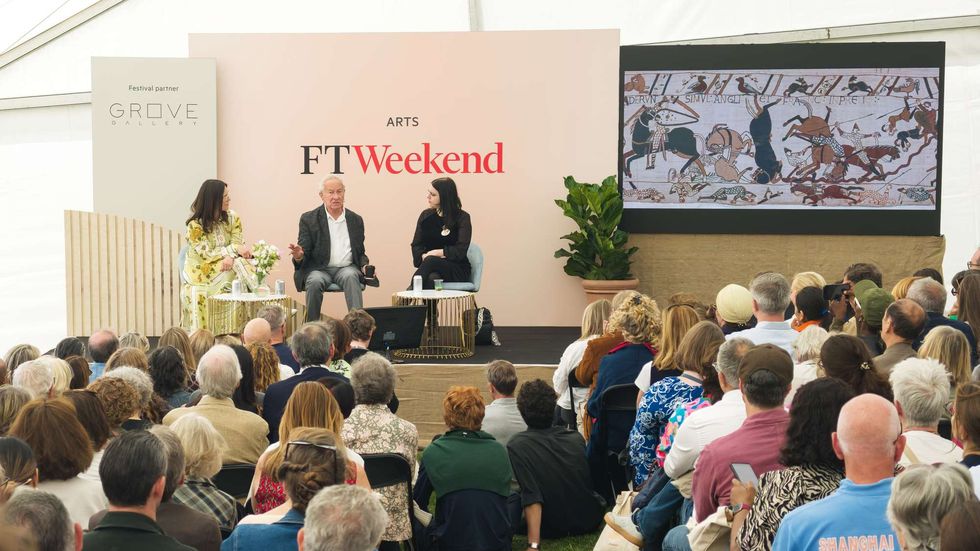 Simon Schama and Janina Ramirez discuss the tapestry at the FT Weekend FestivalAmit Roy
To cut a long story short, “Harold swears a solemn oath on sacred relics to support William’s claim to the English throne.”
But after the death of King Edward on January 5, 1066, “Forsaking his promise to William Harold takes the crown.”
“A blazing comet lights up the sky, heralding a change in [Harold’s] fortunes.”
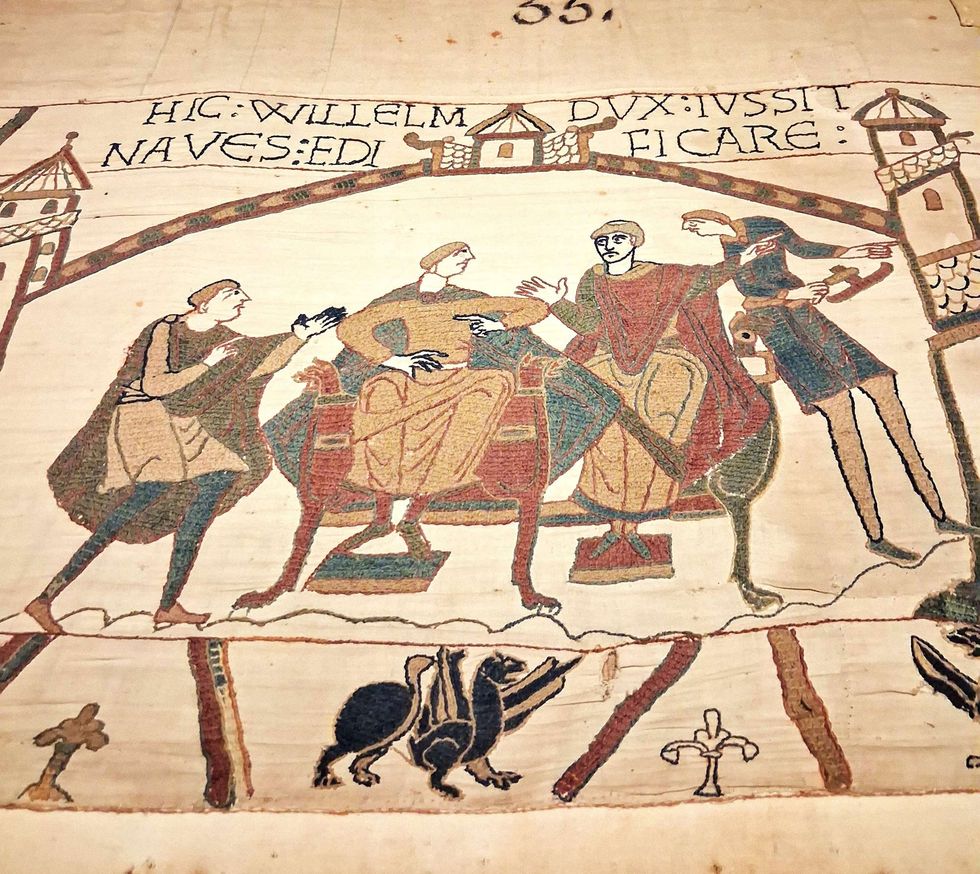
William is not pleased: “Urged on by his half-brother Odo, furious William wages war against Harold.”
“Amidst the brutal fighting, Harold’s brothers Leofwine and Gyrth are slain.”
So, too, is Harold, who is struck by an arrow when he removes his helmet to show his face and rally his men. A massacre follows Harold’s death.
It was an advantage to hear a detailed discussion on the Bayeux Tapestry at the FT Weekend Festival last Saturday (5) between historians Simon Schama and Janina Ramirez.
Schama said: “It’s an extraordinary moment in history, apart from being a massive improvement on Christopher Nolan” – the filmmaker who interpreted history with The Odyssey.
Schama noted that the tapestry features only three women.
Dr Nicholas Cullinan, director of the British Museum, said: “The Bayeux Tapestry is one of the most important cultural artefacts from the Medieval world and has been a source of inspiration and wonder for generations.
“It’s difficult to capture just how extraordinary the opportunity to display the Tapestry in the UK for the first time in 1000 years is. I’m glad we’ll now all be able to share in that excitement as people book their tickets and travel to London to take part in what is undoubtedly going to be one of the biggest cultural events the British Museum has hosted – one for the ages.”
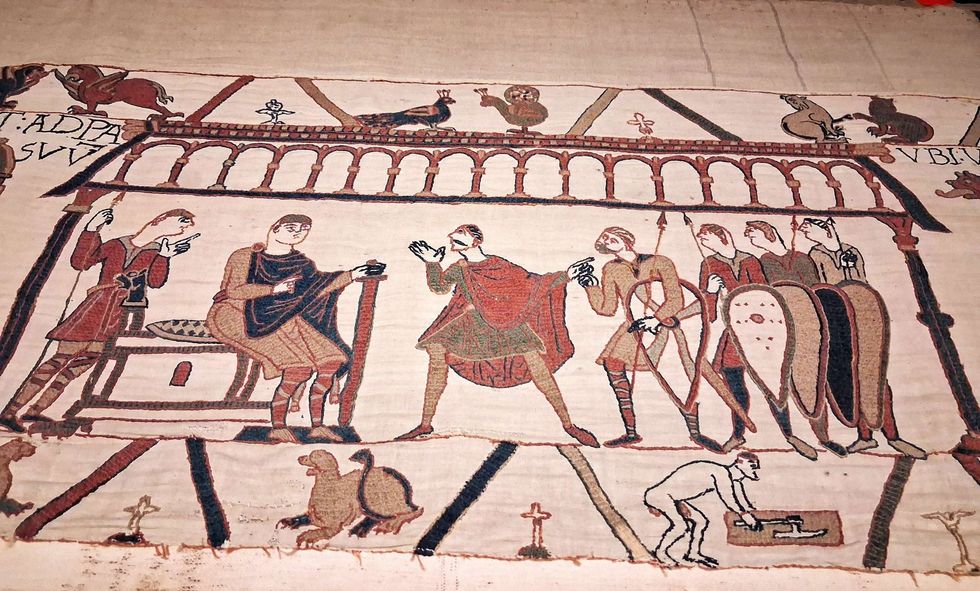 William meets HaroldBritish Museum
George Osborne, chair of the British Museum’s trustees, said: “This will be without doubt the biggest year in the Museum’s history – as we expect 7.5 million people to visit and the Bayeux Tapestry returns to UK soil for the first time in a thousand years.
“It is a defining piece of our nation’s history and a truly once-ina-lifetime experience. I hope people mark their calendars and seize the chance to see it when it arrives, in what promises to be an extraordinary moment for the country.”
In previous permanent displays, the tapestry has been displayed vertically, and from 1700 until 1842 it was usually rolled out for academics and important individuals to see.
“Displaying the Tapestry flat allows audiences to fully appreciate the scale of this spectacular and one-of-a-kind medieval embroidery. It also enables the Museum to bring it to life in a new and imaginative way with digital elements helping enhance understanding,” said the British Museum.
The tapestry had been on display at the Bayeux Tapestry Museum in Normandy since 1983, until the museum closed in 2025 for renovation. This provided the opportunity for the Bayeux Tapestry to come to the UK. It will return to France for display in the new Bayeux Tapestry Museum after its run at the British Museum.
Michael Lewis, curator of the Bayeux Tapestry Experience, commented: “The display of the Bayeux Tapestry at the British Museum offers visitors a once-in-alifetime opportunity to be part of history. This will be a new and exciting presentation of the Tapestry’s story: the events leading to the Norman Conquest, an incredible moment that changed England forever. Important loans will help visitors fully appreciate the Tapestry, explaining why and how the embroidery was made.”