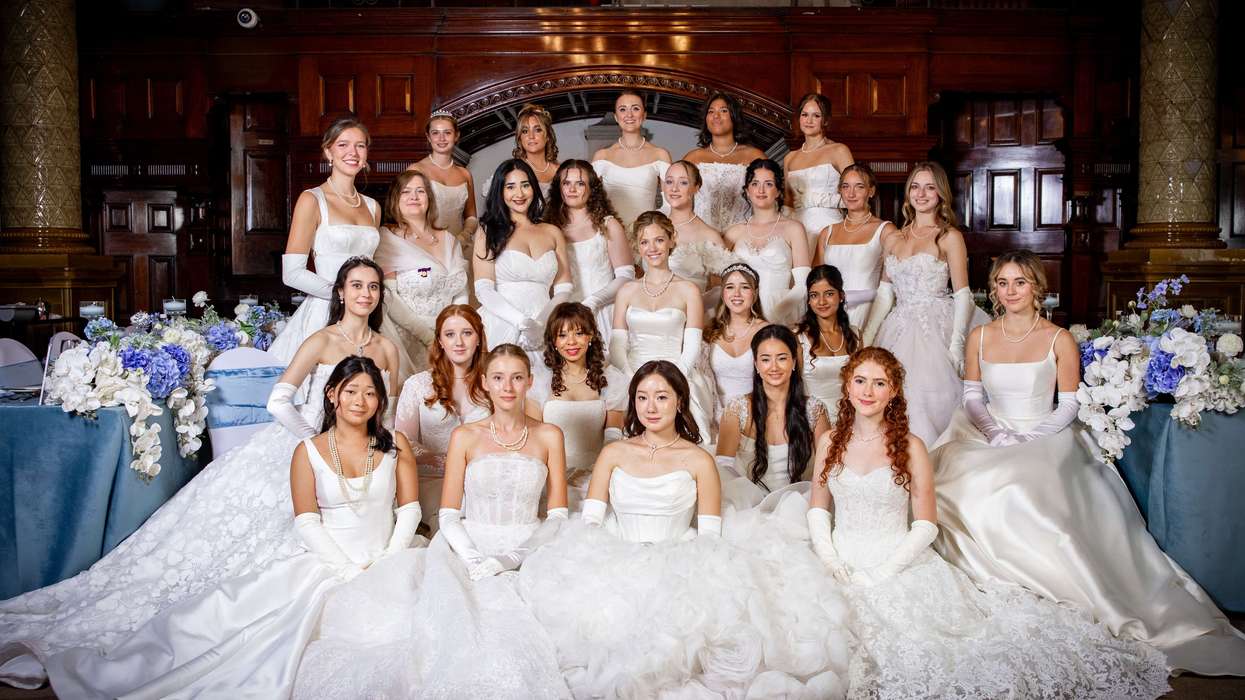

QUEEN CHARLOTTE’S BALL, which dates back to 1780 but remains the most elegant part of the “London season”, is developing ever closer links with India, Eastern Eye can reveal.
For example, one of its patrons is Rani Reena Kumari, who sat alongside the Dowager Duchess of St Albans and nodded graciously as debutantes in white gowns dropped pretty curtsies after being escorted down a long aisle by their fathers.
Jennie Hallam-Peel, who has been running Queen Charlotte’s Ball as chairman of the London Season for children’s charities on a voluntary basis, told Eastern Eye: “HH Princess Reena Kumari is a hugely appreciated patron of Queen Charlotte’s Ball, together with their Graces, the Duke and Duchess of Somerset, the Dowager Duchess of St Albans and HH Princess Aiesha Shah of Lahore.”
This year’s Queen Charlotte’s Ball was held at One Whitehall Place, a regal Victorian venue adjacent to the Hindujaowned Raffles Hotel in the Old War Office in Whitehall.
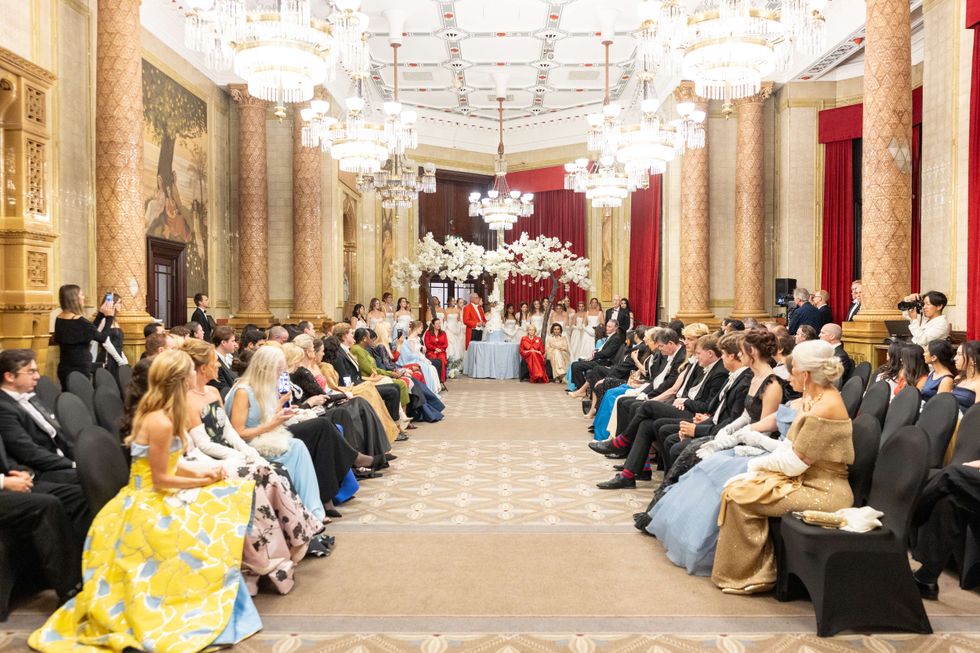 Guests at the eventGetty Images
The scene could have come from Bridgerton, but actually it was the other way round. The Netflix series reimagines Queen Charlotte’s Ball, which has also featured in Downton Abbey.
Queen Charlotte’s Ball originated in 1780, when King George III hosted a grand party to celebrate the birthday of his wife, Queen Charlotte of Mecklenburg-Strelitz, and raise funds for the Queen Charlotte’s and Chelsea Hospital. It featured a giant cake, which became a permanent fixture of what quickly established itself as an annual event.
Lady Howard de Walden, followed by Peter Townend, social editor of Tatler and editor of Burke’s Peerage, continued the tradition for many years. On Townend’s death in 2001, Hallam-Peel took over for what she thought would be a six-month stint “but, of course, 20 years later, I’m still doing it”.
The number of debutantes, who wear gowns specially tailored for them, is limited to 22. Attendance is by invitation only. Ascot, Henley and Cowes have dropped off the Season’s calendar because they are considered “too corporate”.
Hallam-Peel recalled: “The link with India began about 18 years, even 20 years ago, when the Maharajah of Jodhpur (Gaj Singh II) came over to England and wanted to be invited to some of the debutante events, and I met him at a dinner party at the Sloane Club.”
A former debutante herself, she added: “Since we were holding a charity auction, he said, ‘Let me offer a prize.’ And he offered a wonderful holiday for two people in one of his palaces.”
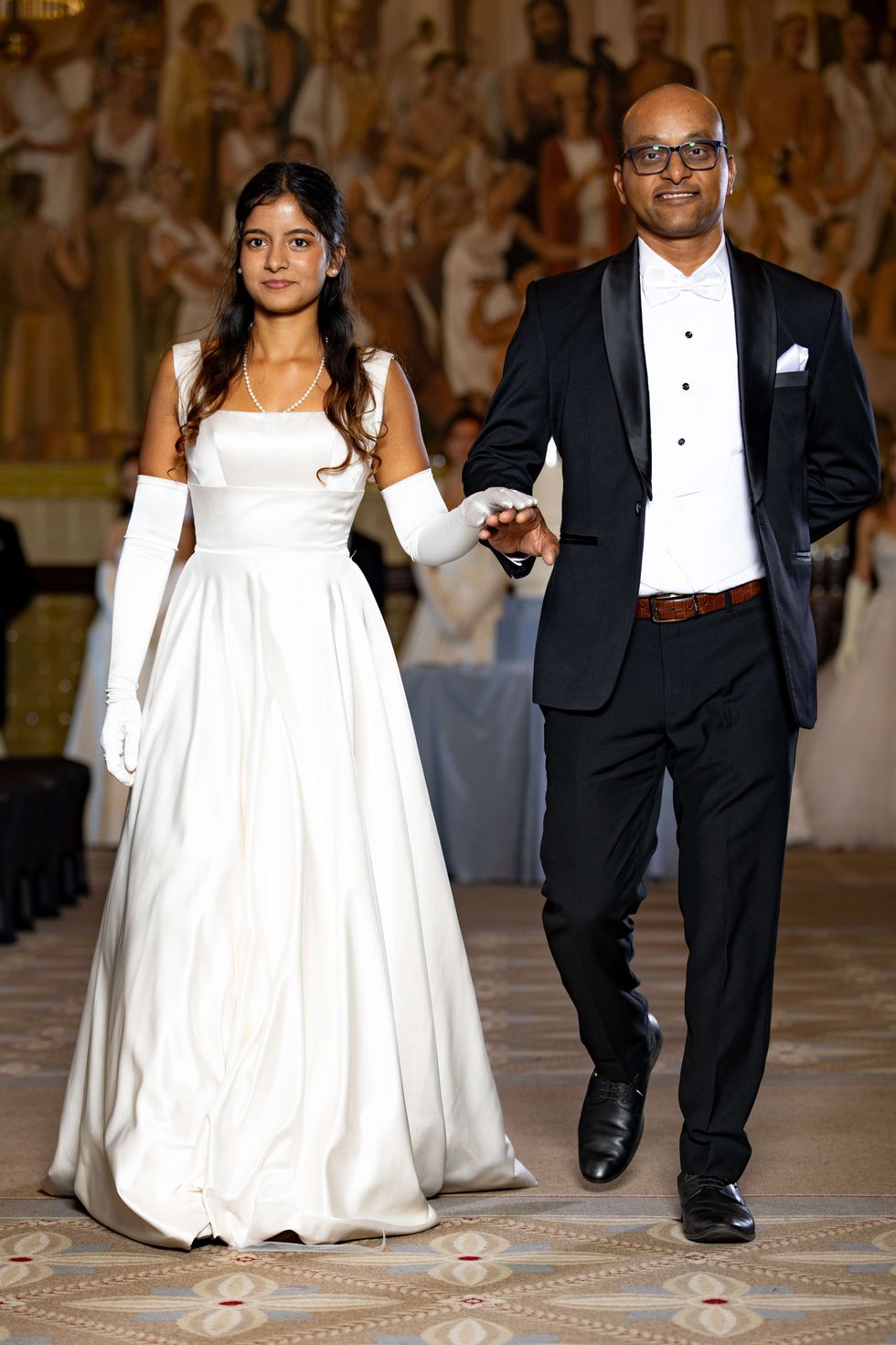 A debutante with her escortGetty Images
She went on: “Then we kind of lost contact with India. And then about 10 years ago I was having tea at Harrods with Sir David Roche, one of our patrons. There were two elderly gentlemen having tea.”
One of them introduced himself as Nawab Mohsin Ali Khan, a member of the royal family of Hyderabad who had settled in London. He soon became a patron of Queen Charlotte’s Ball and attended “year after year”.
Hallam-Peel continued: “He said to me, ‘You know what, Jennie, I’m in my nineties, and I want the association between England and India and particularly the London Season to go on. So I want to introduce you to a lovely young princess,’ and that is how I met Princess Reena. She immediately became involved in a very hands-on way.”
Hallam-Peel went on: “During Covid, Prince Mohsin telephoned me at least three times a week and we chatted about his history and about India generally and about his palace. And when Covid was over, I said, ‘I really have to see this palace.’ And we arranged a wonderful visit there. For years we visited the Falaknuma Palace in Hyderabad, which is where the prince spent his childhood. Sadly, he died in 2022. My husband, David HallamPeel, who is a lawyer, is custodian of the late prince’s charity (World Peace and Prosperity Foundation), at the request of his administrators.”
Before Queen Charlotte’s Ball in September, Rani Reena went to the Royal Military Academy Sandhurst to offer her personal congratulations to a British soldier who had won the annual prize established in the name of her father, Major General Diwan Misri Chand.
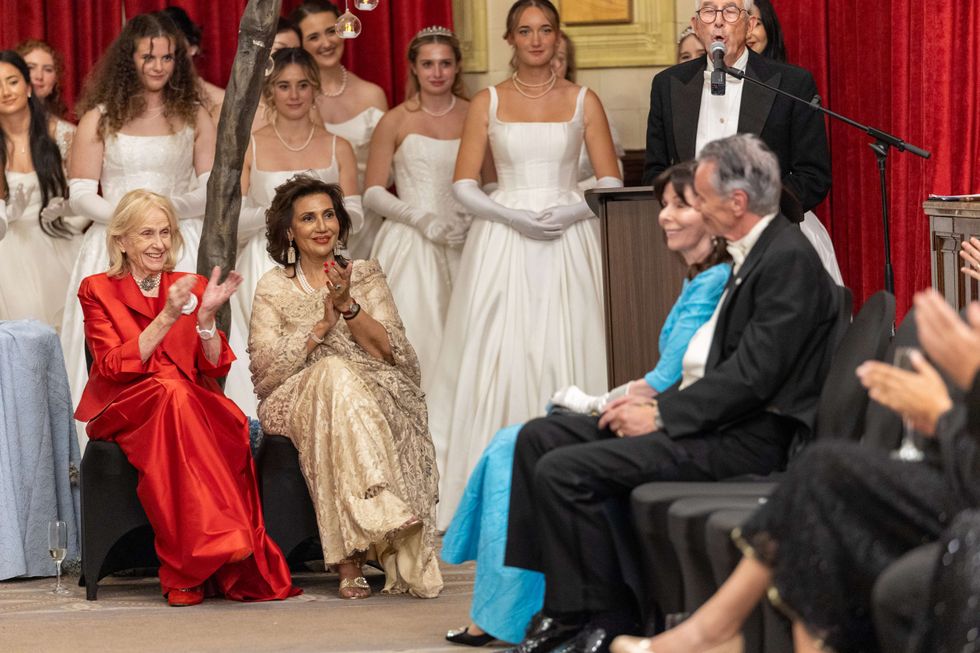 Rani Reena Kumari and Dowager Duchess of St Albans guests and debutantes at the presentation ceremonyGetty Images
Next year, she hopes to organise a special ceremony to mark 100 years since her father became one of the first Indians to be commissioned at Sandhurst in 1927.
According to records, Rani Reena “belongs to the royal families of Labhowa and Sahaspur-Bilari, which are connected through marriage. Raja Pratap Singh Jhala of the Labhowa estate (in Uttar Pradesh’s Firozabad district) is married to Rani Reena Kumari (or Reena Singh), the daughter of the late Rani Indra Mohini and Dewan Major-General Misri Chand of Sahaspur-Bilari.”
As prime minister, Indira Gandhi abolished the princely order, their titles, privy purses and other privileges in 1971 by amending the Indian constitution. Some princes turned their palaces into hotels, while others went into business or politics. Depending on their personal histories, many erstwhile royals are still respected. Their titles tend to be used by their friends in Britain.
Hallam-Peel said: “Princess Reena encouraged us to go to Delhi with a group of London Season supporters to raise the profile of the charitable foundation, and make the first award from the foundation since Prince Mohsin had died.”
On March 28 this year, the London Season hosted an event at the Taj Falaknuma Palace in Hyderabad, where 10 young Indian women were selected as “ambassadors” for the organisation. They were chosen for their “contributions to business, philanthropy, entrepreneurship, and public service”.
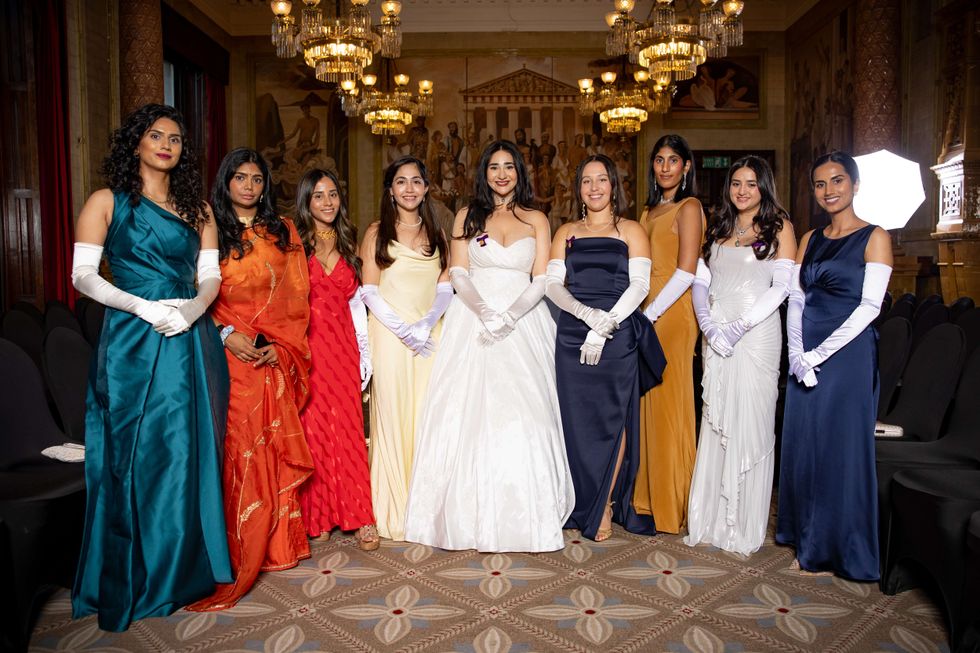 Indian ambassadors to the London Season at the ballGetty Images
They came to London to attend Queen Charlotte’s Ball. Hallam-Peel made a point of naming them: Shivina Kumari (who helped organise the ambassador weekend events alongside her grandmother, Rani Aruna Singh of Koela); Emily Wilson; Suman Kumari; Vedika Aruna; Raveena Kumari; Aradhana Bhandari; Mira Kumari; Natalia Dorris; Shivani Chituri; and Rajeshwari Kumari.
She emphasised: “All of them are from wealthy families, but all were working. They didn’t sit back and do nothing. They were all extremely entrepreneurial women between the age of 25 and 28, so older than our debutantes, but really the kind of women who could be very influential in showing our younger girls how aspirational women can be.”
Hallam-Peel, who has visited India 20 times and is going again in January, believes there is much in common between the English, as they used to be, and the Indians she has encountered on her visits.
“We find a spirituality in Indian people, a gentleness, an old-fashioned courtesy,” she said. “We still have it in this country, but it’s very much kept to a small number of people. I think we instinctively reach out to that calmer, gentler way of life. The old-fashioned courtesy is just so charming. But at the same time, Indian people are so aspirational. Princess Reena also is so aspirational. She’s so clever, and so involved with everything in India. She loves her country. Now we regularly have at least 20, if not 25, Indian people at the Ball every year, which is just so lovely.”

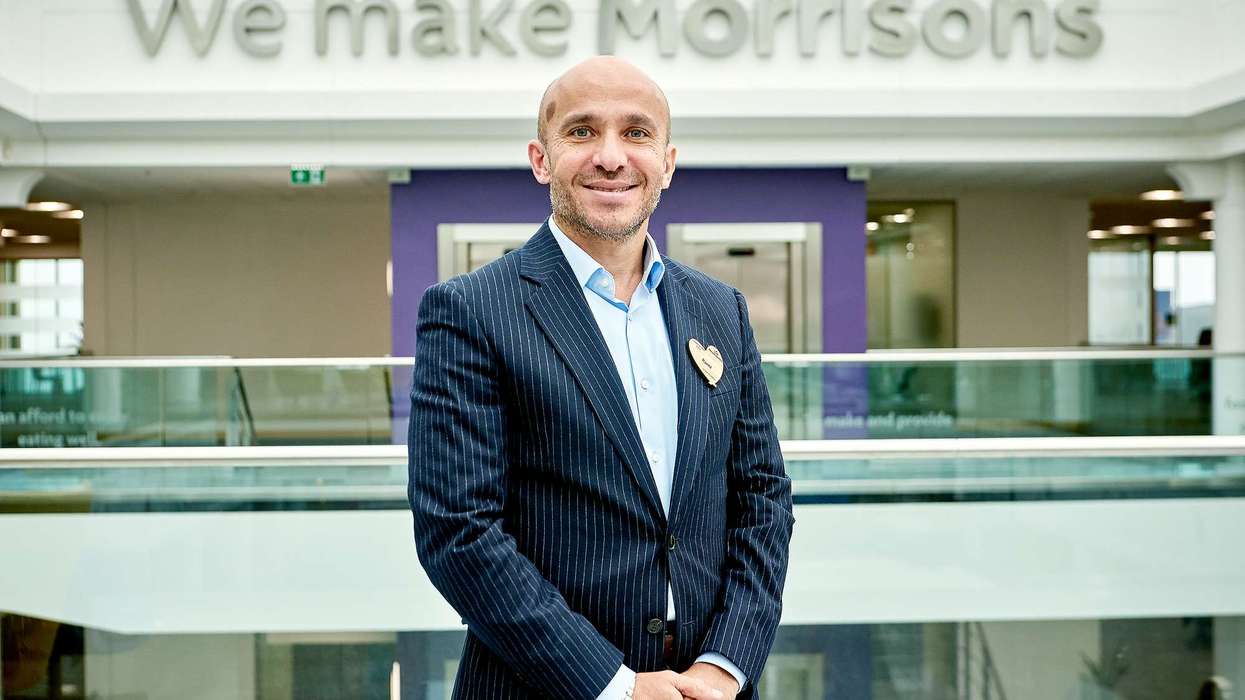
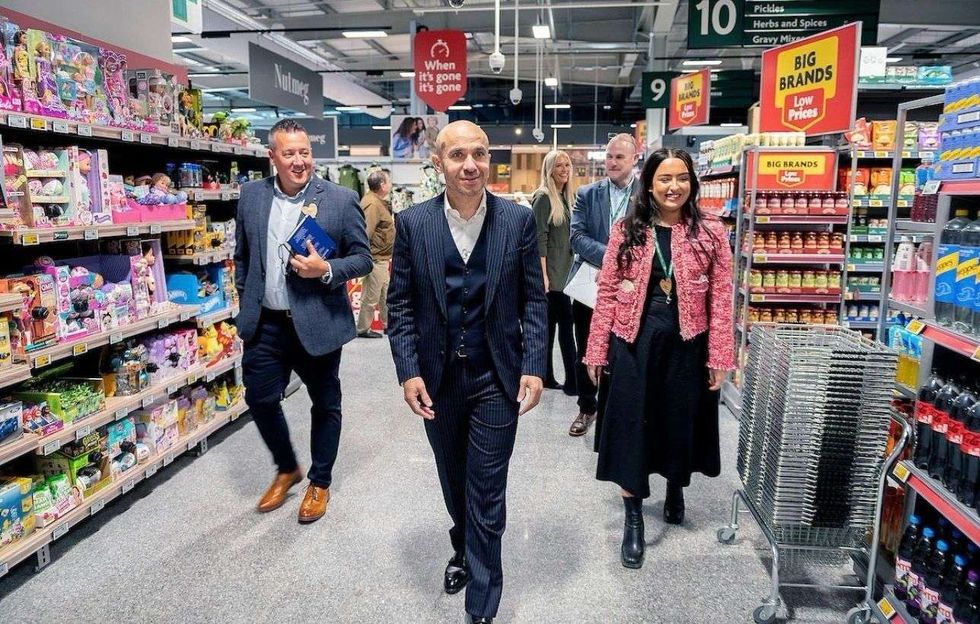 Baitiéh during a visit to a Morrisons storeEastern Eye
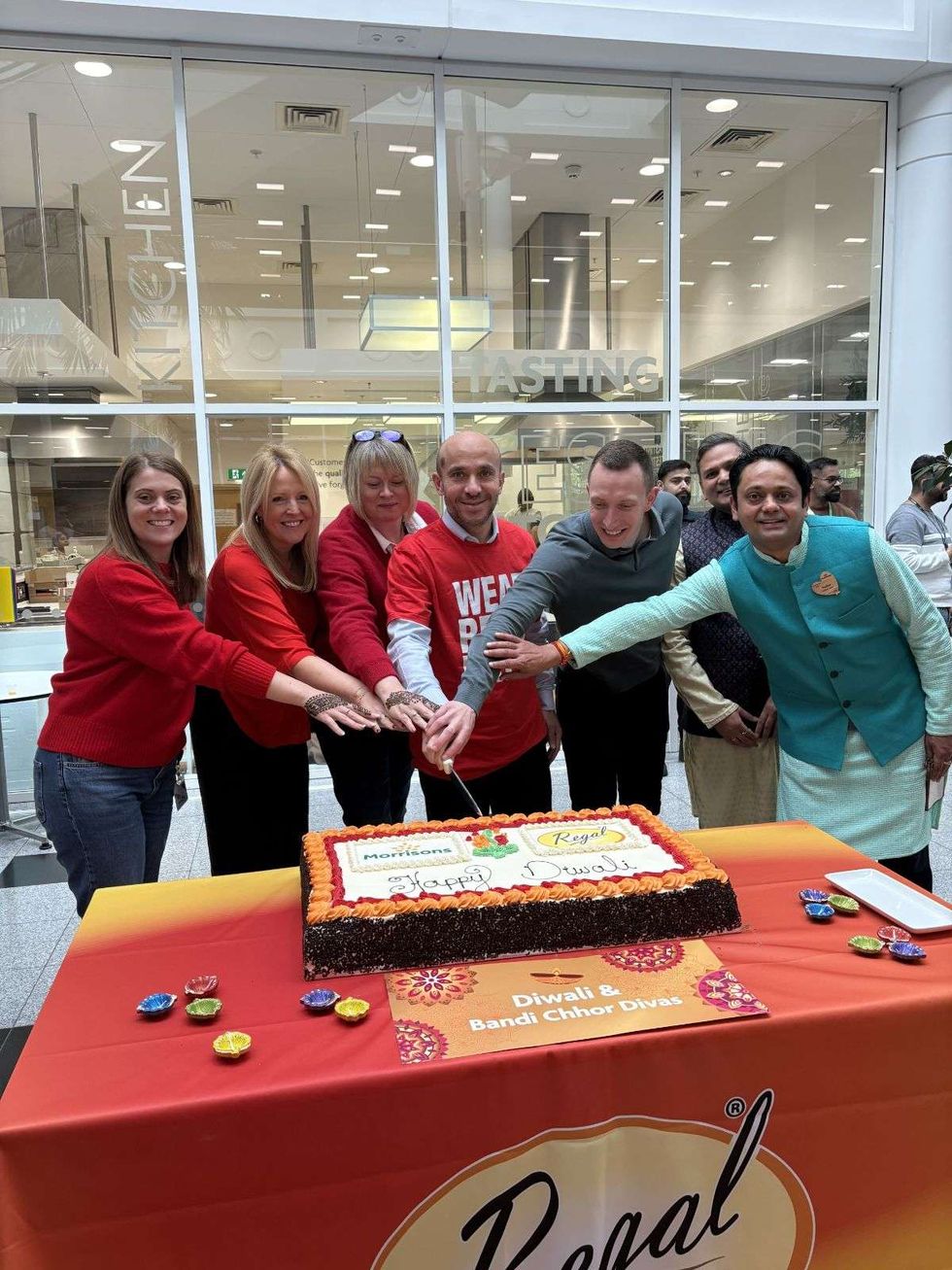 Baitiéh celebrating with colleagues at a store eventEastern Eye
 Rami Baitiéh at a franchise conferenceEastern Eye
 Morrisons has more than 1,700 convenience storesEastern Eye
 A Morrisons Daily store in Helmsley, YorkEastern Eye
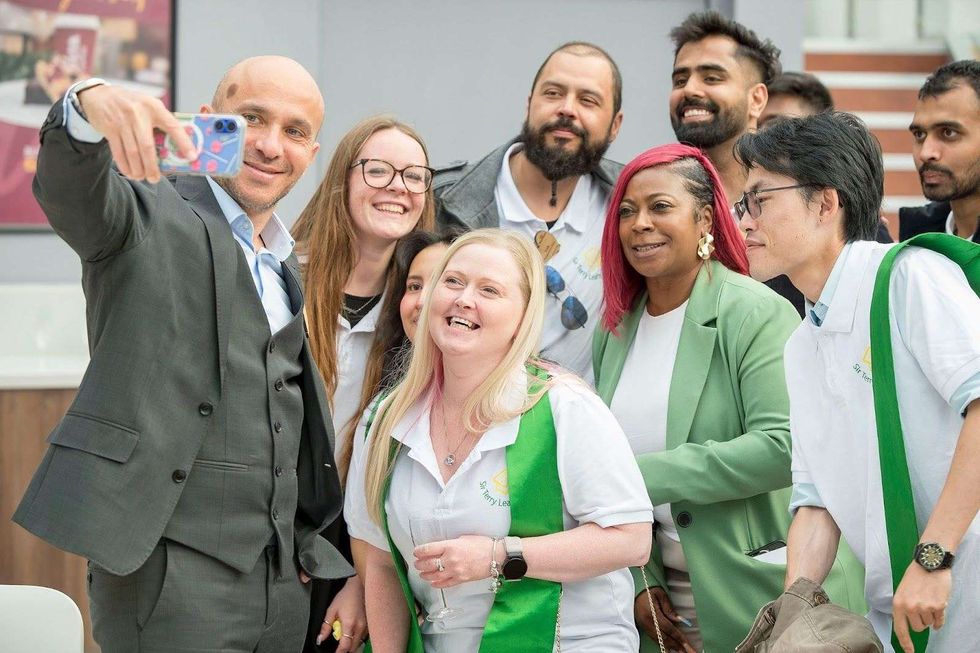 Baitiéh with colleaguesEastern Eye