For British Asians, there is a whole new world to discover in National Trust properties. Take, for example, Karun Thakar’s remarkable exhibition of textiles on the Blickling Estate in Norfolk.
The exhibition opened on 22 May, and I managed to catch it on Friday 23 October, a week before it was due to close on 1 November. I was shown round the exhibition by Emma Slocombe, the senior national curator (social history) in the National Trust’s access and conservation directorate.
She had worked with Thakar in the curation of the exhibition, which was called Journeys: Global Textiles from the Karun Thakar Collection. She had also been present when I had gone to see Thakar’s exhibition at Osterley Park, a National Trust property in west London.
Thakar has had a third exhibition at Dyrham Park near Bath in South Gloucestershire.
It had been a hot summer’s day when I had gone to Osterley. At Blickling, it was a cold, rainy day. But it was still worth making the two-hour journey from Liverpool Street to Norwich, which is about 15 miles from the Blickling Estate.
 Curator Emma Slocombe with ikat robes and arabachi coats in the Peter the Great Room in Blickling Hall Amit Roy
 View of the entrance to Blickling Hall on a rainy autumn dayAmit Roy
Thakar, who has one of the biggest private collections of textiles in the world – it is certainly the most extensive in Britain – has a particular gift for arranging his fabric in English country houses so that they tell a story.
“No matter how grand these properties are, they are still home,” he remarked.
Slocombe, meanwhile, spoke of how having Indian textiles made her see existing English decorations at Blickling Hall with a fresh perspective.
Passing tapestries woven in striking colours in silk, fine English wool and gold thread alongside the kanthas from Bengal and textiles from Punjab and other parts of India, she commented: “What I wasn’t anticipating as a curator was quite how the introduction of new objects makes you look at the existing objects in a new way. So suddenly looking up at these amazing early Mortlake tapestries and appreciating the folds and the colours of the textiles depicted in them in new ways has been really exciting.”
 Kente cloth from Ghana in the Long Gallery in Blickling Hall Amit Roy
Thakar had also been very thoughtful in the way he had displayed his textiles.
“Even spontaneous things are informed by quite a lot of intellectual thinking and aesthetic,” she added.
Blickling Hall is a Grade I listed Jacobean mansion set in 5,000 acres located just north of the market town of Aylsham in Norfolk. The house and estate have evolved over many generations. The current house was designed and built in 1619-1620 by Robert Lyminge for the lawyer Sir Henry Hobart (1560-1625).
Anne Boleyn, second wife of Henry VIII and mother of Elizabeth I, is believed to have been born on the estate in 1501. The estate has a museum to mark the fact that during World War II, the house was requisitioned and served as the Officers’ Mess of nearby RAF Oulton.
After the death of Philip Kerr, 11th Marquess of Lothian, the last private owner of Blickling, in December 1940, the Blickling estate passed into the care of the National Trust as part of his bequest, under the terms of the Country Houses Scheme. The Blickling estate opened to the public in 1962, following restoration work that began in 1960. Visiting this National Trust property – and many others – will certainly be a rewarding experience for British Asians, especially families with children.
The estate has a slave trading connection. Blickling Hall is among the properties highlighted in the National Trust Colonialism and Slavery Report on historical links to wealth derived from plantations and the slave trade. The estate has connections to the 8th Marquess of Lothian, whose family received financial compensation (£4,660) for 543 enslaved people under the Slavery Abolition Act.
 Decoration in the Great Hall at Blickling Hall Amit Roy
In the 18th century, John Hobart (who later became the 1st Earl of Buckinghamshire and inherited Blickling) served as a commissioner for the Board of Trade and Plantations. This body directly advised the British government on colonial governance, trade regulation, and plantation economies in the Americas and the West Indies.
In Blickling Hall, Thakar’s baghs and kanthas were hung in the entrance in the Great Hall. They were all made by women, unlike the portraits in the gallery which were only of men. The colours in the textiles somehow seemed to be in harmony with the stained-glass window above the front door.
In the Brown Room, there is a palampore fragment made in coastal south-east India, and a panel of Ashburnham bed hangings made in Gujarat for sale in Europe. There is also a table carpet, “with grapes, pomegranate and other exotic Indian motifs”.
 Palampore fragment made in coastal south-east India in the Brown Room in Blickling Hall Amit Roy
 Bed valance dating from early 1700s in the Italian Print Room at Blickling Hall Amit Roy
In the Print Room, there is a bed valance dating from the early 1700s and an unfinished 17th century Italian embroidery.
In the South Drawing Room, textiles such as chintz or French toile, either from India or inspired by India, are draped across sofas as though the home owners were discussing how best to display the fresh arrived fabrics.
Blickling had global connections, and the Japanese influence is evident in the kimonos exhibited in the Upper Ante Room.
In the Long Gallery, which houses the finest library owned by the National Trust with 9,000 books, there is a Colcha bed covering made in the 1600s by women in Bengal for the Portuguese market. There is also kente fabric from Ghana where the designs align with the geometry of the bookcases.
The Peter the Great Room is so called because it is dominated by a large tapestry depicting Peter the Great defeating the Swedish army at the Battle of Poltava in 1709. It was installed at Blickling by John Hobart, 2nd Earl, after his service as British Ambassador to the Russian court of Catherine the Great in the 1760s. Here, Thakar had constructed almost a catwalk with Ikat robes and Arabachi coats to reflect the diversity of the Russian empire.
 Indian inspired fabric draped on sofas in the South Drawing Room in Blickling Hall Amit Roy
 Indian inspired fabric draped on sofas in the South Drawing Room with Indian carpet in Blickling Hall Amit Roy
 Karun Thakar has picked out the geometric patterns in the bookcase and the Kente cloth in the Long Gallery in Blickling Hall Amit Roy
 Large tapestry depicting Peter the Great defeating the Swedish army at the Battle of Poltava in 1709 Amit Roy
 ikat robes and arabachi coats in the Peter the Great Room in Blickling Hall Amit Roy
When the exhibitions were announced, the National Trust said: “Journeys brings together standout pieces from Thakar’s global textile collection to explore themes including migration, trade, craftsmanship, colonialism, global histories and beauty.”
It went on: “At Blickling, the house’s associations with commercial enterprise and colonial administration are reframed. Textiles that travelled continents – carrying stories of identity, exchange and transformation – take centre stage, showing how global connections shaped the estate.
“A curated selection of star objects will be on show, including Japanese kimonos, Punjabi baghs and kanthas, French toiles, Italian embroideries, Turkoman coats and Kente cloths from Ghana. Together, they highlight Blickling’s role as a global country house.”
It added: “Visitors will also encounter domestic Punjabi baghs and kanthas (quilts) made by South Asian women brought into spaces traditionally reserved for male portraits, echoing Thakar’s commitment to celebrating overlooked makers and everyday creativity.
 Baghs and kanthas made by women provide contrast to the men only portraits in the Great Hall at Blickling Hall Amit Roy
 Baghs and kanthas in the entrance Great Hall at Blickling Hall Amit Roy
 Baghs and Kanthas in the Great Hall in harmony with stained glass window at Blickling Hall Amit Roy
“The link between Britain and India is significant at Blickling: Jawaharlal Nehru and his daughter, Indira Gandhi visited in 1938 as the guests of Philip Henry Kerr, 11th Marquess of Lothian, who supported India’s progress toward becoming a self-governing Dominion.”
Speaking from Japan, where an exhibition of his chintz collection is touring six venues, Thakar told Eastern Eye: “Each house that I curated presented very different historic links to India. I was very moved when I visited Blickling as Jawaharlal Nehru and 21-year-old Indira had visited the house in 1938. They were invited by Philip Kerr, the last owner of the house. He had spent part of his working life in India. I understand that he had invited them to discuss the future of an independent India.
 Kimonos reflect Japanese influence in Upper Ante Room in Blickling Hall Amit Roy
 Kimono in Upper Ante Room in Blickling Hall Amit Roy
“In the Brown Drawing Room, I installed early Indian chintz and embroidery panels dating from late 17th century as well as much prized hand-woven Kashmiri shawls. The radical and new designs on these textiles made by Indian artists still influence the fabrics we use today.
“The house has one of the most important libraries in the world. The content of some of the books was very much informed by the colonialist view of the world. I wanted to bring global creativity to challenge some of the colonial histories. I installed textiles from West Africa, central Asia, Japan, Bangladesh, Italy, France as well as England, to show the artistic creativity throughout the globe.”
Visitors to Blickling could relax on a sofa and watch a six-minute video of an interview Slocombe had done with Thakar.
He told her that he had started becoming familiar with textiles “when I was really young. We were living in Delhi, and my mum had a tailoring coutière shop, and I was being taught to embroider, stitch and all sorts of things. I started helping with silks, brocades, beautiful embroideries. In 1982 when I just left university, I started travelling, and that’s the first time I started buying Banjara embroidery, which are abstract beautiful embroideries in India. The idea at that stage was just to acquire a few beautiful things, but what I didn’t realise is that’s going to be my lifelong passion. And now, after 40 years, I have acquired a huge number – tens of thousands of textiles from all over the globe.”
 A view of the Palace and fort at Agra shows romantic side of India Amit Roy
Asked about his creative vision for Blickling, he replied: “Blickling is a fascinating property because of the global histories that it has. It has one of the greatest libraries in the world. It was interesting to work there. Some of the properties are linked with historical figures. For example, Jawaharlal Nehru and his daughter Indira Nehru came to visit Blickling before India’s independence. Jawaharlal Nehru was the first prime minister of India, and Indira Gandhi went on to become the prime minister twice until her assassination.”
Philip Kerr, 11th Marquess of Lothian, had visited India in 1912, 1931 and 1937. He had been trying to get Nehru to come to Blickling since 1935.
In one letter to Nehru, he said: “I greatly hope it will be possible for us to meet. I have no doubt that our views about recent events in India and about political questions generally will differ, but for good or evil the destinies of India and England are still closely interlocked.”
In another in 1938, he said: “Dear Mr. Nehru, I’m glad to see that you have arrived safely in England and have escaped Franco’s bombs on Barcelona. I am looking forward to entertaining you here for the weekend of July 9th. It will be quite a small party. I hope to have Lady Astor, who will interest and amuse you, General Ironside, who is one of the best soldiers in England and will be able to give you a conspectus of the military and general state of the world, which you may not be able to get from others, Mr Thomas Jones, who was Baldwin’s most intimate advisor when he was Prime Minister and a very remarkable person in himself. I have half thought of getting Sir Findlater Stewart the head of the India Office, who is a very good man, but I feel he may be too official – none of the rest are!! However, I shall see you before the party and can settle final arrangements then. My main object is to give you a quiet weekend in beautiful surroundings where we can have some talk.”
 Blickling Hall Amit Roy
Nehru and his daughter visited Blickling the weekend of 9-11 July 1938. The other guests were Lord and Lady Astor, great friends of Lothian; Thomas Jones, Civil servant and benefactor; Grace Lankester, Women’s International League for Peace and Freedom; Arthur Salter, politician and university professor; Agatha Harrison, Women’s International League for Peace and Freedom; and General and Lady Ironside Chief of the Imperial General Staff.”
Nehru, educated at Harrow and Trinity College, Cambridge, was just as aristocratic as the other guests, if not more so. In 1937, Indira Nehru had enrolled at Somerville College, Oxford, to read history, political science, and economics.
In the video, Thakar also said: “The idea when I thought about Blickling was to bring global textiles there, in terms of global Blickling as well. We are working in different parts of the house. Initially, we’re starting with the Punjabi baghs, phulkaris and kanthas from undivided Bengal. They all were by women. The hall has a lot of portraits of men. A lot of women lived through that house and some widows who lived there on their own. So, we wanted to bring the presence of women’s work into the hallway.
 Table carpet, European 1670-1680 Amit Roy
“And then we are journeying through all sorts of different histories. In one of the first rooms, we’ve got textiles which were traded in Britain in the 17th century – Palampore, and also embroideries. There’s an Ashburnham panel from the 17th century. We’re showing what was happening with design in India. But it’s also a very interesting time in history because there were design elements sent from Europe to Indian artists who were producing the most amazing hybridisation of designs, taking elements from European prints, florals, and Indian design, Chinese design, Japanese. You had a unique art form emerging, which is still very much relevant today.
“We’re bringing a 17th-century table carpet, which is the most exciting object because all the fruit and the grapes, pomegranate are very exotic in it. So again, interesting iconography coming from roots of Palampore.
“Then in the Italian print room, the yellow room, we are exhibiting unfinished 17th century Italian embroidery because it’s important to show the process. I’m always excited when I find some embroidery which is unfinished. Half of it has got beautiful drawings of the flowers that are embroidered below. It also shows the process of embroidery, and also we’re showing a bed valance dating from the early 1700s. Beautiful gold and yellow silk.
 Unfinished 17th century Italian embroidery in the Print Room at Blickling Hall Amit Roy
“But it’s interesting how I acquired it. It was on a very cold day in the ’80s because I used to go to Portobello Road Market (in Notting Hill in London) a lot and used to find a lot of things, so I bought it just from a stand with no provenance or anything. Someone just happened to have it. It sounds weird, but I had to save them. Seeing it in a street on Porterville Road, I thought I had to take it away,
“And then the journey goes on from there because we've got a room where we're bringing French toile and other European cotton, because that’s a very
important dialogue about what happened to the Indian cotton trade with the Calico Act. All the cotton production moved to France and England, and we’ve got some of those elements, and also the same with shawls, because the Indian Kashmiri shawls were taken over by Paisley shawls produced in Scotland and also in France. We’re bringing some of those elements in.
“I’ve always been interested in aspects of working with existing properties. No matter how grand the properties are, they are domestic settings. Some of the toile we’re installing, they’re almost like curtains. They’ve just come in, and you haven’t quite decided where to hang them. That changes the space rather than (remain) a very formal setting. It becomes a place in a bit in turmoil, and also more open to the imagination.
“Unfinished things, I always find very exciting. Far better than just the finished object. You’ve got something just waiting to be used, whereas that’s something you can never do in a museum. We’re creating that through various rooms so that it looks like a domestic setting that someone is using at the time when it was built, in 1700s or 1800s. And then we’re going to progress to the room with the Russian tapestry. We really wanted to show the ethnic diversity of people in Russia in the 19th century. We’re having almost a catwalk parade of people in the most amazing ikat robes, Arabachi coats, embroidered capes. Those are some of the journeys I hope to take people through in that one property in Blickling, which is very exciting.”
 Picture of Kashmir shows a romantic view of India Amit Roy
Slocombe was one of the editors of the National Trust’s Interim Report on the Connections between Colonialism and Properties now in the Care of the National Trust, Including Links with Historic Slavery (published in 2020).
She contributed with two others to a chapter, “Compensation for Slave-ownership”, which said: “The Slavery Abolition Act (1833) made provision for £20 million to be paid in compensation to the owners of ‘slave property’. This was equivalent to approximately 40 per cent of the government’s total annual expenditure at the time, which, if applied today, would equate to well over £100 billion. Over 45,000 claims for compensation were made, relating to 800,000 enslaved people. No compensation was paid to the enslaved.
“Although compensation enabled the end of the slavery system, the large amounts of money on offer caused ‘a feeding frenzy’ among certain sections of elite society.
“It is inevitable that such a considerable and precipitous transfer of money from the Treasury into private hands will have manifested itself in various forms of reinvestment and spending, thereby concealing the source of this wealth and the history of slavery embedded in our cultural, political, social and material heritage. These legacies are still writ large on the British landscape. Civic and private building investment; towns and cities whose streets bear the names of beneficiaries; private country houses and public monuments; charitable institutions, churches and schools.”
Slocombe was the sole author of another chapter, “Industrialisation and the Import of Cotton”, which said: “In the 1700s, it would have been hard to imagine that, less than 100 years later, the demand for cotton products would spark European industrialisation and the development of a global industry founded on the production of cheap, slave-grown cotton from the West Indies and North America. In England, where there were established wool and linen industries, merchants, weavers and spinners in the eighteenth century saw the popularity of imported Indian fabrics as a threat to their livelihoods. Petitioning Parliament, they persuaded the government to pass the Calico Act (1700), banning imports of finished cloth, while domestic use was made illegal in 1721.”
When Slocombe gave Eastern Eye a tour of Blickling, she began at the entrance in the Great Hall.
She said: “What we wanted to do in this space essentially is to put women’s work into the centre of the house in a space that’s dominated by men, an aesthetic choice because the baghs look fabulous with the colour palette and the architecture of this room. But it was also to represent all of the women who have had a presence at Blickling, whose voices can’t be felt in this particular space. On days when the doors open, which is not today because it’s cold, the baghs blow in the wind, which was really beautiful. And they are also slightly reminiscent of heraldic banners that you would find in a great hall like this.”
She pointed out that Blickling had “an amazing fine art collection”
With the Ashburnham panel and the Palampore fragment, she observed: “Karun wanted to introduce that narrative of the impact that Indian textiles had on British culture in terms of design specifically. This amazing unfinished English embroidery is about 1720-1730, which is an English reinterpretation of the motifs that people were looking at and getting very excited about that were being imported into this country from the East India Company.”
 A panel of Ashburnham bed hangings made in Gujarat for sale in Europe in the Brown Room in Blickling Hall Amit Roy
Since visitors were not allowed to handle the fragile textiles, there were samples of fabrics placed in handling boxes which could be touched.
In the Italian Print Room, “Karun has textile spilling out of an appropriate chest. The chest is 30 years earlier than the amazing valance we have got here.”
Slocombe talked of the effect of “colonialism in India, particularly the impact that the European manufacture of cotton had on Indian industries, and that transfer of technology and manufacture from one part of the world to the other. But he also wanted to respond to the house as a home. It’s an installation where he wanted some of that spontaneity of arrival in a house to happen. We’ve also got a very good 19th-century carpet Indian carpet in here, and he wanted to respond to that, too.”
In the Long Gallery, which houses the library, Slocombe paused before the Blaeu Atlas which were published in Amsterdam from 1635 onwards by Joan Blaeu alongside his father, Williem Blaeu.
“It is one of a set of 12 volumes,” she said. “The date is 1663. It has illustrations of people related to the particular country being depicted. This is one of the rarest set of atlases in the world. This is a way of us bringing some of that global history and the way global history used to be interpreted through the centuries into this space.”
India was shown with what looked like an emperor in regal clothes but the atlas was deliberately left open on the Africa page. The gallery displayed 19th century kente cloth, made and worn by the Asante and Ewe people of modern-day Ghana. Asante weavers incorporated silk traded from across the world, including Italy and India, as early as the 1500s — making these textiles truly global. The patterns on the cloth reflected the geometry of the bookshelves.
“The introduction of these here was in part to tie in with the Blaeu Atlas, which is open on the pages of Africa, but also an aesthetic decision to respond to the geometry of the pattern, because these cloths are woven in strips, which are then constructed together, and to respond to the geometry of the books and the grills on the bookshelves, which I think is particularly successful,” said Slocombe.
Pointing out the designs on the kente, including a “little pair of scissors”, she said: “We very often curate country houses where we put a contemporary artist into dialogue with historic collections. What’s been really special about this
collaboration is that we’ve got historic global objects sitting alongside historic objects in the house, and so they speak to each other through time in a different way.”
Also on a bed was a shimmering golden colcha from Bengal “embroidered by Indian craftspeople for the European market in Portugal. When you look at it, you can see the embroiderers responding to European fashion. What’s really important about this piece is that it’s also a commission, so it includes stories from European classical literature in it. Here, for example, you’ve got the goddess Diana and her ladies bathing, being overlooked by Actaeon, and Actaeon being punished for that by being turned into a stag. Here you’ve got Perseus and the Gorgon. So that’s Perseus with Medusa’s head, with all the snakes coming off it as part of that story. You've got the Three Graces here, and so incredibly important and cross-cultural.”
The colcha also depicts the first Bishop of Goa.
She continued: “The other reason that Karun wants to put it in this space is that if you look above your head, there is the extraordinary Jacobean ceiling. This is one of the best Jacobean ceilings in the country.”
It was made by master craftsman Edward Stanyon to a design by the architect Robert Lyming. It features the heraldic symbols of the Hobart family alternating with images representing the five senses. Henry Hobart chose other images including the figure of Doctrina, or learning, from Henry Peacham’s Minerva Brittana (1612), a book of illustrated emblems. “It is the same iconography that the Indian craftspeople were responding to in the production of this colcha,” explained Slocombe. “He probably wants to create a new dialogue between two things that were contemporary but produced in different cultural contexts.”
A note in The Peter the Great Room says that “at its height, the Russian Empire controlled much of central Asia, but despite efforts at unification and uniformity the many vibrant communities living within its borders maintained their identities through clothing.”
 Colcha made in the 1600s by women in Bengal for the Portuguese market in the Long Gallery at Blickling Hall Amit Roy
Included is a quote from Thakar: “I wanted to show the ethnic diversity of people in Russia in the 1800s. We’re having a parade of people in the most amazing ikat robes, Arabachi coats and embroidered capes.”Slocombe said that the quilted garments from Thakar’s collection were from Central Asia, Uzbekistan, Turkmenistan, places that Russia occupied in the 20th century”.
Although the ikats were not meant to be reversible, she said that “a lot of them were aligned with block-printed Russian textiles, so you get that fusion of the different cultures stitched into the garments themselves. if your coat flaps open, you get to see these amazing patterns. There are pictures of men and women wearing these three or four layered up and then belted.”
The National Trust realised it was once trapped in the past. That it has worked so closely and harmoniously with Thakar in three landmarks textile exhibitions is an indication that the organisation under its director general, Hilary McGrady, is trying to engage with British Asians. Some of its properties are celebrating Diwali.



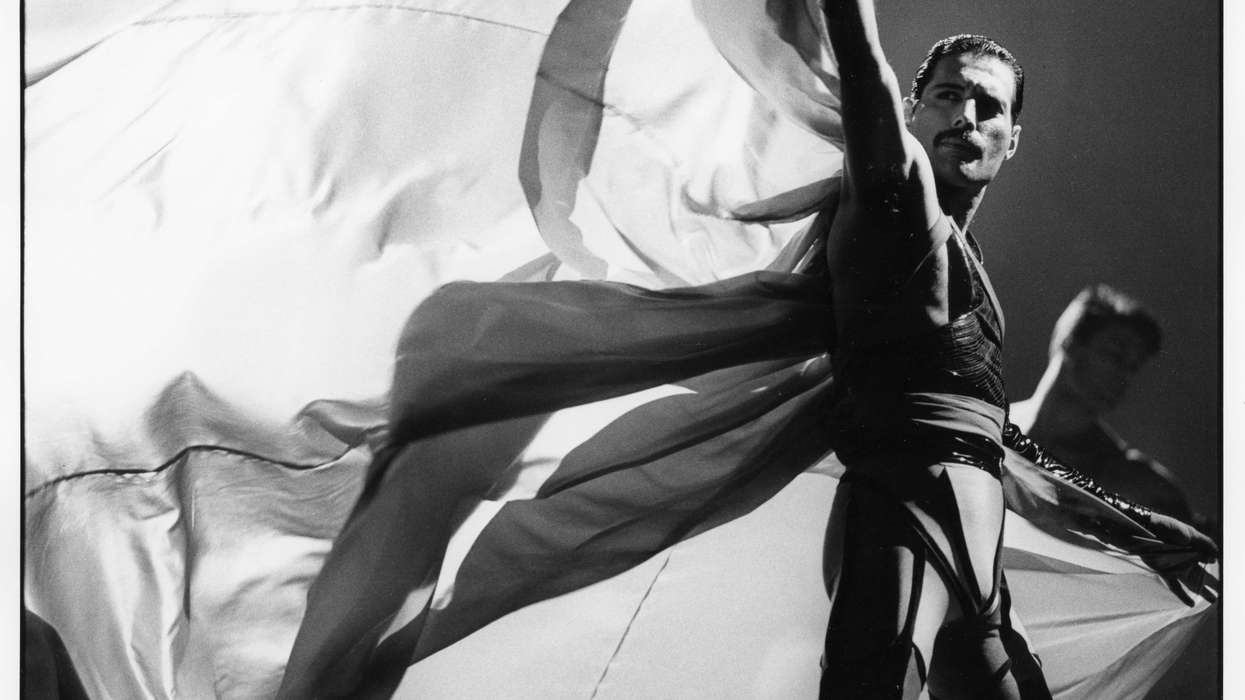
 Freddie Mercury in the Made in Heaven music videoSimon Fowler © Mercury Songs Ltd
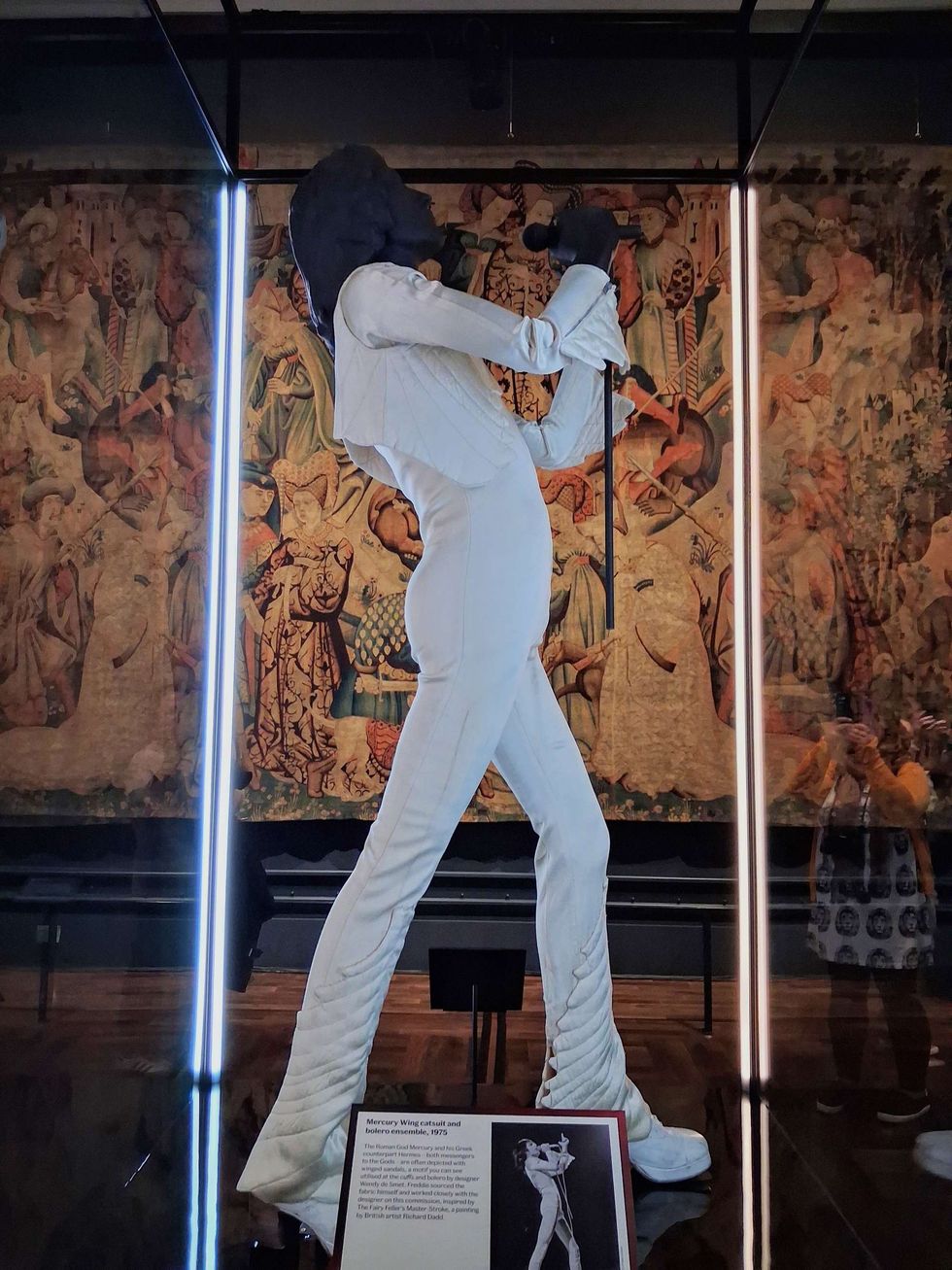 Mercury Wing Catsuit and bolero ensemble (1975)Amit Roy
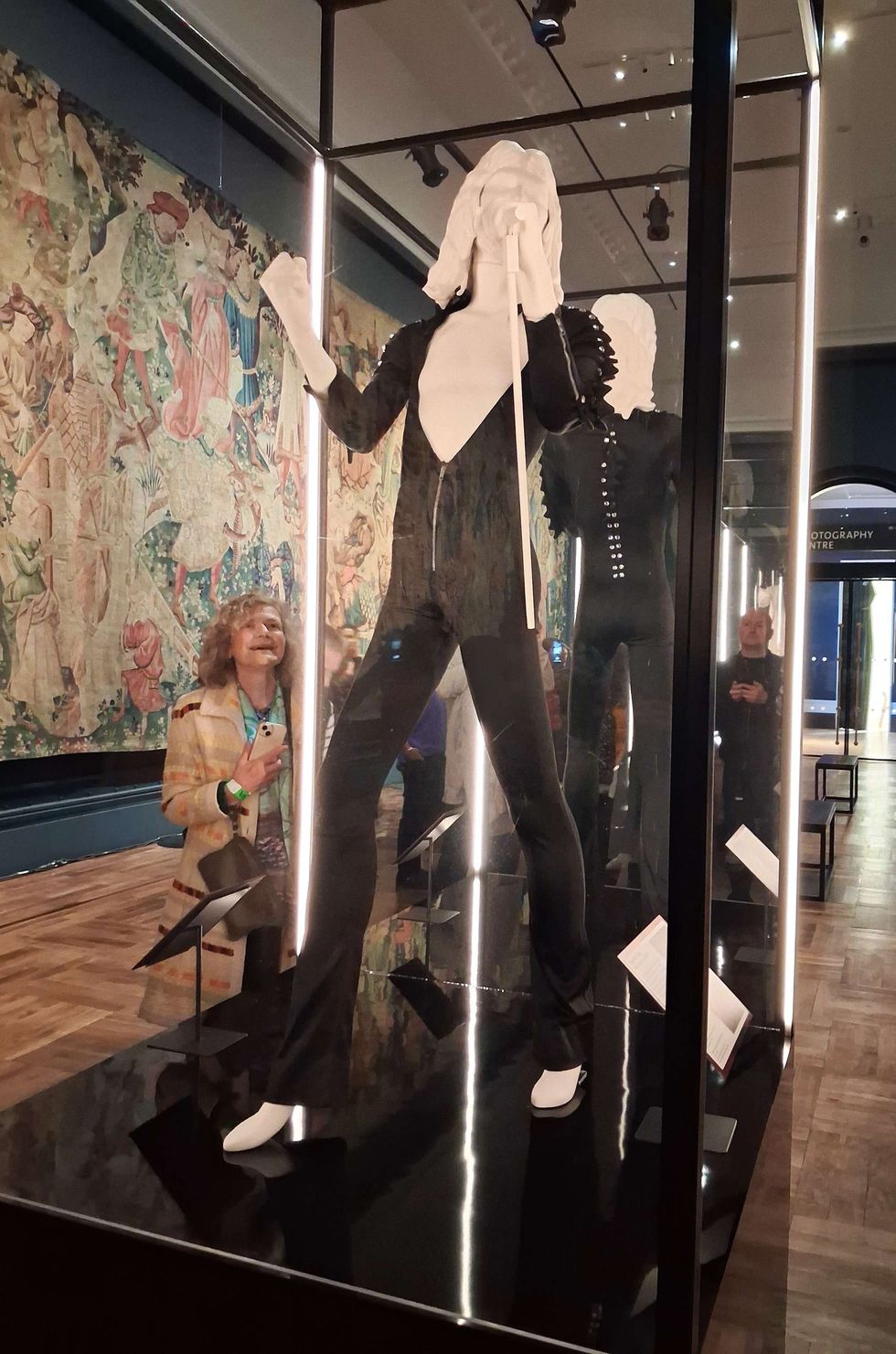 Designer Wendy de Smet with the spine suit or the Black Queen suit from 1975 Amit Roy
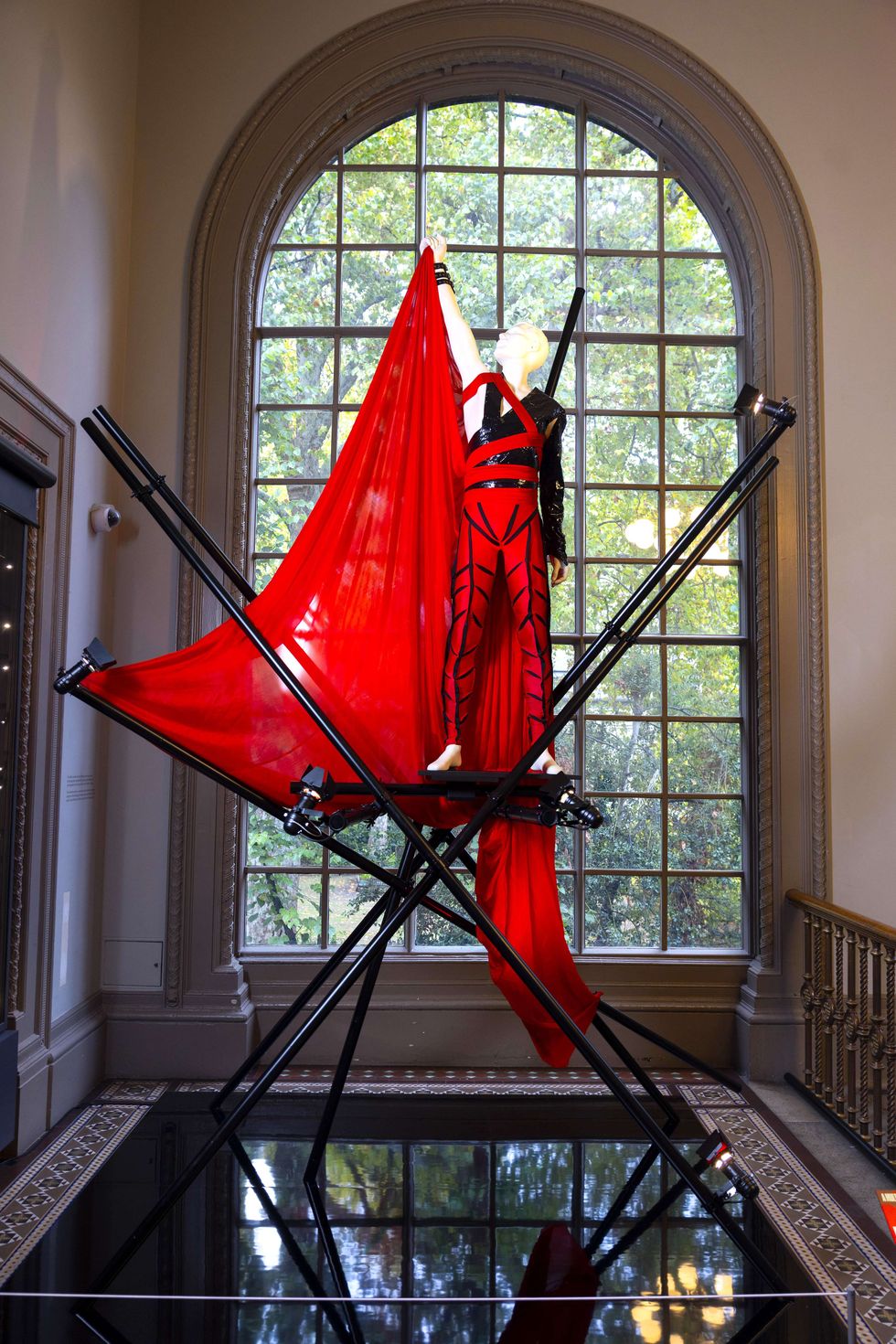 Made in Heaven music video costume (1985) David Parry/V&A
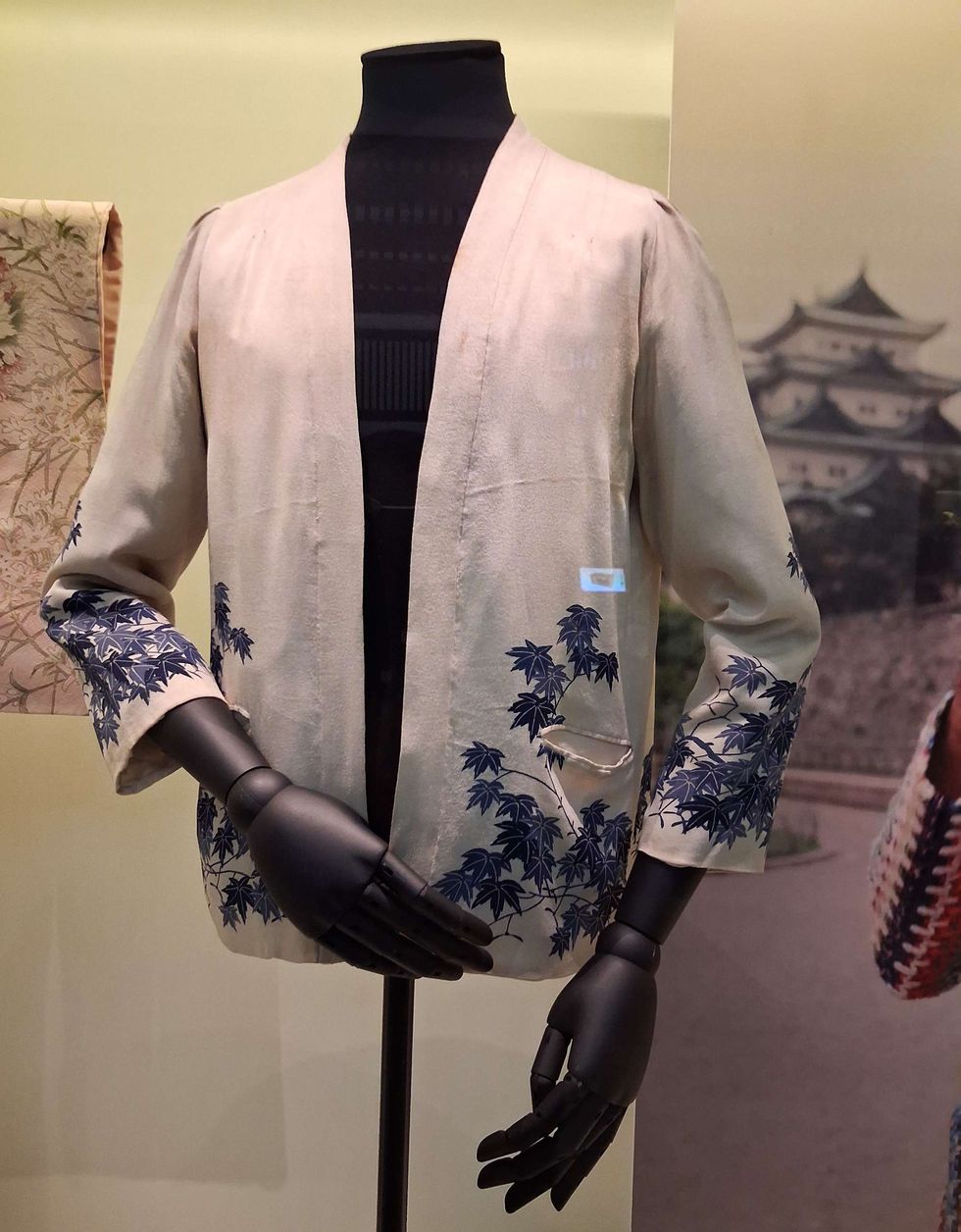 Japanese jacket (early 1970s)Amit Roy
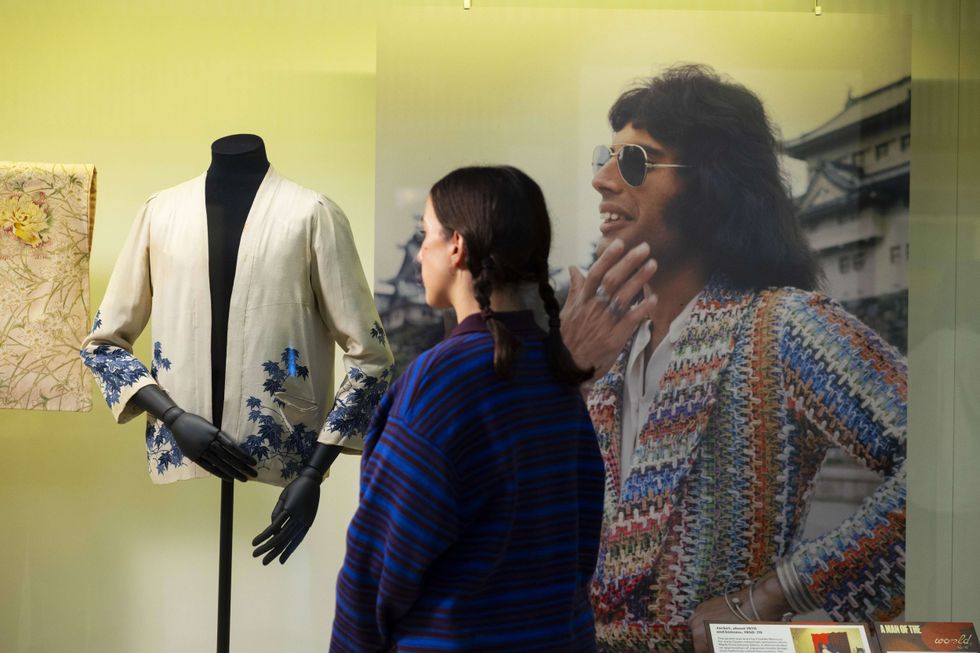 Japanese jacket (early 1970s) and kimono (1950-70) David Parry/ V&A
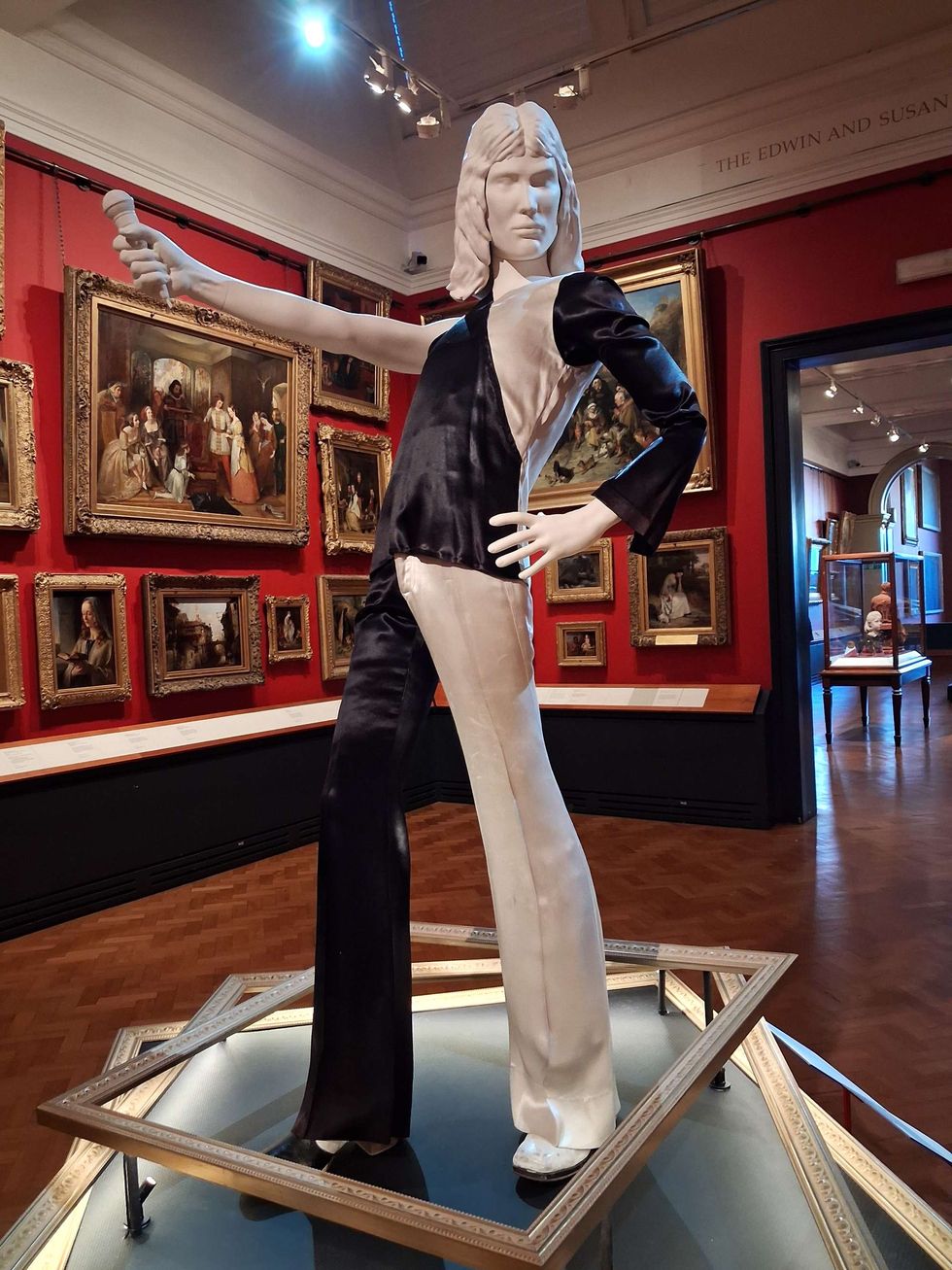 Ensemble worn for Imperial College gig in 1973Amit Roy
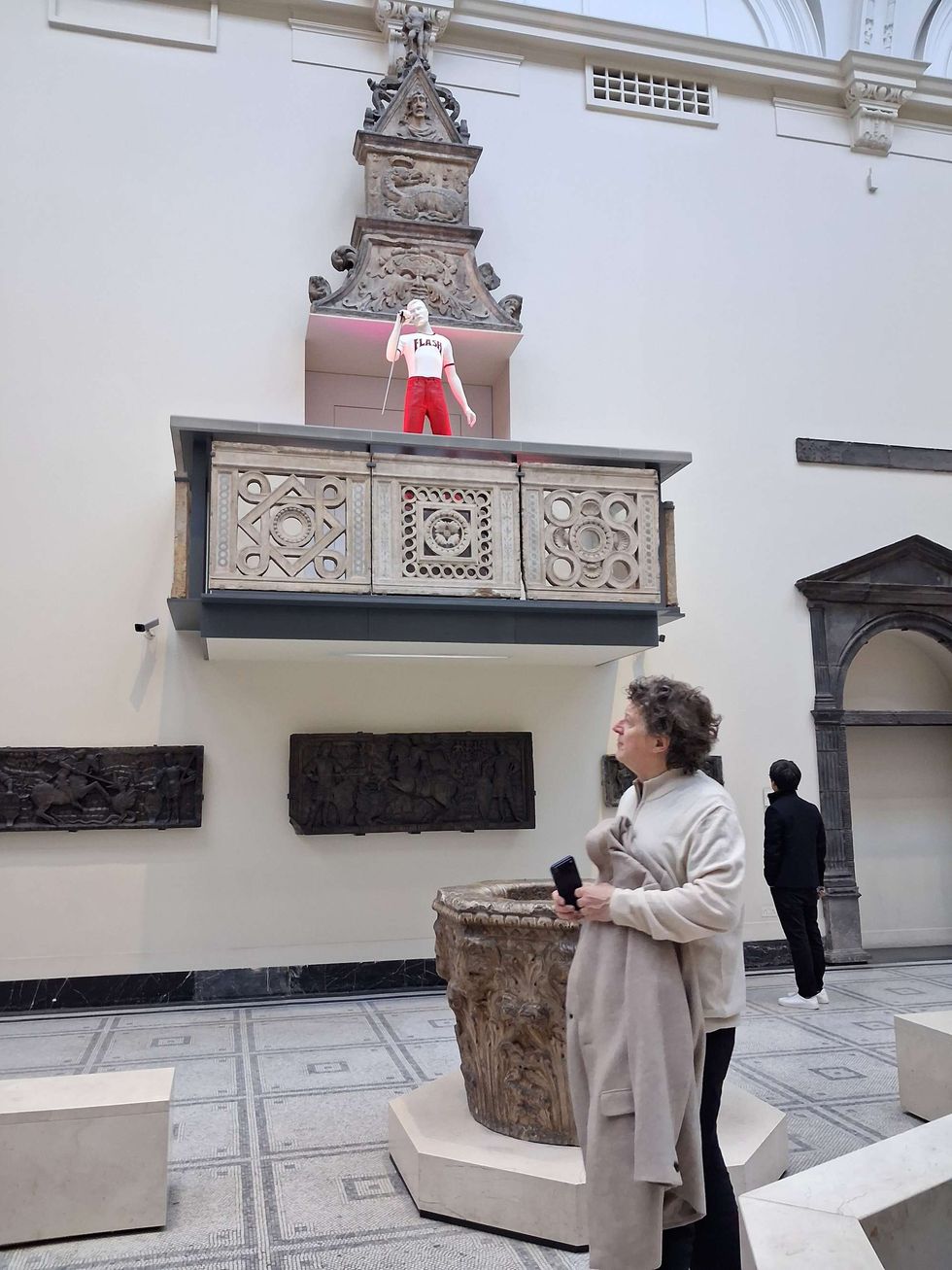 Flash ensemble and half mic (Flash Gordon 1980)Amit Roy
 Freddie Mercury performs wearing a 'Flash' t-shirt at Sports Arena in San Diego, California, United States, on 5th July 1980David TanShinko Music/Getty Images
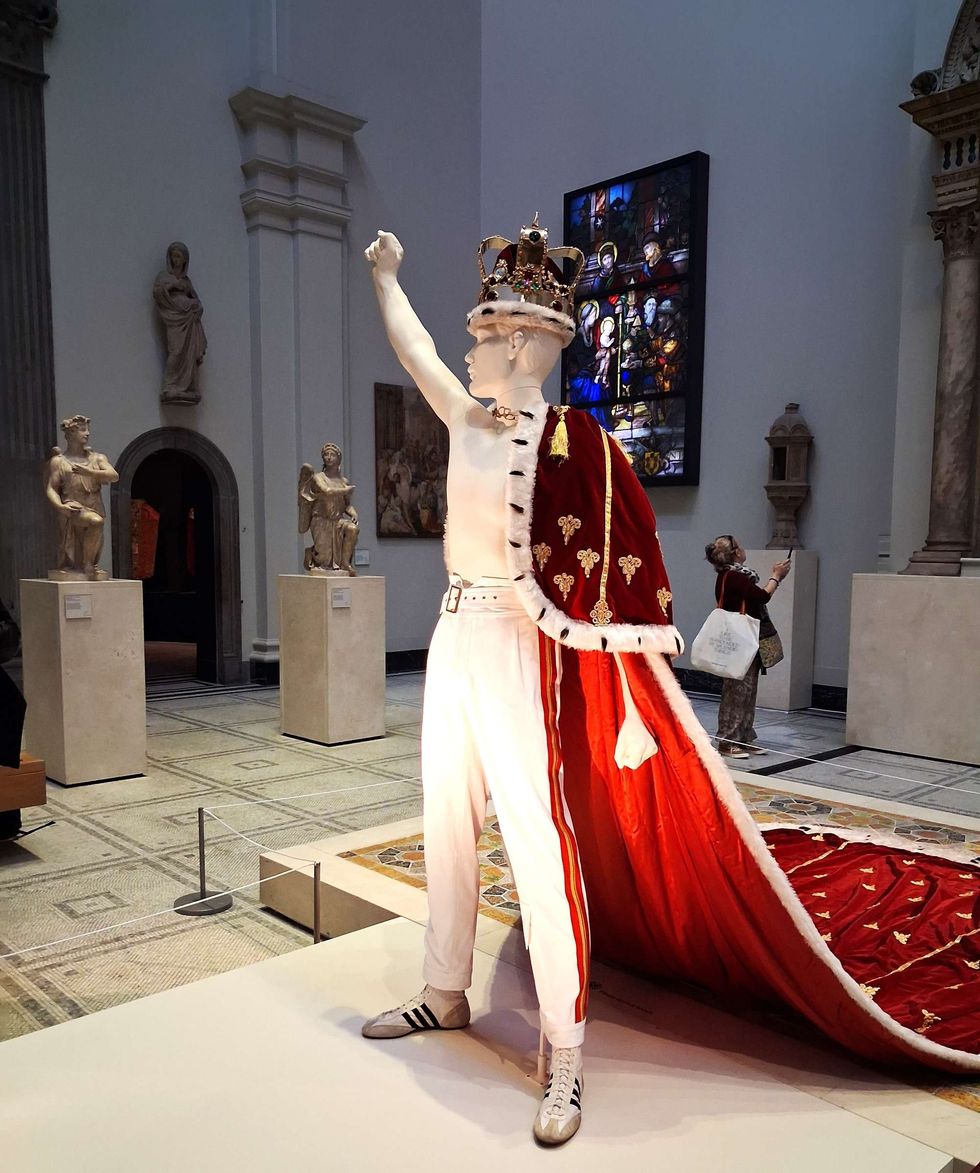 Cloal and crown ensembleAmit Roy
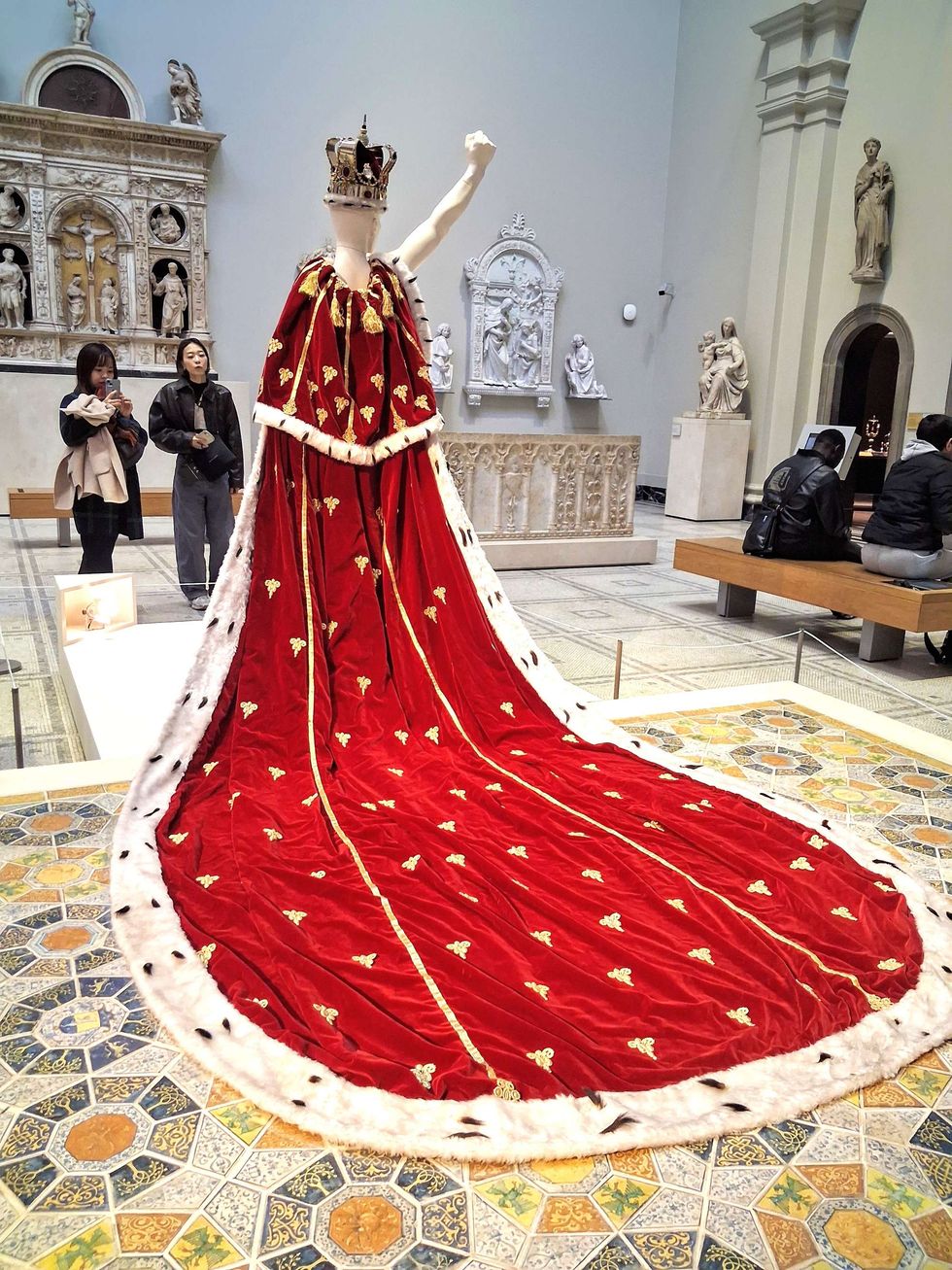 Cloak and crown ensemble (1986)Amit Roy
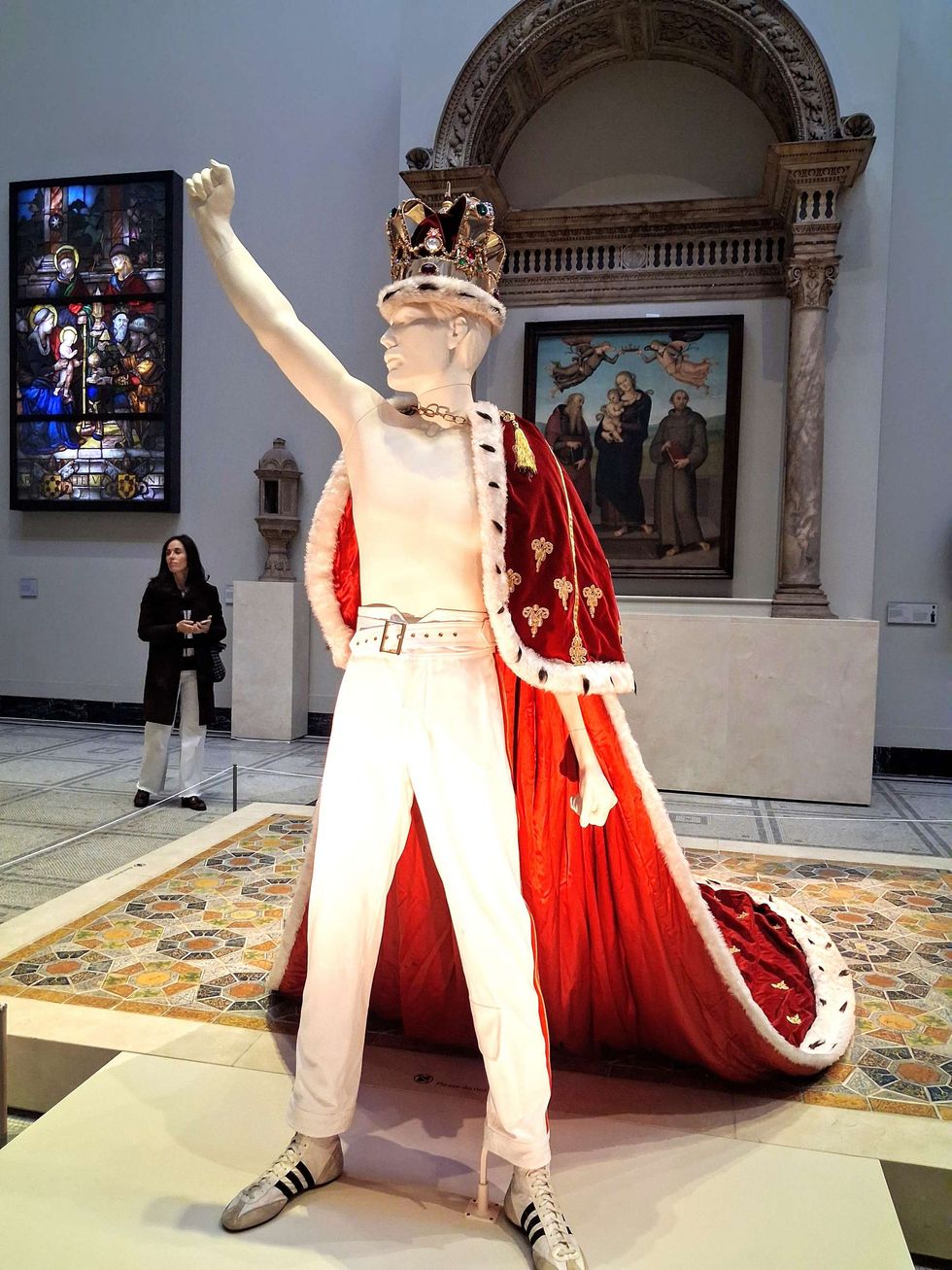 Cloak and crown ensemble (1986)Amit Roy
 Freddie Mercury, Magic Tour (1986) Denis O’Regan