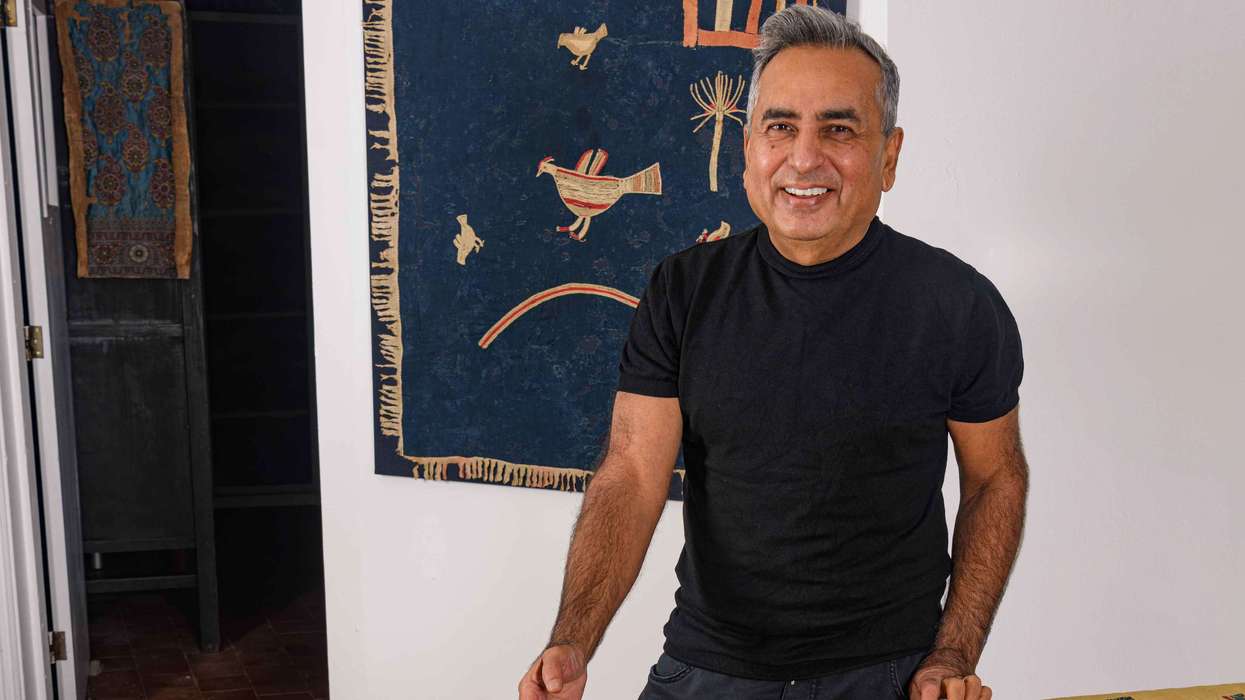

Karun Thakar, who has one of the finest textile collections in the world running into tens of thousands of pieces, has talked to Eastern Eye about 200 of his finest examples which he is displaying at three National Trust properties.
He wants to make the point that behind the exquisite beauty of some of these textiles lie tales of extreme cruelty.
He also wants British Asians to visit National Trust properties because so many of them were either built or decorated lavishly with the money made in India during colonial times.
One exhibition, called Journeys: Wedding Shawls, Baghs and Phulkaris from the Karun Thakar Collection, is being held at Osterley Park and House in west London, straddling the boroughs of Ealing and Hounslow.

Eastern Eye readers may recognise the venue because it was used as a location for the filming of the 2001 Bollywood blockbuster, Kabhi Khushi Kabhie Gham.
Osterley was remodelled in the 18th century by the Child family, who were prominent goldsmith-bankers heavily invested in the East India Company.
Another exhibition, Journeys: Global Textiles from the Karun Thakar Collection, has opened at Blickling Estate, a Jacobean stately home situated in 5,000 acres of parkland in Norfolk.
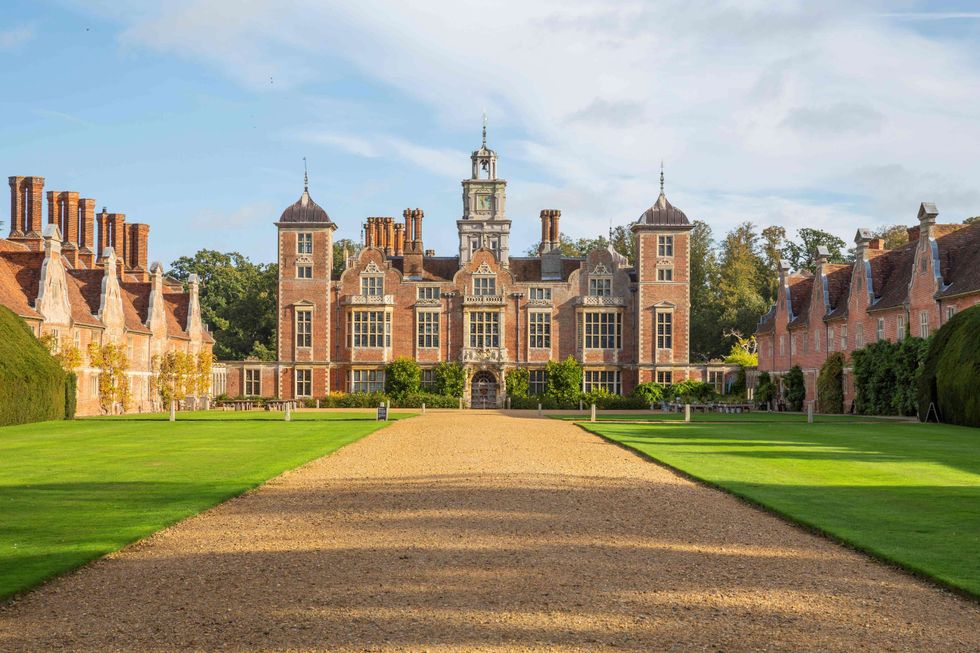 The south elevation of Blickling Hall at Blicking Estate, Norfolk National Trust Images
Jawaharlal Nehru and his 20-year-old daughter, Indira, who both went on to become prime ministers of India, signed the visitors’ book for 9-11 July 1938 when they were guests at Blickling Hall of the owner Lord Lothian, who had been the under-secretary of state for India from 1931 to 1932 and kept up his engagement with the country’s independence movement.
“They have a very large global library,” said Thakar. “It’s one of the best in the world. I’m bringing global textiles to Blickling, from India, Pakistan, Africa, Japan, Russia and so on. It’s a global view of the house.”
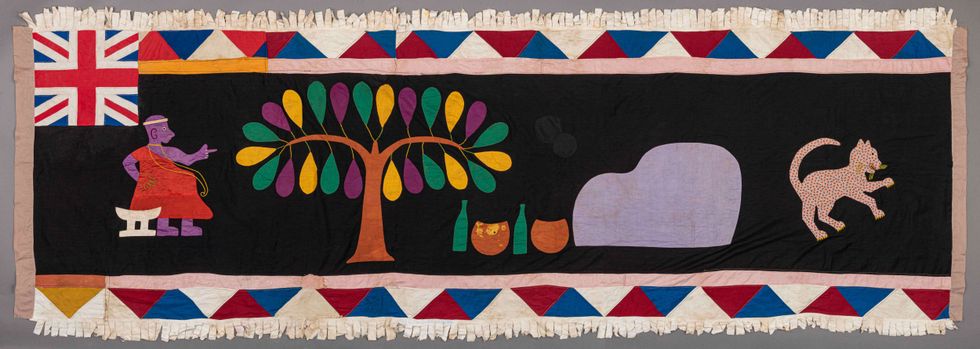 Asafo flag, Ghana, early 20th century Desmond Brambley
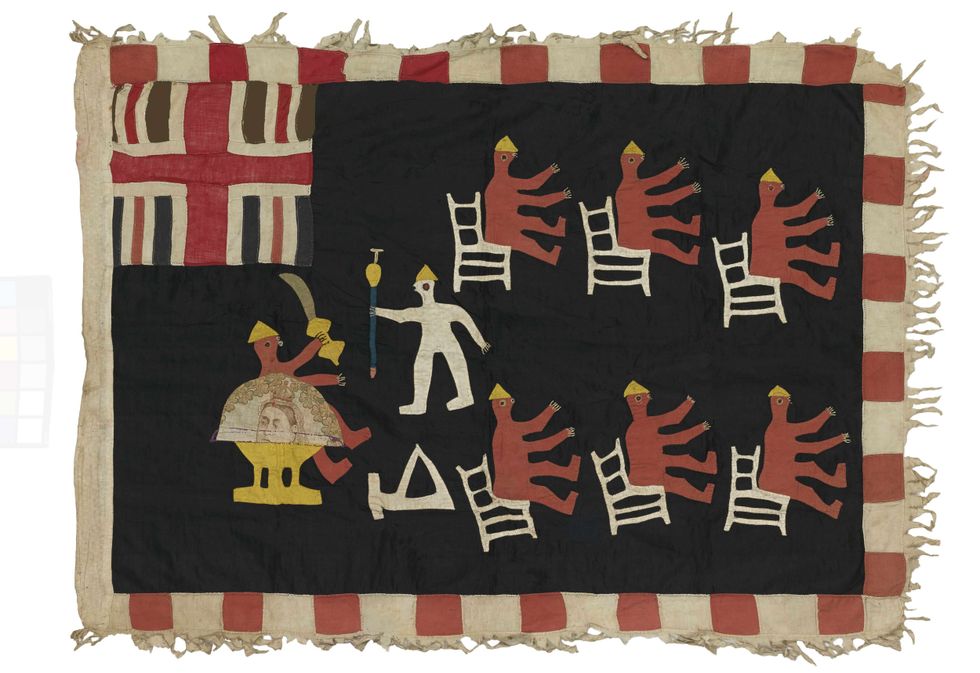 Asafo flag, Ghana, early 20th century Desmond Brambley
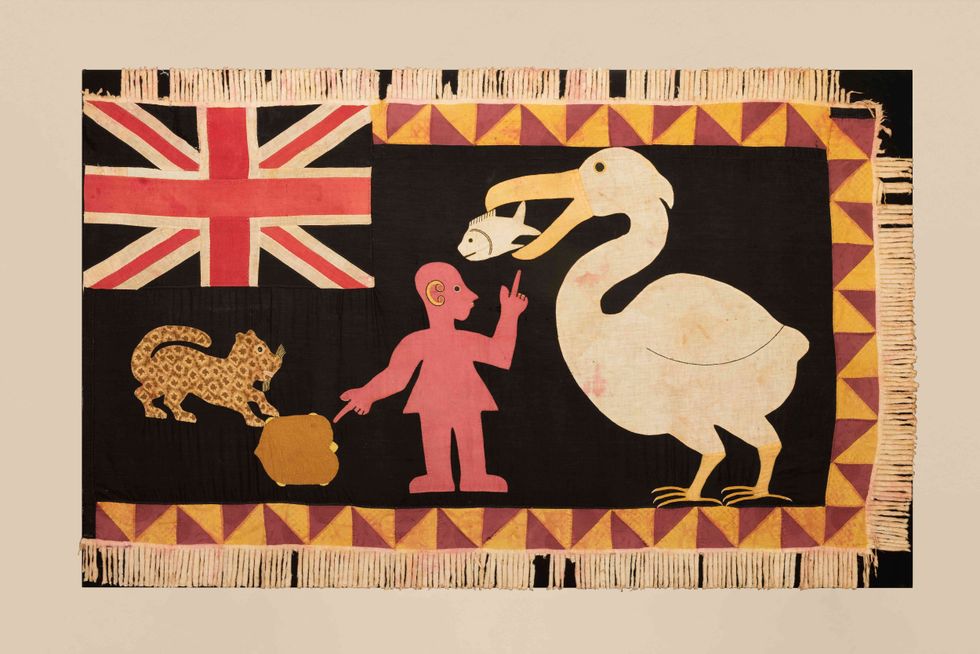 Asafo flag, Ghana, early 20th century Desmond Brambley
The third exhibition, Journeys: Asafo Flags from the Karun Thakar Collection, is at Dyrham Park in in South Gloucestershire.
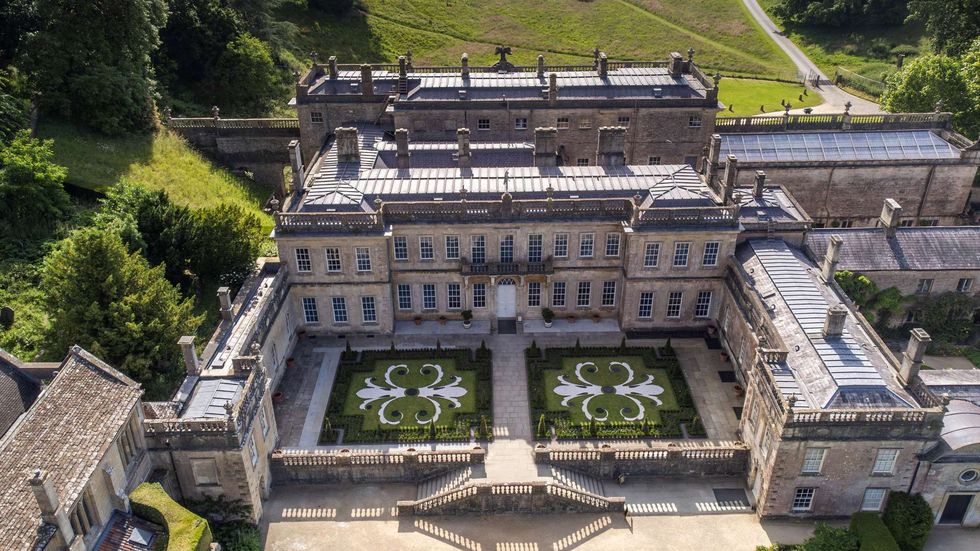 Aerial view of Dyrham ParkSteve Haywood
It was used by Ismail Merchant and James Ivory for their 1993 film, The Remains of the Day.
One of its owners, William Blathwayt (1649–1717), became wealthy from the slave trade.
When it comes to textiles, Thakar is an internationally recognised scholar who has written or co-authored nine books on the subject. There are several on Indian textiles, one last year on chintz which originated from India, and on Japanese kimonos. His exhibition on chintz is currently touring six museums in Japan.
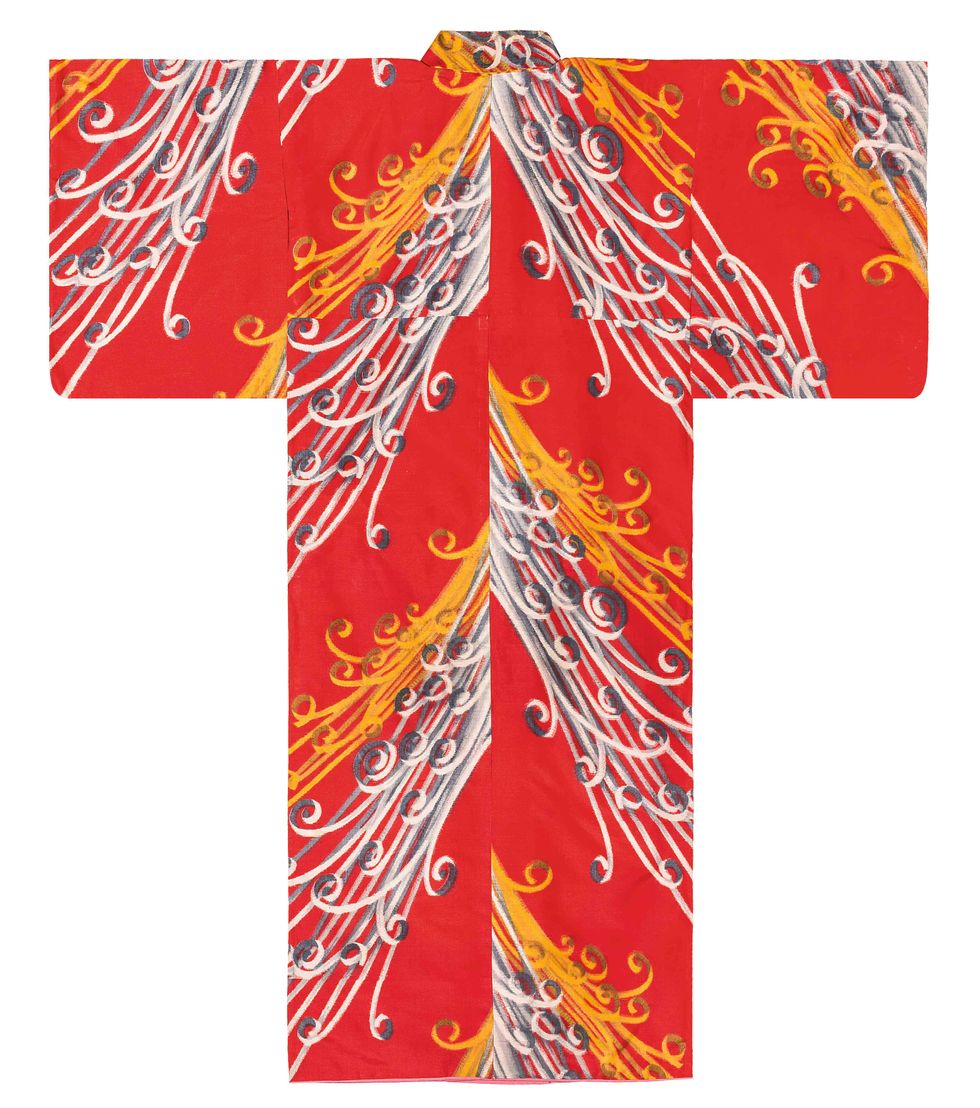 Kimono, Japan, 1900-30 Desmond Brambley
“Chintz has a very interesting history,” he said. “The whole chintz craze took Europe over from the 1600s. Then in the 1700s the import of Indian chintz was banned (to protect the local industry). Anyone wearing chintz was attacked. Women had their dresses torn off. It’s part of not only colonising people where these things are made and taking their wealth away, but also taking their skills away. It was illegal to weave cotton in India during the industrial revolution. That’s why you had the whole swadeshi movement with Mahatma Gandhi and spinning your own cotton. These textiles are very beautiful. I collect beauty but they tell horrific stories as well. British Asians and black people are part of the history I am sharing now.”
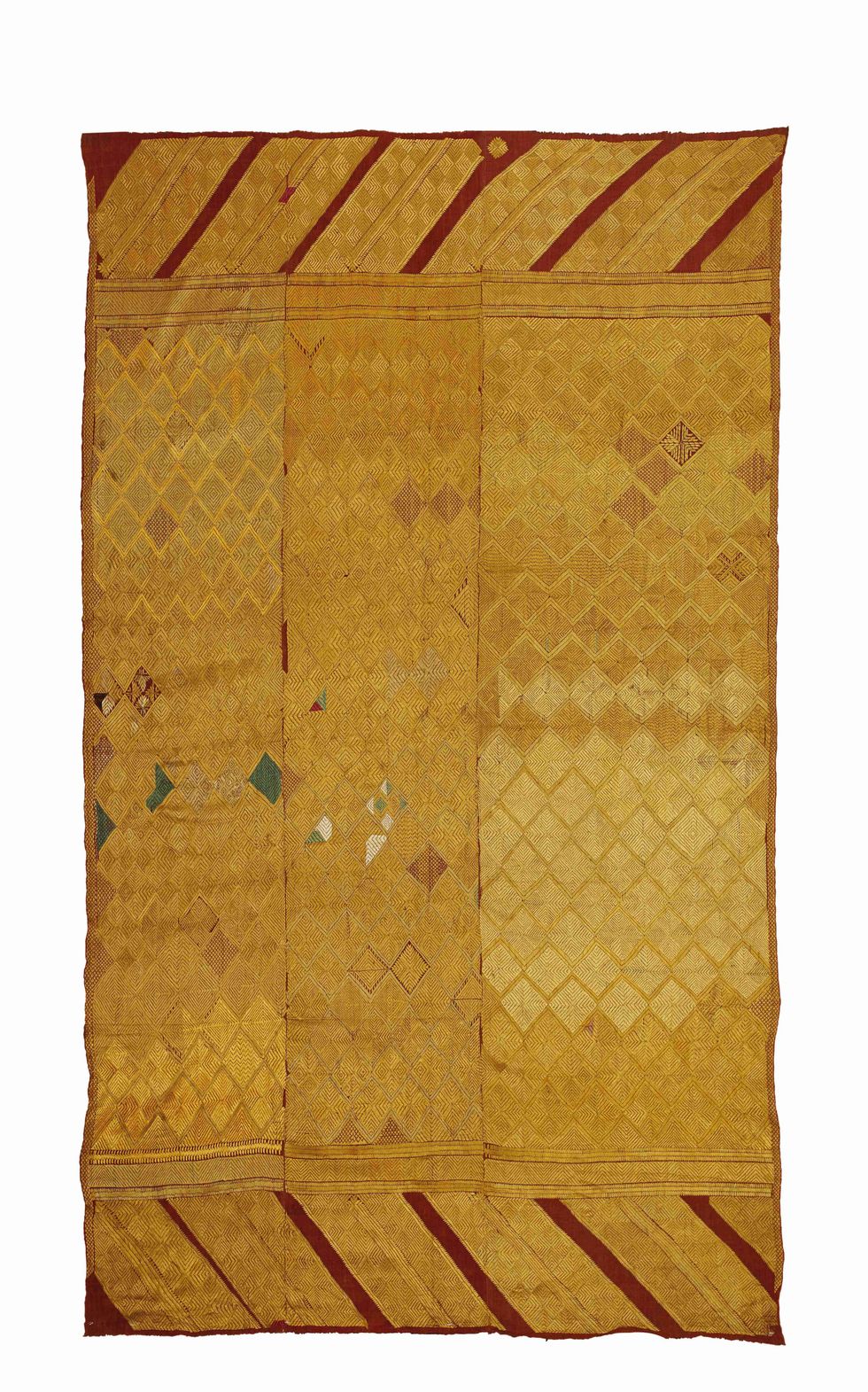 Woman's shawl, bagh, undivided Punjab, late 19th Century. Cotton plainweave embroidered with floss silk. Desmond Brambley
Thakar was born in Nairobi in 1960 but his mother didn’t want to stay in Kenya and moved to India with her four children.
“She set up a tailoring business in Delhi,” he said. “That’s when from a very young age I got interested in fabrics and textiles. We moved to the UK when I just turned 14.”
He found the atmosphere in 1970s Britain to be “hostile”.
He went on: “My early career was very much around work to do with equality. My first job when I was 22 was managing a home for elderly Asians in Stratford in East London. Then I went on to do work in Leicester, monitoring racial attacks on Asian and black communities, and then HIV prevention work within these communities. Those were my paid day jobs. It was my passion to collect on the side. There was almost escape in the beauty of the textiles I was collecting.”
Thakar, who is now 66, said: “I started collecting textiles from the age of 21, really. So I have been collecting for 45 years now.”
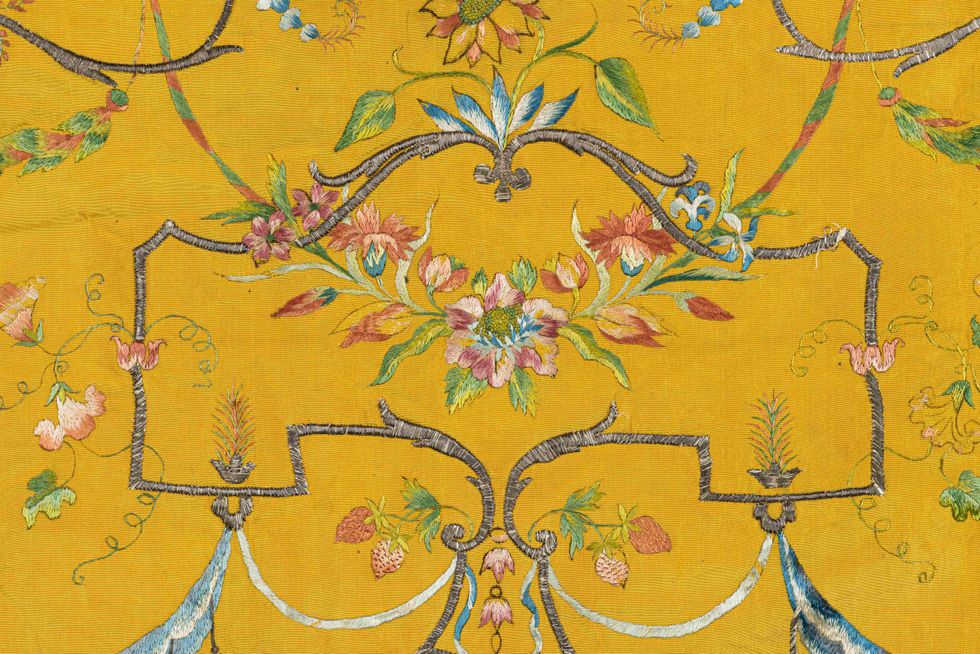 Embroidery, Italian, c.1700 (detail) Desmond Brambley
Some items in his collection, he said, are “extremely fragile, like a piece I am exhibiting at Blickling, which is from 16th century Bengali culture which the Portuguese had commissioned. There’s a show at the moment at De Montfort University (in Leicester). I have donated 40 costumes for students to handle. A lot of people from the Asian community are coming into the university to look at those textiles.”
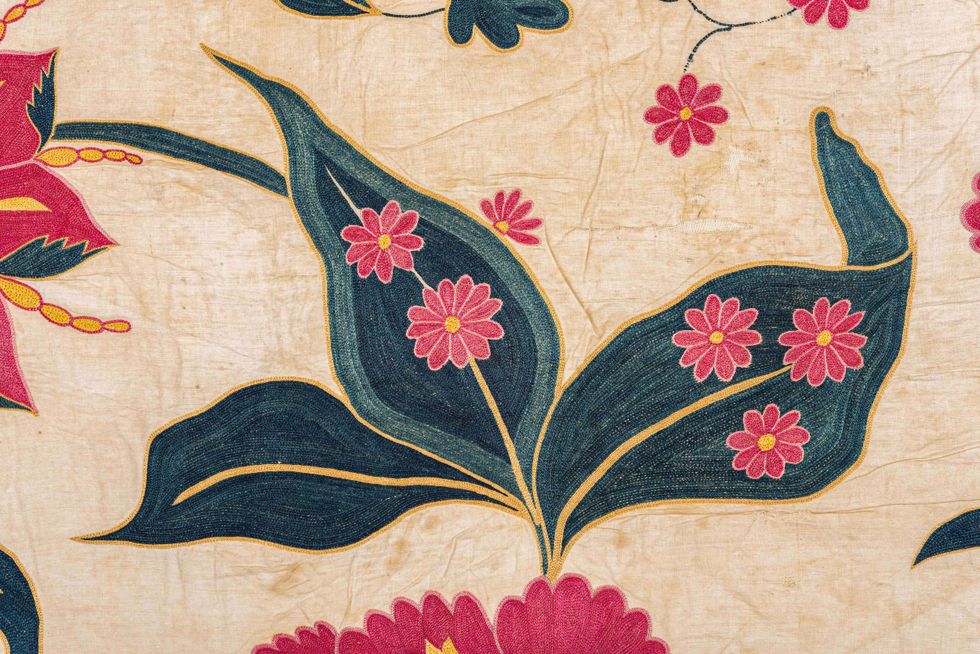 Ashburnham embroidered bed hanging, Gujarat, India, 17th century (detail)Desmond Brambley
Another item has an emotional personal link: “When the partition of India happened (in 1947), people travelled in plain clothes. My mum’s elder sister, Banarso, had three strips of a Punjabi bagh embroidery in which she hid some gold jewellery. When they crossed over to India, they were able to sell the gold. But she kept those three strips of baghs. She gave them to me. I had them restored into a panel, which I am showing at Osterley. So even a small piece of embroidery can tell stories of colonialism and separation. So that fragment holds all sorts of memories for me. That is why we are calling these exhibitions, ‘Journeys’. People have their own journeys with textiles, their own memories.”
Thakar referred to the National Trust’s landmark 2020 report which revealed that “93 of their sites had connections to the global slave trade, the East India Company, or colonial history”.
In the National Trust’s campaign, under its director general Hilary McGrady, to engage more closely with the British Asian community, Thakar acknowledged that “they are trying but obviously it’s a slow process. But to have these three shows is a great start.”
“Journeys” will open at Osterley Park and House, Blickling Estate and Dyrham Park from Friday 22 May 2026 and run until Sunday 1 November 2026.
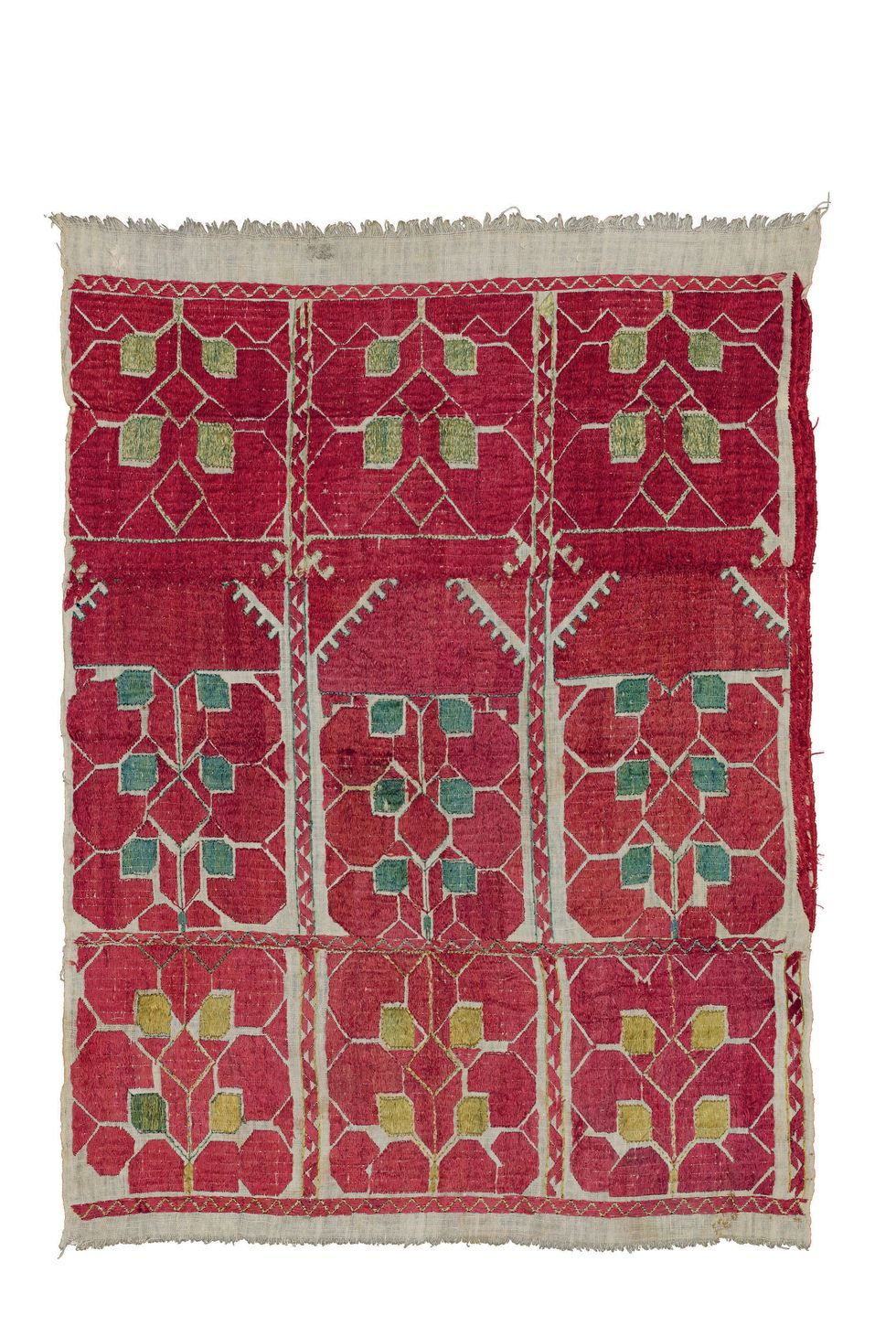 Fragment from Thakar's aunt which she used to protect jewellery when dislocated during partition. Desmond Brambley
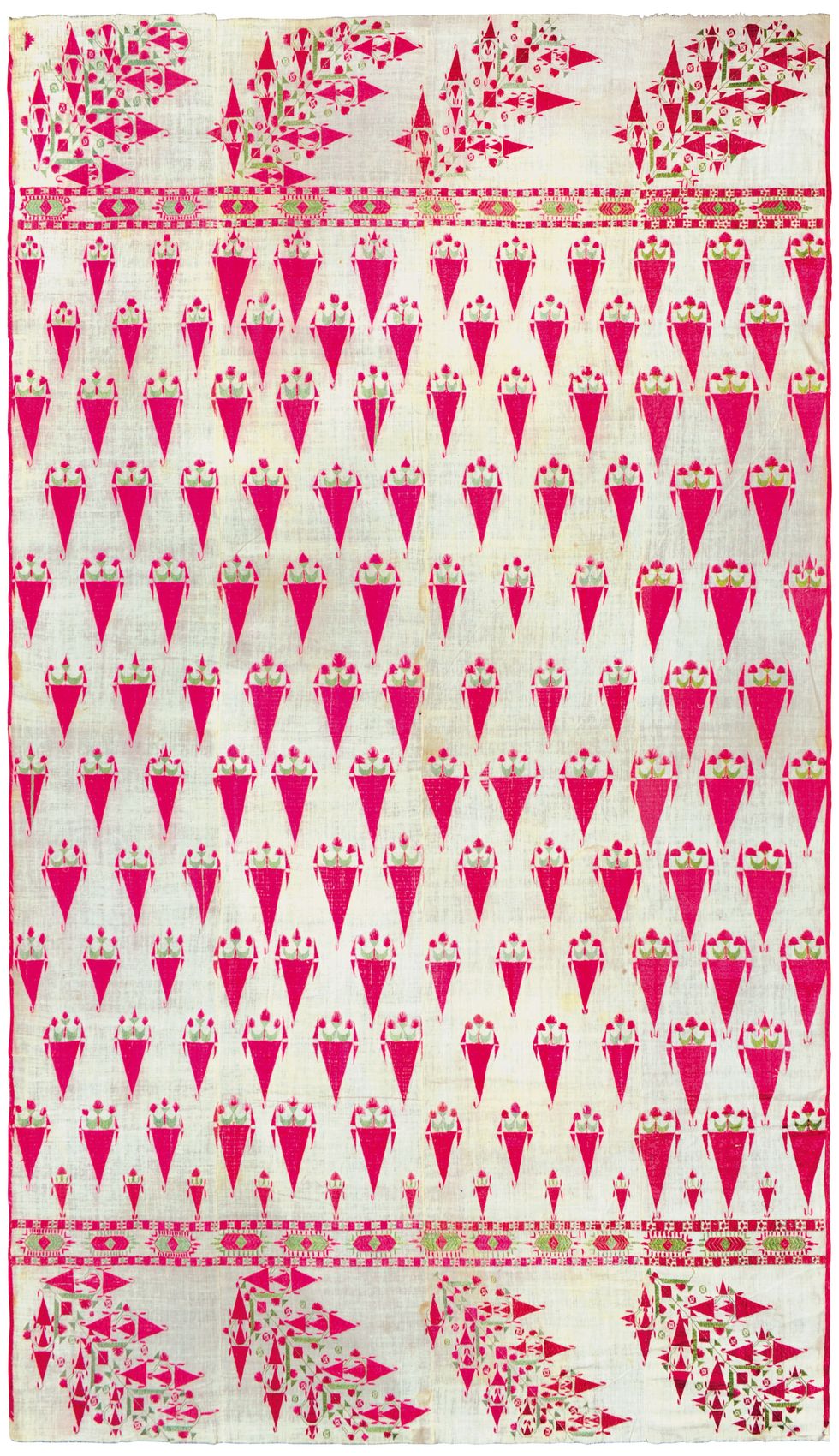 Woman’s shawl, chand or moon bagh, undivided Punjab, early 20th centuryDesmond Brambley

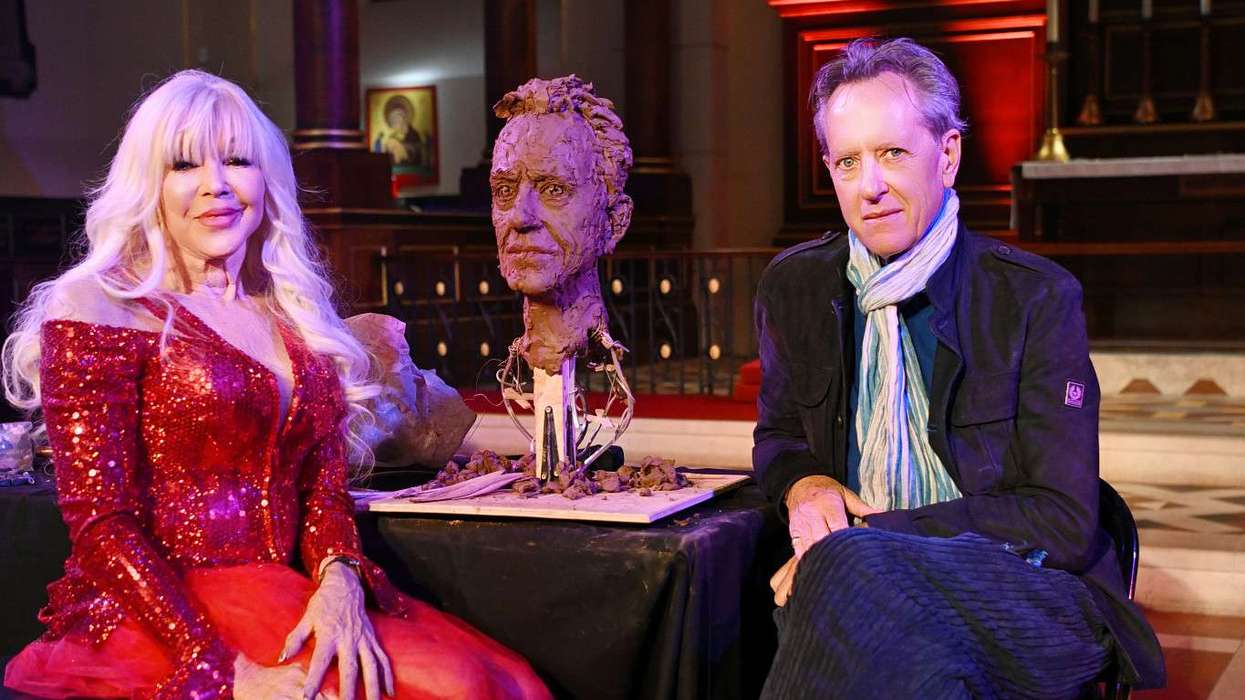
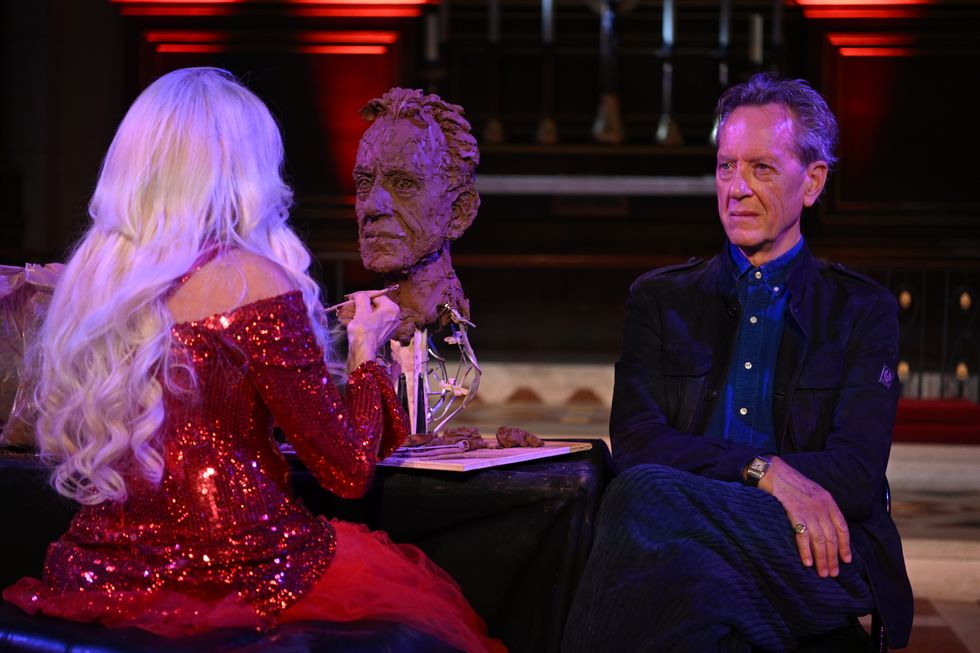 Frances Segelman makes bust of Richard E GrantSophie Dunne
 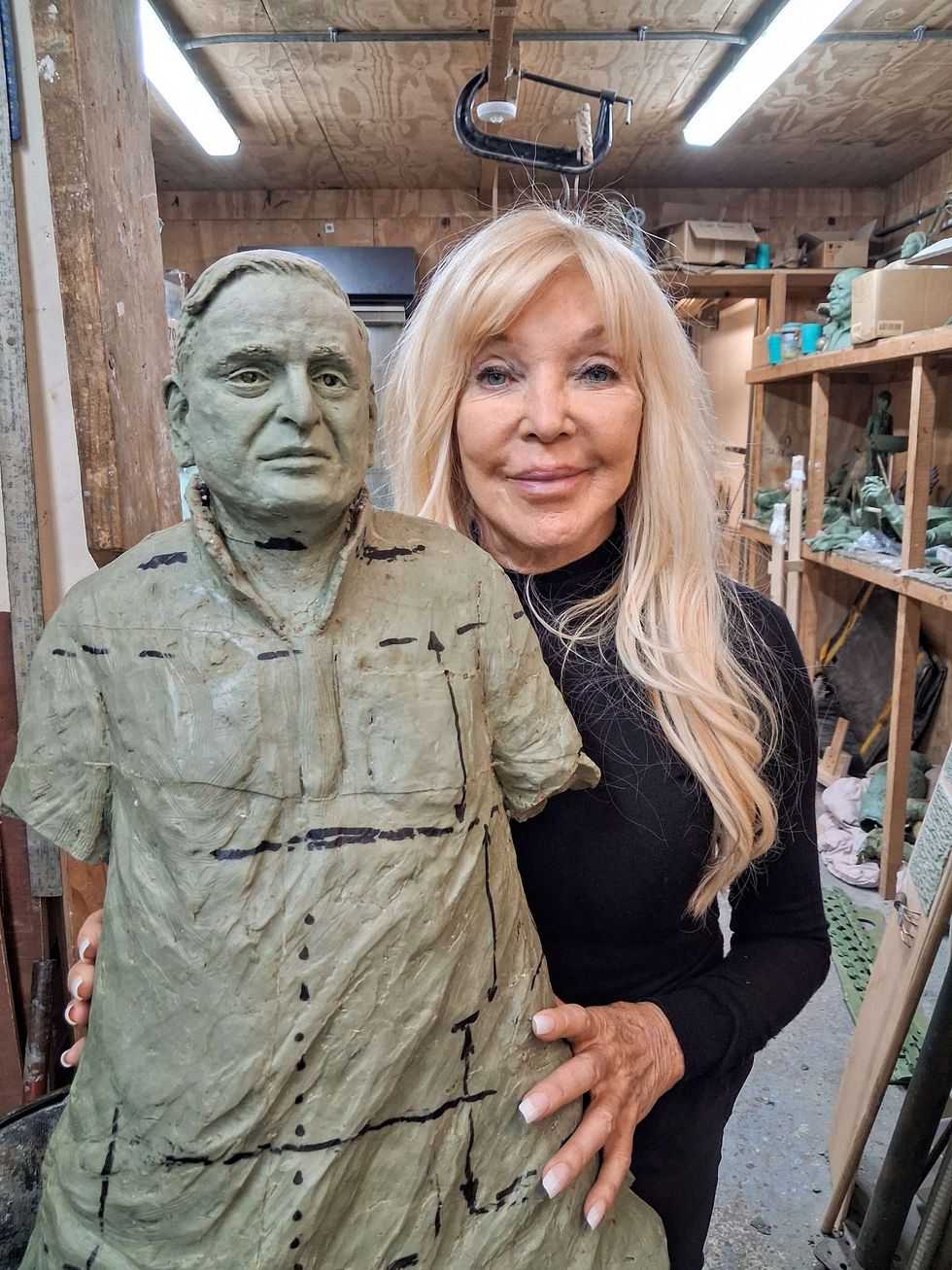 Frances Segelman with maquette of Mulayam Singh Yadav Sophie Dunne
  Frances Segelman was dressed by KruszynskaSophie Dunne
 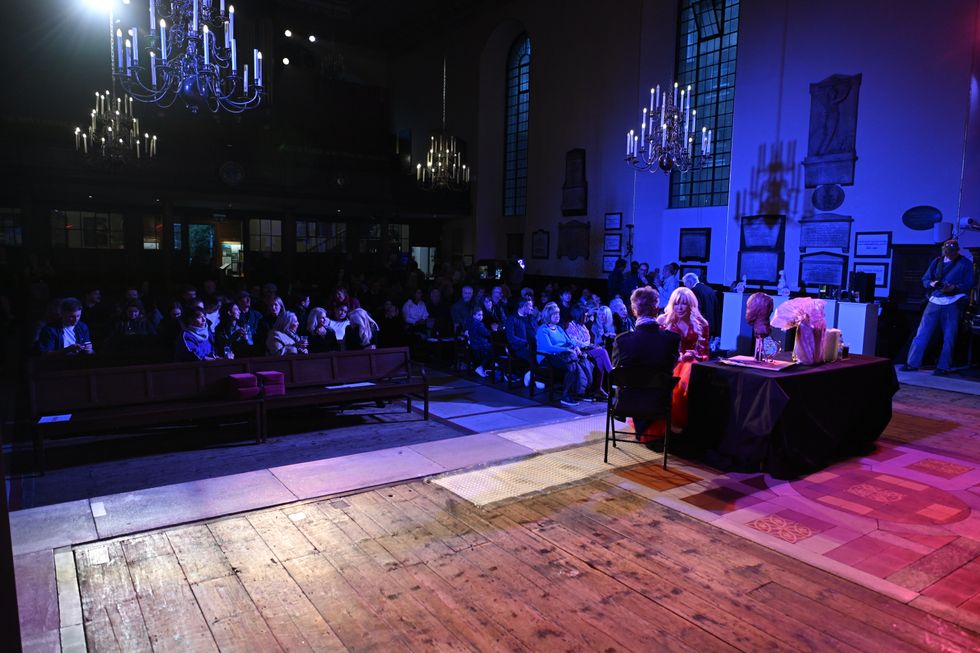 Frances Segelman live sculpting Richard E Grant in Actors' Church in Covent Garden.Sophie Dunne