
Highlights
- At least half a dozen British public schools have established or announced campuses in India.
- Wealthy Indian families and non-resident Indians are among their main target groups.
- High fees and competition from established Indian schools could limit growth.
SOME of Britain's oldest private schools are expanding into India, hoping to attract families seeking an international education for their children while opening up new sources of income, the BBC reported.
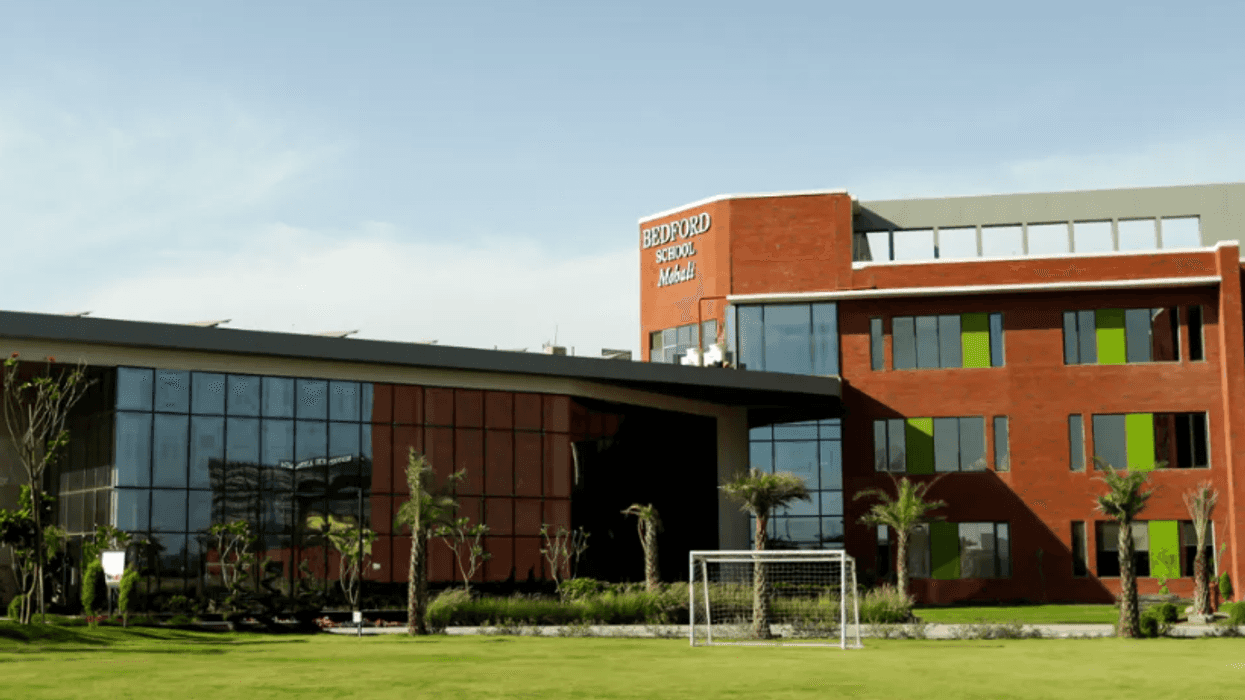
Bedford School, which has a history spanning 473 years, opened an all-girls international campus in Mohali, near Chandigarh, earlier this year. It joins a growing group of British institutions that have established a presence in India.
Harrow School opened its Bengaluru campus in 2023, while Queen Elizabeth's School launched a campus in Gurugram, near Delhi, in August. Shrewsbury School has a campus in Bhopal, and Wellington College has chosen Pune for its Indian base. Millfield and other schools are also considering expansion, the report revealed.
The move comes as British schools face tougher conditions in China, which has been a major market for international campuses, and the introduction of value added tax (VAT) on private school fees in the UK from January 2025.
India's expanding population of wealthy families offers a new opportunity, although high fees and competition mean growth may take time.
Families seek international education
British schools have a long history in India, where local boarding schools have followed elements of the British public-school model for generations. Demand is now growing among families who want their children to gain international exposure and develop skills beyond academic achievement.
“Our international curriculum is quite a driver for many of them,” Caroline Pascoe, head of school at Harrow in Bengaluru, told the BBC.
Harrow and Bedford are among the schools offering a Cambridge curriculum from primary education through to A-levels. The international framework is recognised by schools around the world.
Harsimran Singh Kocchar, whose extended family runs a chain of schools in India, chose Bedford School in Mohali for his five-year-old daughter, Parineet.
He said he was attracted by its focus on character development and confidence, rather than academic results alone. He also welcomed what he described as the absence of a “VIP culture”.
Non-resident Indians are another important group for the schools. Some have returned to India after living abroad, while others in the UK and the Middle East want their children to maintain links with their Indian heritage.
British traditions adapted for India
The schools are bringing elements of their British identity to their Indian campuses while incorporating local customs.
At Harrow in Bengaluru, students wear the school's traditional hats and uniforms. Teachers are called Beaks, and pupils take part in The Long Ducker, a cross-country race held across its campuses. The school also follows a house system associated with British education.
These traditions sit alongside Indian practices, including singing the national anthem each morning and celebrating Ganesh Chaturthi.
About 60 per cent of Harrow's staff in Bengaluru are international, according to Pascoe.
Extracurricular activities, including music and drama, are also part of the schools' offer, giving families an alternative to an education focused mainly on examinations.
China and Hong Kong accounted for half of the 151 overseas campuses operated by 50 UK schools, according to a 2025 study by the UK-based Private Education Policy Forum (PEPF).
However, expansion has slowed amid regulatory changes and greater scrutiny from national governments. A Chinese law introduced in 2024 requiring schools to integrate patriotic education into their subjects also created challenges for foreign institutions, with some planned campuses cancelled.
Britain's introduction of 20 per cent VAT on private school fees has added pressure on schools to find new sources of income.
Naomi Atkins, founding principal of Bedford School Mohali, said the tax change had encouraged institutions that had not previously considered overseas expansion to look at India.
High fees and competition pose challenges
Despite the opportunities, India is proving a difficult market for some British schools.
Many overseas campuses are established through partnerships with local investors or operators. Atkins said the revenue share available to British schools had fallen sharply in some cases, from about 10 per cent in other markets to as little as one per cent in India.
She also warned that schools may have overestimated the size of the market.
India has nearly 250 million children enrolled in schools, but English-language education is already well established. British institutions therefore face competition from Indian schools, unlike in some countries where English-language education is less widespread.
Income levels are another constraint. Some British schools charge £15,000 or more for full boarding, putting their fees beyond the reach of many Indian families.
Overseas campuses have generated substantial income for British schools. According to PEPF, they made £152.4 million in profit between 2011-12 and 2022-23, with profits increasing significantly over the period.