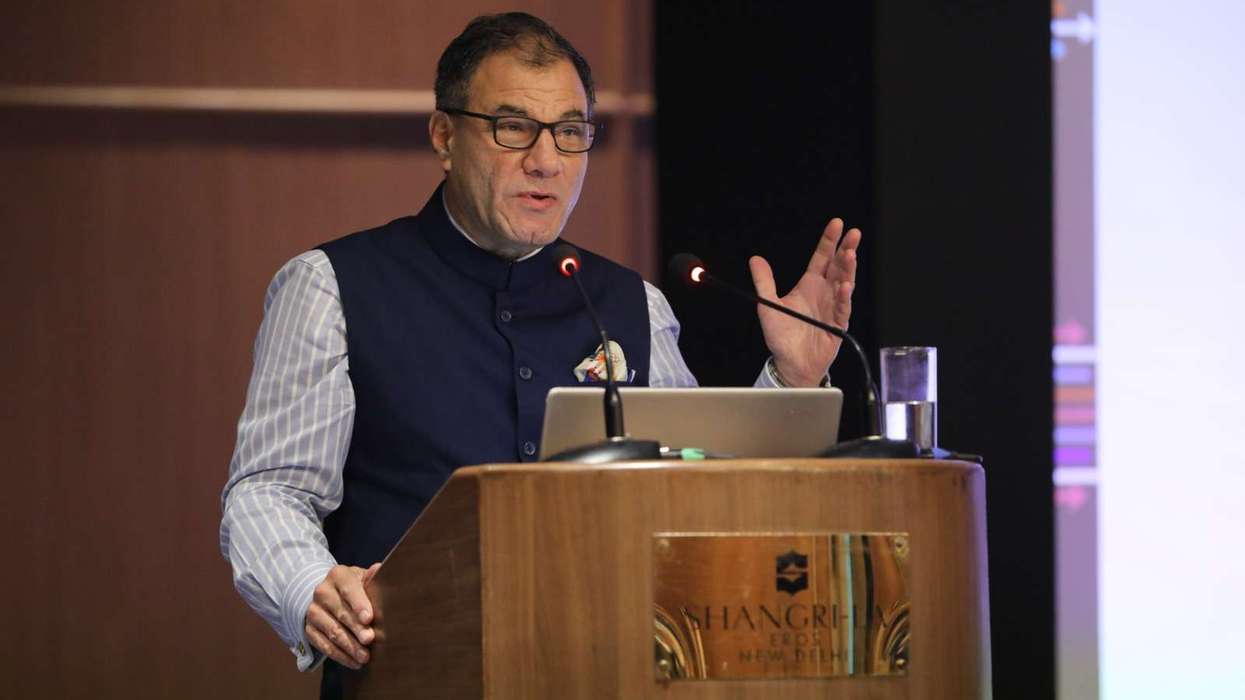

LORD KARAN BILIMORIA has led many delegations to India but the latest one, which convened for a conference from September 14–16, 2026, at the Shangri-La Eros New Delhi, was a little different.
The 45-strong delegation consisted of senior representatives of British business schools, which have set out to strengthen relations with their counterparts in India.
Bilimoria told Eastern Eye that this was the second India-UK Business School Dialogue, convened by the Chartered Association of Business Schools (abbreviated to Chartered ABS or CABS) CEO Flora Hamilton.
In the aftermath of the UK-India Free Trade Agreement, which came into force on 15 July 2026, British business schools are seeking to put down deeper roots in India. The FTA was seen as possibly former UK prime minister Sir Keir Starmer’s most enduring achievement.
The CABS defines its mission as “supporting and championing business schools for the benefit of business and society”.
It adds: “We are the voice of the UK’s business and management education sector. We support our members to maintain world-class standards of teaching, research, and enterprise engagement. Through dialogue with policymakers, business, and stakeholders, we inform government policy to help create the best possible environment for our business schools, the economy and wider society to flourish.”
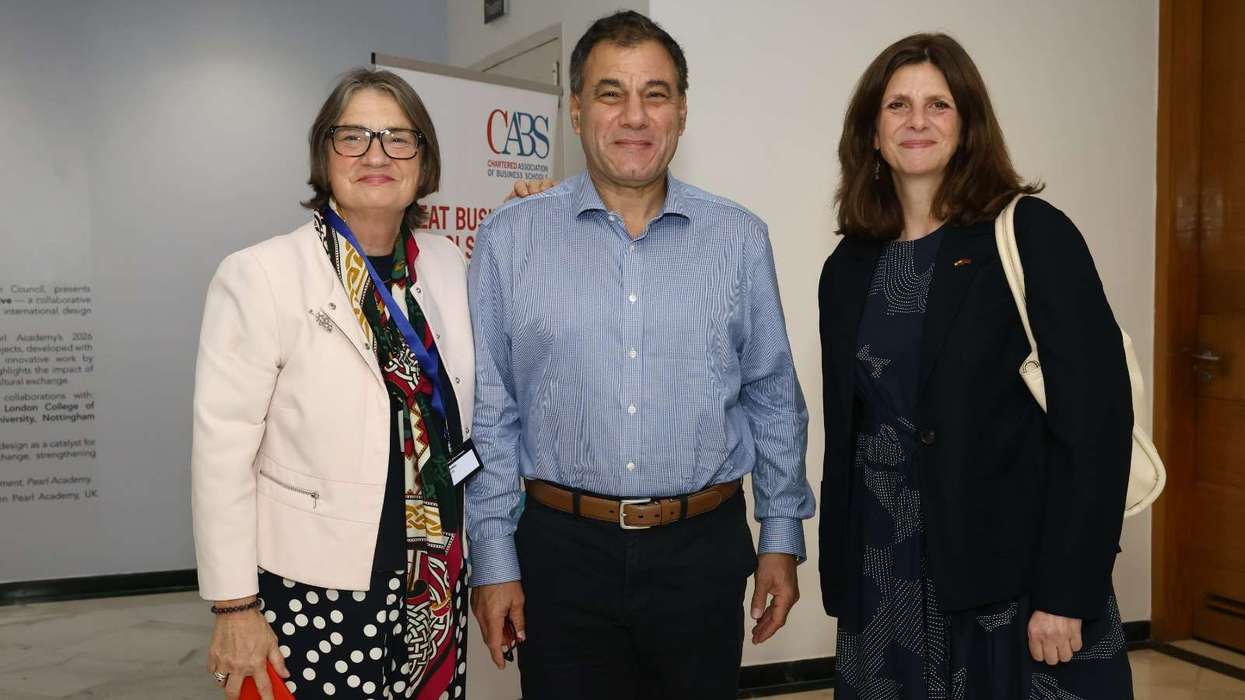 From L - Flora Hamilton. Lord Karan Bilimoria and Alison Barrett. Photo: CABS
It goes on: “The UK’s business schools contribute over £13bn to the national economy. With 1 in 5 university students studying a business course, our business schools teach more students than any other subject in UK universities. They also attract a third of international students studying in the UK, enhancing the UK’s soft power globally.”
It adds: “Business and management graduates go on to lead organisations across the corporate, public and third sectors, contributing to our dynamic economy. The research undertaken in UK business schools has impact across society and helps to turn our capacity for invention into viable businesses.”
Well off families in India still tend to think of Stanford and Wharton in America as finishing schools and matchmaking venues for their sons and daughters – in fact, Rishi Sunak met his future wife, Akshata Murty, at Stanford, while Aditya Mittal met Megha Patodia at Wharton.
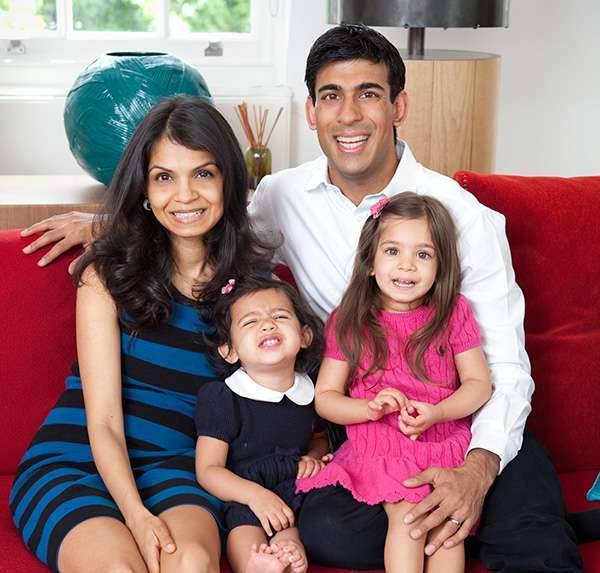 RishiSunak and AkshataEastern Eye
However, since Donald Trump entered the White House, his perceived hostility to migrants has encouraged many potential overseas students to give America a miss for the time being. This has opened a vacuum which British universities are anxious to fill.
It is known that some British universities want to follow the examples of Southampton, York, Bristol, Liverpool, Lancaster, Surrey, Coventry, and Queen’s University Belfast in setting up physical campuses in India.
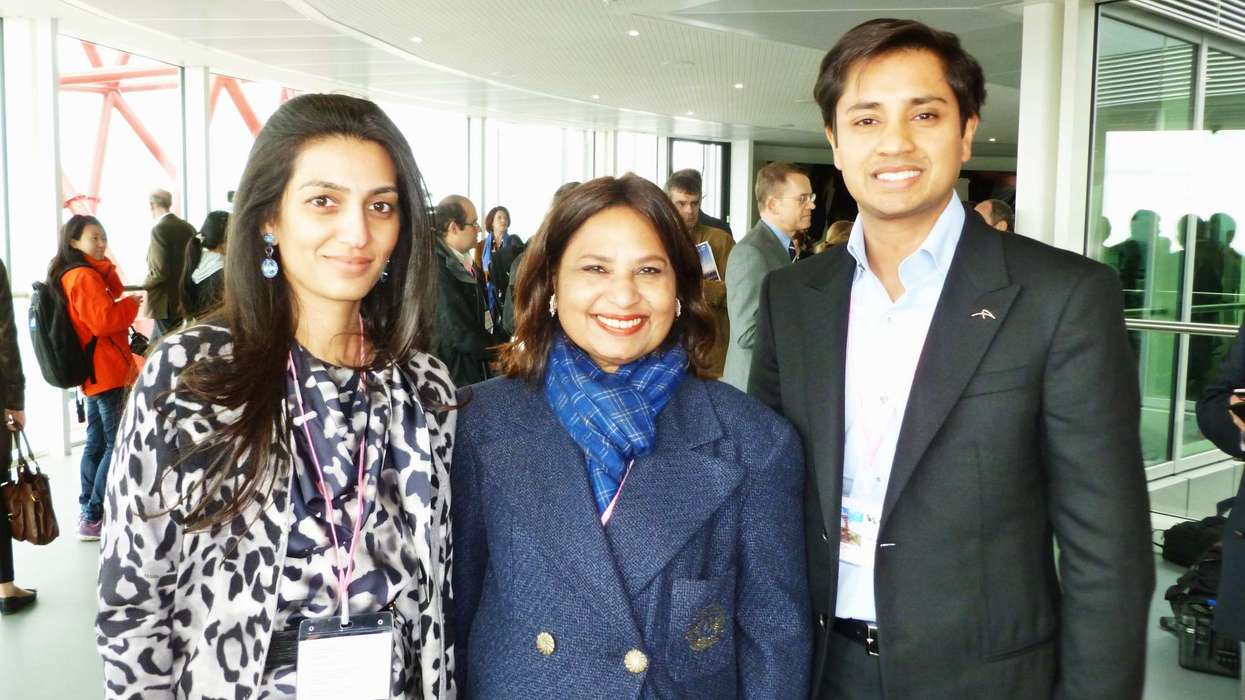 Aditya Mittal (R), Megha Mittal (L) and Usha Mittal (C)Eastern Eye
According to Bilimoria, the latest conference in India brought senior leaders from UK and Indian business schools together with government representatives, regulators, business leaders and sector experts. It was the first major gathering of the two countries’ management education communities since the India-UK Comprehensive Economic and Trade Agreement (CETA) came into force on 15 July 2026. CETA is forecast to lift bilateral trade by £25.5 billion a year, raising UK GDP by £4.8 billion and India’s by £5.1 billion.
Bilimoria, who founded Cobra Beer, was president of the Confederation of British Industry from June 2020 to June 2022. He was also chancellor of the University of Birmingham from July 2014 to July 2024.
He told the gala dinner at last week’s conference: “It is an honour to lead this delegation. Education has been identified in the India-UK Vision 2035 as the pillar that underpins every other area of our collaboration, and people-to-people relations are the golden thread of this partnership. The intellectual partnership between India and the UK will create a skilled, forward-looking talent pool ready to address global challenges.”
Bilimoria spoke alongside Prof Stewart Robinson, chair of the CABS, at the British Council reception on 14 September, and also introduced the keynote by Shiv Shivakumar, past president of AIMA Operating Partner at Advent International, on what global business now needs from management education.
The conference also heard a statement of support from Ben Mellor, deputy British high commissioner in New Delhi, and keynotes from Lily Bi, president and CEO of AACSB International, and from Ashish Tewari of Infosys on the responsible adoption of AI.
Lindy Cameron, currently the British high commissioner in India, has been appointed as the new Permanent Under-Secretary (PUS) at the Foreign, Commonwealth and Development Office (FCDO).
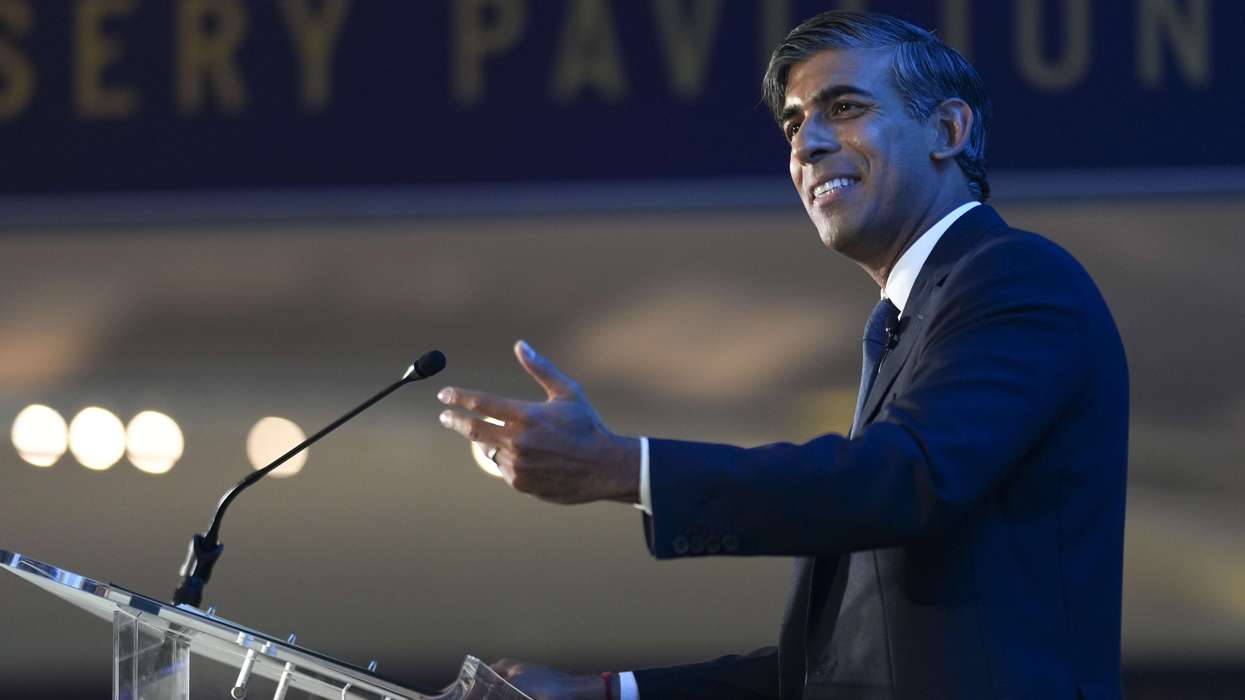
It should also be noted that former British prime minister Rishi Sunak wants to deepen the UK-India collaboration on AI.
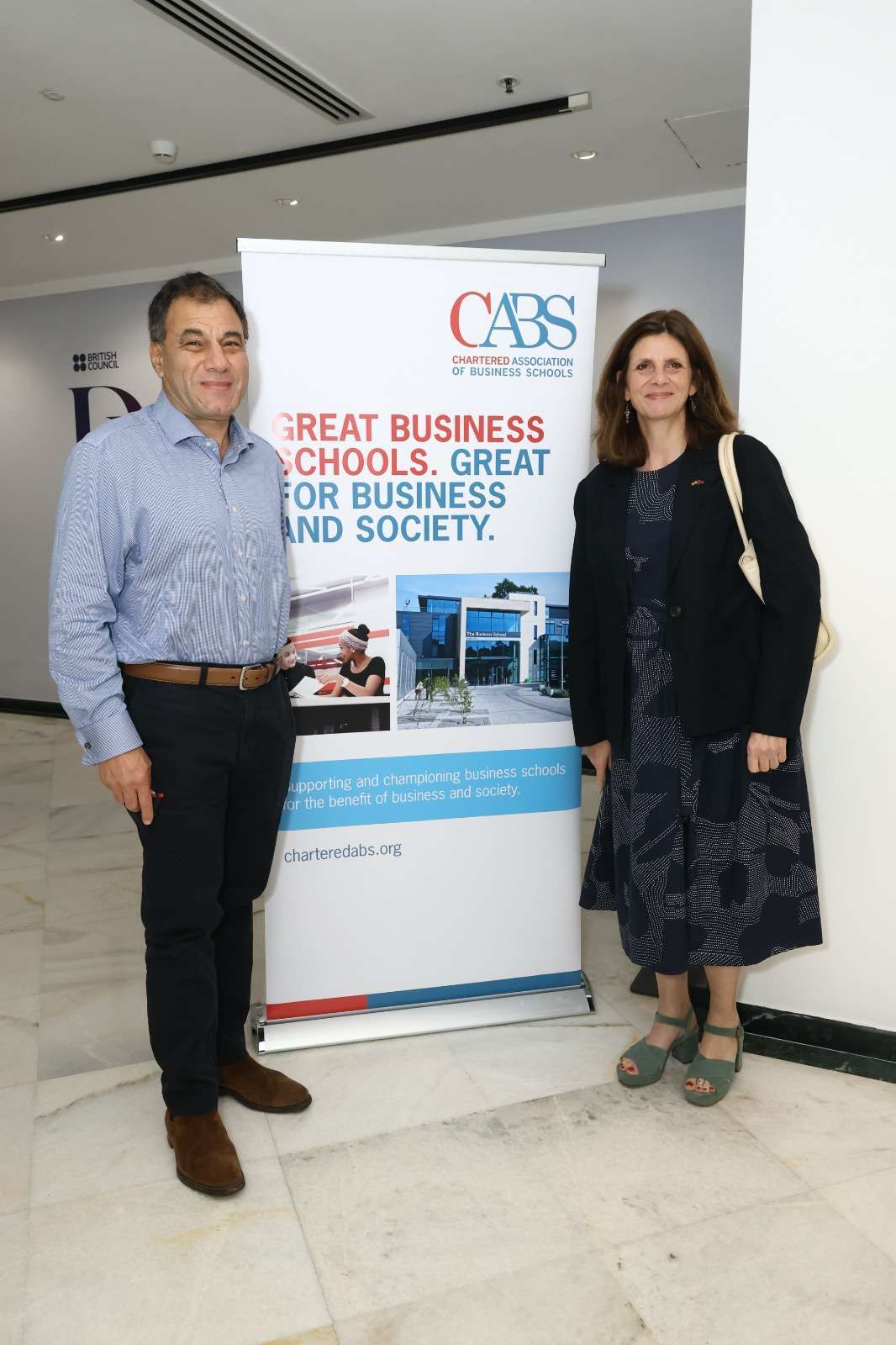 Lord Bilimoria (L) and Alison BarrettPhoto: CABS
On the opening day, CABS launched its Transnational Research Policy Statement, setting out guidance and common principles for designing and managing transnational research partnerships that are strategic, ethical, high quality and built on trust.
Chandrajit Banerjee, director general of the Confederation of Indian Industry, gave the keynote address at the gala dinner.
The dialogue closed with a fireside chat at the British Council between Bilimoria, sports entrepreneur Suheil Tandon, an alumnus of Loughborough University, and Alison Barrett, country director India, British Council.
Prof Sir Steve Smith, the UK Government International Education Champion, said in a statement: “The UK government is delighted to support the second edition of the UK-India Business School Dialogue after a highly successful first event in 2025. As the education corridor between the two countries rapidly expands, it is the right moment for our business schools to come together and tackle shared challenges as well as sharing best practice. The Dialogue contributes to the India-UK Vision 2035, where education partnerships are a fundamental pillar of our relationship, as well as the UK’s refreshed International Education Strategy.”
Institutions which had announced they were joining Bilimoria’s delegation included Aston Business School, Cranfield School of Management and the British Academy of Management.
The logos of the following institutions have featured in the dialogue: Birmingham City Business School, University of Birmingham Business School, University of Bristol Business School, Keele University Business School, London South Bank University, Kent Business School, the University of Law Business
School, International Business School at the University of Lincoln, Manchester Metropolitan University, Newcastle University Business School, University of Northampton, Norwich Business School from the University of East Anglia Norwich, Queen’s Business School from Queen’s University Belfast, University of Southampton Business School, and Surrey Business School from the University of Surrey.
It is not known if Wolverhampton University’s Business School, which is named after its benefactor, Lord Swraj Paul – he was its chancellor from 1999 until his death in August 2025 – went to India.
The Indian side at the dialogue “was heavily represented by top-tier institutions”, management development bodies, and elite policy committees. The core driving forces included: Indian Institute of Management Kozhikode (IIM Kozhikode), Indian Academy of Management (IAM), All India Management Association (AIMA), and Association of Management Development Institutions in South Asia (AMDISA).
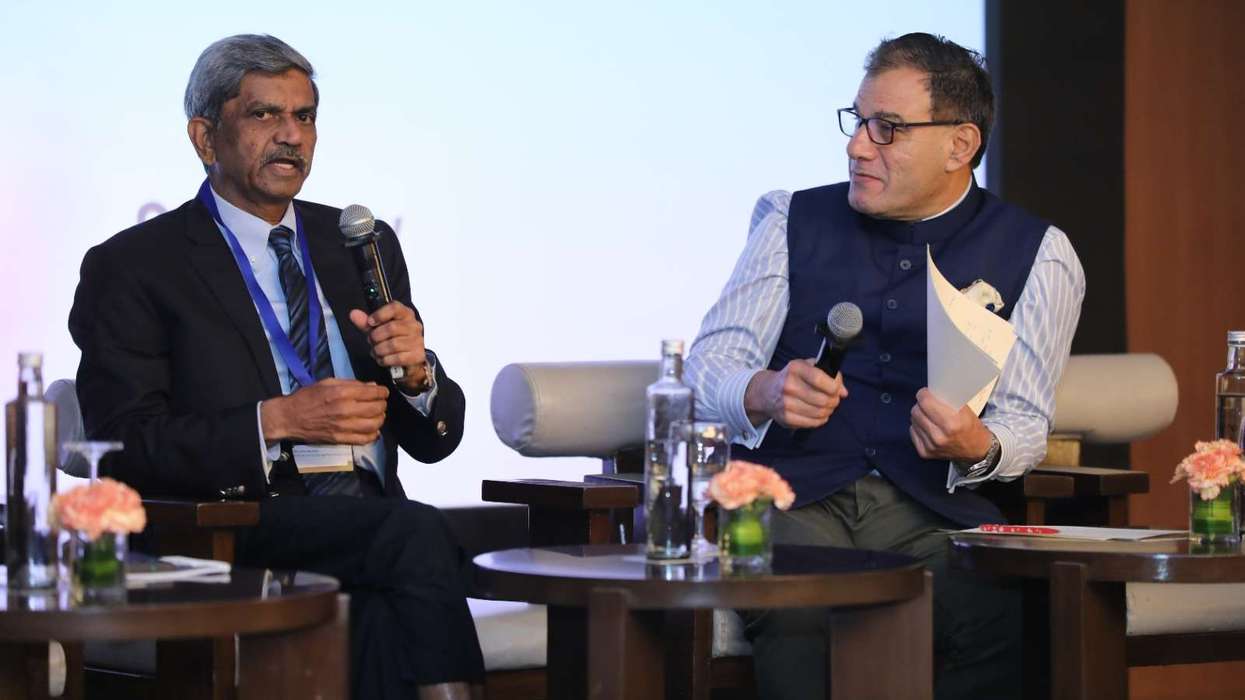 From L - Shiv Shivakumar and Lord BilimoriaPhoto: CABS
Shiv Shivakumar, who interacted with Bilimoria, posted a summary of his keynote address.
He said: “I made 10 points in my keynote:
1. India has 6,000 business schools, the UK has about 100, no comparison on numbers. The UK deputy High commissioner Ben Mellor mentioned in his speech that UK has 4 of the best 10 universities in the world.
2. I argued that we need to build a broader eco system in a world where nationalism is getting stronger. The eco system must involve government, industry and business schools.
3. India & UK have signed the CETA (Comprehensive Economic and Trade Agreement) after 4.5 years of negotiations. With this Indian companies have easier access at low tariffs to the UK market. This is a huge opportunity for Indian industry. This agreement also allows 1800 chefs, yoga trainers etc to work in the UK. I believe this will open the door for more human centric roles.
4. The UK imports £945 billion worth of goods but India’s share is low. There is a big opportunity for Indian companies to export garments, processed foods, automobiles, chemicals and pharmaceuticals to the UK.
5. There are 794 UK companies operating in India with a combined revenue of $60 billion, employing 552,000 people and paying tax of $2.5 billion per annum.
I urged the group to use this asset as the start point. The top 3 UK companies in India are Vedanta, Unilever and Shell.
6. Business schools have to use this agreement to get better integrated in management research, doctoral programmes, international students etc. Business schools in India have increased the women intake to between 25 to 40 per cent of a batch but the number of engineering students in business schools hasn't dropped significantly. The UK MBA is a one-year degree and of good value.
7. AI should be integrated into every subject. If a subject is taught for 36 hours, then at least 18 must be AI impact led. All our teachers need to be trained in AI; else we will have a situation where the students as a body will know more than faculty. That will lower the prestige of the teacher.
8. Business schools must pivot more to soft skills like negotiation, influence, teamwork, self-awareness, leadership. The curriculum needs redesign in the age of AI. Working with people must be prioritised over working with machines.
9. The 794 UK companies in India must be the first stop to offer high quality internships for this cohort. An internship is the first job exposure for many and it should count.
10. Management education is out of reach of the average student. In the room of 100 directors, only 6 colleges were offering scholarships to 10 per cent of the class That’s a low number. No meritorious student should be turned away for lack of funds.”