THE bombs fell overnight. By morning, Rami Baitiéh’s school in Lebanon had been destroyed.
He was 11. He went to look with classmates, and some of his friends were almost happy: no school meant holidays. Rami was shocked. “What happens in the human mind to target the school? What’s going on? I remember this shock. Like if it was yesterday.”
“Let’s play,” a friend said. “I’m not going to play,” Rami replied. “Where are you going?” “I’m going to knock at the other school door.”
He went to a school nearby and asked: “Hello, have you got any place for me?” The answer was a conditional yes. He could come whenever other pupils were off sick. For three to four years, he attended about three days a week and studied the rest of the time at home, “without any teacher, without any Google”. He still finished among the top three students in the country.
Decades later, Rami is chief executive of Morrisons, the 127-year-old Bradford grocer with about 100,000 colleagues. His route there took in a Lebanese village, a French scholarship and a career at Carrefour that ran through Poland, Turkey, Taiwan, Argentina, Spain and France.
That raises the question at the heart of this story. What does a man shaped by so many cultures bring to a supermarket serving a Britain that is itself changing? The answer starts at that school door.
“I learned from very young age, there is a problem, it’s my responsibility to sort it out,” he says. “Although you don’t have all the tools to get your problem sorted, your responsibility is to give yourself the tools to build them from scratch. It’s like selffunded solution, and you go.”
He does not claim a privileged start. “I don’t come from a family where, you know, golden, silver spoon,” he says. “You help yourself, my friend.” He describes his instinct as “finding the solution from within the problem”.
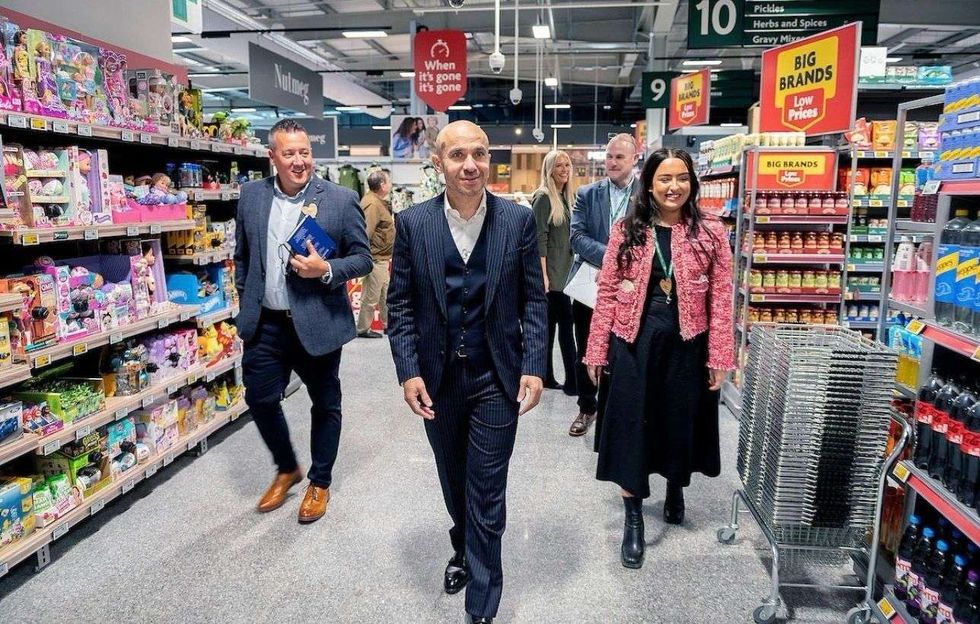 Baitiéh during a visit to a Morrisons storeEastern Eye
The flip side is a “fear that normal people don’t have,” he admits. He compares himself with a samurai who cannot bear to lose dignity and says the fear of failure has never left him. “I can’t go to any shareholder, any bosses, or any customers and say I don’t have solution.” He never wanted to be best in class, he says, but dread kept him studying.
Childhood also taught him how to move between worlds. He was born in a village of fewer than 2,000 people in southern Lebanon. At six, his father’s business took the family to a city in the north, 130 kilometres away, and Rami encountered a new accent and a new way of doing things. Lebanon, he points out, is a tiny country with 18 religions. “So in the same family, it’s almost impossible that you can’t find people from many religions,” he says. “I used to celebrate Christmas three times, Easter two times within my family, other celebrations two or three times, and a lot of gifts all the year.”
It also taught him to adapt. “Here you say hello this way, they say hello that way, and as a kid you learn this without being taught,” he says. “So the adaptability.”
After high school, the French embassy phoned. Rami was one of the three best students in the country, an official told him, and he had a scholarship to study in France. Take the weekend to think about it, they said. “I don’t need to think about it,” Rami replied. “I’m in.”
France felt like “my adoptive country, everything new, everything possible”. He studied “harder than what was needed” so as not to lose the scholarship and ended up top of his cohort. A job at Société Générale followed, where he assessed small-business loans. He was good with numbers. But something was missing. “I love interaction with people,” he says.
So he took a one-year sabbatical and wrote to Carrefour. It handed him an aisle with stock problems. Orders were placed by hand, product by product, on sheets of A3 paper. “I found this very boring, so I wanted to digitise this.” He built a Lotus 1-2-3 spreadsheet that saved him three hours a day. Colleagues asked for help. Soon, 230 people in the store were using it, and the store climbed from 37th out of 110 to first.
Then the group’s chief executive came to see for himself. Rami put on a tie. His boss scoffed: “He will not even say hello to me. You think he will say hello to you?” Ten minutes after the chief executive walked into the store, the manager called Rami over.
The sabbatical never ended. Carrefour sent him to turn round country after country. Taiwan brought his first job as a country chief executive. There, a supply chain manager refused to show him the stock-ordering algorithm. Too complex, she said. He insisted. It was his own formula from 1995.
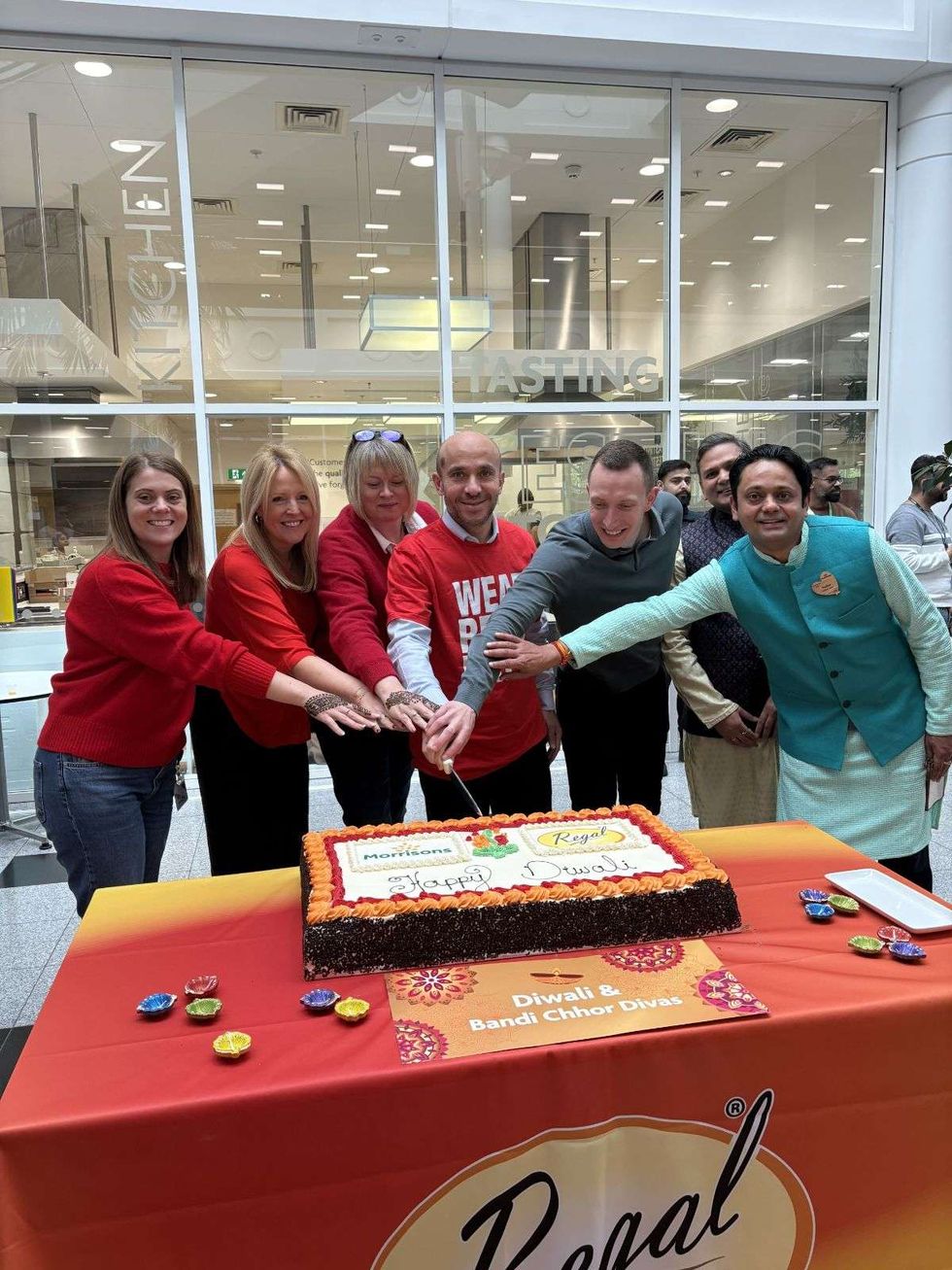 Baitiéh celebrating with colleagues at a store eventEastern Eye
In Argentina, a loss-making business had a year to improve or close. He went, he says, “not for career reasons, but for human reason”, to save 16,000 jobs. In every country, he tried to learn the language, “to show curiosity, humility, and willingness to be integrated”. He speaks nine languages.
When Morrisons approached him, he had been running Carrefour France. Carrefour’s group chief executive had told him he was one of the three best people in the company, and Rami did the sums: a one-in-three chance of the top job, six years away. Morrisons was calling. He looked at its numbers and “could see the solution immediately”.
Still, trading the glamour of Paris for the grit of West Yorkshire would give many retail executives pause. But Bradford, he says, was never a hardship. “I’m a citizen of the world. Honestly, I have never felt in any place on earth that I was foreigner. My country is where I pay my taxes. My place is where I have my toothbrush.”
He does not complain about hotels or restaurants either. “I come from place where from the age of five until 17, if you have food, you say thank you. We used to go to the basement to spend the night, and after you go to school, so I don’t have this moaning personality,” he says.
After taking up the role of chief executive in November 2023, his first job was to listen. “Listening is the first characteristic for a great leader,” he says. His strategy took six months to write. He fixed what he calls certainties, such as availability, checkouts and clean toilets. He asked shoppers why they came to Morrisons, or why they did not.
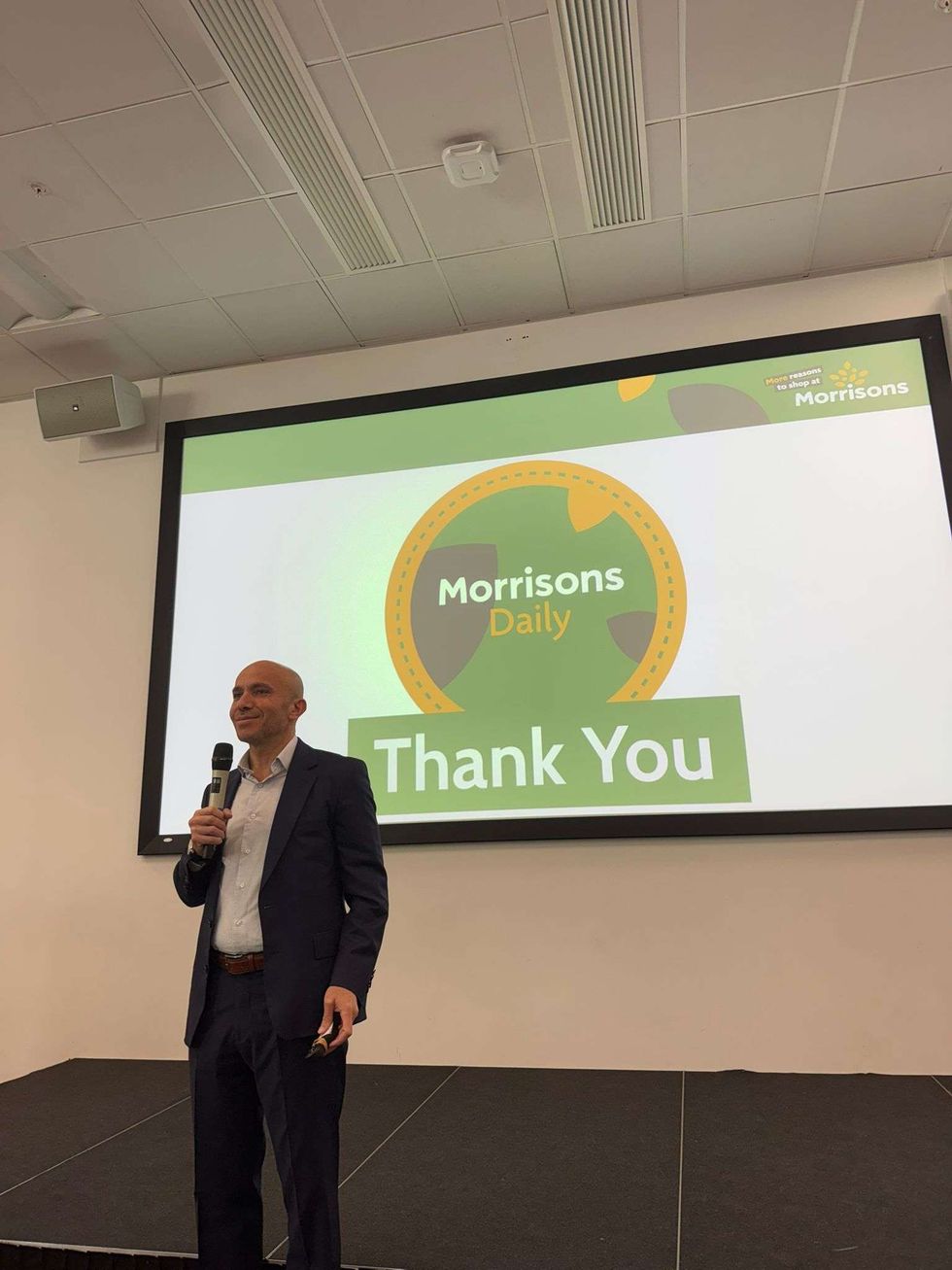 Rami Baitiéh at a franchise conferenceEastern Eye
Almost all gave the same answer. “You stopped your loyalty programme.” Rami asked his team whether that was true. It was. “Where did I get the strategy from? From the customer.” The scheme came back, and its membership rose from 4.5 million to eight million. The scheme had been dropped in the first place because of what it cost to run. “You need at one moment to do the balance between cost and the customer,” he says.
He also borrowed the idea of the inverted pyramid, with the customer at the top and the chief executive at the bottom. The chief executive’s job, he says, is “a post of responsibility, not a post of honour”, and the aim is “to serve, not to be served”.
“The more you are paid, the more you are responsible,” he says. “I’m very happy to pay higher salaries. However, show me more productivity and show me solutions.”
Asked how such a message reaches every level of a business with about 96,000 colleagues, he points to habits rather than slogans. On joining, he began dialling in his senior leaders every evening from 6.30pm to 7.30pm, Monday to Saturday, to report what he had found that day and ask: “Who’s gonna help me sort this out?” Some leaders protested. “No, you need to be there,” he says he told them.
Customer roundtables used to involve staff at levels two and three, who “couldn’t have any authority to change things”. Now executives go and listen. At the quarterly leadership meeting, everyone stands when customers arrive and sits only after they do. A cashier, he recalls, once told him: “But you look very nice guy.”
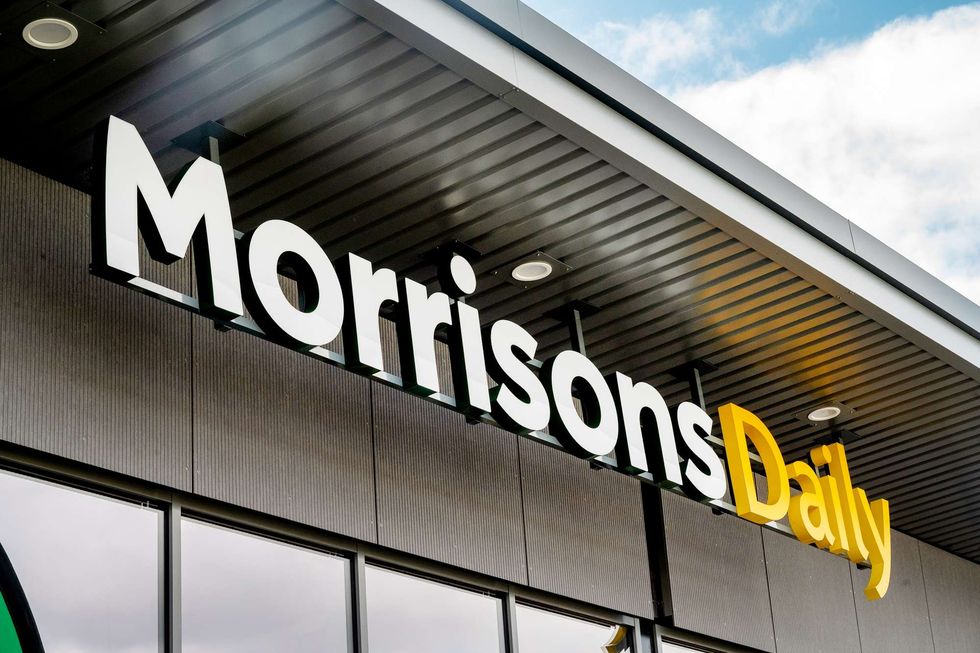 Morrisons has more than 1,700 convenience storesEastern Eye
The other lever is promotion, through their leadership school. (See box below)
Rami does not delegate the blame for any of it. “I am on the bottom of it,” he says. “This is absolutely my responsibility.”
He credits Sir Terry Leahy, former Tesco chief executive and a senior advisor to CD&R, the US private equity firm which owns Morrisons, with explaining a market he did not know. What they share is a belief in “the courage to say the truth, to identify the truth, and to bring solution”.
The test of his ideas lies in the aisles, starting with neighbourhood shopping. Rami believes Britain already has enough big supermarkets and that shopping habits have changed. He foresaw that shift three years ago, he says, as online shopping and digital tools made immediacy normal. “The closer you are to the customer’s house, the better it is for the customer.”
Morrisons has more than 1,700 convenience stores, 700 of them franchised, and Rami says 100 opened this year. He is drawn to the independent shopkeepers who run many of the country’s small stores.
Rami counts 48,000 small stores in Britain, with 38,000 of them independent, and the people who run them impress him. “They have an entrepreneurial mindset, but they look to be integrated, and they are hungry,” he says. “The people from India, from Sri Lanka, from Pakistan, they do it perfectly.”
What does Morrisons offer them? Its brand, its own-label products, its buying power and the More Card loyalty scheme, which earns shoppers five More Points on every product in Morrisons Daily stores too. “I have my markup, which is a very honest markup, and they have their margin,” he says.
 A Morrisons Daily store in Helmsley, YorkEastern Eye
He is no soft touch. Last month, he says, he stopped working with three stores. The reasons included buying from a competitor against the contract, and unpaid bills. “It doesn’t mean that I’m a charity here.”
“I can’t say my ambition is to get the 38,000,” he says, “but why not?” His limit is capacity. Morrisons can sign about 120 stores a year, perhaps 150 next year and 200 the year after.
The second test is what shoppers actually eat. “I do my very best to give the consumer what they want me to give them, and not to change them to be the way I want them to be,” he says. He says he brought a full aisle of world food to Morrisons, and there are now two. Yearto-date growth in the category is 36 per cent, he says. A supplier forum for the category meets three times a year.
Festivals show the idea at work. “They are absolutely important [to sales],” he says of Diwali and other festivals.
A colleague named Tushar is responsible for Diwali, and others handle Ramadan and Eid. Head office celebrates each festival, and colleagues from those communities explain it to the rest of the team.
“Now, if you go to the store at Diwali, you see the product, you see the recipes, you see the prices, the promotions,” he says, and store colleagues are trained for these seasons “to satisfy the customer”.
He links this directly to his own background. “I was born in a village, I grew up in the city, and then I had my second growth period in France,” he says. “I believe in diversity. I believe in the capacity of adaptation and agility.”
He gives two reasons for caring. The first is about seeing more clearly. “I believe that the more diverse, the more we can see different points of view,” he says. The second is about results. “The companies that are more diverse, they are performing better,” he says. “This is from statistics.”
Last comes people. Morrisons’ leadership school, he says, is “the thing that I’m the most proud of”, and he traces it to that destroyed school. “This is probably coming from me missing the opportunity with my school when I was 11, and I struggled to find another school,” he says.
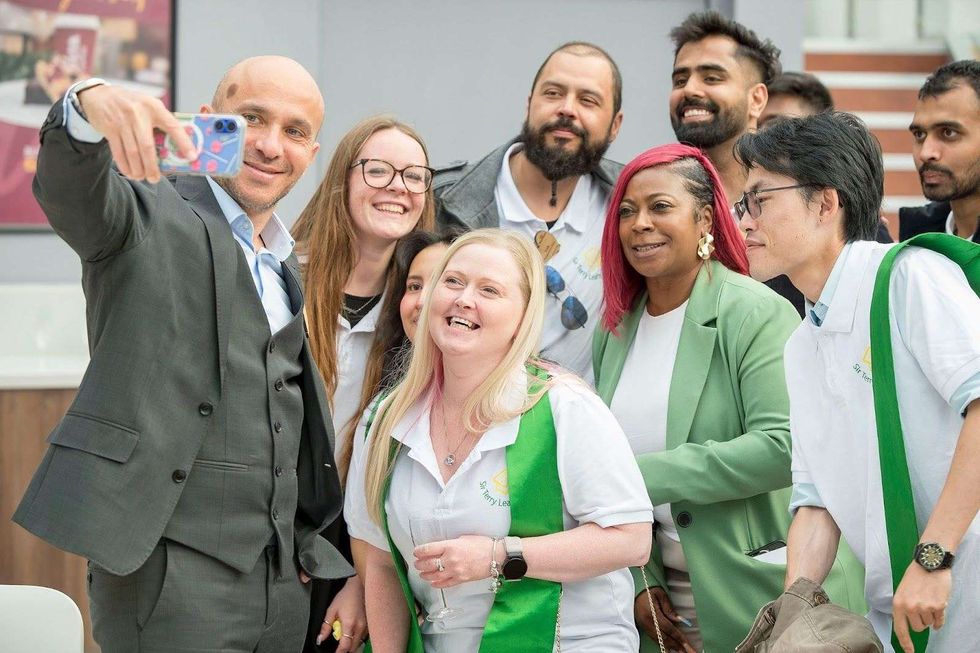 Baitiéh with colleaguesEastern Eye
He is wary of targets. “I have never set a target in terms of statistic to diversity,” he says. “My job is to say I remove all the obstacles in front of anyone who would like to get promoted in the company.” The only target he has set is for disabled colleagues, who he wants to see make up three to five per cent of store teams.
His own position is “zero discrimination”, he says: “You will not face any obstacle, and as customer or as colleague, not one obstacle, so you can belong to this company. This company is yours.”
At a recent leadership meeting, he recalls, a colleague named Maz spoke after the company won a diversity and inclusion award. Maz is of Pakistani descent and from Bradford. “I have been working for Morrisons for 15 years,” he said. “The first 12 years, I was in survival mode. For the last three years, I’m in a belonging mode.”
Rami says he is not chasing a leaguetable position. Morrisons was once among the big four grocers, and it was put to him that it now ranks sixth. “The ranking is not a target for me,” he says. “I want to be higher ranked in customers’ mind.”
Morrisons has delivered a steadier performance under Rami, recording 15 consecutive quarters of underlying like-forlike sales growth through the third quarter of this financial year. EBITDA has also risen, while debt has fallen 46 per cent from its 2022 peak.
Growth is speeding up, too. Like-forlike sales rose 3.2 per cent in the 13 weeks to 26 July, up from 2.2 per cent in the previous quarter, on total sales of £4.1 billion. The company said it grew sales and volumes ahead of the market and expanded its market share.
Rami put the momentum down to “a broad-based improvement across the business”, helped by sharper prices.
At 11, he knocked on a school door with nothing in his hands and a simple request for a place. Today, he runs a school that asks applicants for little more than the question that drove him: “What about your hunger to get where you want to get?”
Appeal of world food
RAMI Baitiéh says Morrisons divides world food shoppers into three groups.
Faith: The deepest level. Some shoppers eat no meat, while others “eat only halal. Some kosher. This we respect.”
Belonging: Cultural identity shapes food preferences across generations, Baitiéh explains. “I am second generation of Indian. I’m third generation of Pakistani. I’m fourth generation of Middle Eastern or French,” he says.
“I’m British, but culturally and from food point of view, I still have some taste from my family.”
Traveller is everyone else. “The British people, wherever their route, they are all travellers, all of them.” That means exploring cuisines such as Italian, Thai and French, including dishes such as pasta.
He says Morrisons has tripled its world food market share, with year-todate growth of 36 per cent.
Passion over pedigree
Applicants to Morrisons’ leadership school do not need a CV. “We don’t ask you about your name, your skin colour, your background, your age,” Rami Baitiéh says. “We have only one question: What about your passion?”
He says more than 2,000 people are enrolled, equivalent to 30 per cent of his management team. In three years’ time, he expects almost 80 per cent of managers to have come through the school, as it is “the only way today to get promoted in Morrisons”.
Baitiéh says the school has changed who gets promoted. The proportion of managers from ethnically diverse backgrounds has risen from eight per cent to 16 per cent, while the proportion of women managers has increased from 25 per cent to 42 per cent.
Managers previously tended to promote people who looked like them, “without knowing it”, he says. Now, employees can put themselves forward. The test is simple. “You need to love numbers, you need to love products, and you need to love people.”