
Highlights
- Dame Meera Syal says there is "a brown pound out there, a very powerful one" that commissioners still underestimate
- She calls herself "a British Punjabi" and says she feels "really sad that people have to be binary" about identity
- She starred in A Tupperware of Ashes which sold out at the National Theatre, but it failed to transfer to the West End
- Her advice to anyone who wants to be a creative: do it only "if there's nothing else you can possibly do"
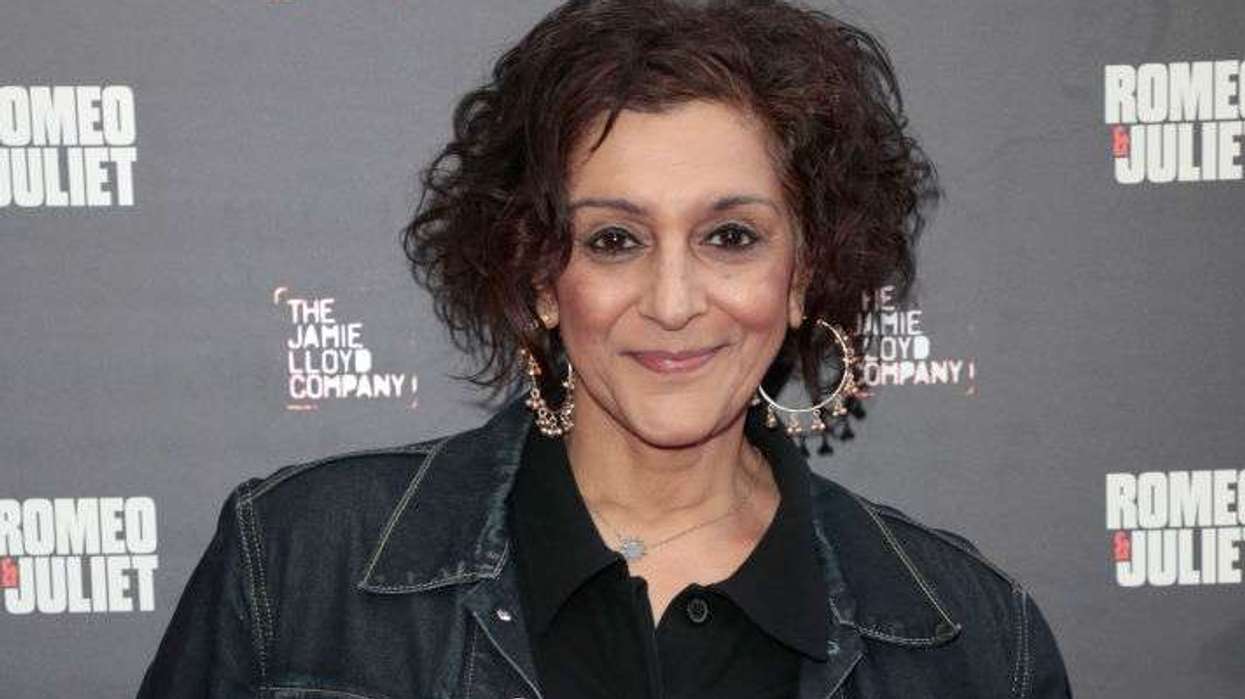
DAME MEERA SYAL has a message for the people who decide which stories get made: there is a brown pound out there, and it is a very powerful one.
In an exclusive interview with Eastern Eye, the writer and actress said commissioners and producers still hesitate when a story is majority brown, and that she thinks they are underestimating who will turn up to watch.
Syal was speaking to mark her memoir, Vigilauntie: A Memoir - Innit?, published by Weidenfeld & Nicolson.
Why is the memoir called Vigilauntie, and what does auntie mean now?
The title was not her idea. "My daughter came up with this rather brilliant title when I was looking for a title for my memoir," Syal said, "because she said that's sort of the two sides of you."
Then Syal had a thought of her own. "And then I began to think, well then everybody should be one."
For her, the word auntie is up for grabs. "You can redefine what auntie means. For my generation, it meant something very specific. But I like to think as Indian women are evolving, we are redefining our roles in so many ways, and auntie is one of those roles we can redefine."
Are Asian stories still seen as a risk by commissioners?
Asked whether Asian-centred stories are still treated as a risk by broadcasters and West End producers, Syal pointed to progress first. "We have many examples of very fine south Asian actors who are leading series and are brilliant, like Himesh Patel, Archie Panjabi and Riz Ahmed," she said.
"But when it's a majority brown story, I think there is still some reticence."
She said the reason is a misreading of the audience. "I don't think they know there's a brown pound out there, a very powerful one. And I still think there's a slight otherness that probably puts the money people off making a mainstream show. Because I think they still think that only brown people will watch it, which I find a bit disappointing this day and age."
Her answer is to keep going. "I think the quality of the work and a persistent will eventually change that."
Does Meera Syal call herself English or British Asian?
Asked whether she would call herself English, Syal chose a more specific label. "I would describe myself as a British Punjabi. Very specifically."
"Both those cultures are deeply intertwined in my soul, and I honestly feel so lucky that I had a bicultural existence. And I feel really sad that people have to be binary about this."
She sees the mix as the source of her work. "The meld of cultures and the collision of cultures is what produces creativity, and a different way of seeing the world, and voices, and works of art, and opinions that maybe haven't been seen before."
"I feel it enriches my life greatly to have both, so I'd hate to confine myself to one."
Why do actors of colour leave for America?
Syal said Britain has seen "a bit of a drain of actors of colour to America, who don't get their flowers here, and then have to go to America, get famous there, and then come back to Britain and get treated like the gods they are".
She said it is a shame, and that there are many, "both black and brown". The American industry is bigger, with bigger rewards and more exposure, she said, but she also sees a "slight parochial attitude" at home that means actors of colour are "maybe slightly overlooked or slightly forgotten".
Her example was Marianne Jean-Baptiste. The year she was nominated for an Oscar, Syal said, she was the only British actor who was, but she was not among the actors chosen to represent Britain at Cannes. "I think that is what precipitated her to move to America, where she did many brilliant roles. Now she's back here... doing lead roles here. But she kind of had to go to America to get recognised."
Is it a good time to work in the creative industries?
Syal said it is hard for everyone at the moment. "There's been a gradual erosion of funding, obviously a gradual whittling away of the film industry because of the writers' strike and of Covid and many other factors." For British Asians, she added, "it gets a bit more tough for us, because, you know, we have to fight harder anyway to be part of that".
But she has no sympathy for illusions. "No one said that this industry was easy or fair. So I think if that puts you off, you probably shouldn't do it."
Her advice to would-be creatives is blunt. "I always say to people that want to be a self-employed creative, only do it if there's nothing else you can possibly do, because then you should be doing it because it's who you are and it's your passion. But if you have a B or C plan and you quite like it, but you're not sure, it's not for you."
Why didn't A Tupperware of Ashes reach the West End?
A Tupperware of Ashes, written by Tanika Gupta and directed by Pooja Ghai, ran at the National Theatre's Dorfman in 2024, with Syal as Queenie, a restaurateur facing an Alzheimer's diagnosis. It did not transfer to the West End.
"We were deeply disappointed because the play was sold out from the minute the reviews came out," Syal said. "I've never had an audience reaction like it for anything. Not only the standing ovations, but crowds of people at the stage door wanting to talk about their own experiences of Alzheimer's, and that this story had touched them so deeply and it made them feel less alone."
As an ambassador for the Alzheimer's Society, she said, what saddened her most was that more people would not see it. "The West End is a tricky place to get into. There is a queue of productions waiting. I feel sad that nobody wanted to do it, though, when for me it ticked every single box."
What is her message to the Asian community on supporting the arts?
That the audience is already there. "There is a hugely engaged and supportive audience out there when they see the stories that speak to them. My book tour has been sold out, and it's full of brown people who do not have to come and spend their money and spend a windy night out in Manchester or whatever, but they're coming because it means something to them."
She said she saw the same with Bombay Dreams. "Three years in the West End. Nearly no one said it would work. There we were."
Her latest example is The Split Up, the BBC One drama about a British Asian family law firm in Manchester, starring her husband, Sanjeev Bhaskar, which was renewed for a second series in October. "It's being watched by everybody, and that's actually what you want," she said. "We don't market our stories just for Asians. We market good stories that south Asians watch, but all audiences come to. Goodness Gracious Me did that, too."
Why did Meera Syal write about sexual assault?
In the memoir, Syal writes about surviving sexual assault. Asked why she chose to share it, she said: "To show that I survived, and to remove the stigma, actually, because the shame also somehow becomes the woman's in these situations, when it really isn't."
"And I think, given what's going on in India right now, it's more important than ever to start removing those labels that are attached to talking about it. We're not going to make it any better the more we sweep it under the carpet. We're not going to make it better if we don't look at the gender inequality that goes very, very deep. And we're not going to make it better until we all have a long, hard look at how we are bringing up our boys."