

Highlights
- Most migrants will have to wait 10 years to qualify for permanent settlement, up from five.
- Concessions introduced for social care workers and some public sector employees.
- Mahmood says settlement must reflect migrants’ contribution to British society.
- Home secretary defends reforms as consistent with Labour values, saying “solidarity is the precondition for social justice”.
HOME SECRETARY Shabana Mahmood on Monday (2) defended the government’s overhaul of immigration settlement rules, saying migrants must demonstrate their contribution to Britain before being granted the right to live in the country permanently.
Under the new earned settlement system, most migrants will have to wait 10 years before applying for indefinite leave to remain (ILR), double the current fiveyear qualifying period. However, the government has introduced concessions for social care workers and certain public sector employees following strong opposition to its original proposals.
Introducing the policy, Mahmood told MPs in the Commons that the government had sought to establish a system that was fair both to those who came to Britain legally and contributed to society and to British citizens, who should not be expected to bear a greater burden.
She referred to her family history, saying her parents had moved to Britain from rural Kashmir more than 50 years ago because they believed they would be treated fairly.
“They came here knowing one thing above all else: that they would be treated fairly,” she told MPs. “They came to this country because they knew we did things differently here and valued fair play above all else.” Mahmood said the system had to reflect that principle through a contract between newcomers and those already living here.
“This country welcomes people seeking a new and better life, but there is also an expectation that they will play their part, contribute to their communities and become part of our national life,” she said.
The home secretary rejected suggestions that this approach was inconsistent with Labour values.
Mahmood argued that public support for shared taxation and universal public services depended on people believing that everyone was contributing.
“Solidarity is the precondition for social justice,” she said.
Mahmood said settlement, which gives migrants the right to live permanently in Britain, was one of the most valuable rights the country could offer. It also provides access to public services, including free education, the NHS and welfare support, where eligible.
Under the previous arrangements, most migrants could apply for settlement after five years, with eligibility based largely on the time they had spent in the country.
Mahmood said this did not place sufficient emphasis on responsibility and contribution.
“Settlement should not be automatic; it should be earned,” she told the Commons.
 Sunder Katwala British Future
Thinktank British Future welcomed the changes, saying they would give many thousands of people worried about losing their legal status a pathway to settlement.
Sunder Katwala, director of British Future, said: “There may be no flagship government policy that has changed quite as much as this one because of public consultation.
“Those changes mean many thousands of people, anxious about losing legal status, will now have a pathway to settle in Britain.”
He said the government had sided with the argument for settlement and integration and would now need to make a more public case against opponents who continued to advocate a politics of “send them all back”.
Prime minister Andy Burnham, in an interview with ITV ahead of Mahmood’s Commons statement, said legal migration had “come right down” and that migration levels were now in a “much better place”.
However, he declined to say whether legal migration was too high or too low, arguing that planned migration had to reflect the needs of the economy.
“When you have planned migration, it’s difficult to say whether it’s too high or too low because it’s got to be, if you like, following gaps in the economy, because if you just put a number on it we may have a shortage in a certain area,” he said.
Burnham also pointed to a fall in small boat arrivals, saying overall migration was in a better position. The number of people arriving in small boats up to October 31 was 40 per cent lower than during the same period last year.
The prime minister previously backed the principle that settlement should be “a right to be earned”, although he had called for the reforms to strike the right balance.
The new system will assess applicants according to their economic and wider contribution to British society, alongside their compliance with immigration and other legal requirements.
Under the new arrangements, applicants will first have to meet a set of basic requirements.
These include having no criminal record, demonstrating a high standard of English, having no unpaid debts to the British taxpayer and having made at least three years of national insurance contributions.
Mahmood described these as “the basic, non-negotiable expectations of anyone seeking to live in this country permanently”. Those who meet the requirements will then be assessed according to their contribution.
A five-year route will remain available to people earning more than £50,000, as well as those working in healthcare and education, including doctors, nurses and teachers.
People making exceptional contributions will be able to apply after three years. This includes those earning more than £125,000, whom Mahmood said would contribute £1.5 million over their lifetime, as well as people arriving through the highest talent visa schemes.
The standard qualifying period for everyone else, including migrants earning less than £50,000, will be 10 years.
Mahmood said this did not mean they would lose the opportunity to settle in Britain. They could renew their temporary visas while working towards meeting the requirements.
The rules will also include penalties for people who breach immigration conditions. Their qualifying period could be extended to 20 years.
Applicants who have claimed benefits will have to complete five continuous years without relying on the state before they can apply for settlement.
Certain groups will retain their existing arrangements, including British National (Overseas) status holders from Hong Kong, members of the armed forces, people with a British connection and those on legacy routes such as the Windrush scheme.
Mahmood announced the final policy in the Commons following a consultation that attracted more than 200,000 responses.
 The government said the new settlement rules would delay permanent residency for around half a million migrants and save billions of pounds in public expenditureJustin Tallis/AFP via Getty Images
The announcement follows months of debate within Labour over whether it would be fair to change settlement rules for people who had already moved to Britain legally, believing they could apply for permanent residency after five years.
Housing secretary Angela Rayner previously described the prospect of changing the rules for people who had arrived in good faith as “un-British”.
Trade unions also opposed retrospective changes, arguing that migrant workers should not face a longer wait after making decisions based on the rules in place when they came to the country.
The government argued the reforms are necessary because of the number of migrants expected to become eligible for settlement following the rise in arrivals under the previous Conservative government.
Around 350,000 lowerskilled workers and their dependants who arrived after Brexit were expected to qualify for settlement in the coming years under the existing rules.
Mahmood said the changes would delay settlement for around half a million people and save billions of pounds in public expenditure.
One of the most contentious aspects of the original proposals was the prospect of extending the settlement period for migrant care workers, many of whom had arrived in Britain during a period of severe pressure on the sector.
Mahmood said 250,000 people and their dependants had arrived in Britain or switched to the social care route between 2022 and 2025.
She acknowledged that these workers had helped the country at a time when the care sector was struggling following the Covid-19 pandemic.
However, she said the route had also been abused by some employers and individuals.
Mahmood accused the previous Conservative government of encouraging businesses to sponsor overseas workers, without adequately checking whether they were suitable employers. She said some companies had been fraudulent or exploitative, while some migrants had arrived knowing that no job was available for them.
The government has already stripped around 1,800 employers of their sponsorship licences over exploitation concerns. Mahmood said the government would help affected workers find positions with legitimate care providers and give them more time to secure employment before their existing visas were curtailed.
She said there were still tens of thousands of legitimate vacancies in the sector and that workers with the necessary skills should be able to find jobs during the new five-year visa period.
“Everyone will have a fair opportunity to make their contribution, and no one will be punished for the actions of their employer,” she said.
The broader reforms also include tougher provisions for people who enter Britain illegally. Under the announced arrangements, people arriving on small boats across the Channel could face a wait of up to 30 years before qualifying for settlement.
The government has presented the changes as part of its wider effort to tighten immigration controls, while retaining routes for people who make an economic or public service contribution. Official figures showed that net migration fell to 171,000 in 2025, from 331,000 a year earlier, following a record 944,000 in 2023.
 Andy Burnham (Photo by Temilade Adelaja / POOL / AFP via Getty Images)
Meanwhile, Tories accused Mahmood of retreating from her original proposals following pressure from within Labour.
Shadow home secretary Chris Philp described any concessions for care workers as a u-turn, arguing that the home secretary had previously warned that allowing low-paid care workers to settle could cost taxpayers £10 billion.
Mahmood rejected the criticism, saying the government had inherited the problems from the Tories.
She also pointed to the government’s record on reducing migration.
“It is this government that has cut net migration by 82 per cent,” she said, adding that the new settlement policy offered a fair solution to the problems left by the previous administration.
Mahmood said the changes would also extend the period for certain low-paid workers who had been allowed by the previous government to renew their visas until 2030 to qualify for settlement.
She said this period had now been extended to 2035, reflecting the changes following the consultation.






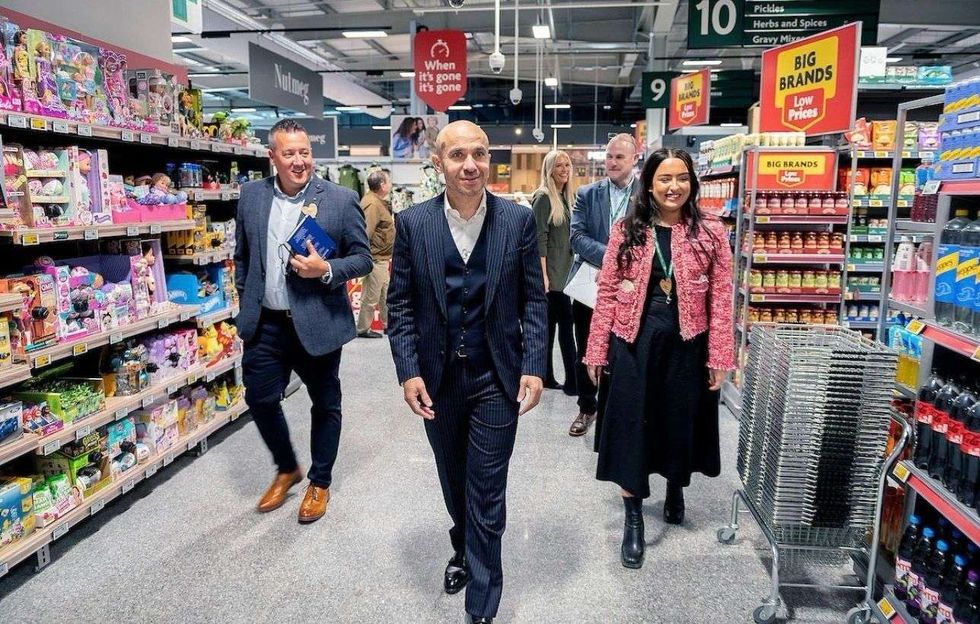 Baitiéh during a visit to a Morrisons storeEastern Eye
 Baitiéh celebrating with colleagues at a store eventEastern Eye
 Rami Baitiéh at a franchise conferenceEastern Eye
 Morrisons has more than 1,700 convenience storesEastern Eye
 A Morrisons Daily store in Helmsley, YorkEastern Eye
 Baitiéh with colleaguesEastern Eye