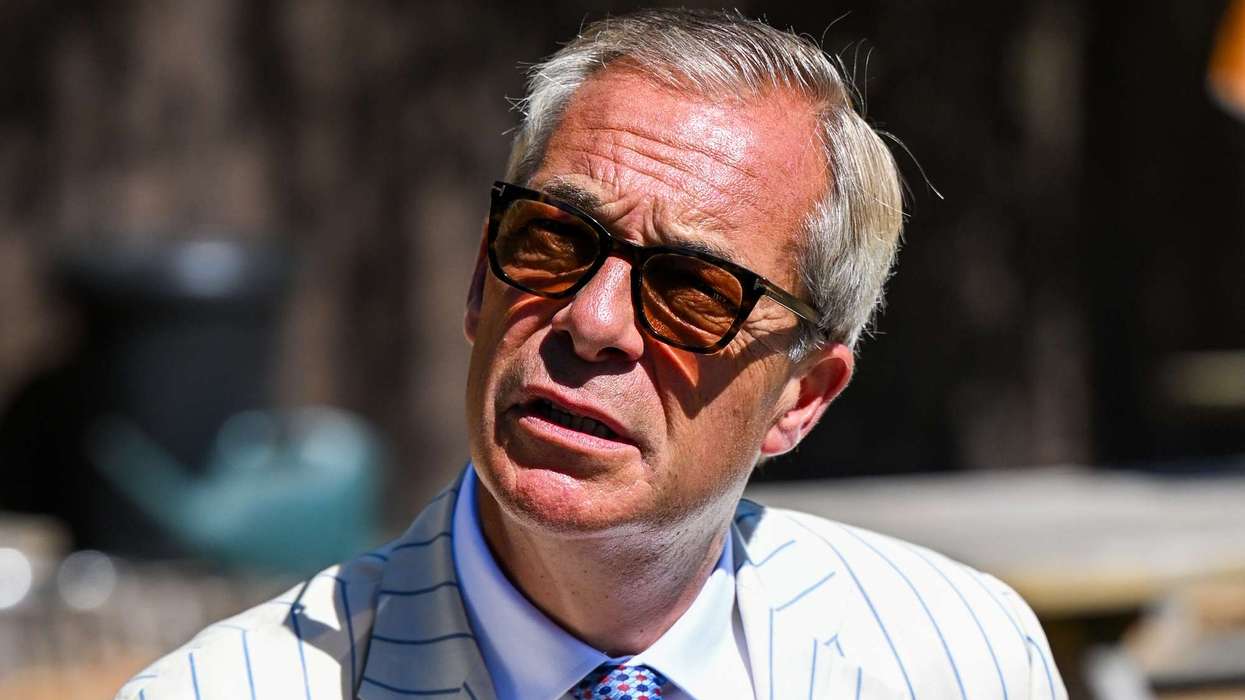

Nigel Farage is the MP for Clacton once again, a month after standing down to ask his constituents if they would vote for him again. He is back where he started.
Farage’s advisers had mistakenly assumed that his resignation could permanently end the Commons inquiry into undeclared donations after the July 2024 general election. But that inquiry recommenced as soon as Farage’s re-election was announced.
His by-election gambit proved neither a triumph he had hoped for, but nor was it quite the embarrassing disaster his critics had predicted, once Farage found himself running only against 33 minor candidates. But the 45 per cent turnout was respectable for an August by-election. Farage won slightly more votes – a thousand up – from the general election. But Reform’s 63 per cent share was well below that of the winners in the handful of by-elections not contested by major parties.
This Clacton contest was certainly Count Binface’s finest electoral hour. The spoof candidate got 95 votes when he recently stood against Andy Burnham in Makerfield, and 69 votes against Boris Johnson in 2019. His peak performance to date had been 308 votes standing against Rishi Sunak: 0.6 per cent of the vote in Richmond, Yorkshire, at the last general election. Binface now increased that thirty-fold to almost 10,000 votes – 27 per cent of the poll in Clacton. The centre-left parties had won a quarter of the general election vote, and transferred to Binface as the main anti-Farage gesture in this contest.
That made him the very first spoof candidate to get his electoral deposit back, by obliterating the previous best, a four per cent vote for the Monster Raving Loony party in a 1999 by-election in Rotherham.
Farage did not appreciate the joke. “I'm damned if I'm going to stand on a stage, having won a resounding victory, and be demeaned and humiliated by nobodies” he said.
Burnham, Johnson and Sunak happily embraced the long tradition of absurdity at British constituency declarations, where party leaders are photographed next to spoof candidates. Theresa May had done so a bit more awkwardly. Farage was angry at the expectation that he may have to follow suit. So Farage became the first by-election victor to not turn up to the declaration since the IRA hunger striker, Bobby Sands, was unable to leave his maximum security prison cell in 1981. Essex Police made clear that Reform UK’s claim that Farage had missed the count on police advice was not true.
The other 30 candidates struggled. Kai Stephens, a 22-year-old radicalised as a teenager, who ran on total remigration and overt racism for the British Democrats, got 0.4 per cent of the vote. One of his supporters called for spoof candidates to be banned, so far-right candidates could not be laughed at for losing to the Bin, who proved seventy times as popular in Clacton.
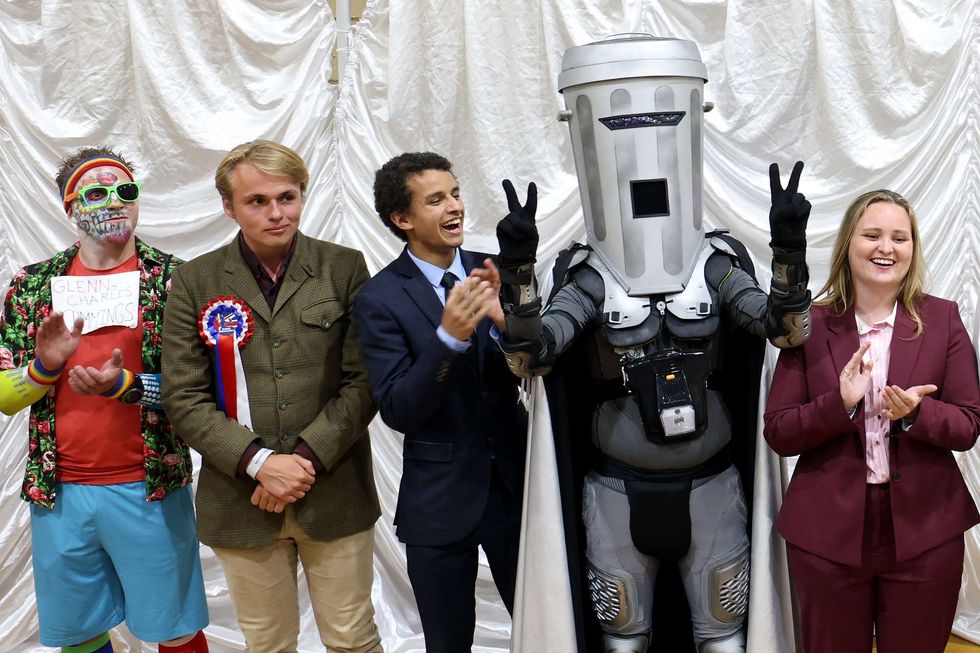 Jon Harvey, dressed as the satirical character Count Binface, waits with other candidates for the declaration of the Clacton-on-Sea by-election at Clacton Leisure Centre on August 14, 2026 in Clacton-on-Sea, England. Getty Images
If the donations inquiry leads to Farage’s suspension from the House of Commons, Binface may get another chance to take on Farage in Clacton, maybe early next year. Farage would be the favourite, though a third Clacton contest would be closer if the “Anybody but Farage” progressive vote could vote tactically for a Conservative, not just for a dustbin. Rupert Lowe’s Restore party could splinter the Reform vote, though, ironically, it could help Farage if he could persuade Count Binface to run again.
Farage’s core challenge is that Britain is not Clacton. The test of his ambition as a political leader is now whether he can still hold the most demographically favourable constituency for Reform in the country - but whether Reform can win a few hundred seats elsewhere.
After a post-election surge to top the polls, Farage and Reform have been slipping in public reputation for the last year. Judged as an outsider insurgent, Farage is the most successful minor party since the SDP/Liberal Alliance surged to the top of the polls in 1981. Judged as an alternate government, Farage’s ratings now compare unfavourably to the leaders of the opposition, such as William Hague or Jeremy Corbyn, who struggled most to persuade the public they could lead the country.
Count Binface was the latest beneficiary of an emerging golden rule of British electoral politics: that there are big gains to be made for whoever can establish themselves as Farage’s main political opponent. The Farage factor propelled Plaid Cymru to government in Wales and gave the Green Party its first by-election victory earlier this year.
There will be many calls to “unite the right” – with contrasting plans about how Farage, Lowe or Tory leader Kemi Badenoch can achieve that. Prime minister Burnham will take much more time to decide how long it will be before the next general election takes place. The lesson of Clacton is that his prospects will be strongest if Farage appears to be his main rival for power.