
Charles Darwin, whose theory of evolution changed science for ever, has been remembered in the lecture theatre in the Yusuf Hamied Centre at Christ’s College, Cambridge.
“I am delighted the lecture theatre is being put to good use,” Hamied, chairman of Cipla, the Indian pharma giant, told Eastern Eye.
Both Darwin and Hamied were students at Christ’s, separated admittedly by 126 years.
The latest talk in the lecture theatre was delivered by Dr Miles Kempton, a junior research fellow at Christ’s, who spoke about “Charles Darwin and the Galapagos Islands”, and especially how the archipelago with its unique wildlife has been represented in film over many decades.
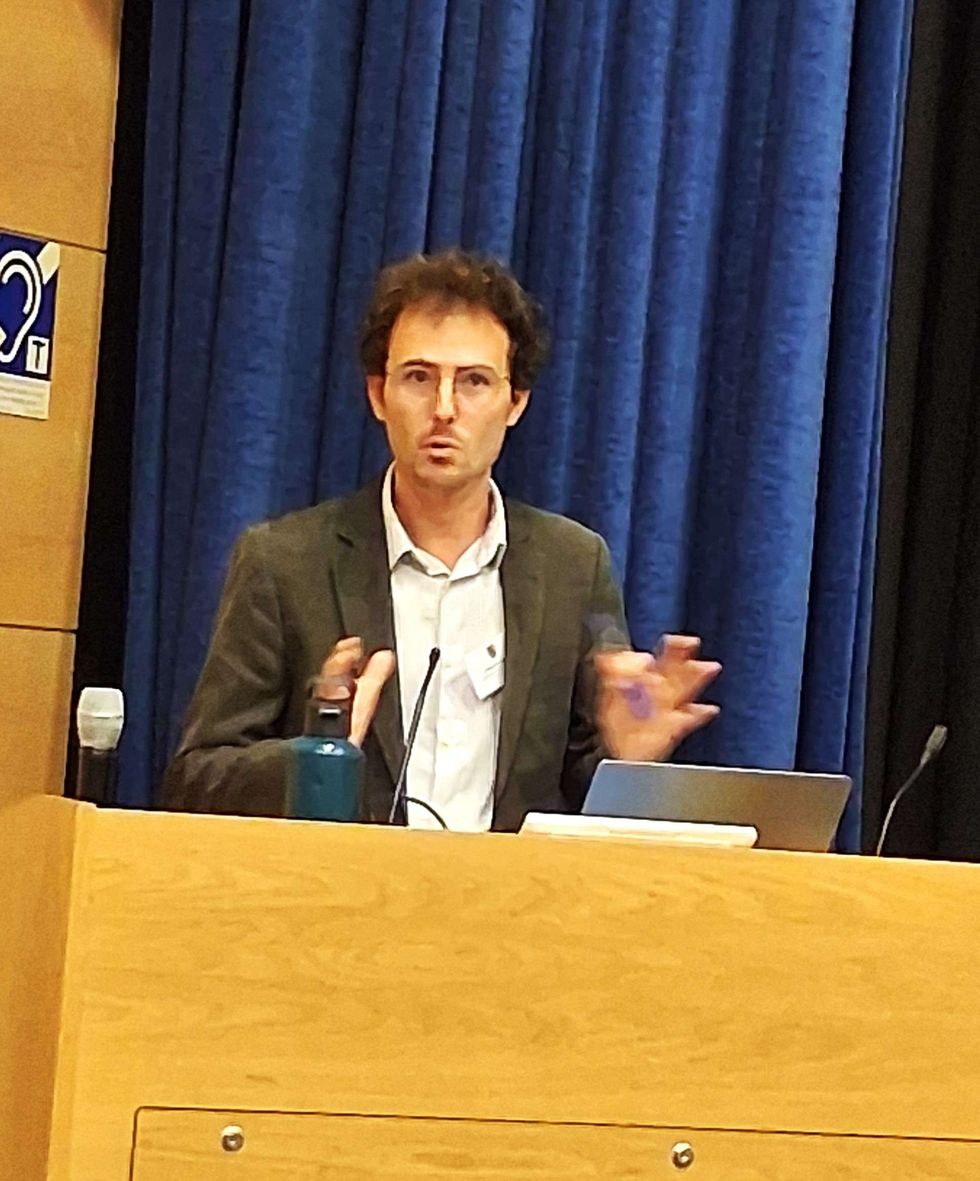 Dr Miles Kempton delivering his talk on Darwin and the Galapagos Islands in the Yusuf Hamied lecture theatreAmit Roy
Darwin was admitted to Christ’s on October 15, 1827, though he formally arrived and began his studies as an undergraduate in January 1828. He graduated with a BA in 1831, and automatically received his MA in 1836.
At the age of 26, he spent September 15 to October 20, 1835, visiting four of the islands in Galapagos archipelago. His observations of local wildlife, like mockingbirds and finches, helped inspire his theory of evolution by natural selection. On November 24, 1859, he set out his theory of evolution in On the Origin of Species by Means of Natural Selection, or the Preservation of Favoured Races in the Struggle for Life.
Hamied was at Christ’s from 1954 to 1960, following up his undergraduate degree with a PhD in chemistry. He then returned home to Bombay (now Mumbai) and joined Cipla, the company his father had established in 1935 to make medicines for the Indian market.
Hamied said there is now a Darwin-Hamied Centre in Hamied Court, a new building for postgraduate students that he funded in 2023. It works with Lord Ara Darzi, of the Fleming Institute in London, on how to combat AMR (Antimicrobial Resistance, which happens when germs like bacteria, viruses, fungi, and parasites change and stop responding to the medicines meant to kill them).
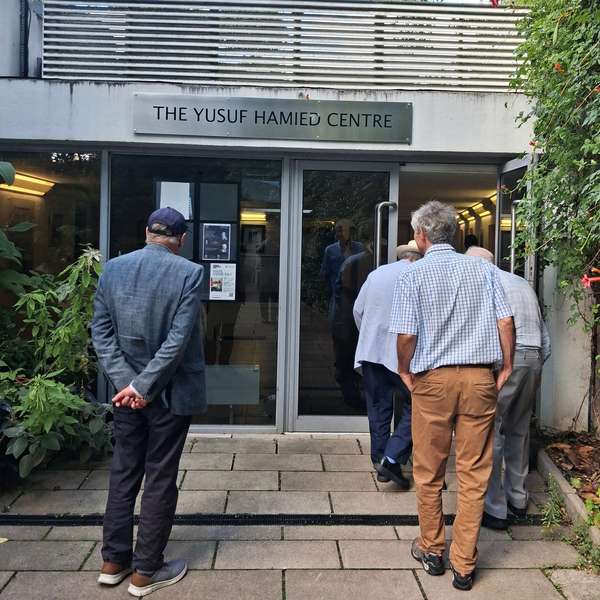 Alumni of Christ's entering the Yusuf Hamied Centre for talk by Miles Kempton Amit Roy
He added: “This centre is exploring Darwin’s evolution theory, and asking the question, ‘What will the world be like in 50 years’ time?’ As the college of evolutionary biologist Charles Darwin, Christ’s is a fitting home for this vital research to understand and preserve our planet’s biodiversity.”
He revealed: “We are setting up a Fleming Institute in Pune in India.”
Christ’s College has announced that the Darwin-Hamied Centre “will promote impactful research at the intersection of biodiversity science, conservation and economics”.
Lord Simon McDonald, Master of Christ’s, commented: “I am proud that Dr Yusuf Hamied has chosen Christ’s to host this important research centre.”
Hamied has also helped with the setting up of the Partha-Hamied Centre at the Judge Business School at Cambridge University. The former refers to the economist Prof Sir Partha Dasgupta, who wrote The Economics of Biodiversity: The Dasgupta Review, a landmark independent global report commissioned in 2019 by HM Treasury in the UK. Published in February 2021. This centre is run by Sir Partha’s daughter, Dr. Aisha Dasgupta, who is a demographer specialising in reproductive health, fertility, and family planning. She has frequently co-authored papers and spoken at events alongside her father regarding population and environmental economics.
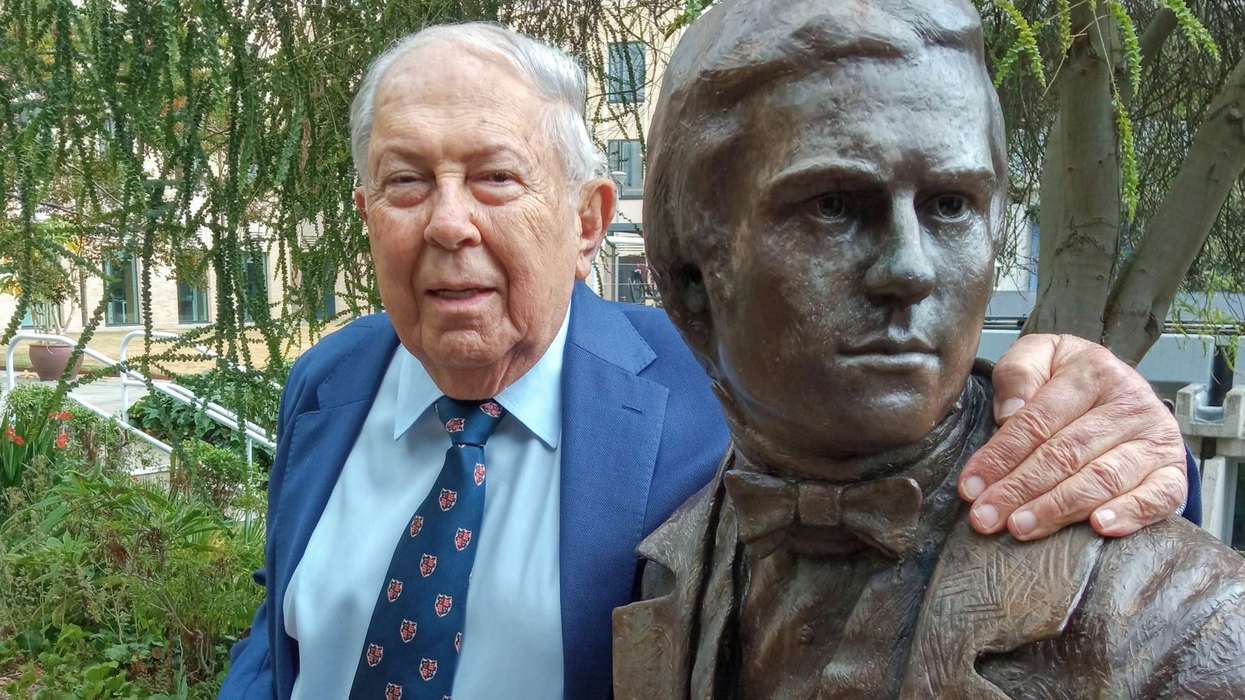
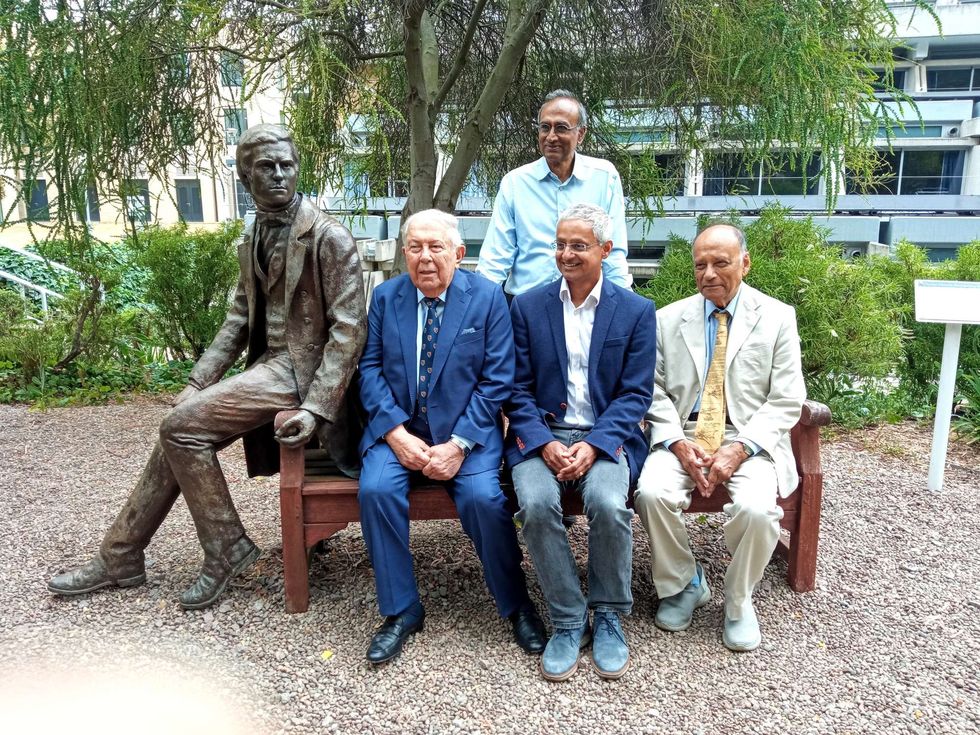 (Seated left to right) Yusuf Hamied, Shankar Balasubramanian, Partha Dasgupta and Venkatraman Ramakrishnan (standing) with the statue of Young DarwinAmit Roy
At an event last month, Kempton was introduced by Lord McDonald, who informed former students of the college gathered in the Hamied lecture theatre: “I’m sure it wasn’t called the Yusuf Hamied Theatre when you were students. I’m sure by now you’re familiar with just how much Yusuf Hamid has done for the college.”
The lecture theatre has screened the documentary, Fire in the Blood, depicting Hamied’s intervention in the HIV-AIDs crisis in Africa and how his “dollar a day” cocktail of retroviral drugs saved the lives of an estimated 15 million Africans who could not afford prohibitively expensive western medicine.
Hamied said there has also been a talk on the Indian scientist Jagadish Chandra Bose in the lecture theatre. He had been an undergraduate at Christ’s between 1882 and 1884 and had read Natural Sciences.
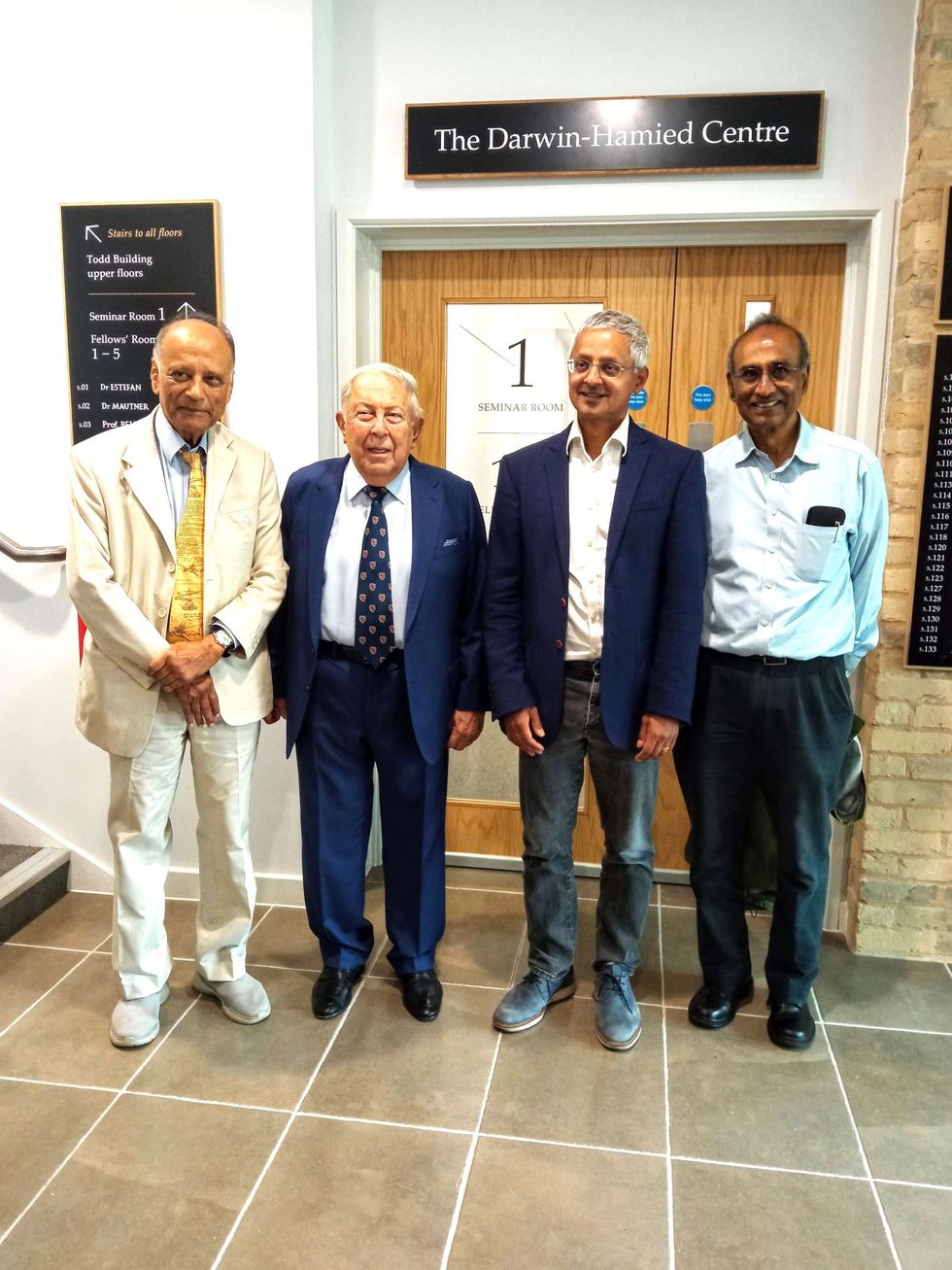 Darwin-Hamied Centre at Christ's. (left to right) Partha Dasgupta, Yusuf Hamied, Shankar Balasubramanian and Venketaraman Ramakrishnan Amit Roy
There is a statue of the young Darwin on a bench with a pile of books to the right of the Yusuf Hamied Centre. To get to the entrance, people pass a bust of Bose.
A whole day was set aside to discuss Bose’s work in the lecture theatre when his bust was installed on December 6, 2008. The year marked the 150th anniversary of Bose’s birth in 1858. There were many speakers was one invited by Hamied – the geneticist and plant breeder, Dr M S Swaminathan, who talk was entitled, “Green genes to manage global warming”.
One of those who attended was the late Dr Bikash Sinha, then director of the Saha Institute in Calcutta (now Kolkata). After Presidency College in Calcutta, he read Natural Sciences as an undergraduate at Christ’s (not at King’s as wrongly stated in Wikipedia). He did his PhD at King’s College London.
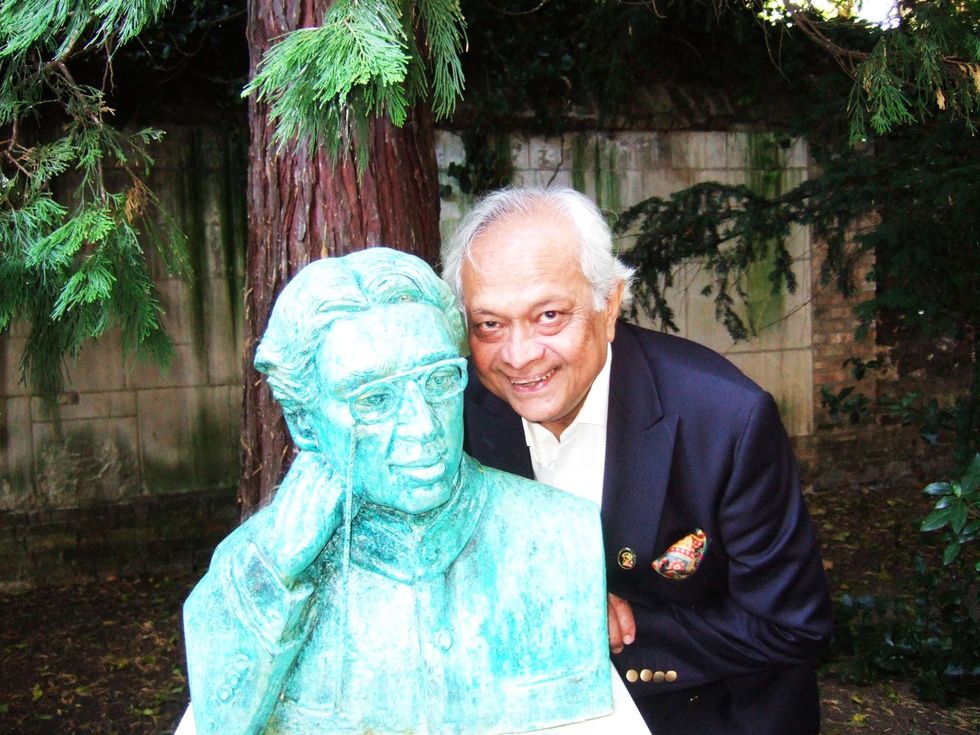 Bikash Sinha with the bust of Jagadish Chandra Bose Amit Roy
Christ’s has a short biograph of Bose: “Pioneer of electro-magnetic waves and widely regarded as the first modern Indian scientist, Jagadis Chandra Bose was a far-sighted visionary and gifted experimentalist.”
Although Bose is now referred as “Jagadish Chandra Bose” and occasionally as “Jagadis Chandra Bose”, the 24-year-old had signed the College register as “Jogodish Chunder Bose”.
“In 1895 in Calcutta, he publicly demonstrated wireless transmission of electromagnetic waves for the first time anywhere in the world, using the waves to ring a distant bell to thereby explode some gunpowder,” the biography continued.
“The Daily Chronicle of England noted in 1896 that ‘The inventor (J.C. Bose) has transmitted signals to a distance of nearly a mile and herein lies the first and obvious and exceedingly valuable application of this new theoretical marvel.’
“Bose was also the first to use a semi-conducting crystal as a detector of radio waves. According to Neville Mott ‘J.C. Bose was at least 60 years ahead of his time’ and that he had ‘anticipated the existence of P-type and N-type semiconductors’. Bose was invited by Lord Rayleigh to present his experiments at the Royal Institution in January 1897, attended by Marconi’s business partner who importuned him to take out a patent and share his proceeds with him. Bose refused on the grounds that scientific discoveries must inure to the benefit of the public.
“Marconi’s wireless transmission on Salisbury plain did not occur until May 1897. Bose also crossed from physics into biology, challenging widespread notions that these realms were different – among the fields he is regarded to have anticipated is cybernetics, through his model of memory as an information storage device. His boundless curiosity led him to study the electrical response of plants and the phenomenon of photosynthesis. Freethinking pioneer and icon, Bose was born and educated in rural Bengal and later Calcutta and achieved both a knight hood and international distinction. He was admitted to read Natural Sciences at Christ’s in 1882, took his BA in 1884 and MA in 1896.”
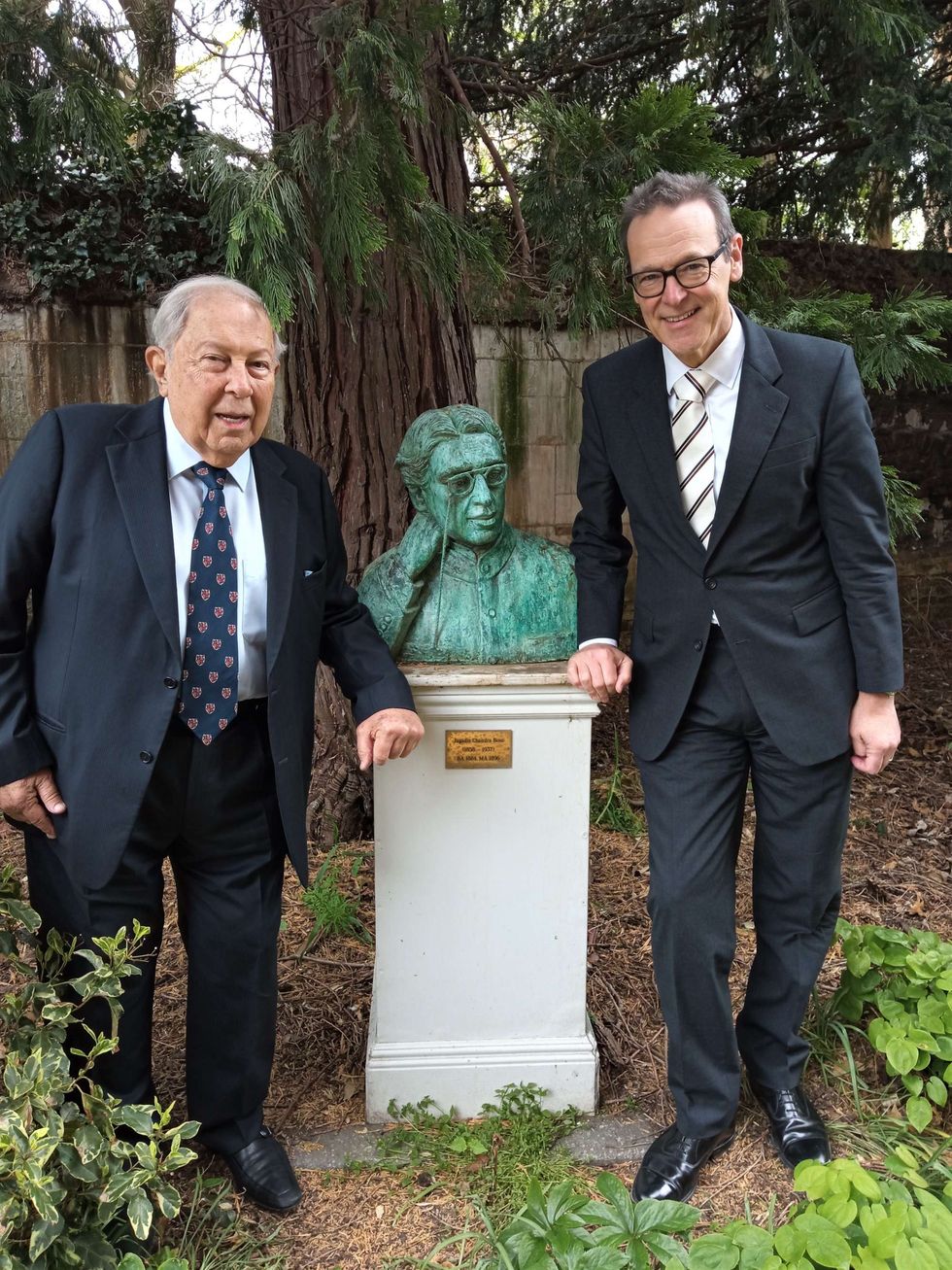 Simon McDonald (right) and Yusuf Hamied with the bust of Jagadish Chandra Bose Amit roy
Christ’s has summed up the life of Darwin as well.
“Charles Darwin was an English naturalist whose work revolutionised the life sciences,” the college said. “He is arguably the most famous alumnus of Christ’s College (alongside the Paradise Lost poet, John Milton).”
“Darwin’s name was entered in the admissions books at Christ’s on 15 October 1827. Admissi sunt in Collegium Christi a Festo Divi Michaelis 1827 ad Festum eiusdem 1828: Octobris 15. Carolus Darwin admissus est pensionarius minor sub Mro Shaw.”
It went on: “However, as Darwin had forgotten much of his school Greek, he was tutored before coming up to Cambridge in the Lent Term of 1828. All the College rooms were full so Darwin took lodgings over the tobacconist’s in Sidney-street, the site now occupied by Boot’s the chemist. A blue plaque under the first floor windows of Boots commemorates Darwin’s stay there. On All Saints' Day in November 1828 Darwin moved into a set of rooms in College, as he later recalled, ‘in old court, middle stair-case, on right-hand on going into court, up one flight, right-hand door & capital rooms they were’.
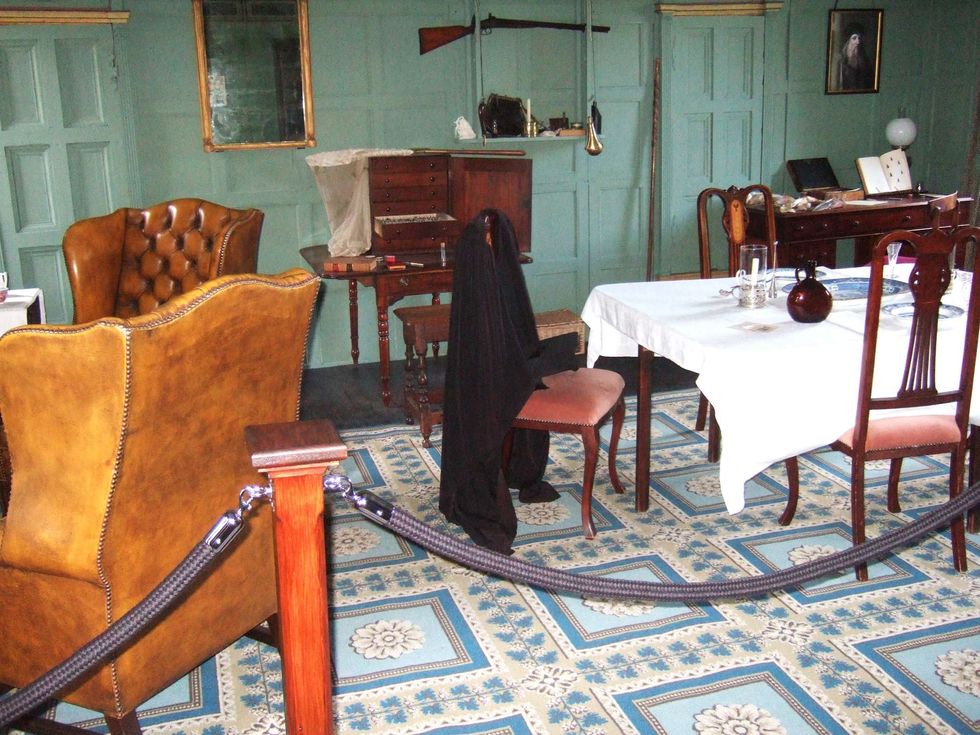 Charles Darwin's room at Christ's with table and chairsAmit Roy
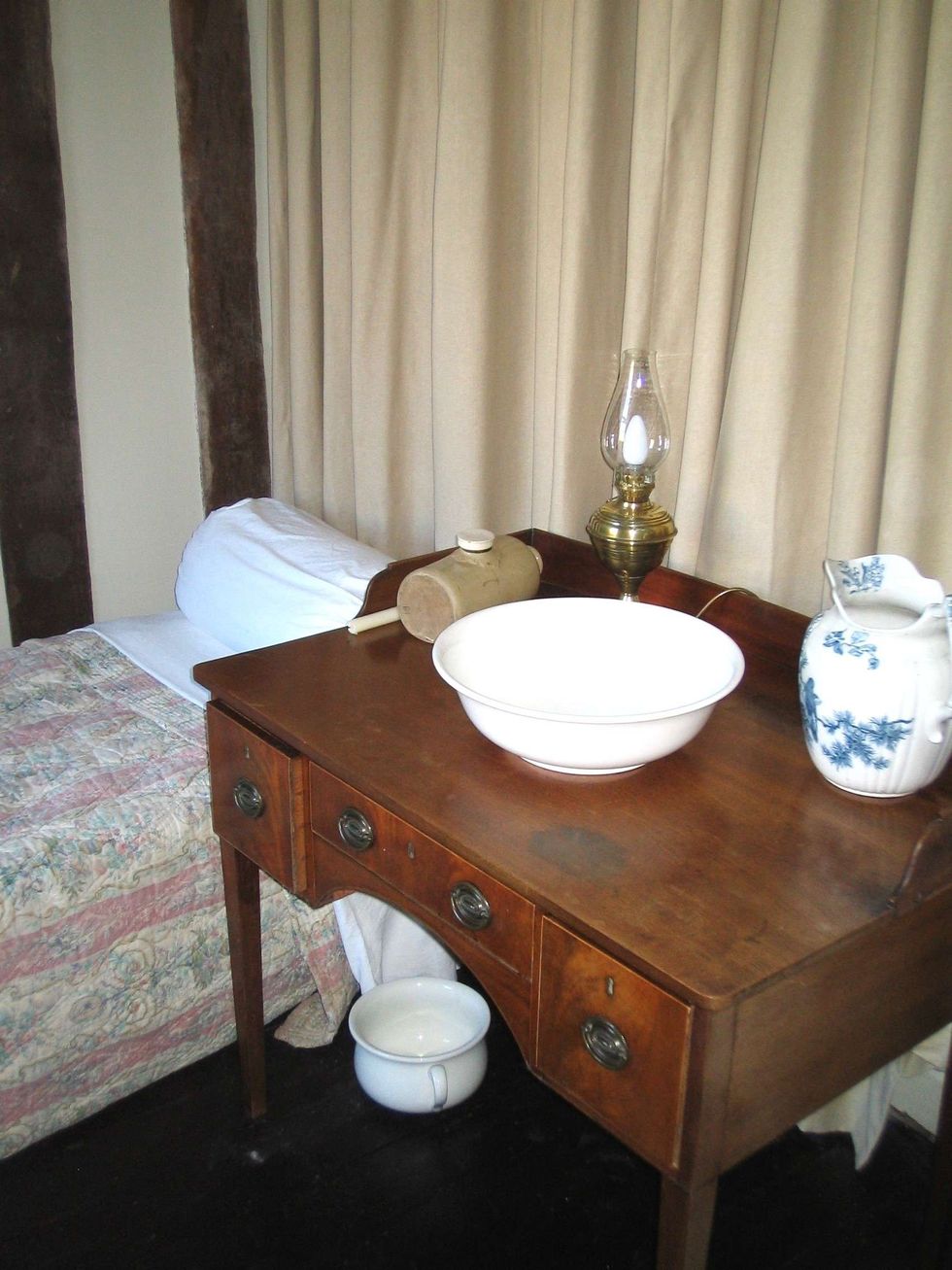 Charles Darwin's room at Christ's with wash basin Amit Roy
“Darwin’s father intended him at this time for the church and Darwin was not altogether unhappy with this prospect. It would provide the leisure and freedom required to pursue his growing scientific interests. While at Christ’s Darwin became an avid beetle collector. He had a special six-drawer cabinet built to house his collection. He decorated his room with eighteenth-century engravings of master paintings. Darwin was equally devoted to shooting.”
As he recalled in his autobiography: “When at Cambridge I used to practise throwing up my gun to my shoulder before a looking-glass to see that I threw it up straight. Another and better plan was to get a friend to wave about a lighted candle, and then to fire at it with a cap on the nipple, and if the aim was accurate the little puff of air would blow out the candle. The explosion of the cap caused a sharp crack, and I was told that the Tutor of the College remarked, ‘What an extraordinary thing it is, Mr Darwin seems to spend hours in cracking a horse-whip in his room, for I often hear the crack when I pass under his windows.’ ”
“Darwin graduated in the Easter Term of 1831. Although he later recalled that: ‘During the three years which I spent at Cambridge my time was wasted, as far as the academical studies were concerned.’ It is certainly the case that Darwin became irreversibly devoted to science at Cambridge. His beetles were more than a hobby and his biological work under his mentor, Professor John Stevens Henslow (1796-1861), prepared him for a life in science. Shortly afterwards he was taught the rudiments of geology by Professor Adam Sedgwick (1785-1873).
It was Henslow who passed on the invitation to Darwin to accompany Captain Robert Fitzroy (1805-1865) on board the voyage of HMS Beagle as naturalist and gentleman companion.
“Upon returning from the five-year voyage (of HMS Beagle) in 1836 Darwin returned to Cambridge to sort out his specimens for three months. He took lodgings in Fitzwilliam Street (today marked by a stone plaque). He dined often in college and regaled the fellows with tales of cannibals and his adventures.
“Arthur Shipley wrote in the College Magazine in 1909: “[Darwin] was apparently a good deal in college, and was evidently made a ‘Member of the Room’, for his name occurs frequently in the Combination Room wine book. This book, which dates back to pre-Napoleonic times, is one of the few records the college retains of the presence of the great naturalist.
“Darwin moved to London in 1837 to begin his life of publishing the results of his voyage, both geological and biological.
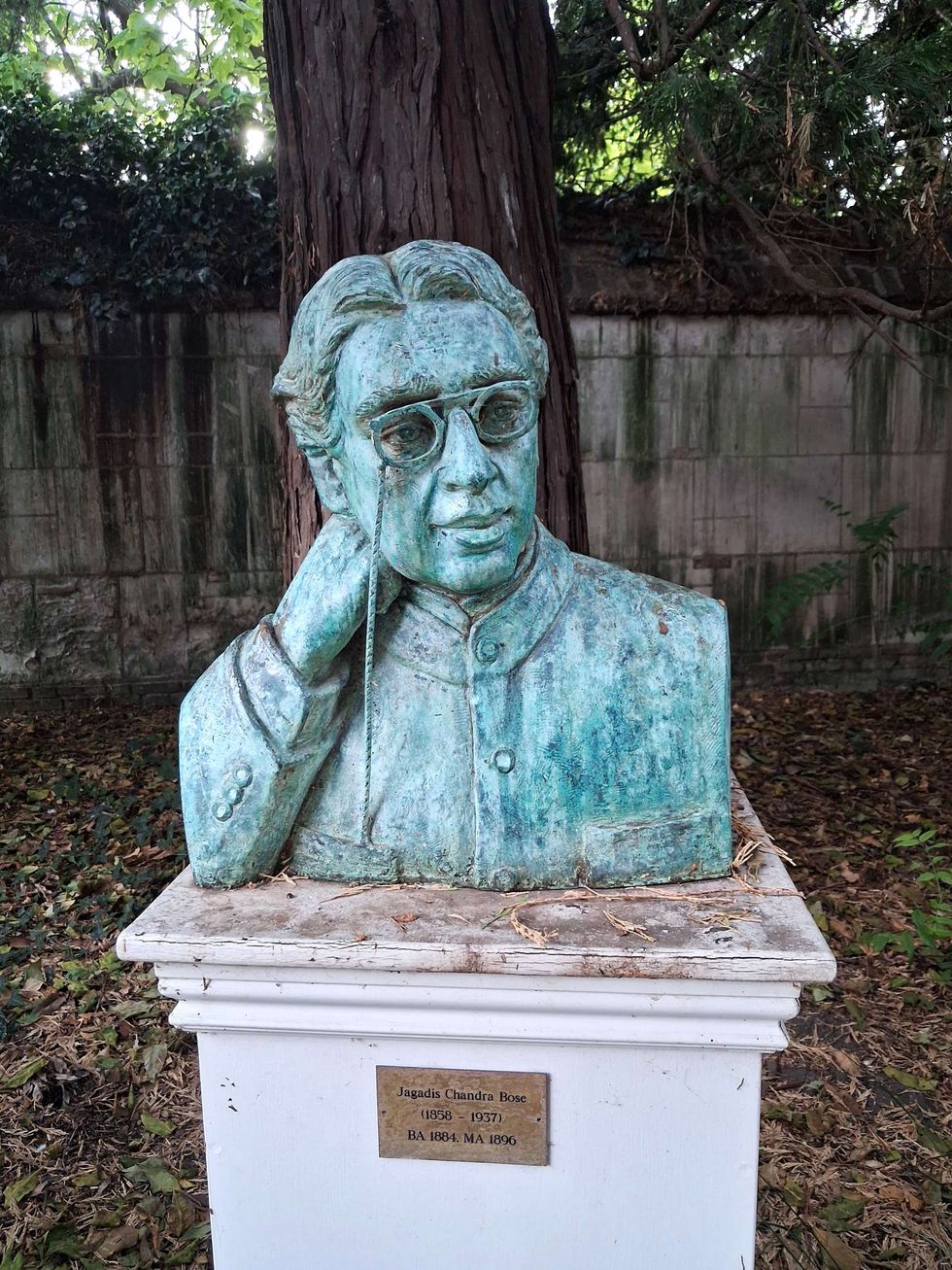 Bust of Jagadish Chandra Bose Amit Roy
“His great work On the Origin of Species (1859) demonstrated with converging evidence from geographical distribution, comparative anatomy and embryology, and the fossil record that life evolves. His theory showed how the great variety of living things are related by common genealogical descent and how all living things come to be exquisitely adapted to their environments. The most important mechanism for change was what he called ‘natural selection’. This process is the necessary result of the fact that all organisms vary and are not identical copies and vastly more individuals are born than ultimately survive to breed. Therefore only a tiny minority survives to reproduce.
“Darwin realised that there must be something special about these surviving minorities. The success in surviving was termed selection because it was analogous to the conscious selection of farmers and breeders of which stock to perpetuate. In later works such as The Descent of Man (1871) and The Expression of the Emotions (1872), Darwin showed that there is not an absolute difference of kind between humans and other animals, but one of degree. Although controversial at first, Darwin’s work was accepted by the vast majority of naturalists during his lifetime.
“Later Darwin sent his eldest son William to Christ’s in the 1860s. On 17 November 1877 Darwin was awarded an honorary degree of Doctor of Laws (LL.D.) from the University of Cambridge in Senate House. Darwin died in 1882 and is buried in Westminster Abbey.
“In 1909, the centenary of Darwin’s birth and the fiftieth anniversary of the publication of the Origin of Species, celebrations were held at Christ’s and the University. Darwin’s rooms were made into an exhibition space with many photographs, manuscripts and other artifacts on display. Hundreds of distinguished visitors from around the world came to see the exhibition and signed their names in a book now kept in the Old Library. An American delegation presented the college with a large bronze bust of Darwin made by the sculptor William Couper for the New York Academy of Sciences in the same year. The first bust was given to the American Museum of Natural History who commissioned a copy from Couper to send to Cambridge. The bust now stands in the portico in the college grounds.
“Arthur Shipley remarked in a speech at the time: ‘His relations to Christ’s were always of the most cordial kind, and it has ever been a subject of regret to the governing body that their new statutes did not pass through Parliament in time for them to confer the only honour they could confer upon Darwin, that of an honorary Fellowship.’ Darwin himself recollected in his autobiography written in 1876, ‘Upon the whole, the three years I spent at Cambridge were the most joyful of my happy life.’ ”
Christ’s marked the 200th anniversary of Darwin’s birth on February 12, 2009, by unveiling a life-sized bronze statue of a young Darwin created by alumnus Anthony Smith.
Prince Philip, then Chancellor of Cambridge, unveiled the sculpture. Darwin’s great-great-granddaughter, botanist Sarah Darwin, attended and posed next to the new artwork. Today, the statue is located between the Yusuf Hamied Centre and Hamied Court.
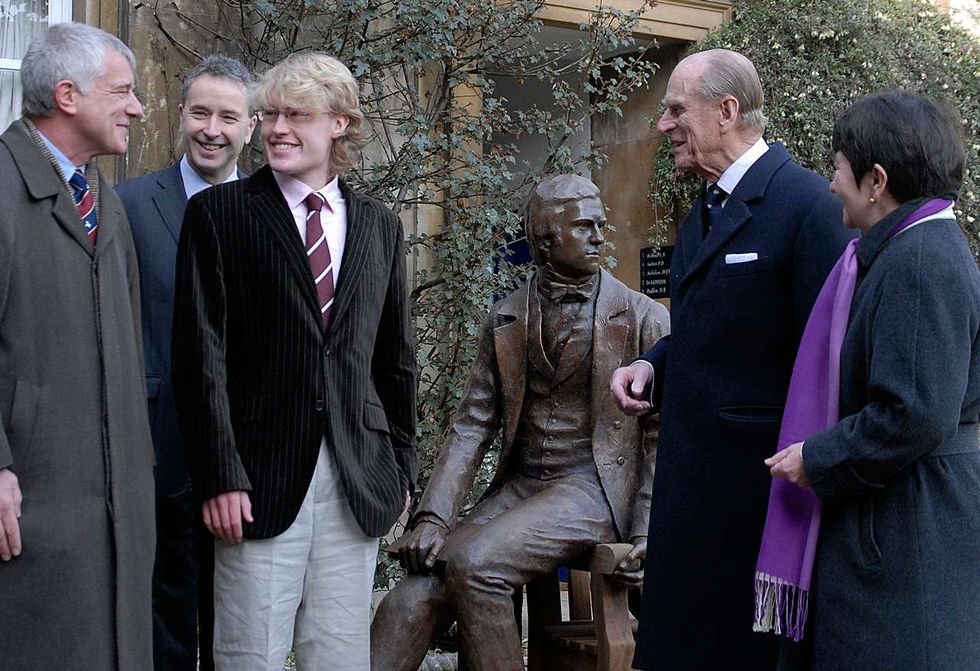 Prince Philip unveiling the young Darwin statue in 2009 Christ's College
People walked past the bust of Bose last month to hear Kempton’s talk.
He began by saying: “I’m a historian of science, particularly a historian of the public cultures of science. I’m interested in the relations between science and media. So, today is going to be something a romp through the history of filmmaking in the Galapagos Archipelago since the Second World War, tracing some of the changes in the genre and the effects and uses of film over the course of this period. For the past couple of years, I’ve been researching the filmography of the Galapagos over the course of the 20th century.”
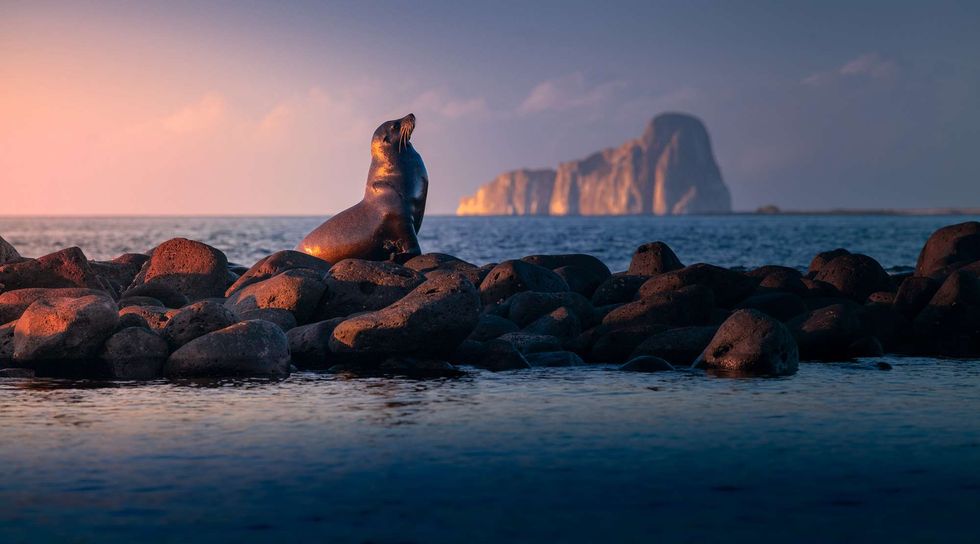 Galapagos Sea Lion Amit Misra
He described Darwin as “a relatively indifferent student and a very serious beetle collector. He left the college in 1831 with an ordinary degree and no plan to change the course of biology.”
What changed the perception of Darwin’s work was a landmark nature documentary, The Enchanted Isles, made in 1967, about the Galápagos Islands.
“Produced by Anglia Television and broadcast on the ITV network, it was famously presented and narrated by Prince Philip, the Duke of Edinburgh, following his expedition to the archipelago in 1964,” said Kempton.
He showed snippets from various films about the Galapagos.
He pointed out that films encouraged tourism which sustained the economy of the small indigenous population of the islands. But tourism beyond a certain point endangered the wildlife of the Galapagos.
He explained: “The most tangible way in which this has taken place is through the introduction of non-native invasive species, and these at an accelerated rate transform the fragile ecosystems of the archipelago. This is in proportion to the amount of traffic that is arriving, whether it is ships or in luggage, in food waste, and so on and so forth. So there are stricter biosecurity regulations, but managing this at the scale that is required for the number of people arriving is asking a great deal. Other transformations are things like the introduction of grazing animals that become feral. But there is also a very successful eradication programme, drawing expertise from workers in in New Zealand who've also worked in similar areas.”
He commented: Conservation in some areas may involve the local inhabitants’ economic loss. Can we expect them to bear this for the benefit of the rest of the world?”
It was easy to capture impressive and photogenic sequences of the animals because they were indifferent to human presence.
He said that films “acted as fundraising tools, sources of publicity, scientific instruments, agents of diplomacy, and incentives for tourism in the archipelago. Of course, before the Galapagos was a laboratory of evolution, it was a larder beginning in the late 17th century, a base for buccaneers and pirates, increasingly whaling activity from the late 18th century. And then Ecuador annexes the islands in 1832, just three years before the young naturalist Darwin arrives.
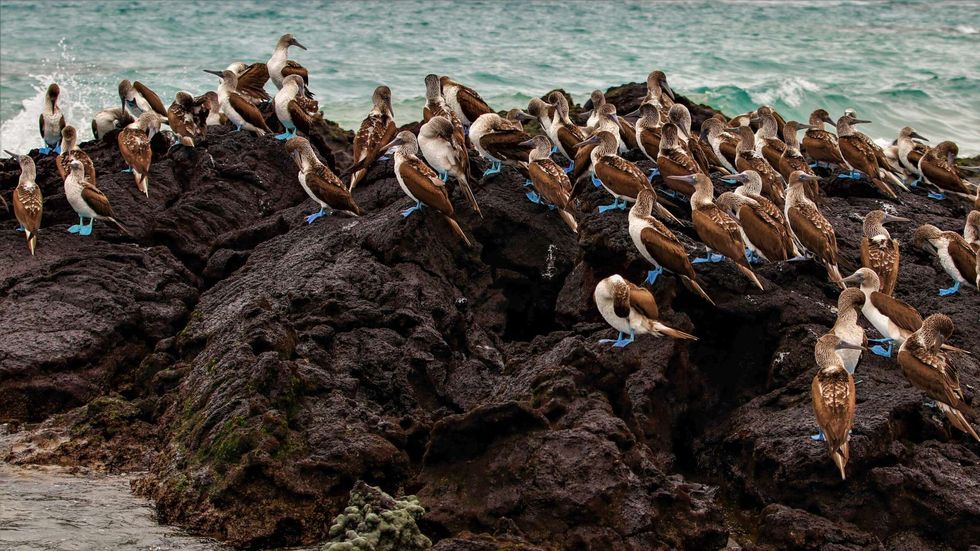 Galapagos Blue-footed-boobiesThomas-Hopmann
“He collects prodigiously and he sends material back to England. He opens up marine iguanas to examine stomach contents, and he clambers over giant tortoises. Thirty of these animals are taken back on the Beagle voyage to sustain the crew, a crucial source of nutrition in in the forbidding environment of maritime travel because these animals can live a long period of time without water. So there’s an interestingly complex picture of how Darwin arrives at evolution by natural selection.
“On the 100th anniversary of Darwin’s visit, we see a flurry of activity conducted by Ecuadorian, North American, and European conservationists to establish a protection regime in the archipelago. The critical outcome is legislation to establish protected zones with certain species receiving protection, but woeful lack of enforcement.
“Julian Huxley, the doyen of the life sciences in this country, recognised that film could be significant publicity value to the whole scheme of conservation from the Galapagos. He’s well placed to say so.”
He won an Academy Award in 1938 for his 1934 short documentary, The Private Life of the Gannets, making it the first wildlife film to ever win an Oscar.
He went on: “The US has a significant strategic and geopolitical interest in the Eastern Pacific, then as now, and constructs an airbase on the island of Baltra, in the centre of the archipelago. The GIs who spent years there remember the what they described as the rock as arid and above all boring. This was a period of widespread deforestation, the application of DDT, and indeed even target practice on the geology and fauna of the islands, so a dark period in the history of the Galapagos, but one with significant consequences.
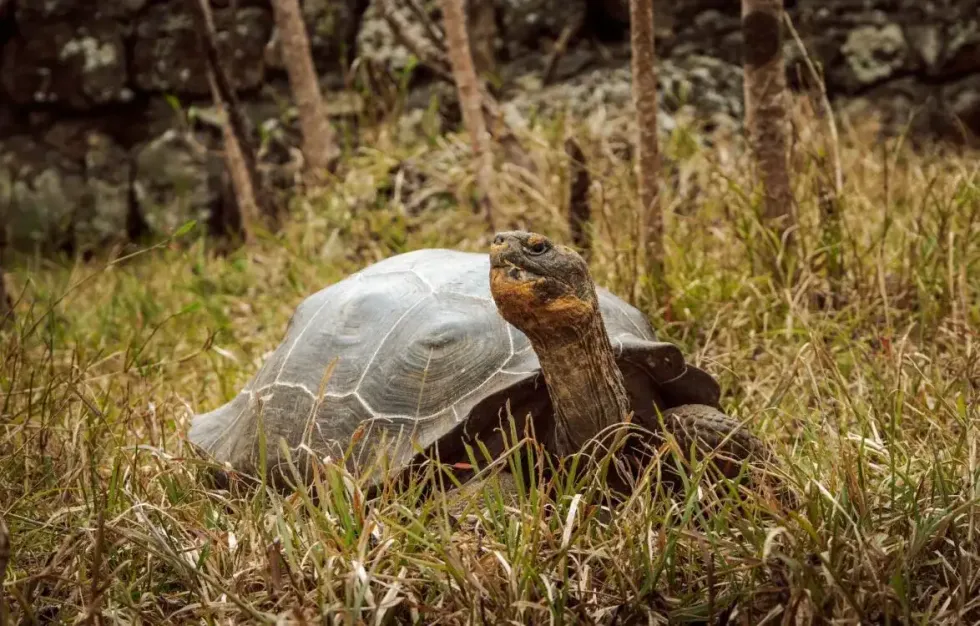 Galapagos giant tortoise Galapagos Conservancy
“The first of these is ongoing diplomatic suspicion on the part of Ecuadorian politicians towards foreign intervention in the islands, and this is something that continues to resonate in the post-war period. the second of this is actually infrastructure and the built environment.
“The airstrip constructed by the US military provides the foundations for commercial aviation in the Galapagos, and of course the main entry point for people, cargo and goods arriving. Anyone who’s visited the Galapagos, in all likelihood, has landed on the Baltra airstrip, although there is now a second airport.”
Turning to the post war period, he referred to a major international zoology conference which takes places in Kensington in1958. The Royal Albert Hall was packed to the rafters with zoologists, he said.
In 1959, the centenary of the publication of Origin of Species, the iconic conservationist Peter Scott visited the Galapagos Islands with specific underwater filming and observations recorded off Fernandina Island. Tony Soper acted as the director-cameraman for the trip. He had recently helped co-found the BBC Natural History Unit in 1957. The expedition was part of Scott’s work for
the BBC television series Look and preceded his co-founding of the Worldwide Fund for Nature (WWF) and instrumental role in creating the Charles Darwin Foundation later that same year.
Christian Zuber (1930–2005) was a pioneering French wildlife filmmaker, photographer, and conservationist whose work in the Galapagos Islands significantly advanced international awareness and environmental protection of the archipelago.
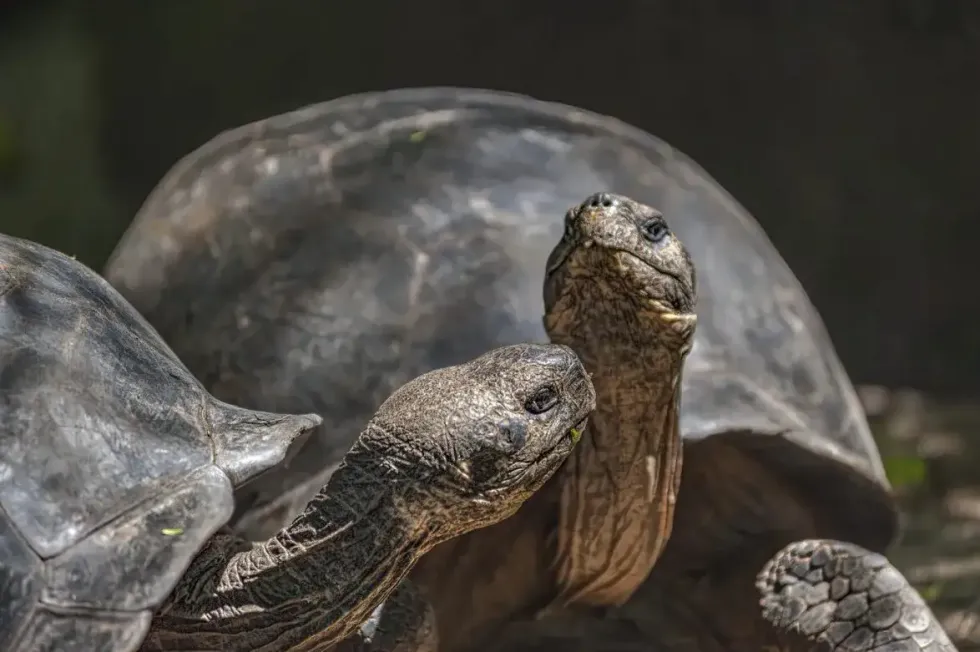 Galapagos giant tortoises Henri Leduc
“He brings the Galapagos to a Francophone audience, but then also even wider international audiences. And in Zuber’s films, there’s a fascinating portrait of the tiny population of 500 or so people, Galapagueños, who have made their lives in the difficult environments of the Galapagos. This captures the earliest stages of the construction and operation of the Charles Darwin Research Station.”
Prince Philip visited the Galapagos in 1964. He was accompanied by Aubrey Buxton, the director of Anglia Television.
“We can follow some of the diplomatic work undertaken by Prince Philip and others over the course of this mission in the Commonwealth archives. Prince Philip suggests that Great Britain is in a strong position to offer the assistance of capable technical personnel, and with long experience in national park programmes, could help to advise on the conservation of Galapagos. Of course, by this point, he is already a major player in international conservation. He's been closely involved in the establishment of the World Wildlife Fund, and he’s the president of the Zoological Society of London. And he saw a key opportunity to expand the orbit of British influence in this international scientific project and to re-establish links with the Galapagos. Ecuador acts on this suggestion and requests the valuable collaboration of the friendly government of the United Kingdom for this joint programme.”
Prince Philip became a patron of the Charles Darwin Foundation. He visited the islands in 1964, 1971 and in 1988. He was impressed by the Islands’ extraordinary natural riches but was also deeply concerned about the dangers threatening them.
In his book Wildlife Crisis (1970) he wrote, “Perhaps the most fascinating expedition of all was a four-day visit to the Galapagos Islands, forever associated with Darwin’s great work, the Mecca of naturalists and a veritable paradise for bird – and animal – photographers. It is here, above all, that the whole problem of conservation becomes most obvious.”
On 12 February 2009, he attended a dinner hosted by Galapagos Conservation Trust at Christ’s College, to celebrate the 200th anniversary of Darwin’s birth. He also unveiled the statue of the young Darwin as a young undergraduate in 1831, prior to his voyage on the HMS Beagle, rather than as an older Victorian gentleman with a beard.
Asked by Eastern Eye whether it was possible to draw a straight line between Darwin’s time as an undergraduate and the current state of conservation on the Galapagos, Kempton replied: “I’m an enormous Darwin fan. I fear I may have attempted to deflate his time too much at Cambridge. But I think with respect to the theoretical development, the critical period is in London in 1837-1838 when he opens his transmutation notebooks, when he receives reports from people sorting through his collections, and he returns to his collections. He reads Malthus, and he really starts substantiating this hunch of natural selection. He resonates continuously through the tradition of wildlife filmmaking, because the connection is so strong. He’s the anchor point.”
At the end of his talk, Lord McDonald allowed himself a little joke: “I can confirm that Charles Darwin’s happiest days were here because of the size of the debt he left. It took a long time for the college to get that money.”
Hamied, who celebrated his 90th birthday on 25th July 2026 with a lunch in Christ’s for 10 of his surviving batchmates, is also fond of saying: “When I am back at Christ’s, I feel 18 again.”


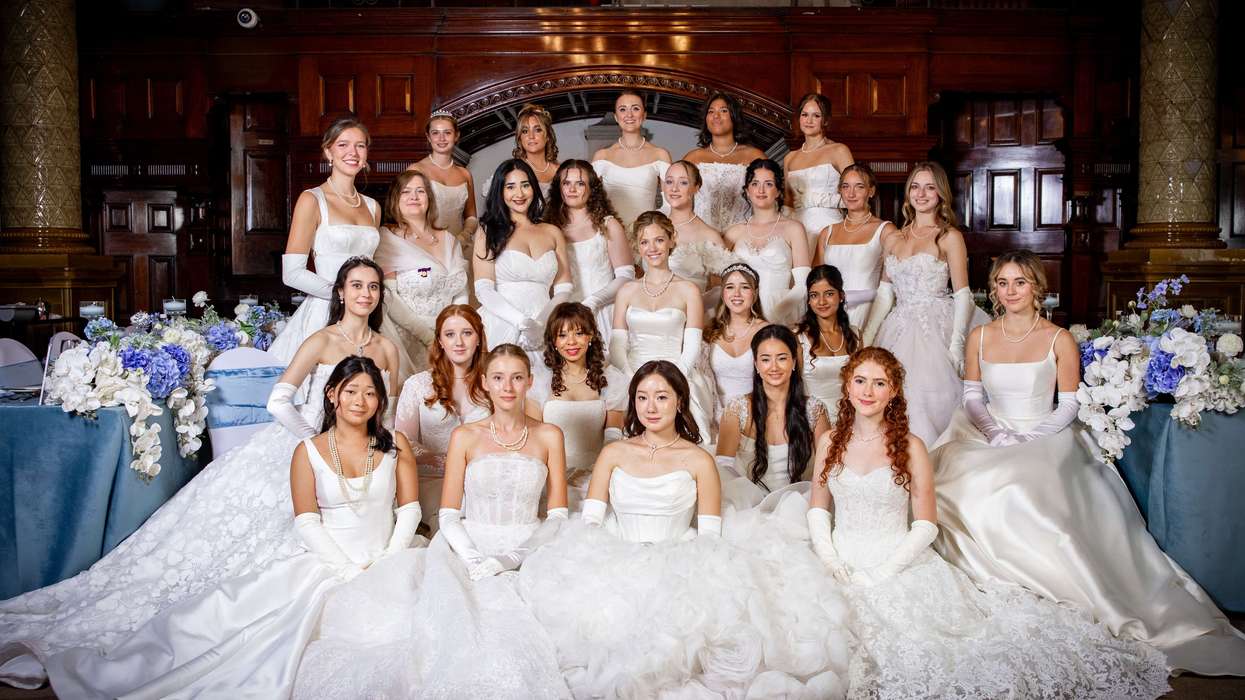
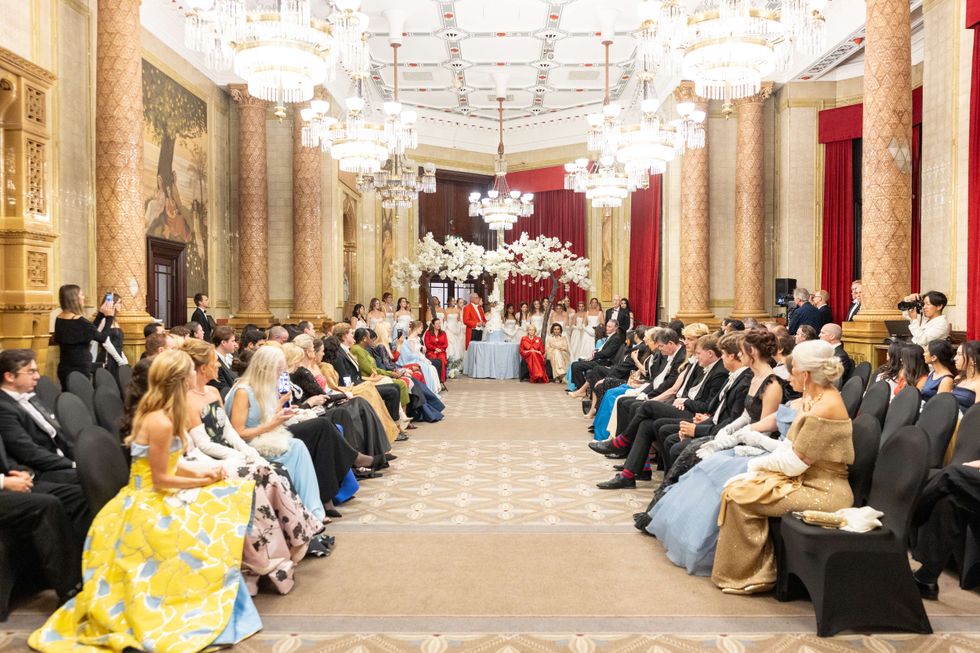 Guests at the eventGetty Images
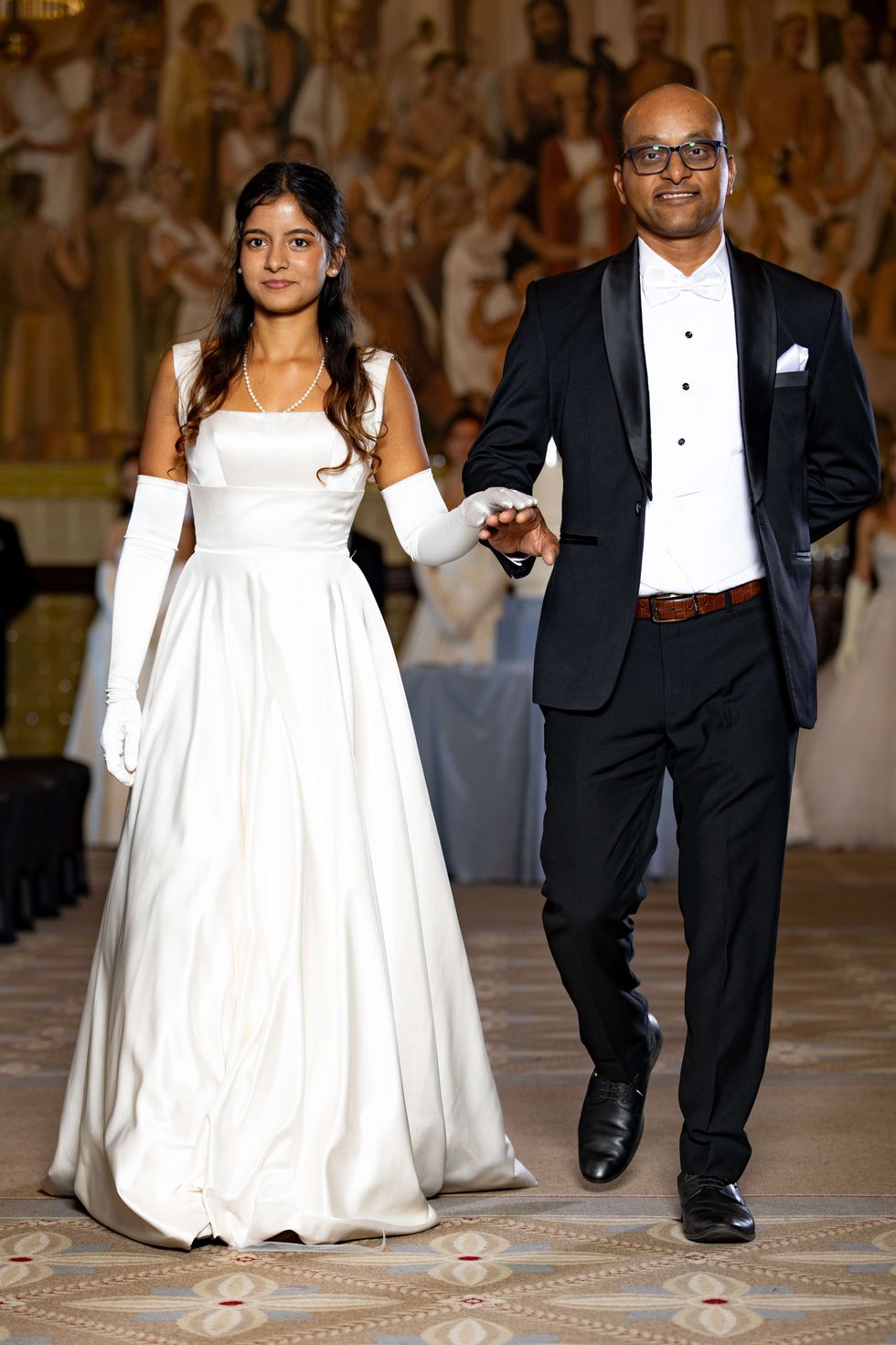 A debutante with her escortGetty Images
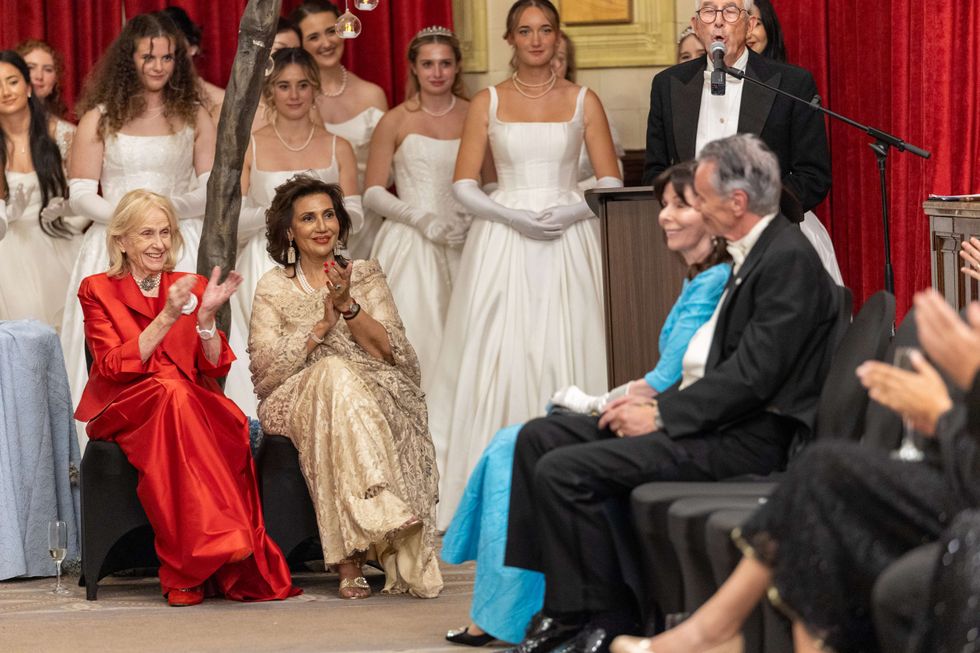 Rani Reena Kumari and Dowager Duchess of St Albans guests and debutantes at the presentation ceremonyGetty Images
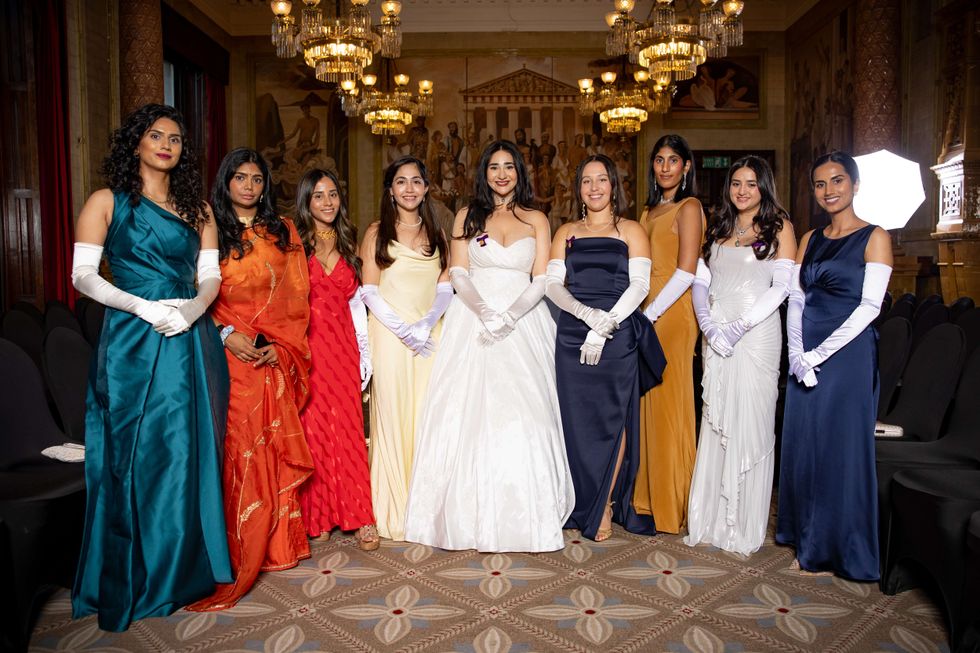 Indian ambassadors to the London Season at the ballGetty Images