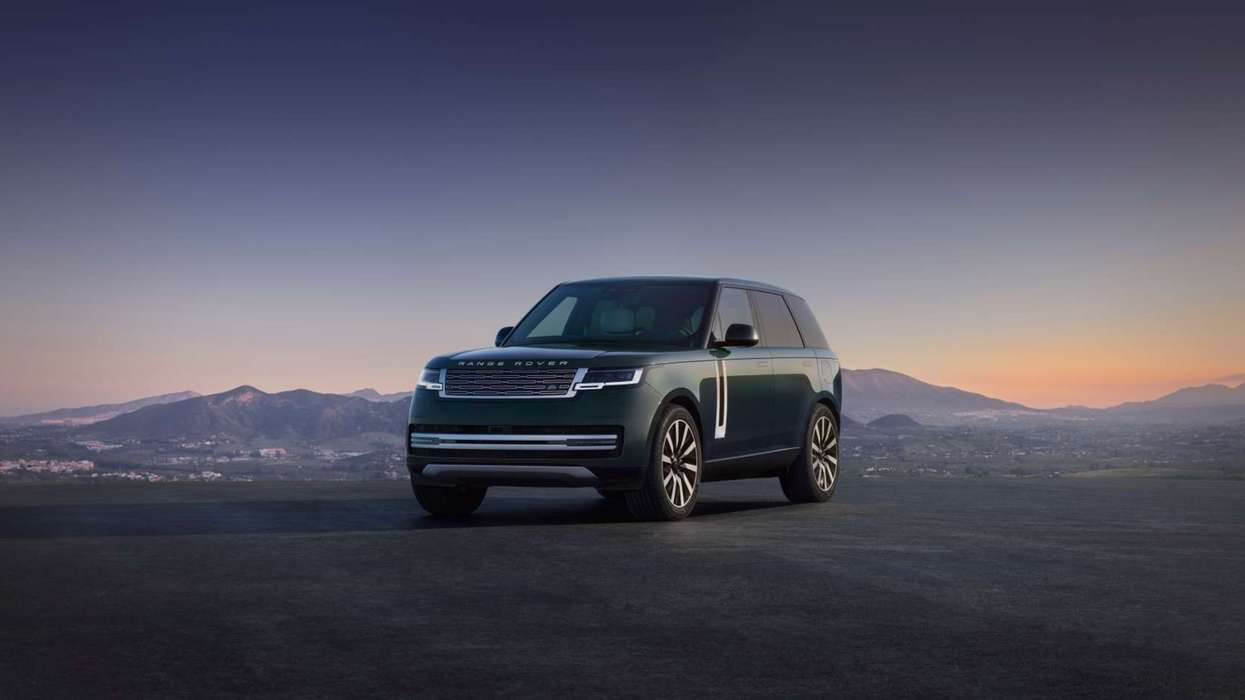

- Range Rover’s first fully electric model starts at £154,070 and can travel up to 372 miles on a charge.
- The 550bhp SUV can accelerate from 0 to 62mph in around 4.5 seconds and wade through up to 900mm of water.
- The delayed launch gives JLR a major new product as the carmaker tries to recover from falling profits and recent disruption.
Range Rover has finally gone electric, but it has not exactly gone small, subtle or cheap.
Jaguar Land Rover (JLR) has unveiled its first all-electric Range Rover, combining the luxury SUV’s traditional off-road credentials with an electric powertrain designed to deliver more instant power and torque.
Starting at £154,070, the new Range Rover Electric is aimed firmly at the luxury end of the electric vehicle market.
It also arrives a year later than originally planned, marking a significant shift for one of Britain’s best-known automotive marques as it begins moving away from vehicles powered entirely by petrol and diesel.
Under the bonnet or more accurately, beneath the vehicle are two 260kW electric motors delivering a combined 550bhp.
JLR says the electric Range Rover produces more torque than any Range Rover before it, while its newly developed traction management system can respond to wheel slip in as little as 50 milliseconds.
That instant response is one of the advantages of electric propulsion, particularly when the vehicle is being driven over difficult terrain.
And this is not an electric SUV designed only for city roads.
From city streets to 900mm of water
The Range Rover Electric can climb slopes of up to 45 degrees and wade through up to 900mm of water.
Its 118.5kWh battery is positioned beneath the floor, with the electric motors and battery system designed to cope with conditions that would challenge many conventional EVs.
The SUV can accelerate from 0 to 62mph in roughly 4.5 seconds, while its claimed driving range reaches up to 372 miles.
The exterior remains unmistakably Range Rover. Changes are relatively subtle, with aerodynamic adjustments to areas including the grille, wheels and underbody helping improve efficiency and range.
JLR says it has filed around 300 patent applications connected with the vehicle, covering areas including its battery and electric motors.
The battery packs and electric drive units will be produced at JLR’s Electric Propulsion Manufacturing Centre in Wolverhampton, while the finished vehicle will be built at Solihull, the home of the Range Rover marque since 1970.
The company says 10,500 employees received additional training for the project and that the vehicle has undergone testing equivalent to 38 trips around the world.
A big electric bet for JLR
The launch is significant for JLR beyond the vehicle itself.
The company has faced a difficult period, including sharply lower profits and disruption linked to US tariffs, supply-chain problems and a major cyber-attack.
The electric Range Rover therefore arrives as a much-needed new chapter for the carmaker.
It also puts the marque alongside other established luxury carmakers making the transition to electric vehicles, including Rolls-Royce and Ferrari.
But Range Rover's move into electric vehicles comes with an obvious contradiction.
The company is offering a zero-tailpipe-emission version of one of the world’s most recognisable large luxury SUVs, yet the vehicle still carries a starting price of more than £150,000.
Its size and weight also mean that going electric does not automatically eliminate all environmental concerns associated with large SUVs.
For JLR, however, the immediate challenge is different: convincing Range Rover buyers that they can have the same combination of luxury, performance and off-road capability without a combustion engine.
If the company can pull that off, the £154,070 Range Rover Electric could prove to be more than just another luxury EV. It could be the model that determines whether one of Britain’s most recognisable automotive brands can successfully make the electric transition.