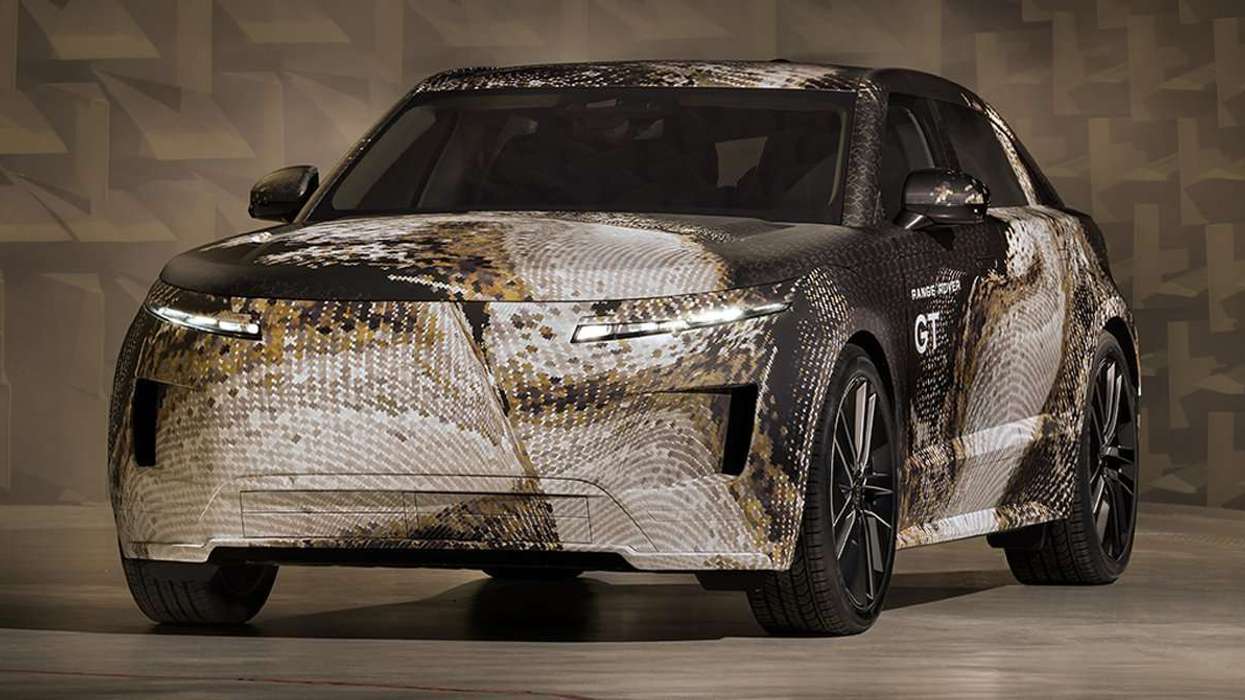

Range Rover has offered the first glimpse of its upcoming all-electric GT, a new model that is expected to become the fifth member of the brand's SUV family. While prototypes are still undergoing final testing, the company has revealed several details about the vehicle ahead of its official debut.
Here are five things to know about the new Range Rover GT.
1. It's a brand-new model, not a Velar replacement
Despite early speculation, Range Rover says the GT is not replacing the Velar. Instead, it will sit alongside the existing Range Rover, Range Rover Sport, Velar and Evoque as an entirely new addition to the range.
The company has not confirmed exactly where it will fit in the line-up, but says it will sit lower than the Evoque while matching the Range Rover Sport in length, giving it the proportions of a coupe-style crossover.
2. It will arrive as a fully electric SUV
The GT will launch first as an all-electric vehicle, built at JLR's Halewood plant using the company's new Electric Modular Architecture (EMA) platform.
The platform supports all-wheel drive and features a flat-floor design, helping maximise interior space. Range Rover has also confirmed that hybrid versions are expected to arrive later, although it has not provided a timeline.
3. The interior takes a minimalist approach
Inside, the GT adopts a cleaner cabin layout with fewer physical controls than current Range Rover models.
Most functions are managed through a large central OLED touchscreen or voice commands. The gear selector has been moved to the steering column, while a compact digital driver display sits above a smaller steering wheel.
The standard layout is a 2+2 seating configuration, although buyers will also be able to choose a traditional rear bench seat.
4. It's designed for long-distance touring
Range Rover says the GT has been developed as a grand tourer rather than a conventional SUV.
Martin Limpert, managing director at Range Rover, reportedly said the vehicle is intended to combine long-distance comfort with the off-road capability associated with the brand. He added that it had been engineered to deliver a more car-like driving experience while remaining unmistakably a Range Rover.
5. More details are coming later this year
Although camouflage images have already been released, several key details remain under wraps.
Range Rover has yet to reveal the GT's driving range, battery specifications, performance figures or pricing. Those details are expected later this year as testing enters its final stages.
For now, the GT signals another step in JLR's electrification strategy, while introducing a completely new model aimed at expanding the Range Rover family rather than replacing one of its existing SUVs.