
- Bloomsbury has more than 14,000 titles covered by the settlement.
- The $1.5 billion (£1.12 billion) deal is believed to be the largest AI copyright settlement in US history.
- Payments will be shared equally between publishers and authors.
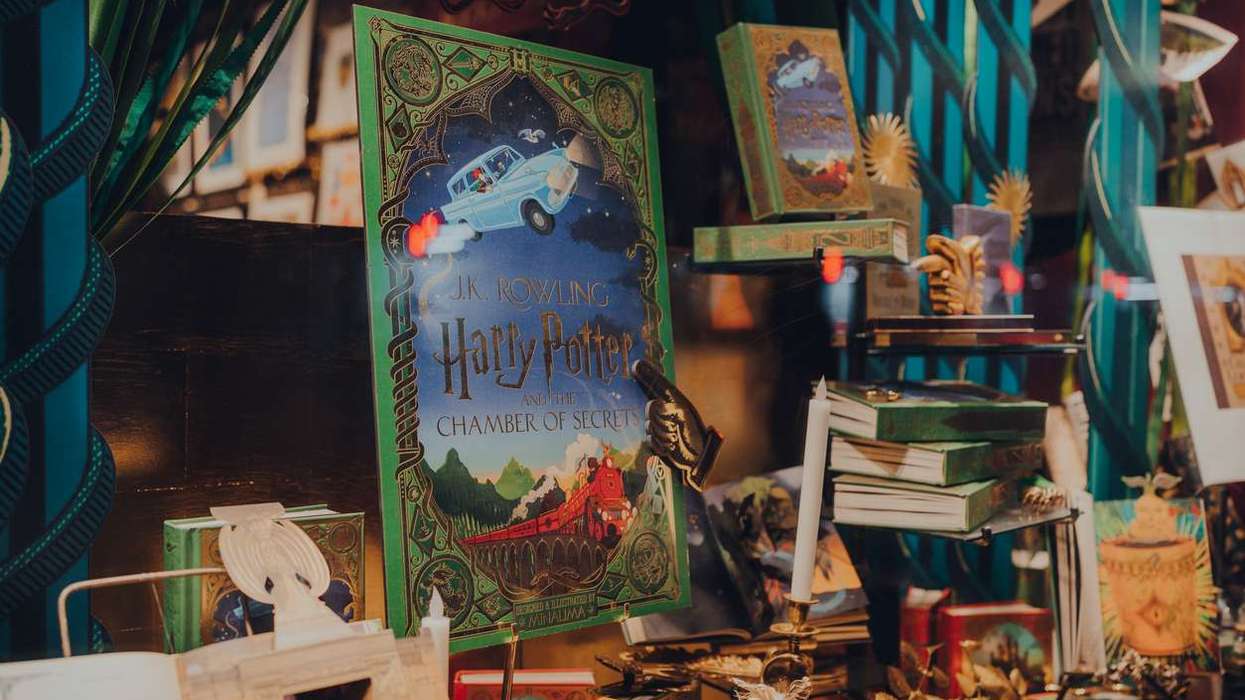
The publisher behind the Harry Potter series is set to receive a multimillion-pound payout after becoming one of the biggest beneficiaries of a $1.5 billion (£1.12 billion) AI copyright settlement involving US artificial intelligence company Anthropic.
Bloomsbury Publishing said a US court had identified 14,087 of its titles as part of the settlement, with proposed compensation of around $3,000 (£2,240) for each title. The payment will be shared equally between the publisher and the respective authors.
The settlement resolves claims that Anthropic used copyrighted books without permission to train its Claude artificial intelligence models.
A landmark moment in the AI copyright battle
The agreement is widely regarded as the largest known copyright settlement linked to artificial intelligence in the US.
The class-action lawsuit was first filed in 2024 by novelist Andrea Bartz and two other authors, who alleged Anthropic had used their books to develop its AI systems without obtaining permission.
A federal judge approved the settlement on July 21, describing it as providing "meaningful relief" to authors and publishers, as quoted in a news report.
According to the settlement, more than 91 per cent of the roughly 482,000 books covered by the case have already been claimed.
After deducting legal fees and other costs of about 10 per cent, Bloomsbury and its participating authors are expected to receive around £14 million ($19 million). The company said payments will be made in instalments beginning in the second half of its current financial year.
Justin Nelson, the authors' lead lawyer, reportedly described the agreement as the largest known copyright recovery in history.
A debate that is far from over
The case is one of the first major legal victories for authors in the growing dispute over how AI companies obtain training data.
Many artificial intelligence developers have argued that using publicly available copyrighted material falls under the US legal doctrine of fair use. Authors, publishers and news organisations, however, have increasingly argued that AI companies should obtain permission or pay licence fees before using protected works.
Anthropic said it was pleased that more than 91 per cent of eligible authors and publishers had claimed their share of the settlement and looked forward to concluding the case, reportedly said Aparna Sridhar, the company's deputy general counsel.
The settlement comes as Bloomsbury continues to expand its own AI strategy. Last year, the publisher introduced an AI licensing programme allowing academic content to be used for training generative AI models, with participating authors receiving royalty payments after choosing to opt into the scheme.
While dozens of AI copyright lawsuits remain before US courts, the Anthropic agreement is expected to be closely watched as a possible benchmark for future settlements between AI companies and content creators.