Skip to content
Search

Latest Stories

Submit Guest Post

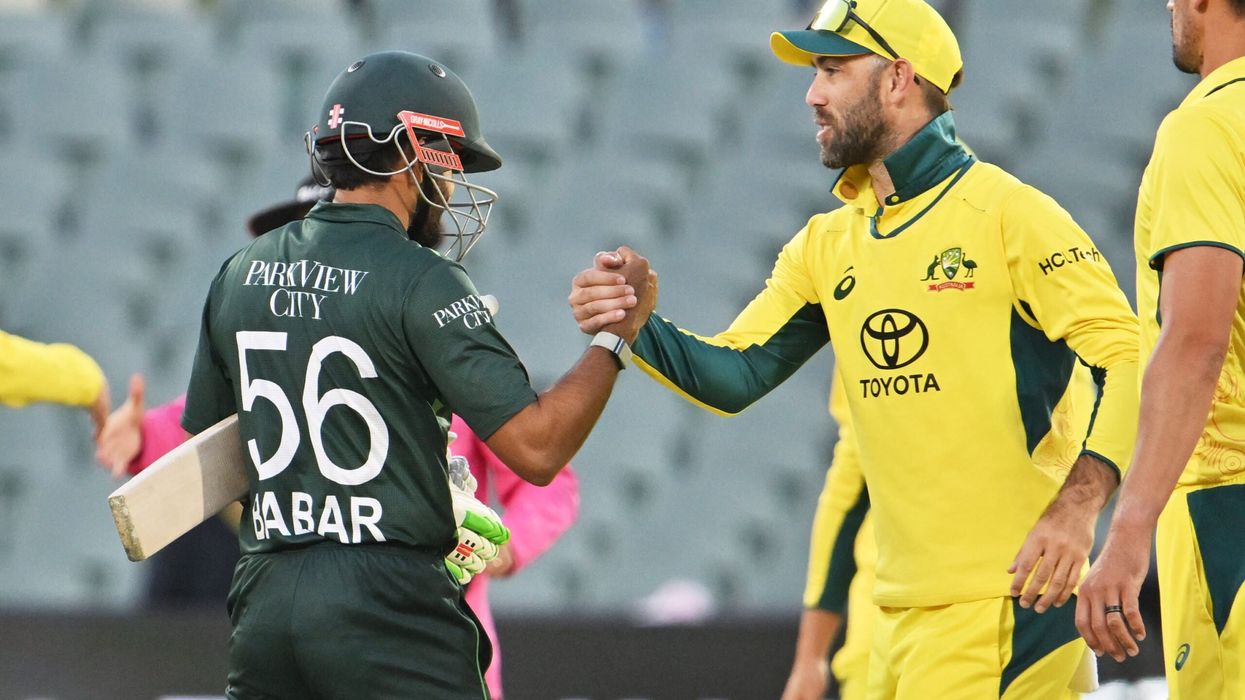
Pakistan overpower Australia by nine wickets in second ODI

Chasing a modest target of 163 after a stellar 5-29 from Haris Rauf, Pakistan reached 169-1 with 141 balls remaining. (Photo: Getty Images)

Saim Ayub struck a powerful 82, and Abdullah Shafique remained unbeaten on 64 as Pakistan defeated Australia by nine wickets in the second ODI at Adelaide Oval, levelling the series on Friday.

Chasing a modest target of 163 after a stellar 5-29 from Haris Rauf, Pakistan reached 169-1 with 141 balls remaining. The victory set up a series decider scheduled for Sunday at Perth Stadium, following Australia’s narrow two-wicket win in the first ODI in Melbourne.


Ayub and Shafique initially took a cautious approach, held back by tight bowling from Josh Hazlewood and Pat Cummins, scoring just 47 runs in the first 10 overs. However, they picked up the pace, with Ayub launching a six off Cummins and later another off Mitchell Starc.

Ayub, 22, was dropped on 47 by Adam Zampa and soon brought up his maiden ODI half-century in only his second game. Shafique joined the scoring with big hits of his own. Ayub’s innings ended when he attempted a big shot off Zampa, caught by Hazlewood after a 71-ball effort that included five fours and six sixes.

Captain Babar Azam (15 not out) then joined Shafique to complete the chase, finishing the match with Pakistan’s 10th six.

"The most important thing is the team won," said Ayub. "We planned to be positive and not focus on the result, but playing as a team is key. Credit goes to Haris Rauf, and the other bowlers also supported him well."

Australia’s struggles

Rauf’s pace troubled the Australian batting order after Pakistan captain Mohammad Rizwan chose to field. Steve Smith was the top scorer with 35 before Australia were bowled out in the 35th over. Rizwan also took six catches.

"It wasn’t one of our best days," said Australia captain Cummins. "You hope for more than 160. They bowled well, but we were looking for a bigger score. We tried to be aggressive in the field, but it didn’t work out."

With Mitchell Marsh and Travis Head on paternity leave, Jake Fraser-McGurk and Matt Short opened again but failed to make significant impacts. Fraser-McGurk hit three boundaries in Naseem Shah’s first over before being lbw for 13 to Shaheen Shah Afridi. Short, after being dropped on eight, fell for 19 to a catch by Azam off Afridi.

Josh Inglis made 18 before gloving to Rizwan off Rauf, who then dismissed Marnus Labuschagne (6), leaving Australia at 87-4. Smith’s 35 ended with an edge off Mohammad Hasnain, and Australia continued to struggle. Rauf later bowled Glenn Maxwell for 16 and secured his second ODI five-wicket haul by dismissing Cummins for 13, assisted by Rizwan once again.

(With inputs from AFP)

Add EasternEye As Your Trusted Source
preferred source on google news

More For You

Tackling hostility against Muslims matters for everyone

Anti immigration protesters attend the 'Glasgow Reclaims The Streets From Far-right Hatred And Violence' anti-racism protest on June 13, 2026 in Glasgow, Scotland.

Getty Images

Tackling hostility against Muslims matters for everyone

Sunder Katwala

Born in the mid-1970s I felt part of a lucky generation, which gained from pushing back the overt racism of that era. When we talk about stronger “social norms”, what we mean is that few people thought that monkey chants at the football or racist jokes on the telly were normal anymore – while more had Asian and black colleagues, neighbours and friends.

That past progress is put to the test today. A terrible crime in Belfast saw organised efforts at indiscriminate racist attacks on migrants and ethnic minorities, whose only connection to the crime was the colour of their skin. Those seeking to make racism fashionable again have the online megaphone of the world’s richest man, Elon Musk, on their side.

Past progress could be experienced unevenly, too. Being of mixed Indian and Irish Catholic parentage, I saw both identities rise in status once the BBC comedy Goodness Gracious Me inverted who could tell the jokes, and peace broke out in Northern Ireland. Yet, British Muslims of my generation felt under more intense scrutiny after the 9/11 terrorist attacks.

Efforts to tackle anti-Muslim hatred risked being stalled by arguments over what to call it and how to define it. The government’s new definition of anti-Muslim hostility seeks to transcend the confusion that the term “Islamophobia” could generate. But the challenge is not just to define the prejudice – but to find effective ways to shrink it.

There are sobering findings on the starting points in new research from British Future and the British Muslim Trust. More than half of British Muslims report experiencing prejudice based on their religion last year – a quarter in person and over a third online. A third of the public hold mostly negative views. One in six endorse sweeping and often indiscriminate hostility. Anti-Muslim hostility can have about twice the social reach as prejudice against other faith or ethnic minorities.

Tackling this hostility cannot be the responsibility of Muslims alone. It will take a whole-of-society effort. After all, this is foundationally about the attitudes towards a six per cent minority group, held among the 94 per cent of us who are not Muslim.

Keep ReadingShow less