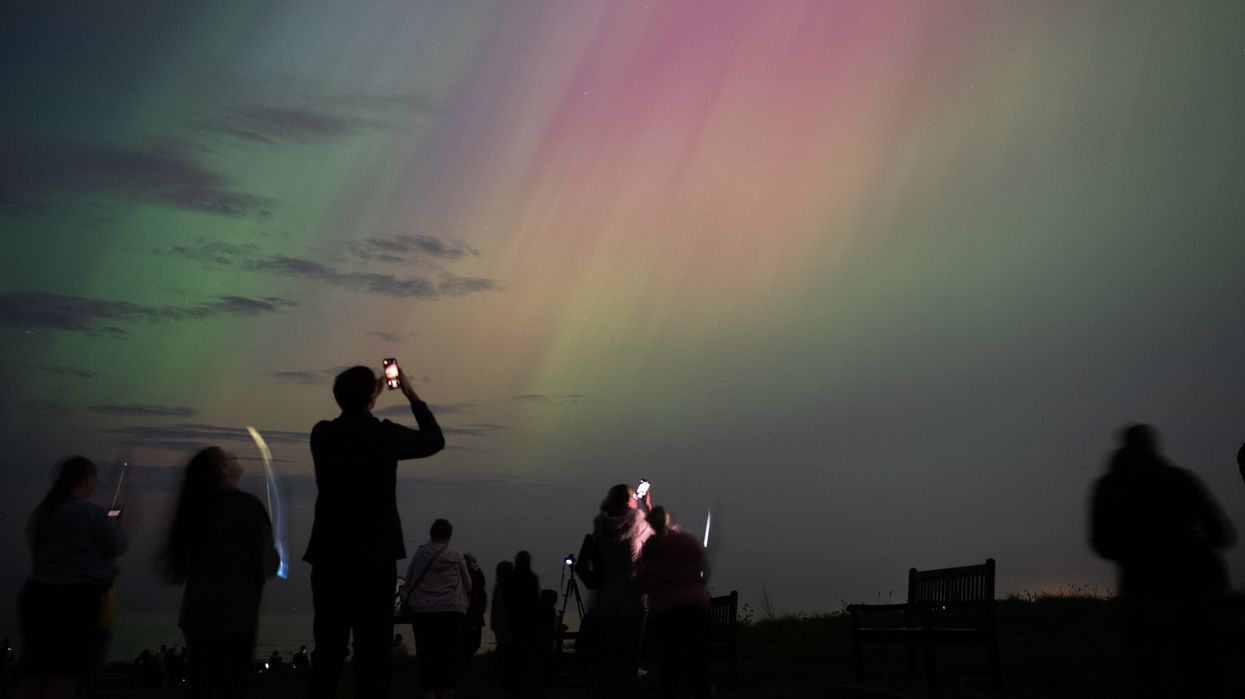

A rare display of the aurora borealis was expected over Hertfordshire after a red alert was issued on Friday, 13 June, by space weather experts. The phenomenon, also known as the Northern Lights, is expected to be seen across large parts of the UK if conditions remain clear.
Red alert signals strong aurora activity
AuroraWatch UK, a monitoring service run by Lancaster University’s Space and Planetary Physics group, issued a red alert on Friday morning. According to the service, this means: “It is likely that aurora will be visible by eye and camera from anywhere in the UK.”
The alert is based on elevated geomagnetic activity levels, which are often triggered by solar storms interacting with Earth’s magnetic field.
Best time and places to watch
While the exact time of visibility has not been confirmed, previous sightings of the aurora borealis have typically occurred between 11 pm and the early hours of the morning. Experts recommend heading to dark, open spaces away from streetlights for the best chance of witnessing the lights.
What causes the aurora borealis?
The aurora borealis occurs when charged particles from the sun collide with gases in Earth’s atmosphere. Oxygen creates green light, while nitrogen can produce shades of purple, pink, or blue.
Skywatchers are advised to monitor AuroraWatch UK for real-time updates.