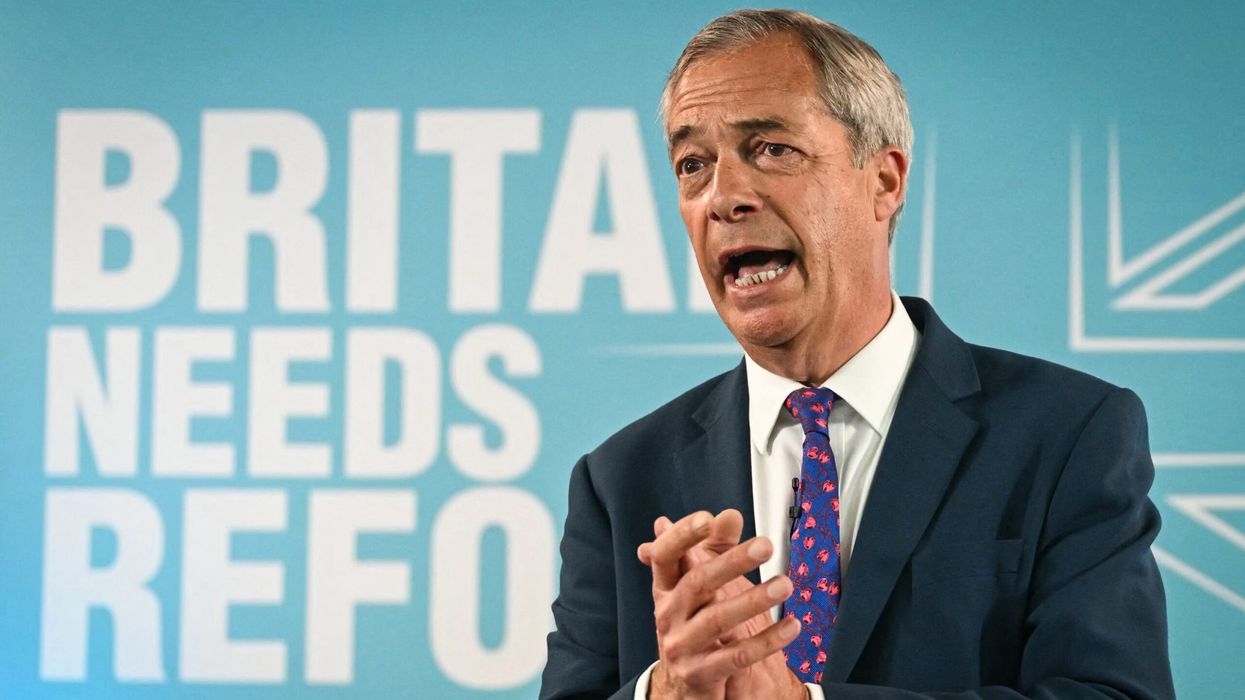

NIGEL FARAGE’s Reform UK has overtaken the Labour Party in a new poll, making it the most popular political party in Britain.
The poll reflects public dissatisfaction with prime minister Keir Starmer less than seven months into his term.
The YouGov poll, conducted for The Times and published on Monday, found that if a general election were held now, 25 per cent of voters would back Reform UK, 24 per cent would support Labour, and 21 per cent would vote for the Conservatives.
YouGov noted that Reform UK’s narrow lead over Labour falls within the poll’s margin of error. The survey included 2,465 respondents and was conducted on 2-3 February.
Starmer led Labour to a landslide victory in last year’s election, ending 14 years of Conservative rule. However, his government has faced early challenges, including backlash over a tax-raising budget and concerns about the economy.
Meanwhile, Farage’s party has gained support with its populist stance, drawing voters away from the two major political parties.
Farage, a key figure in the Brexit campaign and an ally of US president Donald Trump, has advocated for lower taxes and reduced immigration.
Despite securing 14.3 per cent of the vote in last year’s general election, Reform UK won only five of the 650 parliamentary seats due to Britain’s 'first past the post' electoral system.
Labour, with a 33.7 per cent vote share, won 63.2 per cent of the seats.
"Britain wants Reform," Farage wrote on social media platform X, sharing the latest poll results.
Labour’s support fell by three points compared to the previous poll on 26-27 January, while Reform UK gained two points.
The Conservatives, now led by Kemi Badenoch, lost one point. The party recorded its worst-ever election performance last July under former prime minister Rishi Sunak.
(With inputs from Reuters)










English questioning rose from 20 per cent to 31 per cent, and racist jokes from 36 per cent to 41 per cent
Workplace violence against Black and ethnic minority employees rises to 26 per cent
Highlights
The Trades Union Congress surveyed 1,044 Black, Asian and ethnic minority employees. The results show clear increases in racist behaviour between 2020 and 2026.
Workers having their English questioned rose from 20 per cent to 31 per cent. Those hearing racist jokes went up from 36 per cent to 41 per cent.
Racist comments made to workers or around them increased from 31 per cent to 36 per cent.
Violence and threats
The most worrying finding involves physical threats and violence, which jumped from 19 per cent to 26 per cent.
Racist posts shared on workplace social media grew from 22 per cent to 28 per cent. Racist materials being passed around increased from 19 per cent to 25 per cent.
Beyond direct racism, many workers face unfair treatment. Nearly half (45 per cent) said they get harder or less popular jobs.
Over two in five (43 per cent) receive unfair criticism. The same number (41 per cent) stay stuck on temporary contracts.
Work conditions got worse too. Those not getting enough hours rose from 30 per cent to 40 per cent.
Workers denied overtime went from 30 per cent to 37 per cent. Being kept on short-term contracts increased from 33 per cent to 41 per cent.
Direct managers cause most unfair treatment (35 per cent), followed by other managers (19 per cent).
Bullying mainly comes from direct managers (30 per cent) and colleagues (28 per cent). Racist behaviour mostly comes from colleagues (33 per cent) and customers or clients (22 per cent).
Paul Nowak, TUC general secretary, said: "Black and ethnic minority workers are facing appalling and growing levels of racism and unfair treatment in Britain. This racism is plaguing the labour market – and it's getting worse."
The TUC is calling for urgent government action to tackle the problem. The union wants ring-fenced funding for the Equality and Human Rights Commission to enforce workplace protections.
It is pushing for mandatory ethnicity pay gap reporting for companies with over 50 employees.
The TUC says the Employment Rights Act, which makes employers responsible for protecting workers from harassment by customers and clients, will be an important step forward.
The union also wants employers to treat racial harassment as a health and safety issue and monitor ethnicity data across recruitment, pay and promotions.