
- Apple grew from a roughly $350 billion company to around $4.6 trillion under Cook.
- Ternus inherits an AI strategy that has struggled to keep pace with rivals.
- China, tariffs and regulatory battles could complicate Apple’s next phase.
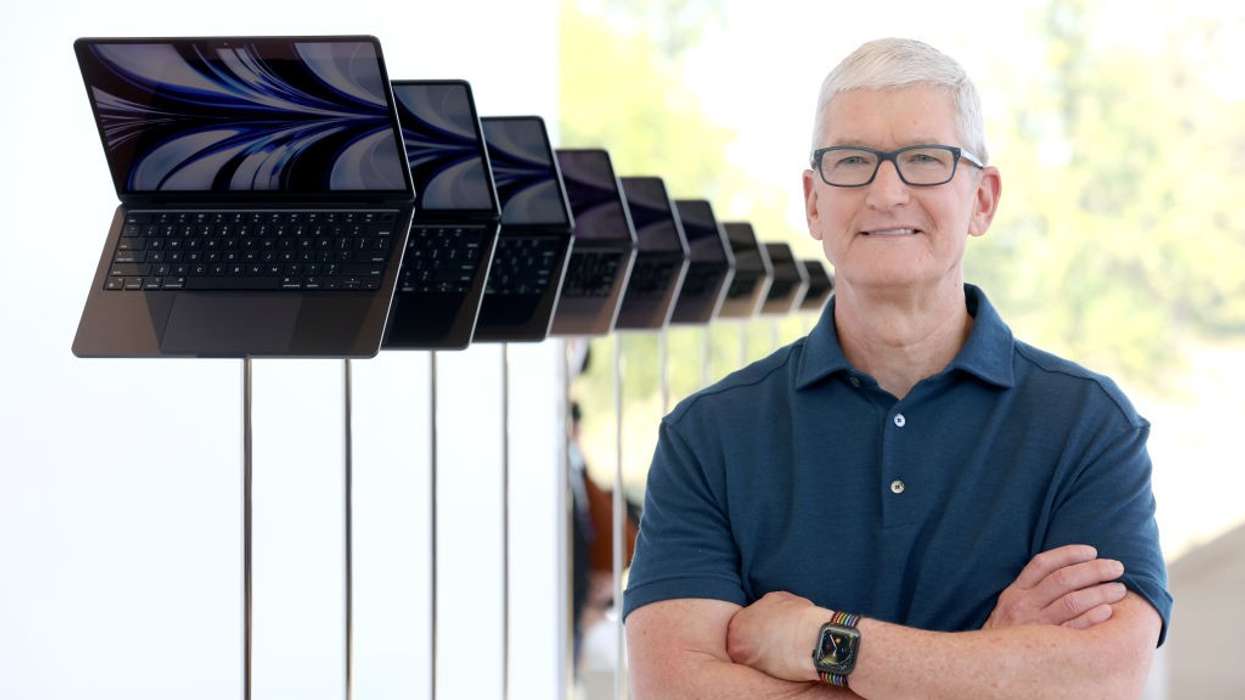
John Ternus has taken charge of Apple as chief executive, ending Tim Cook’s 15-year tenure at the company. The handover comes with Apple valued at around $4.6 trillion, but also facing some of its biggest strategic questions in years.
Cook became CEO in August 2011, shortly before co-founder Steve Jobs died. He leaves behind a company that has grown dramatically in value, expanded its services business and built an ecosystem of more than 2.5 billion active devices. But Ternus is taking over as artificial intelligence, supply-chain risks and regulation reshape the technology industry.
The biggest immediate test may be AI. Apple has been slower than rivals such as Microsoft, Google and Meta to establish itself in the generative AI race. Its Apple Intelligence push has been followed by delays to some features, including a revamped Siri, leaving the company under pressure to show where AI fits into its next phase.
Ternus therefore has a problem that Cook did not face in quite the same way: what comes after the iPhone-led model that has powered Apple's growth for so long?
Cook leaves scale, Ternus gets the harder questions
Cook's biggest contribution was not trying to recreate Jobs. Instead, he built Apple around operational discipline, manufacturing scale and an increasingly important services business.
Apple's annual sales grew from about $108 billion when Cook took over to around $416 billion in its latest fiscal year, while profit increased more than fourfold to about $112 billion. Services also became a major source of recurring revenue, while products such as the Apple Watch and AirPods expanded the company's ecosystem.
But Apple's size has also created new vulnerabilities.
China remains an important part of the company's manufacturing network, even as Apple works to diversify production. That has become more complicated as US-China tensions and tariffs have turned supply chains into a strategic issue rather than simply a cost consideration.
Cook spent years building relationships with policymakers, including US President Donald Trump, while trying to protect Apple's interests during tariff disputes. He will remain at the company as executive chairman, meaning Ternus will not be handling every political relationship alone. But the new CEO will still have to navigate those pressures while establishing his own relationships in Washington and elsewhere.
Regulation is another headache. Apple has faced growing scrutiny over its App Store practices, particularly in Europe, while the US Department of Justice has also challenged the company's position in the smartphone market.
Then there is the question of innovation.
Ternus has deep experience inside Apple's hardware operation and has worked on products including the iPhone, iPad, Apple Watch, AirPods and Vision Pro. But running hardware engineering and running Apple are very different jobs. The new CEO will now have to balance product development with politics, finance, services, regulation and the company's global supply chain.
Apple's Vision Pro has also yet to become a major consumer success, while the company abandoned its long-running electric car project in 2024. These moves have added to questions over whether Apple can create another major product category capable of matching the impact of the iPhone.
That makes the AI transition particularly important.
The company does have advantages that many competitors would struggle to replicate: a huge installed base, control over its hardware and software, a strong chip-design operation and an enormous ecosystem of users. The question is whether Ternus can turn those strengths into a convincing AI strategy without weakening Apple's privacy-focused approach.
Cook's legacy is therefore a mixed inheritance for his successor. He leaves behind a $4.6 trillion company with extraordinary financial scale, but also one that needs to prove where its next major growth engine will come from.
For Ternus, the challenge is no longer building Apple into a giant. It is figuring out what a giant like Apple should become next.