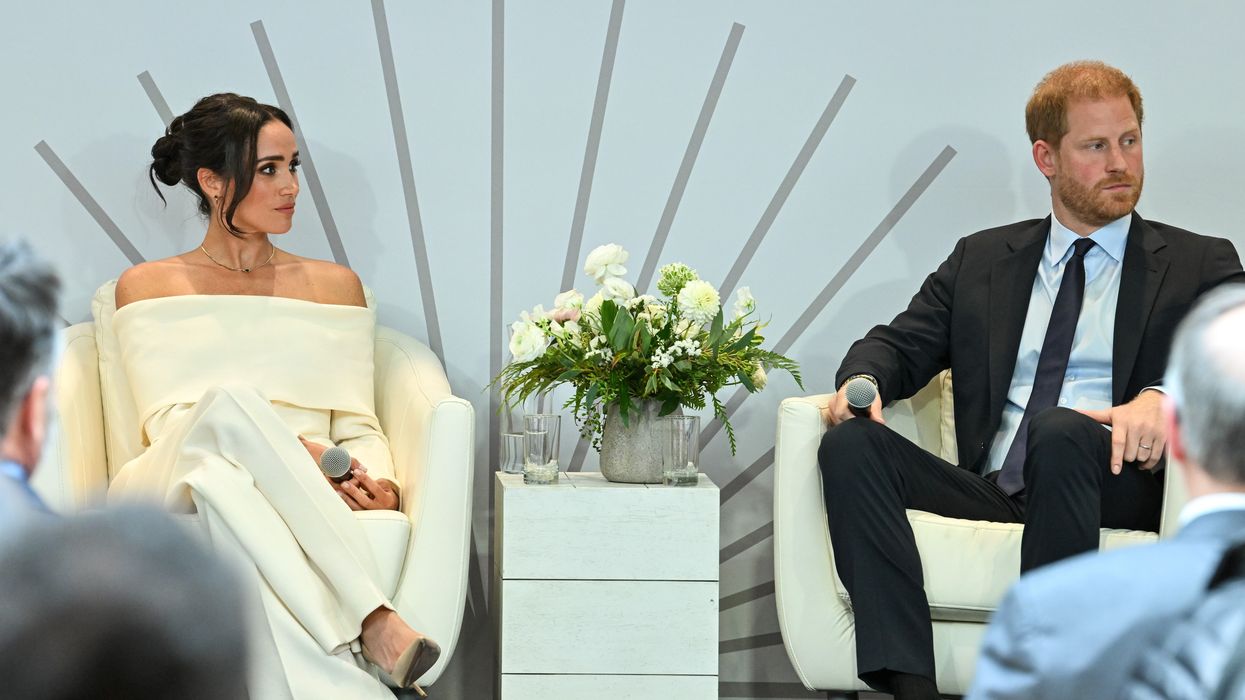

The Duke and Duchess of Sussex have called for stronger protections for children online, warning that not enough is being done to shield young people from the dangers of social media
During a visit to New York, Prince Harry and Meghan Markle unveiled a new memorial dedicated to the memory of children whose families believe harmful online content contributed to their deaths. The installation, named the Lost Screen Memorial, features 50 smartphones, each displaying an image of a child lost to what their families describe as the adverse effects of social media. The memorial was made available to the public for 24 hours.
The images featured in the memorial were provided by members of the Parents’ Network, a support group established by the couple’s Archewell Foundation. The network connects parents whose children have suffered harm related to online activity, offering solidarity and advocating for systemic changes in tech policy.
Speaking to BBC Breakfast, Prince Harry said: “We want to make sure that things are changed so that no more kids are lost to social media.” He added that he is “grateful” that his and Meghan’s two young children are not yet exposed to the online world, stating, “Life is better off social media.”
At the Archewell Foundation event in New York, the prince spoke about the complex social dynamics that make avoiding social media difficult for many young people. “The easiest thing to say is to keep your kids away from social media. The sad reality is the kids who aren't on social media normally get bullied at school because they can't be part of the same conversation as everybody else,” he told journalists.
Both Harry and Meghan have expressed strong support for families seeking greater transparency from tech companies. They argue that bereaved parents should be granted access to the online activity of their children following their deaths. Prince Harry criticised tech companies for citing privacy laws to deny access, particularly to families in the UK.
“You are telling a parent, you are telling a dad and a mum that they can't have the details of what their kid was up to on social media because of the privacy of their kid. It's wrong,” said the prince, calling for accountability from the platforms involved.
Meghan described online harm as a “global issue”, asserting that “one thing we can all agree on is that children should be safe.” She commended the families who are speaking publicly about their loss in order to drive change. “I think in many ways what we see through these parents is the hope and the promise of something better,” she said. “They just want to make sure this doesn't happen to anyone else.”
The couple’s foundation has been actively involved in promoting online safety and mental health initiatives, and continues to advocate for reforms that prioritise the well-being of young people in the digital age.