
Highlights:
- Glasgow-based CardioPrecision completes first clinical cases of robotic aortic valve replacement (AVR) through a small neck incision.
- The procedure was carried out at Cleveland Clinic in the United States.
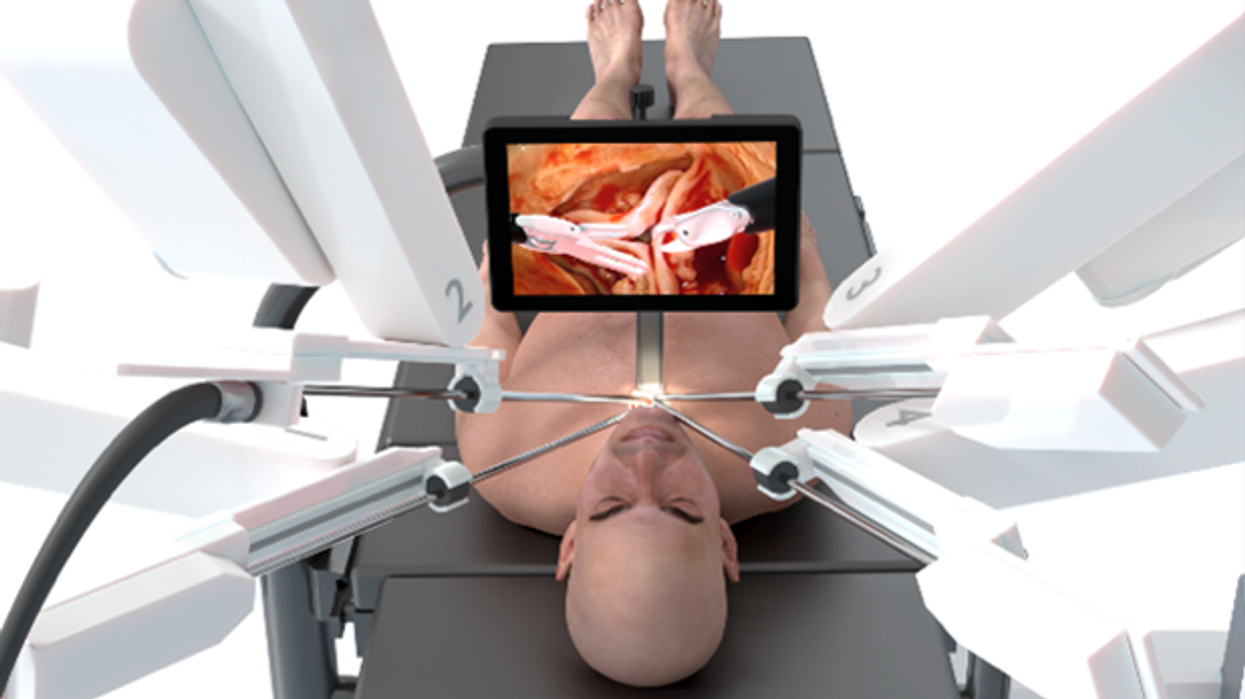
- It uses the company’s CoreVista® Robot Enabling Platform to perform minimally invasive surgery.
- The approach aims to reduce pain, shorten hospital stays, and improve patient outcomes.
- Early results presented at major international conferences show clinical promise.
Glasgow medtech firm CardioPrecision has successfully performed the world’s first clinical cases of robot-assisted aortic valve replacement (AVR) using a small transcervical incision. This breakthrough could significantly reduce the need for traditional open-heart surgery.
The pioneering operations were carried out at the Cleveland Clinic in the United States, a centre globally recognised for its cardiovascular care. The procedures used CardioPrecision’s proprietary CoreVista® Robot Enabling Platform, offering a new route for accessing the heart valve via the neck rather than the chest.
Building on previous cadaver-based demonstrations of the AVATAR (Advanced Videoscopic Aortic Surgery by Transcervical Approach using Robot-assisted) concept, this marks the company’s transition from proof of concept to successful human application.
A move from concept to clinical reality
In 2023, CardioPrecision demonstrated its AVATAR technique in a series of cadaveric cases in Chicago. The procedures confirmed the feasibility of robot-assisted AVR using the CoreVista® platform. The company, spun out from the NHS with support from InnoScot Health, has since refined the technology for use in live patients.
This vision became a clinical reality in 2025, when a team led by Dr Marijan Koprivanac at Cleveland Clinic completed a small series of successful robot-assisted AVR procedures. The CoreVista® platform allowed surgeons to implant either conventional sutured or newer sutureless heart valves through a small neck incision.
Dr Koprivanac presented early data at the American Association for Thoracic Surgery and the International Society for Minimally Invasive Cardiothoracic Surgery meetings in May, noting significant advantages for patients.
He stated:
“Combining the artificial heart valve with this new surgical technology means patients should experience less pain and less time in the hospital. In fact, we believe this may be one of the least invasive surgical heart valve replacement options available.”
Scotland’s role in cardiac surgery innovation
The successful clinical deployment of the CoreVista® system marks a milestone for Scotland’s life sciences sector. CardioPrecision’s long-term vision has been to enable totally endoscopic heart surgery through a neck incision — an ambition now beginning to show tangible patient benefits.
Fraser Sutherland, Chief Medical Officer of CardioPrecision, said:
“The journey to realise our vision – to enable heart surgery to be performed through a small incision in the neck – began over a decade ago. Initially developed as a totally endoscopic procedure, we incorporated robot assistance to harness the dexterity of surgical robotics.”
Chief Executive Officer Ying Sutherland added:
“We are delighted to introduce this groundbreaking procedure to the medical community. Our unwavering commitment to advancing cardiovascular care has driven us to develop this innovative product, which we believe could revolutionise the approach to cardiac surgery.”
Support from InnoScot Health
CardioPrecision was originally formed through support from InnoScot Health, which works with NHS Scotland to bring new healthcare innovations to market. The organisation continues to play a role in the company’s governance and strategic direction.
Graham Watson, Executive Chair of InnoScot Health, commented:
“We congratulate CardioPrecision on its landmark breakthrough in robotic-assisted aortic valve replacement. It represents a vital step in producing improved outcomes through minimally invasive techniques. We are proud to continue supporting its world-leading capabilities.”